

TL;DR:
- Jewellery remodelling turns old metals and gemstones into custom rings, preserving sentiment and reducing waste. A skilled jeweller assesses condition, designs, and crafts a new piece through five main stages, ensuring quality and personalisation. This process offers a sustainable, cost-effective way to create meaningful jewelry that combines history with modern style.
Remaking old jewellery into a new ring is entirely possible. The process, known professionally as jewellery remodelling or bespoke redesign, takes your existing metals and gemstones and transforms them into a fresh piece built around your taste and sentiment. You keep the emotional weight of the original. You get a ring you actually want to wear. Blackwelljewellers has been doing exactly this for over 20 years across its Kent stores, and the results are genuinely remarkable. Whether you have a grandmother’s engagement ring sitting in a drawer or a tangle of broken chains, the raw material is almost certainly usable.
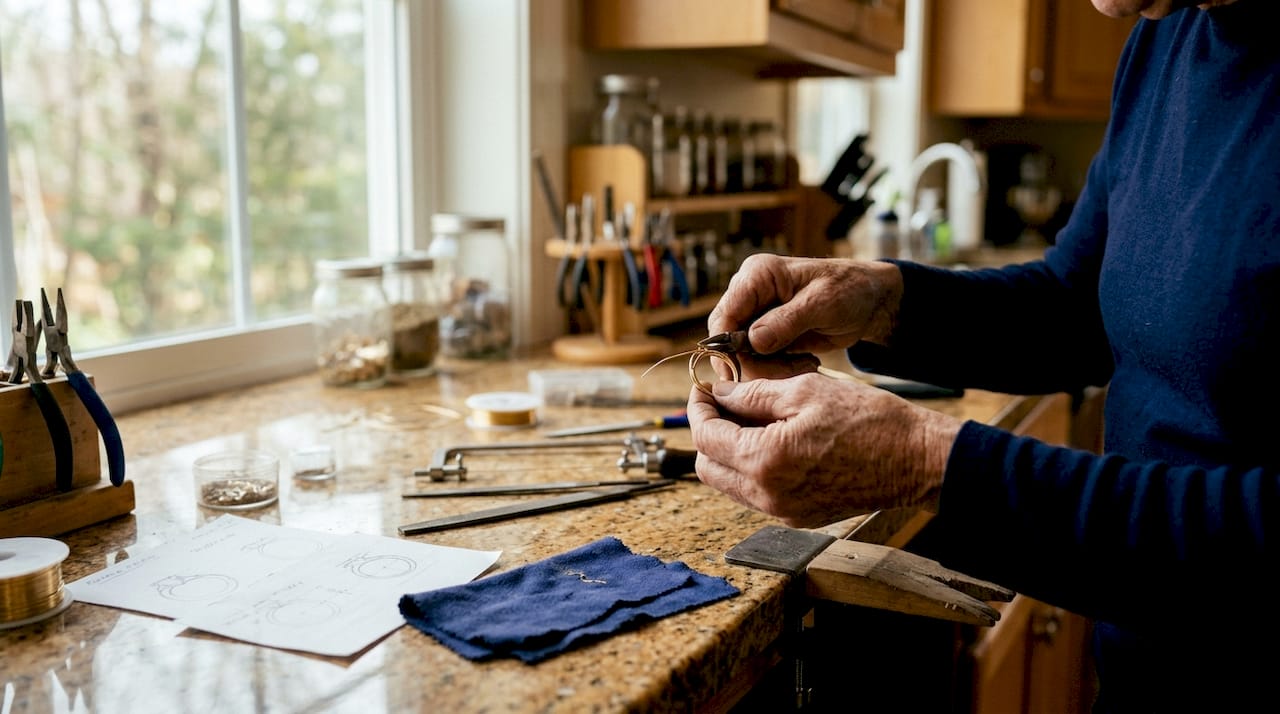
Can you remake old jewellery into a new ring?
Yes, and the range of jewellery you can use is broader than most people expect. Most gold jewellery can be remodelled, including engagement rings, wedding rings, chains, bracelets, and earrings. You can even combine multiple pieces into a single new design. That means the single earring you cannot bear to throw away and the snapped bracelet from your mum could both end up in one cohesive ring.
The metals most commonly used are yellow gold, white gold, rose gold, and platinum. Each behaves differently when melted and recast, so the condition and carat of your original piece matters. A 9ct gold chain and an 18ct gold ring cannot simply be melted together without consequences. Jewellers perform metallurgical testing on old gold before melting it, because mixing different alloys can produce a brittle or discoloured metal that is unsuitable for quality jewellery. That is not a dealbreaker. It just means the metal may need refining or alloy adjustment before it becomes your new ring.
- Yellow, white, and rose gold in 9ct, 14ct, or 18ct grades
- Platinum, which is dense, durable, and highly reusable
- Silver (though less common for rings due to softness)
- Gemstones including diamonds, sapphires, rubies, and emeralds
Pro Tip: Bring every piece of old jewellery you are considering, even fragments or single earrings. A skilled jeweller can assess the lot together and tell you exactly what is workable.
How does the jewellery remodelling process work?
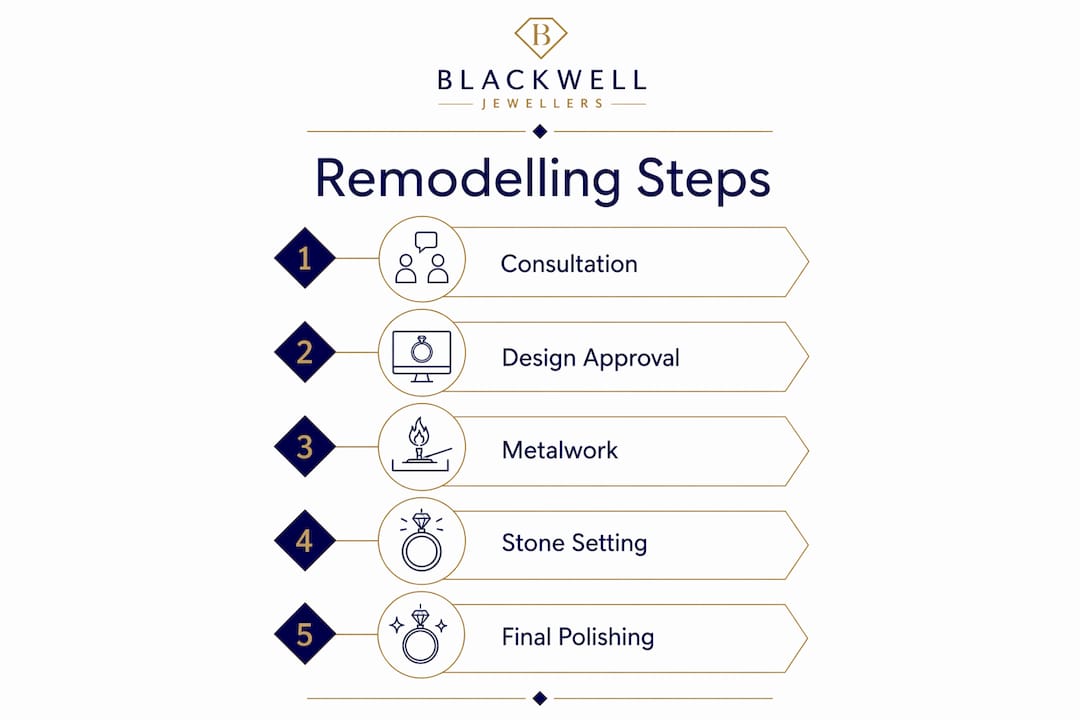
Jewellery remodelling follows a five-step process from initial consultation through to the finished piece. Knowing what happens at each stage removes a lot of the anxiety people feel about handing over sentimental items.
-
Initial consultation and assessment. You bring your old jewellery to the jeweller. They assess the metal quality, carat, condition, and any gemstones present. This is where you discuss what you want the new ring to look like and whether the existing materials can support that vision.
-
Design development. The jeweller creates sketches or a CAD (computer-aided design) model of your proposed ring. CAD is particularly useful because you can see a three-dimensional render before anything is touched. You approve the design, suggest changes, and sign off before any work begins.
-
Stone removal and material preparation. Gemstones are carefully removed and set aside. The metal is tested and, if necessary, refined or adjusted to ensure it will perform well when recast. This is the stage where alloy adjustment happens if mixed carats are involved.
-
Crafting and recasting. The metal is melted, refined, and cast into the new ring form. Gemstones are then set according to the approved design. This stage requires real skill, particularly when setting stones into a newly cast shank.
-
Finishing and quality checks. The ring is polished, hallmarked where required, and checked against the original design brief. You receive a piece that is both structurally sound and visually exactly what you agreed.
Pro Tip: Ask to see the CAD render or sketch before anything is melted. Changes at the design stage cost nothing. Changes after casting cost a lot.
The whole process typically takes several weeks depending on complexity. Bespoke custom ring design at this level is not a quick turnaround service, and that is a good thing. Rushing metallurgical work produces poor results.
What are the benefits and limitations of remodelling old jewellery?
The benefits are real and worth spelling out clearly, because they go beyond the obvious sentimental angle.
Precious metals are too valuable to leave unused. Remodelling is a genuinely sustainable choice, particularly when gold and platinum prices are high. You are not buying new mined metal. You are recommissioning material that already exists. For anyone who cares about ethical consumption, that matters.
The emotional benefit is equally significant. Remodelling updates dated or uncomfortable pieces while honouring their original meaning. A ring that belonged to someone you loved does not have to sit in a box because the style is not yours. You can wear it every day in a form that actually suits you.
Cost is another factor. If you already own the gold and the stones, your outlay covers craftsmanship and design rather than raw materials. That can make bespoke remodelling significantly more affordable than commissioning a new ring from scratch.
The limitations are equally worth knowing:
- Metal condition. Old gold that has been repaired multiple times, or that contains solder from previous work, can be difficult to reuse cleanly.
- Mixed alloys. As noted, combining 9ct and 18ct gold without refinement produces unreliable results. Refinement adds cost and time.
- Gemstone condition. Stones that are chipped, included, or heat-sensitive may not survive removal and resetting. A jeweller will assess this honestly before proceeding.
- Design restrictions. The volume of metal you have limits what ring styles are achievable. A very fine chain may not yield enough gold for a substantial band.
- Colour matching. If you add new metal to supplement your existing supply, matching the colour and finish precisely requires care.
If your original materials are genuinely unsuitable, a good jeweller will tell you. The honest answer is sometimes “this metal is too compromised to reuse,” and in that case you can explore using your stones in a new setting with fresh metal instead.
How can you personalise your new ring design?
This is where remodelling gets genuinely exciting. Some clients reuse everything, while others combine original stones with entirely new design elements or add recycled gold to supplement what they have. The level of personalisation is entirely up to you.
Popular approaches include:
- Setting an original diamond in a modern band. The stone carries the history. The band reflects your current style.
- Combining multiple inherited pieces. Several inherited rings or fragments can be brought together into one cohesive design. This is particularly meaningful when jewellery comes from different family members.
- Changing the metal colour. Yellow gold can be alloyed into rose gold or white gold during the recasting process, giving the piece a completely different feel.
- Adding engraving or texture. Hammered finishes, milgrain edges, and personalised engravings are all achievable at the finishing stage.
- Choosing a contemporary setting style. Bezel settings, tension settings, and pavé bands are all options for stones that were previously in older claw or collet mounts.
The bespoke design process is genuinely collaborative. You are not handing over your jewellery and hoping for the best. You are involved at every decision point, from the initial sketch through to the final polish.
“The result of remodelling is a bespoke piece that feels both meaningful and completely personal, combining original sentiment with new style. Clients receive something unique that carries the emotional value of the old with a fresh, modern design.”
If you want guidance on where to start with your own design ideas, the bespoke jewellery guide from Blackwelljewellers walks through the process in plain terms.
Key takeaways
Jewellery remodelling is the most sustainable and personally meaningful way to create a new ring, using your existing metals and stones with professional craftsmanship at every stage.
| Point | Details |
|---|---|
| Remodelling is widely possible | Most gold, platinum, and gemstone jewellery can be transformed into a new ring by a skilled jeweller. |
| Metallurgical testing is non-negotiable | Mixed alloys must be tested and refined before melting to avoid brittleness or discolouration in the new piece. |
| The process has five clear stages | Consultation, design, stone removal, casting, and finishing give you control and transparency throughout. |
| Personalisation is extensive | You can change metal colour, combine multiple pieces, and choose modern settings while keeping original stones. |
| Sustainability is a genuine benefit | Reusing precious metals avoids new mining and makes bespoke design more cost-effective than starting from scratch. |
What I have learned from watching people remake their jewellery
I have seen a lot of jewellery remodelling conversations over the years, and the thing that strikes me every single time is how much anxiety people bring to that first consultation. They are worried the jeweller will judge their old pieces, or that something irreplaceable will be damaged, or that the finished ring will not look like what they imagined.
Almost none of those fears materialise. What actually happens is that people leave the consultation feeling relieved. A good jeweller will tell you honestly what is workable and what is not. They will not oversell the possibilities or dismiss your sentimental attachment to a battered old chain. They treat the material with respect because they understand what it represents.
The sustainability angle is something I think gets undersold. People focus on the emotional story, which is valid, but reusing gold and platinum is also just the sensible thing to do. These are finite, expensive materials. Leaving them in a drawer is genuinely wasteful. Remodelling is one of the few areas where doing the right thing environmentally and doing the right thing personally are exactly the same decision.
My honest advice: do not wait until you have a clear design in mind before booking a consultation. Go with your old pieces and an open mind. The design will emerge from the conversation. That is what the process is for.
— James
Bespoke remodelling at Blackwelljewellers
Blackwelljewellers has offered bespoke jewellery services from its Kent stores for over 20 years, with in-house jewellers who handle the full remodelling process from assessment through to hallmarked finish. If you have old jewellery sitting unworn, a consultation is the logical first step.

The team works with gold, platinum, and a wide range of gemstones, and can advise on everything from simple resettings to complex multi-piece combinations. You can also browse the second-hand jewellery collection if you want to supplement your existing materials with authenticated pre-owned pieces. Whether you visit a store in Maidstone, Gravesend, or Bexleyheath, or get in touch online, the starting point is always a straightforward conversation about what you have and what you want.
FAQ
Can any old jewellery be remade into a ring?
Most gold and platinum jewellery can be remodelled into a new ring, including rings, chains, bracelets, and earrings. A jeweller will assess the metal condition and gemstone quality before confirming what is achievable.
Does remodelling damage the original gemstones?
Gemstones are carefully removed before any metalwork begins, and a skilled jeweller will assess each stone for chips or heat sensitivity first. Most diamonds and hard gemstones survive the process without issue.
How long does jewellery remodelling take?
Timescales vary by complexity, but bespoke remodelling typically takes several weeks from design approval to finished piece. Rushing the process compromises quality, particularly at the casting and setting stages.
Is remodelling old jewellery cost-effective?
Remodelling is generally more affordable than commissioning a new ring from scratch because you supply the raw materials. You pay for craftsmanship and design rather than new gold or platinum.
What happens if my old metal is not suitable for reuse?
If mixed alloys or poor metal condition make direct reuse impractical, a jeweller can refine the metal or suggest using your original gemstones in a new setting with fresh metal instead.
Recommended
- From Two Diamond Rings to One Masterpiece | Custom Ring Design & Remak – Blackwell Jewellers
- Can I Use My Own Gold to Create a New Piece? – blackwellonline
- How Long Will It Take to Resize My Ring? Quick Adjustments at Our On-S – blackwellonline
- Can Broken Jewellery Be Fixed? In-Store Repair Services at Blackwell J – blackwellonline