

Many jewellery owners unintentionally harm cherished pieces through incorrect cleaning methods, with studies showing improper care increases wear risk by up to 20%. Proper maintenance varies dramatically by material and jewellery type, particularly for pre-owned and bespoke items. This guide reveals expert care techniques tailored to gold, silver and diamond pieces, highlights professional inspection benefits, explains storage essentials, identifies damaging mistakes to avoid, and offers situation-specific recommendations to preserve your jewellery’s beauty and value for decades.
Table of Contents
- How To Choose The Right Jewellery Care Approach
- Material-Specific Jewellery Care Tips
- Professional Cleaning, Inspection And Restoration Benefits
- Jewellery Storage And Handling Best Practices
- Common Mistakes And Preventive Tips In Jewellery Care
- Summary Comparison Of Jewellery Care Approaches
- Situational Recommendations For Jewellery Owners
- Discover Expert Jewellery Care And Bespoke Services At Blackwell Jewellers
- Frequently Asked Questions
Key takeaways
| Point | Details |
|---|---|
| Material-specific cleaning methods | Gold requires mild detergent every 2-3 months, silver needs anti-tarnish storage, diamonds benefit from professional ultrasonic cleaning. |
| Professional inspection benefits | Annual expert checks reduce gemstone loss risk by 60% and preserve market value. |
| Proper storage essentials | Individual padded compartments cut damage risk in half, anti-tarnish bags prevent silver oxidation effectively. |
| Common mistakes to avoid | Over-cleaning gold, using harsh chemicals like bleach, and improper storage accelerate jewellery deterioration. |
| Situational care recommendations | Pre-owned gold needs monthly home cleaning with yearly inspections, bespoke pieces require delicate handling and bi-annual professional review. |
How to choose the right jewellery care approach
Selecting the optimal care method starts with understanding your jewellery’s unique characteristics. Identifying your piece’s material composition and current condition forms the foundation of effective maintenance. Gold, silver, platinum and gemstones each demand distinct cleaning approaches to avoid damage.
Consider the age and frequency of wear when planning your care routine. Vintage pieces require gentler handling than modern jewellery, whilst regularly worn items accumulate oils and debris faster. Clean your jewellery properly at home using methods matched to usage patterns.
Value and sentimental importance should guide your investment in professional care and restoration services. High-value or irreplaceable bespoke pieces justify more frequent expert maintenance to protect their integrity. Your storage environment significantly affects tarnishing rates and damage risk, with humidity and direct sunlight accelerating deterioration.
Key factors for personalising your care approach:
- Assess material composition first to select compatible cleaning products
- Evaluate current condition to determine restoration needs
- Match cleaning frequency to usage patterns and exposure
- Align care investment with piece value and irreplaceability
- Review storage conditions to minimise environmental damage
Pro Tip: Reassess your care routine every six months as jewellery ages or if you notice changes in appearance or structural integrity. Being aware of common jewellery care mistakes helps you adapt maintenance strategies before problems escalate. Implementing safe jewellery storage tips protects your investment between cleanings.
Material-specific jewellery care tips
Gold jewellery responds best to gentle cleaning with lukewarm water and mild detergent applied with a soft cloth. Limit gold cleaning to once every two to three months, as excessive cleaning wears away surface layers and dulls the finish over time. Pat dry thoroughly after washing to prevent water spots.
Silver proves particularly susceptible to tarnish from sulfur exposure in air and certain materials. Store silver pieces in anti-tarnish bags or cloths between wears to slow oxidation dramatically. Safe cleaning methods for gold and silver preserve metal integrity whilst removing built-up tarnish.
Diamonds tolerate more vigorous cleaning than softer gemstones, with ultrasonic cleaning restoring brilliance effectively. However, ultrasonic methods can damage delicate bespoke settings or loosen stones in vintage pieces. Reserve ultrasonic cleaning for professional use where experts can assess structural soundness first.
Substances to strictly avoid for all metals and gemstones:
- Bleach damages metal surfaces and dissolves adhesives in settings
- Ammonia weakens gold alloys and clouds certain gemstones
- Abrasive cleaners scratch metal surfaces and dull finishes
- Chlorine corrodes gold and platinum, particularly in swimming pools
- Harsh chemicals found in household cleaners cause irreversible discolouration
Pro Tip: Test any new cleaning solution on an inconspicuous area before applying to visible surfaces. This precaution prevents surprises on heirloom or high-value pieces. When you clean your jewellery at home, work in good lighting to spot potential issues early. Understanding what to avoid harsh cleaning chemicals protects your collection from accidental damage.
Professional cleaning, inspection and restoration benefits
Annual inspections reduce gemstone loss risk by 60% compared to jewellery maintained solely at home. Expert jewellers identify loose prongs, worn settings and structural weaknesses invisible to untrained eyes. Early detection prevents costly stone replacements and emergency repairs.
Certified professional cleaning preserves up to 90% of pre-owned jewellery’s market value by maintaining original finish quality and structural integrity. Professionals use calibrated equipment and appropriate cleaning methods for each material combination. This expertise proves particularly valuable for pieces with mixed metals or delicate gemstone arrangements.
Restoration services address unique wear patterns on bespoke and vintage items that generic care cannot resolve. Expert jewellers can rebuild worn prongs, refinish scratched surfaces and restore original lustre without compromising authenticity. These interventions extend jewellery lifespan dramatically whilst maintaining historical value.
Professional inspection advantages include:
- Detection of microscopic cracks before they cause stone loss
- Assessment of setting security and prong condition
- Identification of metal fatigue in high-stress areas
- Verification of gemstone authenticity and condition
- Recommendations for preventive maintenance timing
Research shows annual professional inspections cut gemstone loss risk by 60% through early detection of setting failures and structural weaknesses.
Regular expert maintenance catches problems when repairs remain simple and affordable. Delayed attention often transforms minor adjustments into major reconstruction projects. Learning about common jewellery repairs helps you recognise when professional intervention becomes necessary.
Jewellery storage and handling best practices
Storing jewellery in individual padded compartments reduces damage risk by 50% compared to jumbled storage in single containers. Separate storage prevents scratches from harder materials damaging softer metals and stones. Velvet-lined boxes or compartmentalised organisers provide ideal protection.
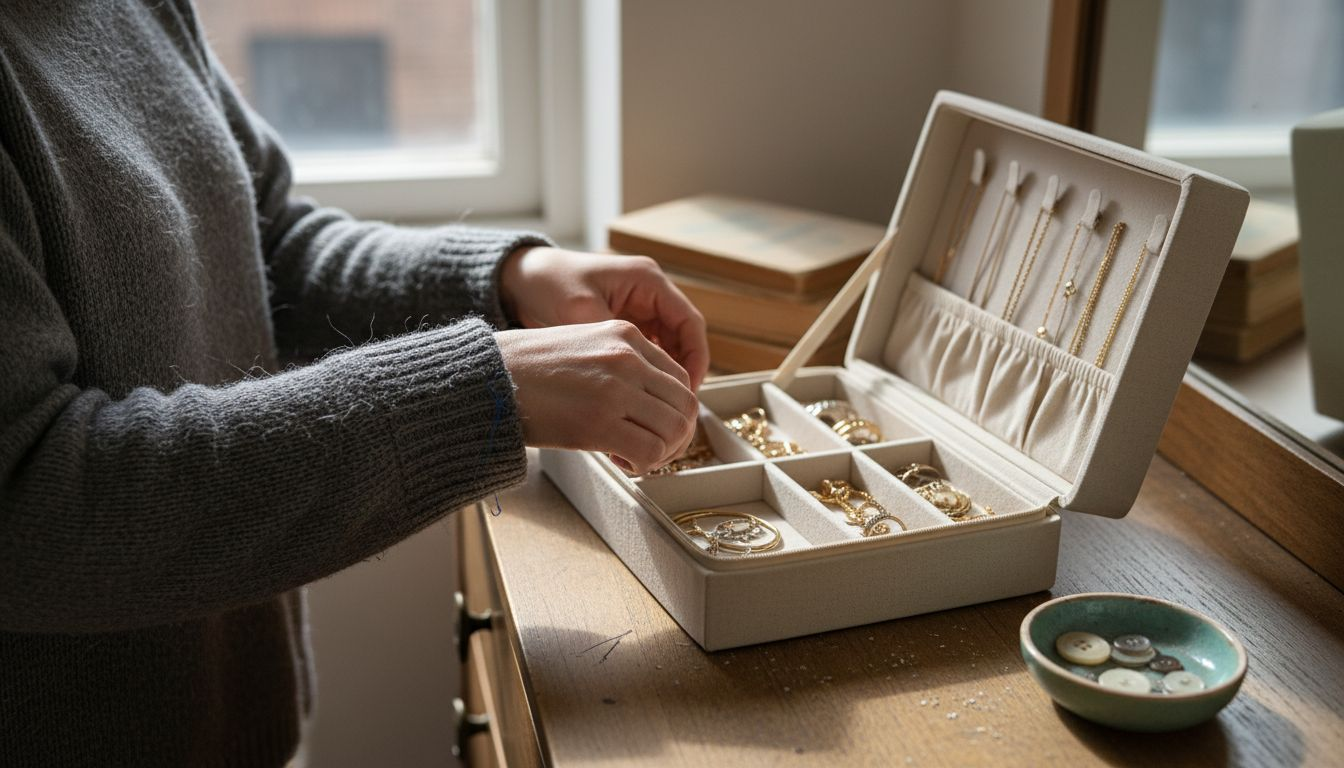
Anti-tarnish bags or strips significantly slow silver oxidation by absorbing sulfur compounds from surrounding air. These affordable storage aids extend time between cleanings and maintain silver’s natural lustre. Replace anti-tarnish materials annually for continued effectiveness.
Keep all jewellery away from bathrooms and other high-humidity areas where moisture accelerates tarnishing and corrosion. Direct sunlight fades certain gemstones over time and can weaken adhesives in assembled pieces. Choose cool, dry storage locations with stable temperature and minimal light exposure.
Handle bespoke pieces with particular care due to custom settings that may incorporate delicate design elements. Hold pieces by metal bands rather than stones to avoid loosening settings. Remove jewellery before activities involving impact, chemicals or extreme temperatures.
Essential storage and handling practices:
- Use separate compartments or pouches for each piece
- Insert anti-tarnish strips in silver storage containers
- Store in cool, dry locations away from sunlight
- Remove jewellery before swimming, cleaning or exercising
- Handle pieces by metal components rather than stones
Pro Tip: Rotate stored jewellery quarterly to equalise air exposure and prevent moisture accumulation in closed containers. Brief airing prevents musty odours and checks for developing tarnish. Following safe jewellery storage tips preserves condition between wears. Simple jewellery care hacks enhance protection without expensive equipment.
Common mistakes and preventive tips in jewellery care
Many owners damage treasured pieces through well-intentioned but incorrect maintenance approaches. Understanding frequent errors helps you avoid costly repairs and irreversible harm. Harsh chemicals like bleach and ammonia rank among the most destructive substances for jewellery.
Over-cleaning gold jewellery accelerates surface wear and removes microscopic layers with each cleaning session. Limit gold cleaning to once every two to three months unless pieces become visibly soiled. More frequent cleaning provides no additional benefit and hastens deterioration.
Bespoke pieces demand exceptional handling care due to custom settings potentially featuring fragile or unconventional construction. Mass-produced jewellery typically withstands rougher treatment than unique designs incorporating delicate metalwork. Treat each bespoke item as irreplaceable.
Improper storage causes preventable damage through scratching, tangling and accelerated tarnishing. Throwing jewellery loosely into boxes creates abrasion as pieces contact each other. This carelessness proves particularly harmful to softer materials like silver and gold.
Steps to prevent common jewellery damage:
- Read product labels on all cleaning solutions before applying to jewellery
- Establish a cleaning schedule matched to wear frequency rather than arbitrary timing
- Inspect bespoke pieces monthly for loose stones or damaged settings
- Implement dedicated storage systems with individual compartments
- Remove jewellery before exposure to chemicals, including perfumes and lotions
- Document cleaning methods and frequencies to identify patterns if problems emerge
- Seek professional advice before attempting unfamiliar cleaning techniques
Recognising common jewellery care mistakes before they occur protects valuable pieces. Understanding how to avoid jewellery repair mistakes during maintenance prevents creating new problems. Learning why jewellery breaks helps you identify risk factors in your care routine.
Summary comparison of jewellery care approaches
Different cleaning methods suit specific jewellery types and maintenance goals. Understanding each approach’s strengths and limitations enables informed decisions about care strategies. The table below compares effectiveness, safety and appropriate applications.
| Method | Effectiveness | Safety Level | Best For | Avoid For | Frequency |
|---|---|---|---|---|---|
| Mild detergent home cleaning | Moderate | High | Gold, platinum, simple settings | Porous gemstones, antique pieces | Every 2-3 months |
| Anti-tarnish storage | High for prevention | Very high | Silver jewellery | Not applicable | Continuous |
| Ultrasonic cleaning | Very high | Moderate | Diamonds in secure settings | Delicate bespoke, emeralds, opals | Professionally only |
| Professional certified cleaning | Very high | Very high | All jewellery types | None | Annually minimum |
| Polishing cloths | Moderate | High | Gold, silver surfaces | Gemstone surfaces | As needed for tarnish |
Home care with mild detergent provides safe, effective maintenance for most gold and silver pieces when performed correctly. This approach removes oils and light debris without risking chemical damage. Combine gentle home cleaning with proper storage for everyday maintenance.
Ultrasonic cleaning delivers superior results for diamonds and other hard gemstones by vibrating away embedded particles. The method proves too aggressive for delicate bespoke settings or fracture-filled stones. Reserve ultrasonic cleaning for professional application after structural assessment.
Professional certified cleaning maximises value retention through expert material handling and appropriate method selection. Jewellers adjust techniques based on individual piece construction and condition. This personalised approach delivers optimal results whilst eliminating guesswork and risk.
Situational recommendations for jewellery owners
Tailored care strategies match your specific jewellery types and usage patterns. Pre-owned gold jewellery benefits from monthly gentle cleaning using lukewarm water and mild detergent. Schedule annual professional inspections to verify structural integrity and setting security.
Bespoke diamond rings warrant professional ultrasonic cleaning paired with bi-annual expert inspections due to custom settings potentially incorporating unconventional construction. These pieces represent significant investment and often irreplaceable sentimental value. Enhanced care preserves both monetary worth and emotional significance.
Antique silver requires specialised attention including anti-tarnish bag storage and gentle cleaning every three to four months. Avoid harsh polishing that removes desirable patina from vintage pieces. Professional restoration maintains authenticity whilst addressing structural concerns.
Storage choices should reflect jewellery type and wearing frequency. Daily-wear pieces need accessible storage with quick retrieval, whilst occasional pieces benefit from more protective long-term storage solutions. Match storage investment to piece value and replacement difficulty.
Recommended care by common jewellery types:
- Pre-owned gold rings: Monthly home cleaning, annual professional inspection, individual storage
- Bespoke diamond engagement rings: Bi-annual professional service, daily removal before activities, secure storage
- Antique silver brooches: Quarterly gentle cleaning, anti-tarnish storage, minimal handling
- Everyday gold chains: Clean every 2-3 months, professional inspection yearly, hang storage to prevent tangling
- Vintage gemstone jewellery: Professional cleaning only, climate-controlled storage, annual authenticity verification
Implementing proper home jewellery cleaning between professional services maintains appearance without risking damage. Understanding appropriate professional maintenance timings prevents both neglect and excessive intervention. Balance convenience with protection based on each piece’s characteristics.
Discover expert jewellery care and bespoke services at Blackwell Jewellers
Protecting your jewellery investment requires combining proper home maintenance with expert professional services. Blackwell Jewellers brings over 20 years of established family-run expertise to professional jewellery repairs across Kent locations in Maidstone, Gravesend and Bexleyheath.

Our certified jewellers provide comprehensive care for pre-owned and bespoke pieces, from routine inspections to complex restoration projects. Each service combines traditional craftsmanship with modern techniques to preserve your jewellery’s authenticity and value. Whether you need guidance on expert jewellery cleaning tips or wish to explore our bespoke jewellery design process, our team delivers personalised solutions matched to your specific needs and treasured pieces.
Frequently asked questions
How often should I professionally inspect my pre-owned jewellery?
Schedule annual professional inspections as a minimum baseline for all pre-owned pieces. This frequency reduces gemstone loss risk by 60% through early detection of loose settings and structural weaknesses. Increase inspection frequency to twice yearly for high-value pieces or jewellery worn daily.
What is the safest method to clean bespoke diamond rings at home?
Use lukewarm water with mild detergent applied gently using a soft cloth for home cleaning of bespoke diamond rings. Avoid ultrasonic cleaning at home as vibrations can loosen delicate custom settings. Reserve deep cleaning for professional jewellers who can assess structural integrity first.
Can I store silver jewellery together with gold pieces?
Store silver and gold jewellery separately to prevent tarnishing transfer and scratching between different hardness metals. Silver requires anti-tarnish bags or strips, whilst gold benefits from individual padded compartments. Following proper jewellery storage best practices protects both materials optimally.
Recommended
- When to Bring Your Jewellery to a Professional for Maintenance – blackwellonline
- 3 Easy Jewellery Care Hacks Everyone Should Know – blackwellonline
- What to Avoid: Mistakes That Damage Your Jewellery – blackwellonline
- Common Jewellery Repair Mistakes (and How to Avoid Them) – blackwellonline
- Luxury Handbag Care Workflow for Pristine Condition - BVPRIVE