

TL;DR:
- Jewellery repairs in Gravesend include ring resizing, stone resetting, chain soldering, and rhodium plating for precious metals. Most repairs are done in-store within 2 to 10 days, with early inspections preventing costly damage. Blackwelljewellers offers expert, in-house service for both modern and antique jewellery, emphasizing professional handling and transparency.
Jewellery repairs in Gravesend cover a surprisingly wide range of in-store services, from ring resizing and stone resetting to chain soldering and rhodium plating, primarily for pieces made from precious metals like gold, silver, and platinum. If you’ve got a ring that no longer fits, a necklace clasp that gave up the ghost, or a diamond that’s wobbling in its setting, the good news is that most of these problems are fixable without sending your piece away for weeks. Blackwelljewellers, with its Gravesend store and over 20 years of experience in Kent, handles the full spectrum of jewellery restoration in-house. This guide tells you exactly what can be fixed, what can’t, and what to watch out for.
Jewellery repairs in gravesend: which materials and items can be fixed?
Not everything that glitters can be repaired. That’s the honest truth, and it’s worth knowing before you walk through the door.
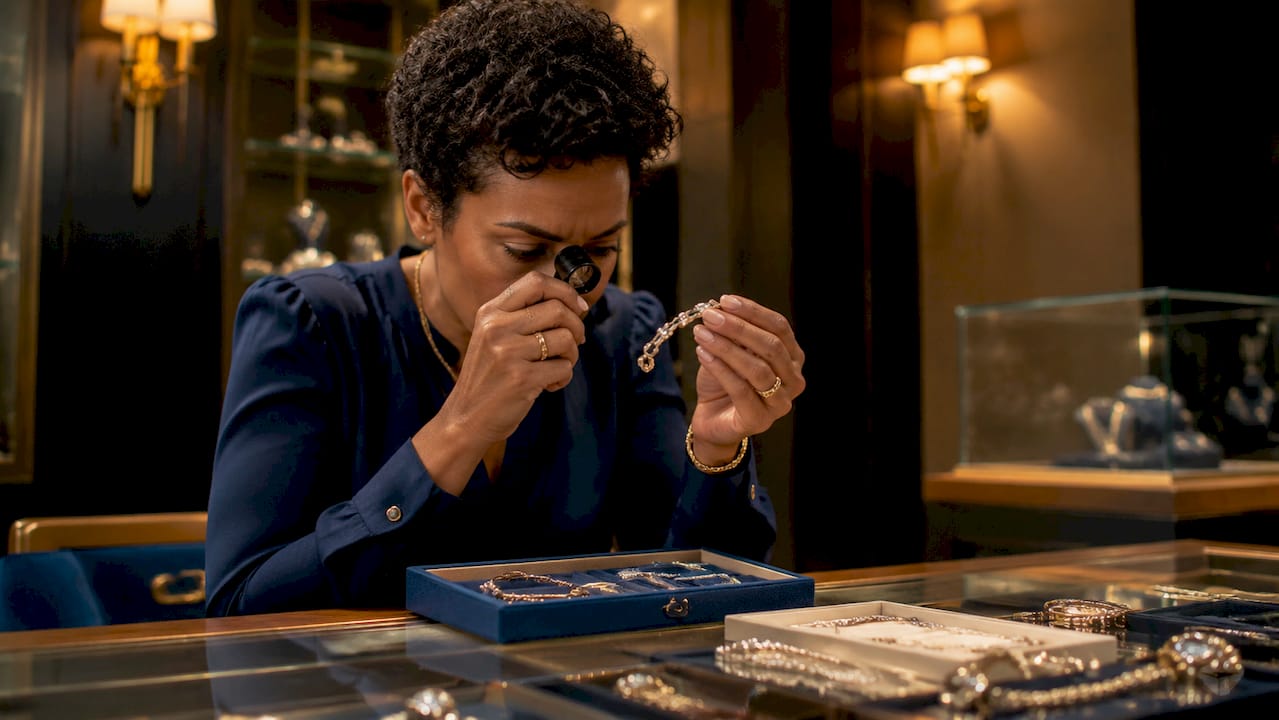
Precious metals like gold, silver, and platinum are the standard candidates for professional repair. These materials can withstand the heat and pressure of soldering, resizing, and refinishing without falling apart. Palladium also makes the list. These metals are workable, durable, and respond well to the tools a skilled goldsmith uses every day.
Here’s what typically lands on the repair bench:
- Rings (gold, silver, platinum): resizing, prong repair, stone resetting, polishing
- Necklaces and chains: soldering broken links, replacing clasps, untangling and straightening
- Bracelets: clasp replacement, link repair, resizing
- Earrings: post replacement, butterfly back repair, stone resetting
- Brooches and pendants: pin mechanism repair, structural rebuilding
Now, the awkward bit. Costume jewellery often cannot be repaired professionally because base metals and plated pieces cannot withstand high-heat soldering. A jeweller who tries to solder a brass-core piece risks destroying it entirely. If your piece is sentimental but made from non-precious materials, a skilled jeweller will tell you upfront rather than take your money and hand back a mess.
Pro Tip: Bring your piece in for a free assessment before assuming it’s beyond saving. Sometimes what looks like costume jewellery turns out to have a solid silver or gold core, which changes everything.
Antique and vintage pieces are a special case. They can absolutely be repaired, but they require a jeweller with experience handling older metalwork and settings. Blackwelljewellers regularly works with pre-owned and antique pieces, so this is well within their wheelhouse.
What are the most common types of jewellery repairs available in store?
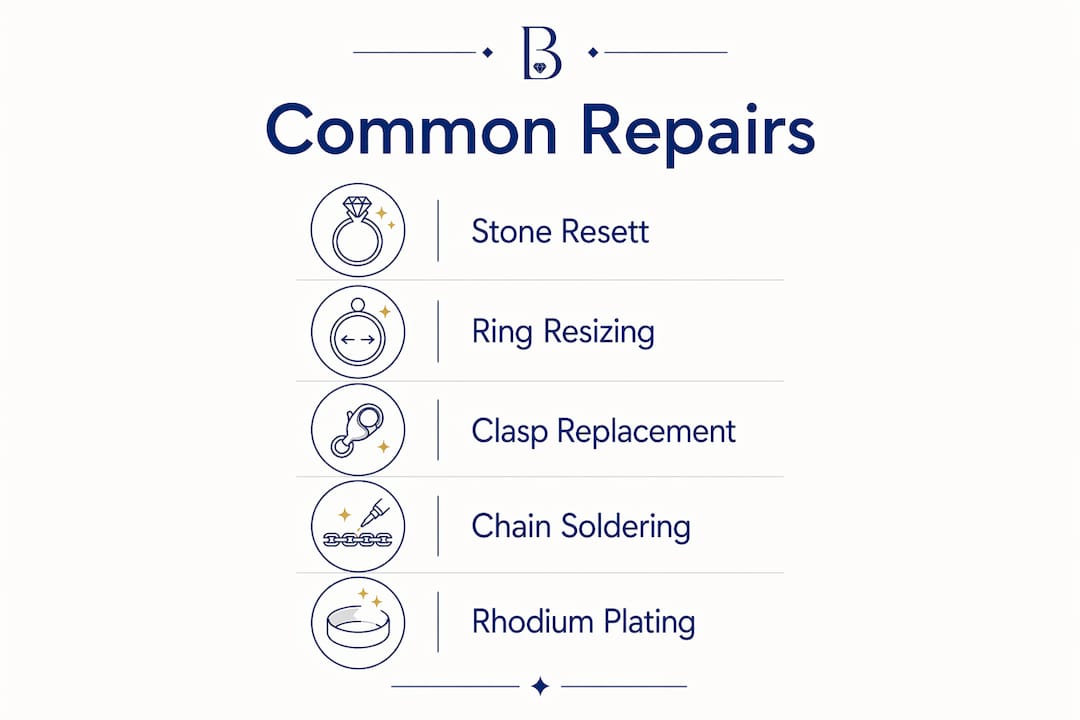
This is where it gets practical. Common jewellery repairs include ring resizing, stone replacement, prong rebuilding, chain soldering, polishing, and rhodium plating. Each one is a distinct skill, and knowing what each involves helps you have a better conversation with your jeweller.
Here are the main repair types you’ll encounter at a Gravesend jewellery store:
-
Ring resizing: The most requested repair by a mile. A jeweller cuts the band, adds or removes metal, and solders it back together. Going up or down by one or two sizes is straightforward. Larger adjustments on rings with stones set around the band take more care.
-
Stone replacement and prong repair: Stones fall out when prongs wear down or break. A jeweller re-tips or rebuilds the prongs and resets the stone. If the original stone is lost, a replacement of matching cut and quality can be sourced.
-
Chain and clasp repairs: Broken links are soldered and faulty clasps are replaced to restore full functionality. This is one of the faster repairs, often completed within a day or two.
-
Polishing and refinishing: Years of wear leave scratches and dullness on metal surfaces. A professional polish removes surface marks and restores the original finish, whether that’s a high shine or a brushed texture.
-
Rhodium plating: White gold naturally has a slightly yellow tint. Rhodium plating restores white gold to a bright finish and typically lasts 1–3 years depending on how often you wear the piece. It’s a routine maintenance service, not a one-off fix.
-
Engraving refurbishment: Worn or faded engravings can be re-cut to restore the original text or design. This is particularly popular with wedding bands and heirloom pieces.
Improper repair attempts cause scratches, stone damage, weak joints, and incorrect sizing. That’s why professional handling matters. A DIY fix with superglue or a craft tool can permanently damage a piece that a jeweller could have saved in twenty minutes.
Pro Tip: When dropping off a piece for repair, take a photo of it first. You’ll have a reference point for the original condition, which is useful if any questions arise about the finished result.
Most repairs take between 2 and 10 business days depending on complexity. Simple jobs like chain soldering or clasp replacement sit at the faster end. Stone replacement or full restoration takes longer. Always ask for an estimated timeframe when you drop off.
Does regular inspection actually save you money?
Yes. Genuinely. This isn’t a sales pitch dressed up as advice.
Annual professional inspections identify early signs of wear like loose stones and worn prongs before they become expensive problems. A prong that’s starting to thin costs a fraction of what a full stone replacement costs after that stone falls out on the pavement. The maths is simple.
“Waiting until jewellery breaks completely is the biggest mistake. Small warning signs should prompt timely repairs.” — Jewellery Repairs: Cost and Timing Insights
Common warning signs include wobbling stones, thin ring bands, broken clasps, and dull surfaces. If you notice any of these, don’t wait. A wobbling stone is a stone about to go missing. A thin band is a band about to snap.
Many jewellers, including Blackwelljewellers, offer free visual inspections. You bring the piece in, they check it over, and they tell you honestly what needs attention. There’s no obligation to proceed with repairs on the spot. That kind of transparency is exactly what you want from a local jeweller you’re going to trust with your grandmother’s engagement ring.
Pro Tip: Book an inspection after any period of heavy wear, such as after a holiday or a busy social season. Rings take a beating when you’re more active, and catching issues early keeps repair costs low.
Pre-emptive repairs after a quick inspection save costs and protect valuable stones. Think of it like a car service. You don’t wait for the engine to seize before you change the oil.
What advanced repair services are available, and when do you need them?
Some repairs go beyond the everyday. These are the jobs that require real patience, specialist tools, and a jeweller who genuinely knows what they’re doing.
Advanced repairs like filigree restoration and engraving refurbishment require specialised skills, particularly for antique or sentimental pieces. Filigree is the delicate wirework you see on Victorian and Edwardian jewellery. Repairing it without flattening or distorting the pattern takes a steady hand and experience with period metalwork.
Here’s a quick reference for advanced repair types, typical use cases, and what to expect:
| Repair Type | When You Need It | Typical Timeframe |
|---|---|---|
| Filigree restoration | Damaged or missing wirework on antique pieces | 1–3 weeks |
| Full structural rebuild | Severely bent or broken settings | 1–2 weeks |
| Engraving refurbishment | Worn or illegible inscriptions | 3–5 days |
| Hallmark restoration | Worn or unclear hallmarks on precious metal pieces | 3–7 days |
| Antique clasp replacement | Period-correct fittings for vintage pieces | 1–2 weeks |
In-house workshops with skilled goldsmiths can perform delicate repairs like filigree restoration and structural rebuilding. Not every high street shop has this capability. When you’re dealing with an antique or a piece of significant sentimental value, you want a jeweller with an actual workshop on site, not one who sends everything out to a third party.
For complex jobs, be prepared to leave the piece for longer. A jeweller who rushes a filigree repair or a full rebuild is not a jeweller you want touching your heirloom. Ask upfront about the process, who will be doing the work, and whether it’s completed in-house. These are reasonable questions and any reputable jeweller will answer them without hesitation.
Key takeaways
Most jewellery repairs in Gravesend are completed in-store for precious metal pieces, and catching problems early is always cheaper than waiting for something to break completely.
| Point | Details |
|---|---|
| Precious metals are repairable | Gold, silver, platinum, and palladium can all be professionally repaired in-store. |
| Costume jewellery has limits | Base metal and plated pieces often cannot withstand soldering and may be declined by professional jewellers. |
| Common fixes are quick | Ring resizing, chain soldering, and clasp repairs typically take 2–5 business days. |
| Annual inspections save money | Early detection of loose stones or worn prongs prevents costly full restorations later. |
| Advanced repairs need specialists | Filigree restoration and structural rebuilds require in-house workshops and experienced goldsmiths. |
Why i think most people get jewellery repairs wrong
Here’s my honest take, having spent years around jewellery and the people who care for it.
Most customers walk in with one of two problems. Either they’ve waited far too long (the stone is gone, the band has snapped, the clasp has been “temporarily” replaced with a safety pin for six months), or they’ve had a go at fixing it themselves and made things considerably worse. Both situations are avoidable.
The thing people underestimate is how much a good jeweller can tell you in five minutes for free. Walk in, show them the piece, ask what they see. You’ll leave knowing exactly what needs doing, what it’ll cost, and how long it’ll take. That’s genuinely useful information, and it costs you nothing but a short trip.
I’d also say this: don’t be embarrassed about the piece. Whether it’s a £30 silver ring or a platinum diamond solitaire worth thousands, a professional jeweller treats every repair with the same care. The sentimental value of a piece has nothing to do with its price tag, and any jeweller worth their salt understands that.
The one thing I’d push back on is the idea that local repairs are somehow inferior to sending a piece to a specialist. In my experience, a jeweller with an in-house workshop and 20 years of experience in Kent is exactly the specialist you need. You get to talk to the person doing the work, ask questions, and see the result before you leave. That’s not something a postal repair service can offer.
— James
Get your jewellery repaired at Blackwelljewellers in gravesend
Blackwelljewellers has been handling jewellery repairs across Kent for over 20 years, with a dedicated in-house workshop at the Gravesend store. Whether you need a quick ring resize, a stone reset, or a full restoration on a cherished antique piece, the team works on-site with the tools and expertise to do the job properly.

You can browse the full range of repair services available or pop into the Gravesend store for a free assessment. No obligation, no pressure. Just an honest look at what your piece needs. And if you’re in the market for pre-owned jewellery that’s already been inspected and restored to wearable condition, the second-hand jewellery collection is well worth a look.
FAQ
What jewellery can be repaired in a gravesend store?
Pieces made from gold, silver, platinum, and palladium are suitable for professional in-store repair. Costume jewellery made from base metals is often declined because it cannot withstand soldering.
How long do jewellery repairs take in store?
Most repairs take between 2 and 10 business days. Simple jobs like chain soldering or clasp replacement are faster; stone replacement and full restorations take longer.
Is rhodium plating available at local jewellers?
Yes. Rhodium plating is a standard service at most professional jewellery shops and restores white gold to a bright finish, typically lasting 1–3 years with regular wear.
How do i know if my jewellery needs a repair?
Watch for wobbling stones, thin or bent bands, broken clasps, and dull or scratched surfaces. These are signs that a repair is needed before the problem gets worse.
Does Blackwelljewellers offer free inspections?
Blackwelljewellers offers free visual assessments at its Gravesend store. You can bring in any piece for an honest evaluation with no obligation to proceed with repairs.