
Selling gold and silver jewellery locally in Kent can feel daunting when you’re unsure about fair pricing, transparency and trustworthy buyers. Many people hesitate because they’ve heard stories of undervaluation or aggressive tactics. This guide walks you through every step to sell your precious metals confidently, from preparing your items and understanding valuation methods to finding reputable family-run jewellers who use advanced testing technology. You’ll learn how to verify fair offers, avoid common pitfalls and even explore upcycling options that transform scrap into beautiful new pieces whilst retaining value.
Table of Contents
- What You Need Before Selling Gold And Silver Jewellery In Kent
- Step-By-Step Process To Sell Your Gold And Silver For Cash In Kent
- How To Verify A Fair Sale And Avoid Common Pitfalls
- Options For Upcycling And Reusing Your Gold And Silver Jewellery
- Find Trusted Family-Run Jewellers In Kent For Cash Gold And Silver Deals
- Frequently Asked Questions
Key takeaways
| Point | Details |
|---|---|
| XRF testing ensures accuracy | Non-destructive purity analysis performed visibly so you can watch and trust the results |
| Valid ID is mandatory | UK law requires photographic identification for all precious metal transactions to proceed legally |
| Multiple quotes maximise value | Comparing offers from different family jewellers and online platforms helps secure the best price |
| Same-day payment available | Reputable jewellers provide bank transfers immediately after sale acceptance with full receipts |
| Upcycling retains sentimental worth | Scrap gold can be remade into personalised jewellery by skilled craftsmen for lasting value |
What you need before selling gold and silver jewellery in Kent
Proper preparation transforms a potentially stressful transaction into a straightforward, confident experience. Before visiting any jeweller, gather essential documents and understand what affects your jewellery’s value. Valid photographic ID is required by law for precious metal sales in the UK, so bring your passport or driving licence in original form. Without this documentation, no reputable jeweller can proceed with your sale regardless of how valuable your items are.
Collect all gold and silver pieces you wish to sell, including broken chains, single earrings, damaged rings and tarnished items. Many people underestimate the value hiding in jewellery boxes, but scrap and damaged pieces hold worth based purely on metal content. Clean your items gently with warm soapy water and a soft cloth to remove surface dirt, allowing for more accurate assessment. Avoid harsh chemicals or abrasive materials that might damage delicate hallmarks or gemstone settings.
Understanding gold hallmarks and purity helps you anticipate valuation before your appointment. British hallmarks indicate purity levels such as 9ct, 18ct or 22ct, directly affecting price per gramme. Research current market prices for gold and silver to establish realistic expectations, but remember that local jewellers have overhead costs including rent, staff and equipment that affect their buying prices. They typically offer 70 to 85 percent of spot price depending on purity, quantity and market conditions.
Before your appointment, consider these preparation essentials:
- Separate items by metal type and colour for easier assessment
- Remove any sentimental pieces you might regret selling later
- Note approximate weights if you have kitchen scales at home
- Write down any questions about valuation methods or payment options
- Check online reviews for jewellers you’re considering visiting
With preparation complete, let’s delve into the step-by-step process to sell your gold and silver safely and profitably.
Step-by-step process to sell your gold and silver for cash in Kent
The selling process at reputable family-run jewellers follows a transparent, customer-focused structure designed to build trust at every stage. Understanding each step removes uncertainty and empowers you to make informed decisions without pressure. Here’s exactly what happens from the moment you walk through the door until cash reaches your account.
-
Book an in-store appointment at a trusted family jeweller in Kent, allowing sufficient time for thorough assessment without rushing. Walk-ins may be accommodated but appointments guarantee dedicated attention.
-
The jeweller examines each piece visually, checking for hallmarks, maker’s marks and overall condition. They’ll separate items by metal type and purity for systematic evaluation.
-
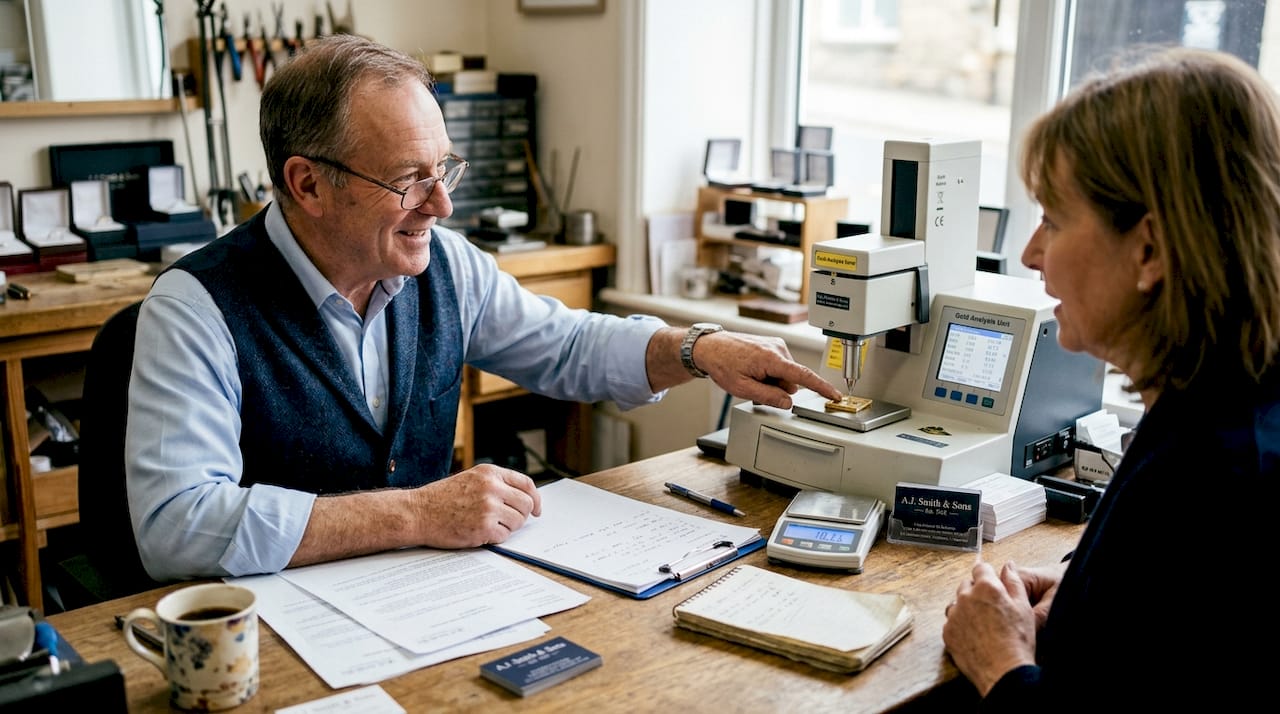
XRF technology allows non-destructive testing whilst customers watch for transparent purity measurement. This handheld device uses X-ray fluorescence to analyse metal composition without damaging your jewellery, providing accurate purity readings in seconds.
-
Items are weighed precisely using calibrated digital scales, with weights displayed clearly so you can verify measurements. Reputable jewellers weigh items in front of customers to maintain transparency.
-
The jeweller calculates your offer based on current market prices, metal purity and total weight. They’ll explain the calculation clearly, showing how they arrived at the final figure.
-
You receive a detailed quote with no obligation to proceed. Take time to consider the offer, ask questions or request clarification on any aspect of the valuation.
-
If you accept, the jeweller completes ID verification as required by UK law and issues a comprehensive receipt detailing items sold, weights, purities and payment amount.
-
Payment is processed via same-day bank transfer, providing immediate access to funds with full traceability. Some jewellers may offer cash for smaller amounts, but bank transfers are standard for security and record-keeping.
Pro Tip: Ask the jeweller to explain their gold valuation methods in detail before accepting any offer. Understanding how they calculate prices helps you recognise fair dealing and builds confidence in the transaction.
During your appointment, discuss alternative options such as upcycling or remaking your scrap gold into new jewellery. Many family jewellers offer bespoke design services that transform old pieces into contemporary styles whilst retaining the precious metal value. This option appeals to customers who want something wearable rather than immediate cash, and craftsmen can often credit the scrap value against the cost of creating new pieces.
After selling, verify your transaction and explore possible next steps to make the most of your sale.
How to verify a fair sale and avoid common pitfalls
Protecting yourself from undervaluation or dishonest practices requires knowledge of fair pricing indicators and red flags that signal problematic buyers. Even with reputable jewellers, comparing offers ensures you receive maximum value for your precious metals. Smart sellers take time to verify fairness through multiple checks and comparisons.
Request quotes from at least three different family-run jewellers or online platforms before committing to any sale. Price variations of 10 to 20 percent between buyers are common due to different overhead costs, business models and current inventory needs. Online buyers sometimes pay slightly more because they have lower premises costs, but local jewellers provide immediate payment and face-to-face service that many customers value highly. Local jewellers offer immediate service and personal trust but online platforms sometimes pay more, so comparing options is crucial for informed decisions.
Look for specific transparency indicators that distinguish trustworthy buyers from questionable operators. Reputable jewellers use XRF testing equipment and provide detailed receipts showing metal purity, weight and price calculations. They explain their valuation process clearly without rushing you or using high-pressure tactics. Be extremely cautious of buyers who refuse to test items in front of you, offer vague explanations about pricing or pressure you to sell immediately without allowing time to consider.
Pro Tip: Calculate the approximate value yourself before visiting jewellers by multiplying your item’s weight by its purity percentage, then by current spot price. Expect offers around 70 to 85 percent of this figure to account for business costs and profit margins.
Watch for these common pitfalls when selling gold and silver:
- Buyers who claim items are lower purity than hallmarks indicate without proper testing
- Offers made without weighing items or using uncalibrated scales
- Pressure to sell immediately with warnings that prices will drop soon
- Buyers who discourage you from getting second opinions
- Missing or incomplete receipts that don’t detail transaction specifics
- Cash-only transactions without proper documentation or ID verification
Verify buyer credentials by checking online reviews, asking about business history and confirming they follow UK regulations for precious metal transactions. Established family-run jewellers with physical premises and long trading histories typically offer more accountability than temporary buyers or pop-up gold buying events. Understanding scam avoidance tips protects you from common fraudulent practices that target uninformed sellers.
Consider this comparison when deciding between local and online buyers:
| Factor | Local Family Jewellers | Online Buyers |
|---|---|---|
| Payment speed | Same-day bank transfer or immediate cash | 1-3 days after receiving items |
| Personal service | Face-to-face consultation and advice | Remote communication only |
| Price offered | 70-80% of spot price typically | 75-85% of spot price typically |
| Trust and accountability | Physical premises and local reputation | Rely on reviews and guarantees |
| Convenience | Requires in-person visit | Post items with insured delivery |
Having confirmed a fair process, let’s briefly explore services to repurpose your gold and silver for continued enjoyment and value.
Options for upcycling and reusing your gold and silver jewellery
Selling isn’t your only option when dealing with unwanted or damaged precious metal jewellery. Upcycling transforms old pieces into contemporary designs whilst preserving the intrinsic metal value and often retaining sentimental connections. Family-run jewellers in Maidstone and London offer bespoke upcycling services to create new jewellery from scrap gold, providing an alternative that combines creativity with value retention.
Scrap gold and silver can be melted down and recast into virtually any design by skilled craftsmen. Broken chains become elegant pendants, mismatched earrings transform into unique rings, and outdated styles are reimagined as modern pieces you’ll actually wear. The process begins with consultation where you discuss design preferences, budget and timeline with an experienced jeweller. They’ll assess your scrap metal’s value and explain how it offsets the cost of creating new pieces, often providing significant savings compared to buying entirely new jewellery.
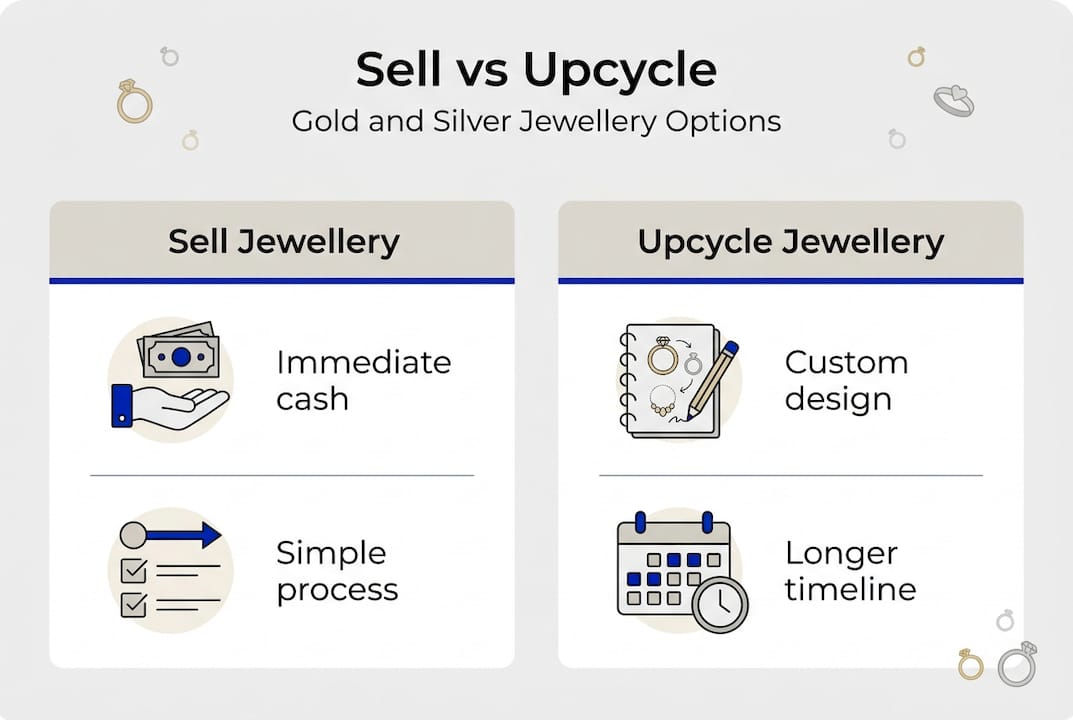
Upcycling offers several compelling advantages over outright selling. You retain the precious metal value whilst gaining a wearable piece that reflects current style preferences. Sentimental items with emotional connections can be transformed rather than lost forever, allowing you to honour memories in new forms. The environmental benefit is substantial, as upcycling reduces demand for newly mined gold and silver, supporting sustainable consumption patterns that minimise ecological impact.
Consider these popular upcycling options:
- Wedding rings remade from family heirlooms to incorporate heritage into new marriages
- Pendants created from broken chains or single earrings with added gemstones
- Signet rings cast from multiple small gold items combined
- Charm bracelets incorporating elements from various old pieces
- Contemporary statement rings designed from outdated cocktail jewellery
Compare the value proposition of selling versus upcycling:
| Aspect | Selling Outright | Upcycling |
|---|---|---|
| Immediate cash | Yes, same-day payment | No, investment in new piece |
| Metal value retained | Lost, exchanged for money | Fully retained in new jewellery |
| Sentimental connection | Severed completely | Preserved and transformed |
| Environmental impact | Neutral | Positive, reduces mining demand |
| Final cost | None, you receive payment | Craftsmanship fees minus scrap credit |
Many jewellers provide detailed quotes showing how your scrap gold’s value reduces the total cost of commissioned pieces. For example, if you have 20 grammes of 9ct gold worth approximately £200 at current rates, this amount is credited against the cost of creating a new ring. You pay only for additional gold needed, gemstones, design work and labour. The gold upcycling services offered by family jewellers combine traditional craftsmanship with modern design sensibilities for truly personalised results.
With these options understood, we’ll conclude with where to go for trusted, local family jewellers in Kent to sell or upcycle your gold and silver.
Find trusted family-run jewellers in Kent for cash gold and silver deals
When you’re ready to sell or transform your precious metals, choosing the right jeweller makes all the difference between a stressful transaction and a confident, rewarding experience. Blackwell Jewellers operates multiple showrooms across Kent including Maidstone, Gravesend and Bexleyheath, providing over 20 years of established, transparent service to local communities. Their expert valuations use XRF technology for accurate purity assessment, and same-day bank transfers with comprehensive receipts ensure complete transparency and legal compliance.
Beyond cash purchases, Blackwell specialises in gold upcycling options that transform your scrap into beautiful bespoke pieces crafted by skilled jewellers. Whether you need immediate cash or prefer to repurpose precious metals into contemporary designs, their personalised approach ensures you receive maximum value and expert guidance. Visit their website to explore services, view customer testimonials and book an appointment at your nearest Kent location. For comprehensive guidance on finding trusted cash 4 gold in Kent, their resources help you make informed decisions with confidence.
To address final questions you may have, here is a helpful FAQ section.
Frequently asked questions
What identification do I need to sell gold and silver jewellery?
Valid photographic ID is legally required for transactions of precious metals in the UK, so bring your passport or driving licence in original form. Photocopies or digital versions are not acceptable for compliance purposes. This legal requirement protects both buyers and sellers by creating traceable records that prevent illegal trading. Understanding gold hallmarks and purity also helps verify your items match the documentation provided during the sale process.
How quickly will I receive cash after selling my gold or silver?
Reputable jewellers provide same-day bank transfers after sale acceptance, typically processing payments within hours of completing the transaction. Bank transfers offer security and traceability that protect both parties, though some jewellers may provide immediate cash for smaller amounts. Always request a detailed receipt regardless of payment method, and verify funds have cleared before leaving the premises if receiving cash. Following selling gold tips ensures you maximise value whilst maintaining transaction security throughout the process.
Can I sell broken or damaged gold and silver jewellery?
Absolutely, scrap or broken gold and silver jewellery can be sold or upcycled into new pieces regardless of condition. Precious metal value depends entirely on purity and weight, not aesthetic appearance or functionality. Broken chains, single earrings, bent rings and tarnished items all contain recoverable gold or silver. Alternatively, consider gold upcycling services that transform damaged pieces into contemporary designs, preserving sentimental value whilst creating wearable jewellery you’ll actually enjoy.
How do jewellers determine the value of my gold and silver items?
Jewellers calculate value by multiplying metal weight by purity percentage, then by current market price per gramme. XRF testing establishes precise purity levels, whilst calibrated digital scales measure exact weights. The final offer typically ranges from 70 to 85 percent of spot price to account for business costs including refining, overhead and profit margins. Reputable jewellers explain calculations transparently and allow you to verify weights and purity readings during assessment, building confidence through visible processes rather than opaque valuations.