
A tennis necklace is a continuous line of individually set diamonds or gemstones, joined edge to edge with no dangling pendant, worn snug against the neckline. Traditionally set in white gold, platinum or yellow gold, it takes its name (and its no-nonsense, straight-line elegance) from the tennis court. It’s the sort of piece you can wear to the school run and a wedding without changing a thing.
TL;DR:
- The construction of a tennis necklace involves linked stones that fold and drape like fabric, with common styles including uniform and graduated designs.
- Its name originated from Chris Evert’s broken tennis bracelet incident, and the design evolved from the French rivière style with a sportier branding.
- Price varies heavily based on carat weight, cut, colour, clarity, and metal, with high-end pieces reaching significant sums at auction and pre-owned options offering better value.
- Secure clasps and proper stone settings are crucial, and regular professional inspection is recommended to ensure longevity and safety.
- Proper maintenance includes gentle cleaning, careful storage, and periodic professional checks, especially for vintage or high-value pieces.
Table of Contents
- What defines a tennis necklace? Construction and key features
- Why is it called a tennis necklace? The Chris Evert story
- What styles and variations exist?
- How should you wear a tennis necklace, and where should it sit?
- How much does a tennis necklace cost, and what drives the price?
- What should you check before buying a tennis necklace?
- How do you care for and maintain a tennis necklace?
- A note on authenticated pre-owned tennis necklaces
- Author perspective: why the tennis necklace endures
- How Blackwelljewellers can help with your next tennis necklace
- Sources
- FAQ
What defines a tennis necklace? Construction and key features
Strip away the marketing gloss and a tennis necklace is really an engineering exercise: dozens of individually set stones, linked together so the whole thing moves like a fabric rather than a rigid band. That flexibility is the entire point. It drapes rather than sits, which is exactly why it feels so different from a chain-and-pendant piece.
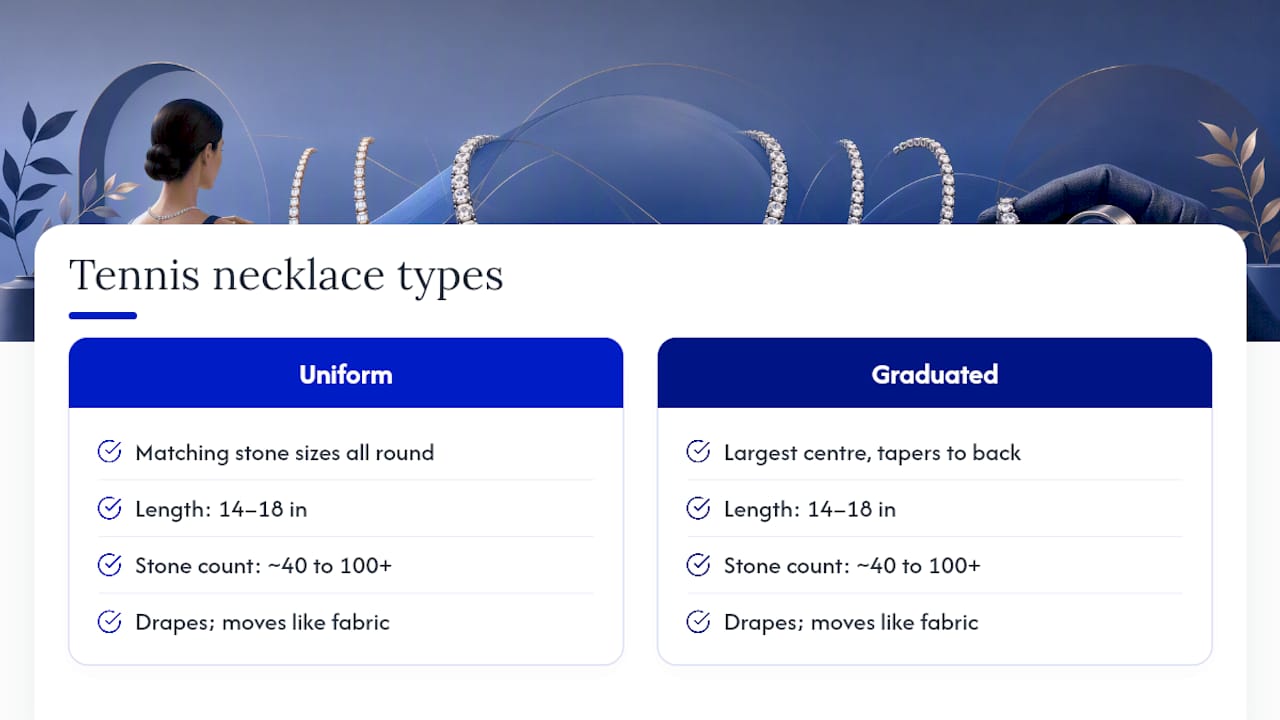
Two broad construction styles dominate. A uniform design uses stones of matching size all the way round; a graduated version, closer to the traditional rivière necklace, tapers from a larger centre stone down to smaller ones at the back. Most pieces run between 14 and 18 inches, with stone counts ranging from around 40 to well over 100 depending on size and cut.
Setting choice matters more than most buyers realise. Prong settings lift each stone to catch maximum light. Channel settings tuck them into a metal groove, which trims the sparkle a touch but drastically cuts the risk of snagging on jumpers, scarves, or a toddler’s fist.
Why is it called a tennis necklace? The Chris Evert story
The name has nothing to do with fashion houses and everything to do with a broken clasp on a tennis court. During a televised match in the late 1970s, Chris Evert’s diamond line bracelet came loose and fell to the ground mid-play. She reportedly asked the umpire to pause so she could retrieve it before continuing, and the moment stuck in the public imagination hard enough that the continuous-diamond-line bracelet was rebranded the “tennis bracelet” almost overnight.
The necklace inherited the name once jewellers scaled the bracelet’s design up to sit around the throat. Before Evert, this same construction had a much older, quieter name: the rivière, French for “river,” describing the unbroken flow of stones. Tennis necklace is really just the rivière with a sportier PR story attached.
What styles and variations exist?
Not every tennis necklace looks the same, and the differences are more than cosmetic.
- Straight-line design: uniform stones from clasp to clasp, contemporary in feel and easy to layer with other chains.
- Graduated rivière: a statement centre stone tapering outward, which reads as more formal and portrait-ready than a straight line.
- Round brilliant cut: maximises sparkle and light return, the classic choice for a reason.
- Emerald or baguette cut: creates a cleaner, more linear sparkle, closer to Art Deco than red-carpet glitz.
- Prong setting: shows off the most fire and brilliance, at the cost of slightly higher snag risk.
- Channel setting: smoother against skin and clothing, with less sparkle but far less risk of catching on fabric.
Metal choice shifts the whole personality of the piece. White gold and platinum read as sharp and modern; yellow and rose gold bring warmth and feel closer to vintage rivière territory. Neither is objectively better. It depends on whether you want the piece to disappear quietly into an outfit or announce itself.
How should you wear a tennis necklace, and where should it sit?
Length dictates almost everything about how a tennis necklace behaves on the body.
- A 14 to 16 inch length sits as a choker, resting above or right at the collarbone, currently the most fashion-forward option and a mainstay of the “tennis core” trend.
- A 16 to 18 inch length is the most versatile, sitting just at or slightly below the collarbone for both office and evening wear.
- Layering works best when you mix lengths and textures. A tennis necklace paired with a fine pendant chain or a strand of pearls looks curated rather than accidental.
- If you’re active during the day, check the clasp before you leave the house. A secure box clasp with a safety catch is worth more than any extra sparkle.
Necklines matter too. A tennis necklace sits beautifully against a crew neck or scoop but can get lost under a high polo neck, so save those for a simpler chain.
How much does a tennis necklace cost, and what drives the price?
Price swings enormously, and the reasons are the same four factors that drive every diamond purchase: carat weight, cut, colour and clarity, alongside the metal used for the setting. A modest gemstone or lab-grown diamond piece can sit at an accessible price point, while a fine natural-diamond necklace with high colour and clarity grading climbs quickly from there.
Total carat weight across dozens of stones adds up fast, which is why two necklaces that look similar at a glance can carry very different price tags once you compare grading reports. Colour and clarity grading matter just as much here as they do on a single solitaire, arguably more, because dozens of stones magnify any inconsistency.
Certification and documented provenance add real value, particularly on pre-owned pieces. At the very top of the market, fine-jewellery tennis necklaces can reach five and six-figure sums at auction, a reminder that this humble sporting name now covers everything from high-street glamour to serious high jewellery.
What should you check before buying a tennis necklace?
A tennis necklace lives or dies on its clasp and its settings, not just its sparkle. Before you commit, work through this list properly rather than trusting the display lighting.
- Test the clasp and safety catch under gentle tension, not just a quick click.
- Ask how each stone is secured, and whether it is prong or channel set.
- Request diamond grading reports or gemstone certificates, and check for a proper UK hallmark on the metal.
- Ask what the returns policy covers and whether servicing or repairs are included.
Pro Tip: Run your fingertip slowly along the entire underside of the strand. Any stone that wobbles, however slightly, needs attention before you buy, not after.
Jewellers generally recommend professional inspection of the setting at the point of sale, especially on anything second-hand or vintage.
How do you care for and maintain a tennis necklace?
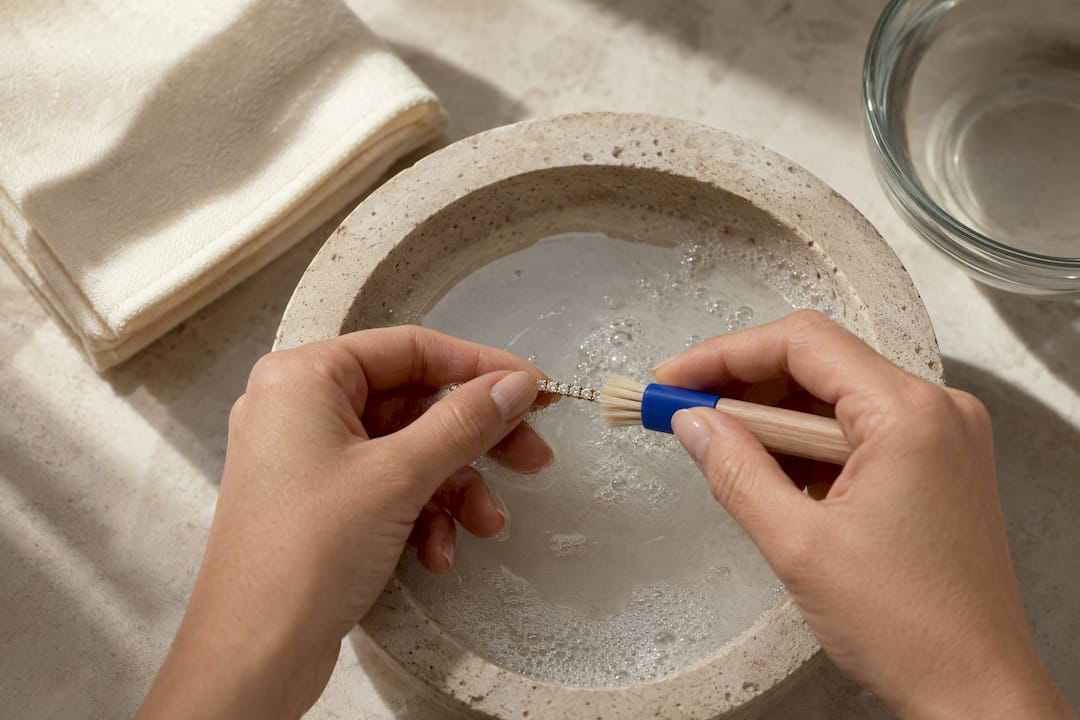
Clean it gently with warm water, a drop of mild soap, and a soft brush, avoiding anything abrasive that could scratch the metal or loosen a setting. Save ultrasonic cleaning for a professional, particularly on older or vintage pieces.
Store it flat, ideally in its own fabric-lined box, so it can’t tangle with other chains or scratch against harder gemstones. Have the clasp and settings checked by a jeweller every year or two, and get anything genuinely valuable properly valued for insurance, because “I think it’s worth roughly…” is not what an insurer wants to hear.
A note on authenticated pre-owned tennis necklaces
Buying pre-owned only works if someone has actually checked the piece properly first. At Blackwelljewellers, every second-hand item goes through inspection, hallmark verification, and restoration where needed before it reaches a customer, which matters enormously on a piece built from dozens of individual settings that all need to hold. Testing the clasp under gentle tension and examining each link for wear catches problems a quick glance never will.
Buying authenticated pre-owned also means better value for the same carat weight, backed by a documented condition history rather than a hopeful guess. Ask for a condition report, and ask what a repair or a bespoke reset might involve if you fall for a design that needs a little work.
Author perspective: why the tennis necklace endures
Most jewellery trends fade because they only work for one outfit. The tennis necklace survives because it does the opposite: no pendant to clash, no silhouette to date. Whether it’s authenticated pre-owned or made to your own specification, that adaptability is the whole appeal.
— James
How Blackwelljewellers can help with your next tennis necklace
If you’d rather not gamble on an unverified clasp or a vague “diamond-look” listing, You can buy with the provenance and condition history spelled out upfront, backed by a jeweller with experience trading from stores in Kent and online. Every piece in the second-hand jewellery collection is inspected, hallmarked, and restored in-house before it goes on sale, so the checklist above is already done for you.

Prefer something built to your own design? The bespoke jewellery service can create a tennis necklace to your exact length, stone choice, and metal preference, and the ethical diamonds collection gives you a responsibly sourced starting point for either route. If you already own one and the clasp feels loose or a setting needs attention, the jewellery repairs team can assess and restore it. Visit one of the Kent stores or enquire online to get a condition report and a quote.
Sources
For deeper detail on grading, provenance, and market pricing, consult the GIA 4Cs blog on the Chris Evert story, and Sotheby’s guide on pricing and buying at auction level.
- What Is a Tennis Necklace? The Complete Guide | Stienhardt
- How the tennis bracelet got its name | GIA 4Cs blog
- How to choose the perfect tennis necklace | Sotheby’s
- Tennis necklace guide | Natural Diamonds
FAQ
Why do they call it a tennis necklace?
The name traces back to Chris Evert’s diamond bracelet coming loose during a televised match in the late 1970s, which led the continuous diamond-line style to be nicknamed “tennis”. The necklace version simply borrowed the bracelet’s name once jewellers scaled the design up.
How much does a real tennis necklace cost?
Price depends on total carat weight, cut, colour, clarity and metal, so it ranges from modest gemstone pieces to fine-diamond necklaces reaching five and six figures at auction. Blackwelljewellers’ authenticated pre-owned pieces offer a way to access higher carat weight for a given budget, with current prices available on the site.
Can you wear a tennis necklace all the time?
Yes, provided the clasp and safety catch are secure and you check them periodically. It’s durable enough for daily wear, though jewellers recommend removing it before swimming, exercise, or activities where it could catch on something.
Where should a tennis necklace sit?
Most tennis necklaces sit at or just below the collarbone, with lengths of 16 to 18 inches being the most versatile for everyday wear. Shorter 14 to 16 inch choker lengths sit higher on the neck and suit the current tennis core styling trend.