
Many UK buyers assume conflict-free labels guarantee ethical sourcing, yet this misconception leads to purchases that may still involve environmental harm or labour exploitation. True ethical diamonds require transparent supply chains, rigorous certifications, and environmental responsibility beyond basic conflict-free status. This guide clarifies definitions, certifications, and practical verification steps to help you purchase authentic ethical diamonds confidently in the UK.
Table of Contents
- Understanding Ethical Diamonds: Definition And Key Principles
- Certifications And Standards: How Ethical Diamonds Are Verified
- Environmental And Social Impacts Of Diamond Mining
- Common Misconceptions About Ethical Diamonds
- Practical Framework For Evaluating And Purchasing Ethical Diamonds
- UK Context: Regulations And Trusted Sources For Ethical Diamond Purchases
- Discover Ethical Diamonds At Blackwell Jewellers
- Frequently Asked Questions
Key takeaways
| Point | Details |
|---|---|
| Definition | Ethical diamonds ensure conflict-free origins, transparent supply chains, and environmental responsibility. |
| Certification | Kimberley Process provides baseline verification, whilst Responsible Jewellery Council covers broader ethical standards. |
| Environmental impact | Mining practices significantly affect water use and land, which ethical sourcing aims to minimise. |
| Lab-grown differences | Lab-grown diamonds avoid mining impacts but differ ethically and commercially from natural ethical diamonds. |
| UK legal protections | Consumer Rights Act 2015 mandates provenance disclosure, enabling pre-purchase verification. |
Understanding ethical diamonds: definition and key principles
Ethical diamonds are those mined and traded without financing conflict or human rights abuses, with transparent supply chains verified by independent certification. The term encompasses more than conflict-free status. It includes respect for worker rights, community welfare, and environmental stewardship throughout extraction, cutting, and retail.
Supply chain transparency forms the foundation of ethical claims. Without documented traceability from mine to market, claims remain unverifiable. The Kimberley Process Certification Scheme covers over 99% of global diamond trade, preventing conflict diamonds from entering legitimate markets. However, this certification addresses only conflict financing, not broader ethical concerns.
Ethical diamonds prioritise environmental responsibility alongside human rights. Mining operations must demonstrate efforts to minimise ecological damage, reduce water consumption, and rehabilitate mined land. These principles distinguish truly ethical diamonds from those meeting only minimum conflict-free requirements.
Key ethical principles include:
- Documented origin from mines adhering to labour and environmental standards
- Independent third-party certification verifying conflict-free status
- Transparent supply chain with traceable custody records
- Commitment to environmental restoration and community investment
- Regular audits ensuring ongoing compliance with ethical standards
Pro Tip: Always request written documentation tracing your diamond’s journey from mine to retailer, not just conflict-free certification.
Certifications and standards: how ethical diamonds are verified
Certification schemes provide the infrastructure for verifying ethical diamond claims. The Kimberley Process confirms conflict-free status by tracking rough diamond exports and imports between participating countries. However, critics note its narrow scope excludes labour conditions, environmental practices, and human rights beyond conflict zones.
The Responsible Jewellery Council certification includes social, environmental, and ethical standards beyond conflict-free requirements, covering over 90% of the jewellery supply chain. RJC standards address business ethics, labour rights, environmental impact, and product disclosure. Members undergo regular audits to maintain certification, providing consumers with broader ethical assurances.
De Beers integrates stringent ethical standards verified independently across their supply chain. Their Best Practice Principles encompass environmental stewardship, community development, and employee welfare. Such corporate programmes demonstrate how leading producers exceed baseline certifications.
Independent third-party audits validate certification claims and uncover gaps in compliance. These audits assess mining operations, cutting facilities, and retail practices against published standards. Retailers committed to transparency willingly share audit results with consumers.
| Certification | Scope | Key Criteria |
|---|---|---|
| Kimberley Process | Conflict-free verification | Prevents diamonds from financing armed conflict |
| Responsible Jewellery Council | Comprehensive ethical standards | Labour rights, environmental impact, business ethics, transparency |
| De Beers Best Practice Principles | Corporate ethical programme | Community investment, environmental restoration, worker welfare |
Pro Tip: Demand retailers provide multiple certification endorsements, not just Kimberley Process compliance, to ensure comprehensive ethical coverage.
Environmental and social impacts of diamond mining
Diamond mining carries substantial environmental consequences. Operations require approximately 480 litres of water per carat of mined diamond, straining water resources in arid mining regions. Open-pit mining disrupts ecosystems, displaces wildlife, and leaves large land scars requiring decades for rehabilitation.
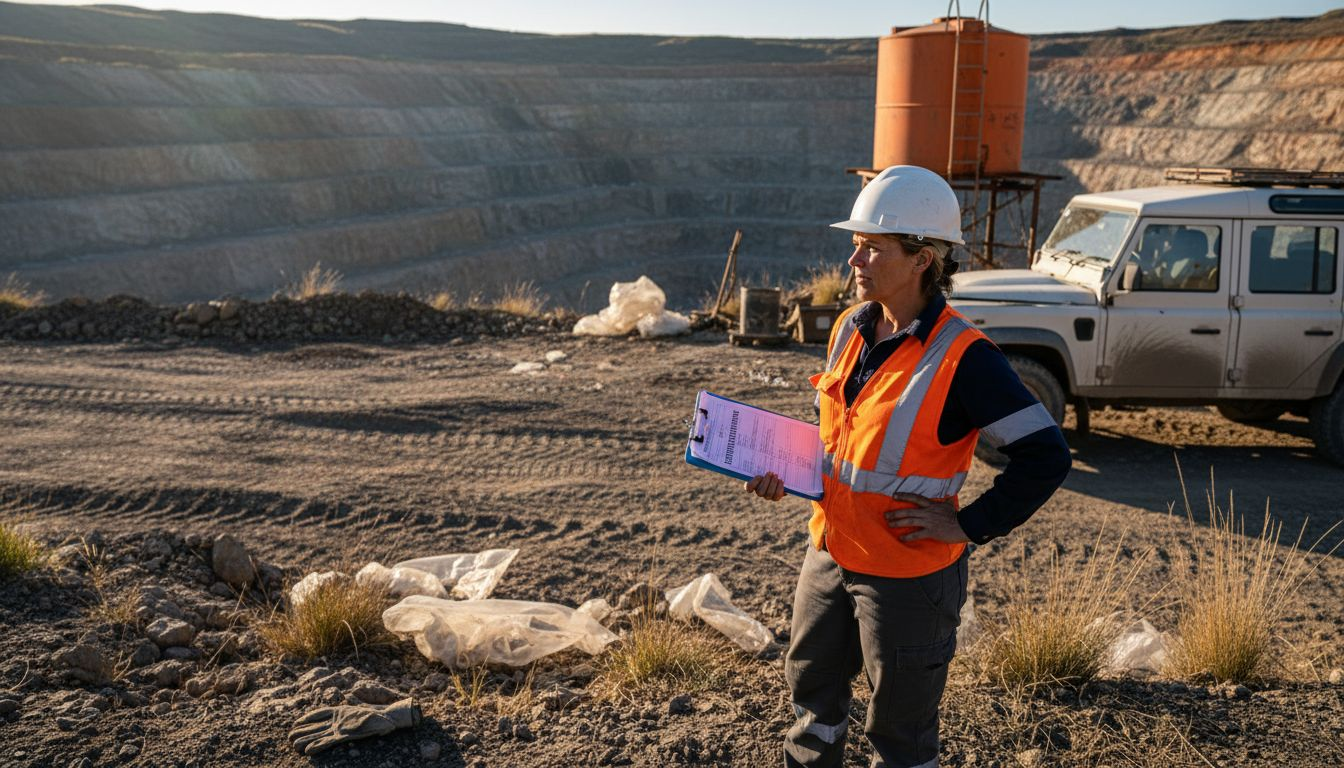
Ethical diamonds seek to minimise these impacts through responsible mining practices. Leading operations implement water recycling systems, reducing freshwater consumption by up to 70%. Land rehabilitation programmes restore mined areas to productive ecosystems, supporting biodiversity recovery and community use.
Worker rights and community welfare represent critical social dimensions. Mining regions often experience labour exploitation, inadequate safety protections, and insufficient wages. Ethical diamond operations guarantee fair wages, safe working conditions, and community investment programmes funding education, healthcare, and infrastructure.
“Responsible mining transforms extraction from exploitation to partnership, ensuring communities benefit economically whilst protecting environmental heritage for future generations.”
Key environmental and social challenges include:
- High water consumption threatening local water security
- Land degradation requiring extensive rehabilitation efforts
- Ecosystem disruption affecting biodiversity and agriculture
- Worker safety risks from mining accidents and health hazards
- Community displacement without adequate compensation or support
Ethical sourcing addresses these challenges through transparent monitoring, third-party audits, and long-term community engagement. Buyers supporting ethical diamonds incentivise industry-wide improvements in environmental and social practices.
Common misconceptions about ethical diamonds
Conflict-free status does not automatically mean fully ethical. The Kimberley Process addresses only conflict financing, ignoring labour conditions, environmental damage, and corporate accountability. A diamond can be conflict-free yet mined using exploitative labour or destructive environmental practices.
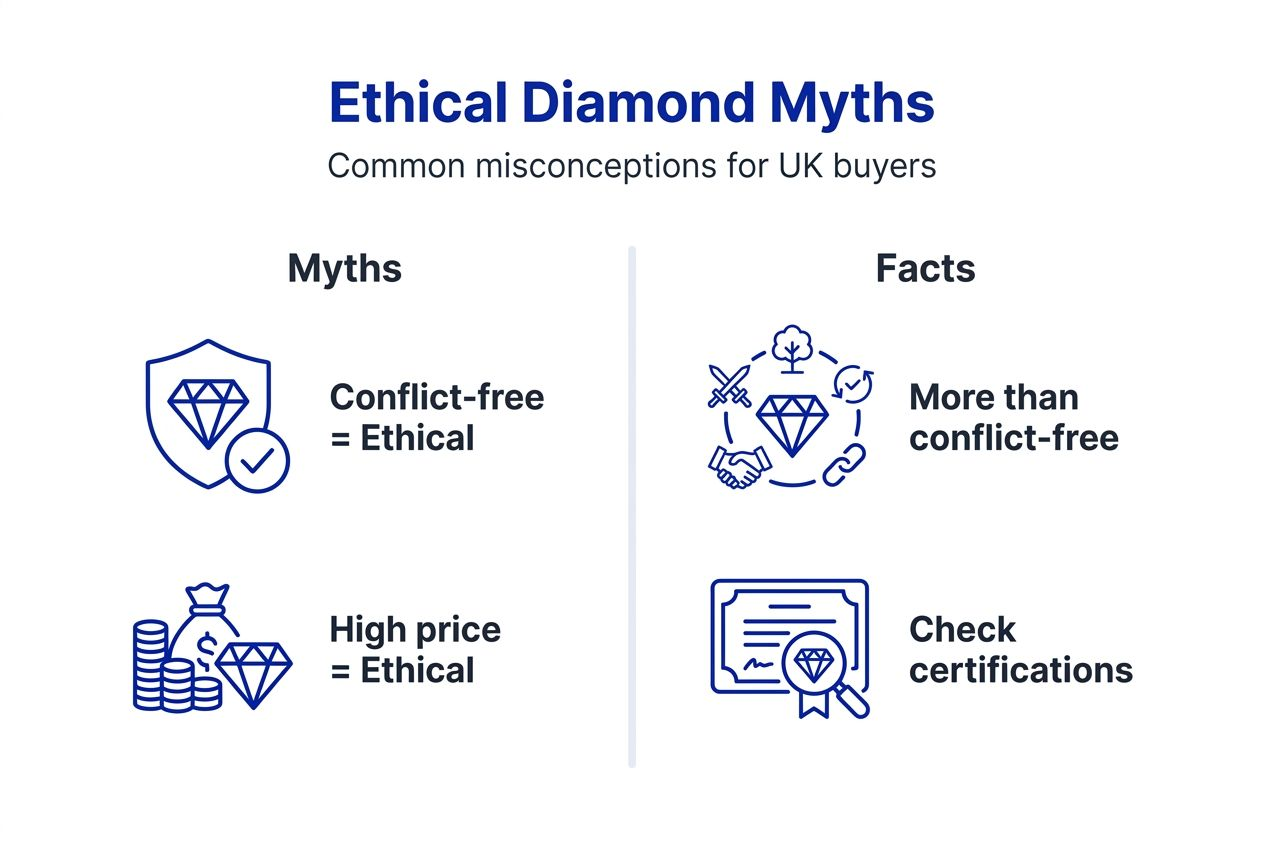
Price premiums alone do not guarantee ethical sourcing. Some retailers inflate prices without delivering genuine ethical improvements. Always verify specific certifications and supply chain documentation rather than assuming higher prices reflect ethical practices.
Lab-grown diamonds avoid mining impacts but differ ethically and commercially from natural ethical diamonds. Lab production eliminates extraction-related environmental and social issues. However, energy consumption during growth, particularly from non-renewable sources, introduces different ethical considerations. Resale value typically remains lower for lab-grown stones compared to natural ethical diamonds.
| Factor | Natural Ethical Diamonds | Lab-Grown Diamonds |
|---|---|---|
| Mining impact | Managed through responsible practices | Eliminated |
| Energy use | Lower per carat | High during growth process |
| Supply chain transparency | Documented from mine to market | Manufacturing origin verified |
| Resale value | Holds value over time | Typically depreciates faster |
| Ethical focus | Environmental and social responsibility | Energy sourcing and manufacturing ethics |
Pro Tip: Evaluate lab-grown diamonds and natural ethical diamonds separately, understanding their distinct ethical profiles and commercial characteristics.
Common pitfalls include:
- Assuming conflict-free equals comprehensive ethical sourcing
- Relying solely on price as an ethical indicator
- Overlooking certification details and audit reports
- Confusing lab-grown with natural ethical diamonds
- Accepting vague supplier claims without documentation
Understanding these misconceptions empowers you to ask targeted questions and demand substantive proof of ethical claims.
Practical framework for evaluating and purchasing ethical diamonds
Verifying ethical claims requires a systematic approach. Follow this framework to assess diamonds confidently:
- Request written certification documentation, including Kimberley Process and Responsible Jewellery Council endorsements.
- Inquire about supply chain traceability, asking for documented custody records from mine to retail.
- Examine independent third-party audit reports verifying ethical compliance beyond baseline certifications.
- Question environmental and social impact practices, including water use, land rehabilitation, and community investment.
- Verify retailer reputation through consumer reviews, industry memberships, and regulatory compliance history.
- Compare multiple suppliers to assess transparency levels and willingness to provide detailed ethical information.
Key questions to pose to sellers include:
- Which specific mines supplied this diamond, and what ethical standards do they follow?
- Can you provide third-party audit reports confirming environmental and labour practices?
- What community investment programmes does the mining operation support?
- How does your supply chain ensure ongoing ethical compliance?
- Will you provide written documentation of all certifications and traceability records?
Common pitfalls include assuming conflict-free automatically means fully ethical, over-relying on price as an indicator, and accepting vague supplier assurances without documentation. Demand specifics, not generalities.
Pro Tip: Prioritise retailers demonstrating transparency by proactively offering detailed provenance information and multiple certification endorsements without prompting.
UK context: regulations and trusted sources for ethical diamond purchases
UK legislation requires jewellers to disclose origin and certification of diamonds, enabling consumer verification pre-purchase. The Consumer Rights Act 2015 mandates clear provenance information, protecting buyers from misleading claims. Retailers failing to provide accurate disclosure face legal consequences and reputational damage.
Reputable UK jewellers adhere to ethical sourcing standards and support industry transparency initiatives. Membership in organisations like the Responsible Jewellery Council signals commitment to comprehensive ethical practices. Physical stores with established local reputations offer additional accountability compared to anonymous online sellers.
Blackwell Jewellers meets high ethical and legal standards through transparent provenance disclosure and authenticated collections. With over 20 years of established trading across multiple Kent locations and a national online platform, Blackwell combines in-house expertise with rigorous inspection protocols. Every diamond undergoes authentication and certification verification before sale.
Recommendations for identifying trustworthy retailers:
- Verify membership in recognised industry organisations like RJC
- Check consumer reviews and trading history for reputation indicators
- Confirm compliance with UK Consumer Rights Act disclosure requirements
- Assess willingness to provide detailed documentation and answer specific questions
- Prioritise established businesses with physical locations offering real-world accountability
UK buyers benefit from legal protections and a mature retail market where ethical standards increasingly influence purchasing decisions. Leverage these advantages by demanding transparency and supporting retailers demonstrating genuine commitment to ethical sourcing.
Discover ethical diamonds at Blackwell Jewellers
Navigating ethical diamond purchases requires trusted partners committed to transparency and quality. Blackwell Jewellers offers ethically sourced diamonds with documented provenance, meeting UK legal standards and exceeding baseline certification requirements. Our family-run business prioritises customer trust through in-house expertise, rigorous authentication, and transparent communication.
Explore our ethical diamond collection featuring pieces with verified supply chain documentation and comprehensive certification. Whether you seek engagement rings, anniversary gifts, or investment pieces, our experts provide personalised guidance matching your values with exceptional quality. Visit our Kent showrooms or browse online to discover diamonds reflecting your commitment to responsible purchasing. Contact our team for detailed provenance information and certification verification on any piece.
Frequently asked questions
What is an ethical diamond?
An ethical diamond is mined and traded without financing conflict, respecting human rights, and minimising environmental impact through transparent, certified supply chains. It exceeds conflict-free status by addressing labour conditions, community welfare, and ecological responsibility. Certification from schemes like Responsible Jewellery Council verifies comprehensive ethical compliance beyond baseline Kimberley Process requirements.
How can I verify a diamond’s ethical claims?
Request written certification documentation, including Kimberley Process and Responsible Jewellery Council endorsements, plus documented supply chain traceability from mine to retail. Examine independent third-party audit reports and question specific environmental and social practices. Reputable retailers willingly provide detailed provenance information and answer targeted questions about mining operations and community investment.
Are lab-grown diamonds more ethical than natural diamonds?
Lab-grown diamonds eliminate mining-related environmental and social impacts but introduce different considerations around energy consumption during production. Natural ethical diamonds focus on responsible mining practices, whilst lab-grown stones depend on energy sourcing ethics. Evaluate each option based on your specific ethical priorities and commercial expectations, as they represent distinct ethical profiles.
What UK laws protect ethical diamond buyers?
The Consumer Rights Act 2015 mandates jewellers disclose diamond origin and certification, enabling pre-purchase verification. Retailers must provide accurate provenance information or face legal consequences. This legislation empowers UK buyers to demand transparency and hold sellers accountable for ethical claims, creating a regulatory framework supporting informed purchasing decisions.
Does conflict-free mean the same as ethical?
No, conflict-free addresses only whether diamonds finance armed conflict, verified through Kimberley Process certification. Ethical encompasses broader concerns including labour rights, environmental impact, community welfare, and corporate accountability. A diamond can be conflict-free yet mined using exploitative labour or destructive practices, making comprehensive certification essential for truly ethical purchases.
Recommended
- The 4 Cs of Diamonds: The Complete 2025 Guide for UK Buyers – blackwellonline
- Lab-Grown vs Mined: Which Diamond Gives Better Value? – blackwellonline
- The Difference Between Lab-Grown and Natural Diamonds – blackwellonline
- Which Should You Choose? Lab-Grown vs Natural in 2025 – blackwellonline
- Organic Cotton Clothing Guide for Sustainable Fashion Choices – River tot