
Many assume fine jewellery is only about gold and diamonds. Sterling silver with hallmark authentication, ethical sourcing, and fully custom bespoke designs are equally important in the UK market. Understanding what defines fine jewellery helps you make informed choices about authenticity, sustainability, and personal value. This guide clarifies the scope of fine jewellery, ethical diamond sourcing, bespoke craftsmanship, and how to confidently choose quality pieces for your collection.
Table of Contents
- Understanding Fine Jewellery: Definition And Key Characteristics
- Ethical Sourcing And Responsible Diamond Choices
- The Art Of Bespoke Jewellery: Craftsmanship And Personalisation
- Pre-Owned Fine Jewellery: Quality, Authentication And Value
- Common Misconceptions About Fine Jewellery
- How To Make Informed Decisions When Buying Fine Jewellery
- Explore Our Fine Jewellery Collection
- Frequently Asked Questions About Fine Jewellery
Key takeaways
| Point | Details |
|---|---|
| Fine jewellery materials | Includes 9K, 14K, 18K gold and sterling silver (.925), all requiring hallmark authentication under UK law. |
| Ethical sourcing standards | Conflict-free diamonds verified through the Kimberley Process, lab-grown alternatives, and recycled metals ensure responsible buying. |
| Bespoke design process | Fully custom-designed pieces created through personal collaboration, offering unique stories and superior hand-crafted durability. |
| Pre-owned jewellery value | Authenticated and restored pieces provide cost savings, sustainability, and verified provenance with long-term value retention. |
| Informed buying checklist | Verify hallmarks, check ethical certifications, assess restoration quality, and confirm provenance documentation before purchase. |
Understanding fine jewellery: definition and key characteristics
Fine jewellery isn’t defined by price alone. It’s about precious metals meeting UK hallmarking standards. Sterling silver marked .925 with natural gemstones qualifies just as much as gold pieces. The legal definition centres on material purity and authentication.
Precious metals include 9K, 14K, and 18K gold, sterling silver (.925), platinum, and palladium. Each requires a hallmark stamp certifying purity under UK law. These marks prove authenticity and protect buyers from counterfeit materials. Without hallmarks, a piece cannot legally be sold as fine jewellery in the UK.
Fine jewellery differs fundamentally from fashion and costume pieces. Fashion jewellery uses base metals plated with gold or silver, wearing away over time. Costume jewellery incorporates non-precious materials like brass, glass, or plastic. Fine jewellery maintains its material integrity and value because precious metals don’t tarnish or degrade.
Common UK hallmarks to recognise include:
- Lion passant (sterling silver .925 standard)
- Crown or orb (gold purity marks for 9K, 14K, 18K)
- Assay office marks (Birmingham anchor, London leopard, Edinburgh castle)
- Date letter (year of hallmarking)
- Maker’s mark (manufacturer or jeweller identification)
Inspecting hallmarks before buying protects your investment. Use a jeweller’s loupe to examine stamps clearly. Genuine hallmarks appear crisp and precisely stamped, never blurred or hand-engraved. Understanding jewellery hallmarks in the UK empowers you to verify authenticity instantly.
Hallmark certification isn’t optional marketing. It’s a legal requirement ensuring transparency and quality across the UK jewellery market. When you buy hallmarked pieces, you’re protected by centuries of regulatory standards designed to prevent fraud and guarantee material value.
Ethical sourcing and responsible diamond choices
Ethical considerations shape modern fine jewellery purchases. Ethical diamonds in the UK are identified through strict traceability processes such as the Kimberley Process, ensuring they are conflict-free, while lab-grown diamonds offer a sustainable alternative with lower environmental impact. Buyers increasingly demand transparency about where materials originate and how they’re extracted.
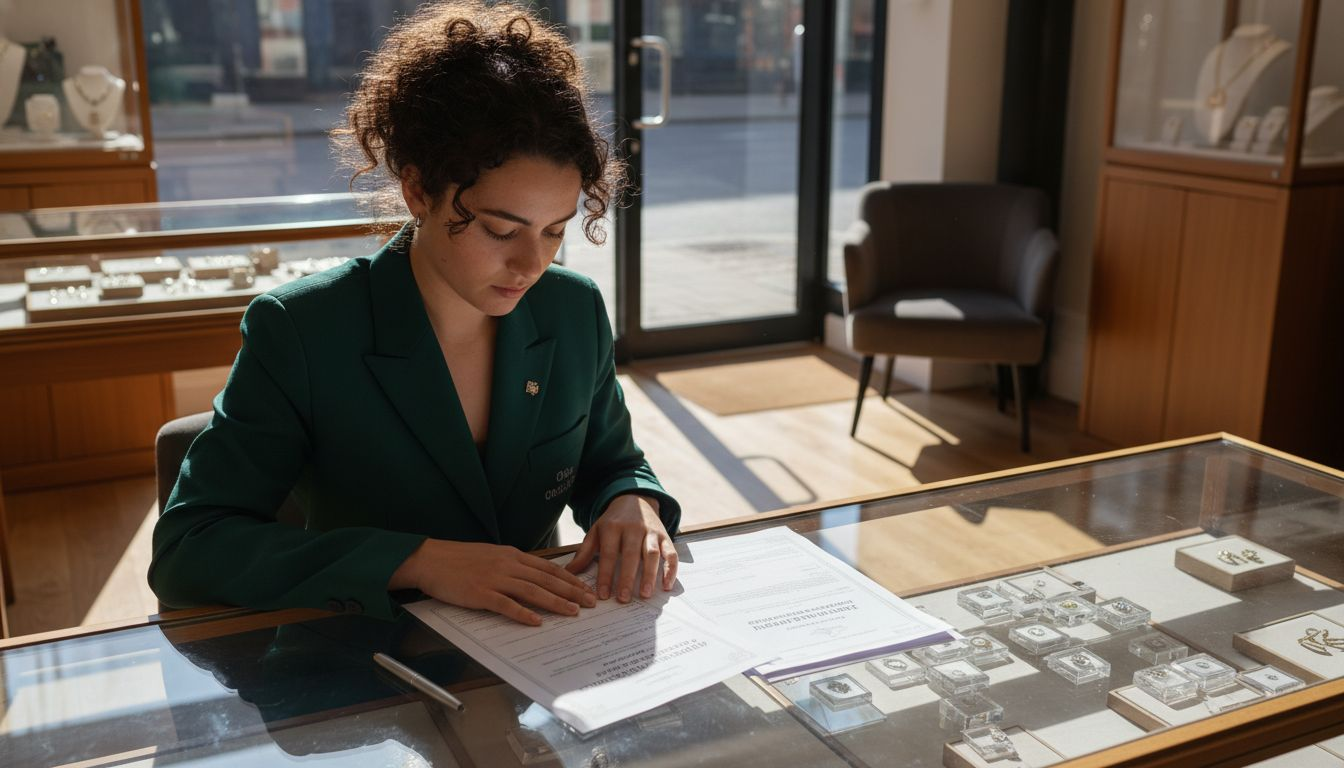
The Kimberley Process Certification Scheme prevents conflict diamonds from entering global markets. Established in 2003, it requires participating countries to certify rough diamond shipments as conflict-free. Whilst not perfect, it provides baseline traceability for natural diamonds. UK retailers must demonstrate Kimberley Process compliance when selling natural diamonds.
Traceability standards extend beyond conflict prevention:
- Blockchain tracking systems record diamond journeys from mine to retail
- Third-party certifications verify ethical mining practices and worker conditions
- Transparent supply chains allow consumers to trace specific stone origins
- Environmental audits assess mining impact on local ecosystems
- Fair trade certifications ensure miners receive equitable compensation
Lab-grown diamonds offer environmental and ethical advantages. They require significantly less land disruption, no mining labour concerns, and lower carbon emissions compared to mined stones. Chemically and physically identical to natural diamonds, lab-grown alternatives cost 40 to 60 percent less whilst maintaining identical beauty and durability.
“Choosing lab-grown diamonds doesn’t compromise quality. You’re selecting a stone with identical properties, full transparency, and reduced environmental impact.”
Recycled metals contribute to ethical fine jewellery. Repurposing existing gold and silver reduces mining demand and environmental destruction. Many bespoke jewellers exclusively use recycled precious metals, combining sustainability with traditional craftsmanship. Recycled gold maintains the same purity and quality as newly mined material.
Consumer responsibility involves verifying ethical claims actively. Request documentation proving conflict-free certification, ask about supply chain transparency, and check for recognised ethical certifications. Genuine ethical jewellers provide detailed provenance information willingly. If a retailer hesitates or provides vague answers, consider it a warning sign. Your questions about ethical sourcing demonstrate informed buying and encourage industry accountability.
The art of bespoke jewellery: craftsmanship and personalisation
Bespoke jewellery represents fully custom design from concept to creation. Unlike mass production or simple customisation, bespoke pieces start with your vision and a blank canvas. The bespoke jewellery design process involves deep collaboration between you and skilled artisans.
The creation journey unfolds in clear stages:
- Initial consultation to discuss vision, budget, and personal meaning
- Design sketches and digital renderings showing multiple concepts
- Material selection including metal type, gemstones, and ethical sourcing
- Wax model or CAD prototype for three-dimensional visualisation
- Approval and refinement based on your feedback
- Hand fabrication by master jewellers using traditional techniques
- Final finishing, polishing, and quality inspection
- Presentation with certification and care documentation
Understanding the differences between bespoke, customisation, and mass production helps set expectations:
| Aspect | Bespoke | Customisation | Mass Production |
|---|---|---|---|
| Design origin | Entirely unique, created for you | Modifications to existing design | Standard catalogue piece |
| Client involvement | Deep collaboration throughout | Limited choice within constraints | None, select from inventory |
| Timeline | 8 to 16 weeks typical | 2 to 6 weeks | Immediate availability |
| Cost | Higher, reflects artisan time | Moderate, some labour savings | Lowest, economies of scale |
| Uniqueness | One of a kind | Semi-unique | Identical to others |
Bespoke pieces carry emotional and investment value beyond appearance. They capture personal stories, commemorate relationships, and embody individual style perfectly. Unlike mass-produced jewellery, bespoke creations appreciate in sentimental worth over time. The value of bespoke jewellery extends to superior craftsmanship and material quality.
Hand-crafted designs demonstrate exceptional durability. Master jewellers construct bespoke pieces with structural integrity that mass production cannot replicate. Settings hold gemstones more securely, metal joints are reinforced, and finishing prevents premature wear. A well-made bespoke ring lasts generations with minimal maintenance.
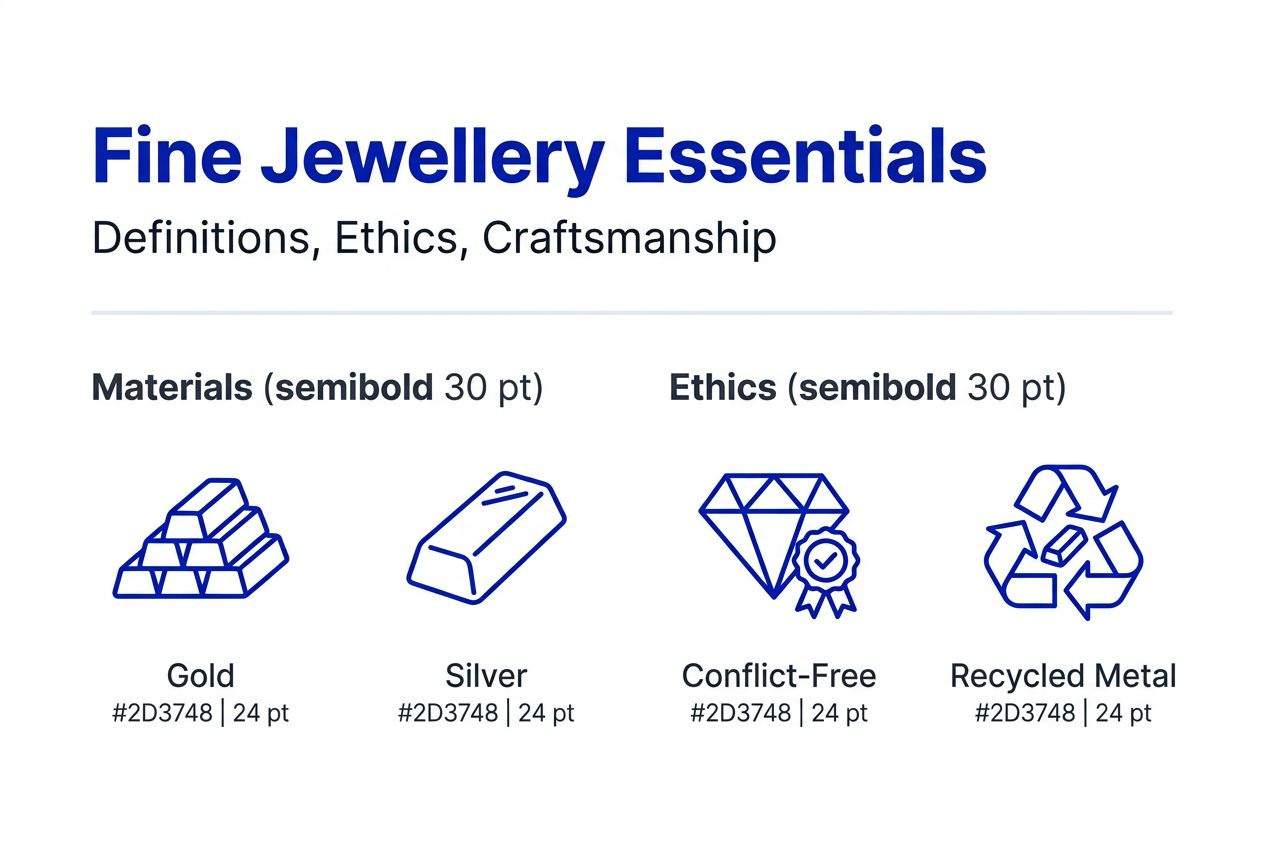
Pro tip: Document your bespoke jewellery design journey with photos from consultation through completion. This visual story adds personal meaning and creates heirloom documentation for future generations.
Personal collaboration with your jeweller ensures satisfaction. Communicate openly about preferences, share inspiration images, and ask questions throughout. Experienced designers guide you through technical decisions whilst honouring your creative vision. The ethical bespoke design process balances artistic expertise with client desires, resulting in pieces that exceed expectations.
Pre-owned fine jewellery: quality, authentication and value
Authenticated pre-owned fine jewellery offers luxury at reduced cost with sustainability benefits. Each piece undergoes rigorous inspection to verify hallmarks, assess structural integrity, and confirm gemstone authenticity. Expert restoration returns pieces to wearable condition whilst preserving original character. The 2026 UK jewellery guide demonstrates how pre-owned pieces can save 30 percent or more compared to new equivalents.
Authentication processes ensure reliability:
- Hallmark verification under magnification confirms metal purity and UK compliance
- Gemstone testing using refractometers and spectroscopes identifies natural versus synthetic stones
- Structural inspection assesses prong security, clasp function, and wear points
- Professional cleaning and polishing restores original lustre without compromising integrity
- Documentation of provenance, previous owners, and historical significance when available
Buying pre-owned jewellery provides distinct advantages. Cost savings range from 20 to 50 percent below retail for comparable new pieces. You access vintage designs and discontinued styles unavailable in current collections. Sustainability improves because no new mining or manufacturing occurs. Immediate availability eliminates production wait times.
| Consideration | Pre-owned Advantage | New Jewellery |
|---|---|---|
| Price | 20 to 50 percent savings | Full retail cost |
| Environmental impact | Zero new mining required | Extraction and processing |
| Availability | Unique vintage finds | Current catalogue only |
| Depreciation | Already occurred | Loses value immediately |
| Character | Established patina and history | Untouched, no story |
Provenance and craftsmanship affect long-term value significantly. Pieces from renowned makers or historical periods appreciate over time. Documented ownership history increases collectability and resale potential. Superior original craftsmanship ensures durability that mass-produced modern pieces often lack.
Risks exist when buying pre-owned without proper authentication. Counterfeit hallmarks, replaced gemstones, and hidden structural damage can devalue pieces dramatically. Quality assurance from established jewellers mitigates these concerns through professional inspection and restoration guarantees. Always purchase pre-owned jewellery from sources offering authentication documentation and return policies.
Pro tip: Learn to spot fake gold jewellery using simple tests like magnet response, acid testing, and weight assessment. This knowledge protects you when evaluating pre-owned pieces from any source.
Evaluating pre-owned pieces requires systematic inspection. Examine hallmarks for clarity and correctness, check gemstone settings for security, assess overall condition honestly, and request any available provenance documentation. Reputable sellers provide detailed condition reports and stand behind authenticity guarantees. Pre-owned fine jewellery combines value, sustainability, and unique character when purchased with informed scrutiny.
Common misconceptions about fine jewellery
Several widespread beliefs about fine jewellery mislead buyers and limit appreciation of quality pieces. Addressing these misconceptions clarifies what constitutes genuine fine jewellery and prevents costly mistakes.
Fine jewellery is not limited to gold and diamonds. Sterling silver pieces with proper hallmarking qualify fully as fine jewellery under UK standards. A .925 silver ring with natural gemstones carries the same legal status as gold equivalents. Material value differs, but both meet fine jewellery definitions. This misconception causes buyers to overlook beautiful, authentic pieces simply because they’re silver rather than gold.
Bespoke jewellery means fully custom design, not minor modifications. Adding an engraving to a stock ring isn’t bespoke creation. True bespoke work starts from scratch based entirely on your specifications. The design, materials, construction, and finishing are unique to you. Customisation offers limited choices within existing templates, whilst bespoke provides complete creative freedom. Understanding this distinction prevents disappointment and ensures you receive the level of personalisation you’re paying for.
Ethical jewellery requires documented transparency, not marketing claims alone:
- Genuine ethical sellers provide certification proving conflict-free sourcing
- Vague statements like “responsibly sourced” without evidence should raise suspicion
- Blockchain tracking, Kimberley Process compliance, and third-party audits demonstrate real commitment
- Ethical pricing should reflect fair labour costs, not just marketing premiums
- Transparency extends to supply chains, mining practices, and environmental impact
Fashion, costume, and fine jewellery serve different purposes. Fashion jewellery uses base metals with plating, suitable for trend-following at low cost but lacking durability. Costume jewellery incorporates non-precious materials for theatrical or temporary wear. Fine jewellery employs precious metals and genuine gemstones for lasting value and heirloom potential. Each category has legitimate uses, but only fine jewellery maintains material worth over time.
Common pitfalls stem from these misconceptions. Buyers overpay for “bespoke” services that deliver only basic customisation. Others dismiss sterling silver pieces assuming they’re inferior to gold. Some accept ethical claims without verification, supporting unethical practices unknowingly. Recognising these errors helps you navigate the market confidently and make purchases aligned with your values and budget.
How to make informed decisions when buying fine jewellery
Confident fine jewellery purchases require systematic verification and informed evaluation. Follow these practical steps to ensure authenticity, quality, and value in every acquisition.
Step-by-step authentication checks:
- Verify hallmarks using a jeweller’s loupe, confirming metal purity stamps are crisp and properly positioned
- Request diamond certification from recognised laboratories like GIA, IGI, or HRD for stones over 0.30 carats
- Inspect gemstone settings for secure prongs, even bezels, and no excessive gaps indicating poor craftsmanship
- Assess restoration quality on pre-owned pieces by checking for uniform polishing and proper clasp function
- Examine overall construction for smooth edges, aligned components, and comfortable wearability
- Ask for provenance documentation including previous owners, historical significance, or maker information
- Test weight against expected standards for the stated metal and size
Evaluating ethical claims requires scrutiny beyond marketing language. Request specific documentation proving conflict-free diamond sourcing through Kimberley Process certification. Ask about supply chain transparency and whether the retailer can trace materials to their origin. Look for third-party ethical certifications from recognised bodies. Genuine ethical jewellers welcome detailed questions and provide comprehensive answers with supporting evidence.
Understanding the bespoke consultation process helps you collaborate effectively. Prepare inspiration images showing styles you admire. Articulate your budget clearly from the start. Communicate the piece’s intended meaning or occasion. Ask to see previous bespoke work examples and client testimonials. Discuss timelines realistically, understanding that quality hand fabrication cannot be rushed. Working with a jewellery designer becomes productive when both parties communicate openly and set clear expectations.
Recognising quality indicators in pre-owned jewellery protects your investment:
- Sharp, clear hallmarks without wear suggest authentic precious metals
- Even gemstone colour and clarity consistent with grading claims
- Smooth, professional restoration without visible solder marks or rough repairs
- Original boxes, certificates, or documentation adding provenance value
- Structural integrity with no loose stones, weak clasps, or thin metal from wear
Pro tip: Always request a detailed receipt documenting metal purity, gemstone characteristics, and any restoration work performed. This provides legal protection and facilitates future insurance or resale.
Common mistakes to avoid include accepting verbal assurances without written documentation, skipping independent appraisals for significant purchases, ignoring return policies that protect dissatisfied buyers, rushing decisions without proper research, and overlooking maintenance requirements for long-term care. Take time to verify claims, compare options, and ensure your purchase meets expectations before finalising payment. Informed buying protects both your financial investment and emotional satisfaction with fine jewellery.
Explore our fine jewellery collection
Now that you understand what defines fine jewellery, ethical sourcing, and bespoke craftsmanship, explore pieces that embody these principles. Our authenticated collection includes hallmarked gold and sterling silver jewellery, from elegant 9ct yellow gold cubic zirconia fish brooches to fully custom bespoke designs.
Every pre-owned piece undergoes rigorous inspection and restoration by expert jewellers, ensuring authenticity and wearable quality. Our bespoke jewellery design insights guide you through creating unique pieces that reflect your personal story. Whether you seek ethical diamonds, vintage finds, or custom creations, our Kent stores and online platform offer transparent provenance and quality guarantees. Browse Blackwell Jewellers to discover fine jewellery that combines value, sustainability, and lasting craftsmanship.
Frequently asked questions about fine jewellery
What metals are officially recognised as fine jewellery in the UK?
Fine jewellery in the UK includes 9K, 14K, and 18K gold, sterling silver (.925), platinum, and palladium, all requiring hallmark certification. Sterling silver pieces with proper hallmarks qualify equally alongside gold under UK law.
How can I verify a diamond is truly conflict-free?
Request Kimberley Process certification proving the diamond originated from conflict-free sources, and ask for supply chain documentation tracing the stone from mine to retail. Reputable sellers provide this evidence willingly and can explain their ethical sourcing practices in detail.
Is bespoke jewellery worth the higher cost?
Bespoke jewellery offers unique design, superior hand-crafted durability, and personal meaning that mass-produced pieces cannot replicate. The investment reflects artisan expertise, quality materials, and a one-of-a-kind creation tailored specifically to your vision and story.
Can pre-owned jewellery be as reliable as new?
Pre-owned jewellery from authenticated sources undergoes professional inspection, hallmark verification, and expert restoration ensuring wearable quality. Properly vetted pieces offer identical reliability to new jewellery whilst providing cost savings, sustainability benefits, and access to unique vintage designs.
What hallmarks should I look for to ensure authenticity?
Look for the lion passant (.925 silver), crown or orb (gold purity), assay office marks (Birmingham anchor, London leopard, Edinburgh castle), date letters, and maker’s marks. These stamps must appear crisp and precisely positioned, never blurred or hand-engraved, confirming genuine precious metal content and UK compliance.
Recommended
- Designing Your Dream: How to Start Creating Your Own Bespoke Jewellery – blackwellonline
- How Bespoke Jewellery Design Works – blackwellonline
- Is Bespoke Jewellery Worth the Investment? Understanding the Value of – blackwellonline
- From Sketch to Reality: The Bespoke Jewellery Design Journey – blackwellonline
- Custom Jewelry Design Process: Creating Ethical Luxury – Eternal Carat