
A single carat. Two hundred milligrams of carbon. And yet the price can swing from under £300 to well over £30,000 depending on where the stone came from, how it was graded, and who is selling it. That staggering range catches many UK buyers completely off guard. Whether you are planning a bespoke engagement ring, building a jewellery investment, or simply want a stone you can be proud of, understanding what drives that variation is the difference between a confident purchase and a costly mistake. This guide walks you through every factor that matters, from market basics to ethical certification.
Table of Contents
- Understanding the 1 carat loose diamond market
- Natural vs lab-grown: a comparison for UK buyers
- How to judge diamond quality: the 4 Cs and beyond
- Ethical sourcing and certification explained
- Buying tips and avoiding common pitfalls
- Finding your 1 carat diamond with confidence
- Frequently asked questions
Key Takeaways
| Point | Details |
|---|---|
| Price varies widely | 1 carat diamond prices in the UK range from under £300 to over £30,000 based on quality and source. |
| Lab vs natural choice | Lab-grown diamonds offer big savings and are ethically clear, but natural stones retain more long-term value. |
| Certification is crucial | Always verify third-party certification for trust, value, and resale. |
| Ethical sourcing matters | Choose diamonds with Kimberley Process or RJC certification for ethical peace of mind. |
| Avoid common pitfalls | Buy from reputable UK retailers, understand the 4 Cs, and never skip the paperwork. |
Understanding the 1 carat loose diamond market
A loose diamond is simply a stone that has not yet been set into a piece of jewellery. Buyers choose loose stones for good reason: you can inspect the diamond fully before committing, compare it against alternatives, and have it set exactly as you wish. That flexibility is particularly valuable when you are commissioning a bespoke piece or want to match a specific metal or setting style.
The 1 carat weight sits at a sweet spot in the market. It is large enough to carry genuine visual presence on the finger, yet attainable enough to remain within reach for many buyers. It is also the benchmark weight that most jewellers and grading laboratories use when publishing price data, making comparisons straightforward.
Price variation in this category is dramatic. The average UK price for a 1ct round natural diamond sits around £3,259, but the full range runs from £260 to £32,748 depending on quality. That spread is driven by four main factors:
- Cut quality, which determines how brilliantly the stone reflects light
- Colour grade, from the colourless D through to the near-colourless G-H range most buyers target
- Clarity grade, measuring internal inclusions and surface blemishes
- Certification and provenance, which affect buyer confidence and resale value
Understanding how these interact is essential before you spend a penny. Our carat and pricing guide breaks down exactly how weight and quality combine to set a stone’s market value.
Natural vs lab-grown: a comparison for UK buyers
The single biggest decision you will make when buying a 1 carat loose diamond is whether to choose a natural or a lab-grown stone. Both are real diamonds. Both share the same chemical composition and crystal structure. But the price difference is extraordinary.
The average UK price for a 1ct round lab-grown diamond is approximately £215, with good quality stones typically ranging from £1,400 to £3,000. Natural equivalents of comparable quality cost £4,000 to £6,000. That gap reflects rarity and geological time, not visual quality.
| Feature | Natural diamond | Lab-grown diamond |
|---|---|---|
| Average UK price (1ct) | ~£3,259 | ~£215 |
| Good quality price range | £4,000–£6,000 | £1,400–£3,000 |
| Visual appearance | Identical | Identical |
| Resale value | Stronger long-term | Declining rapidly |
| Environmental impact | Mining required | Lower carbon footprint |
| Ethical concerns | Requires certification | Generally lower risk |
“Lab-grown diamonds are not simulants or fakes. They are grown atom by atom using the same carbon structure as a mined stone. The difference is origin, not identity.”
Pro Tip: If long-term resale value matters to you, lean towards a certified natural diamond. If you want maximum size and brilliance for your budget, a lab-grown stone delivers exceptional optical quality at a fraction of the cost.
Not sure which suits your priorities? Our comparison of lab-grown or natural diamonds for engagement rings covers the emotional and financial trade-offs in detail, and our guide to the differences explained goes deeper into structure and grading.
How to judge diamond quality: the 4 Cs and beyond
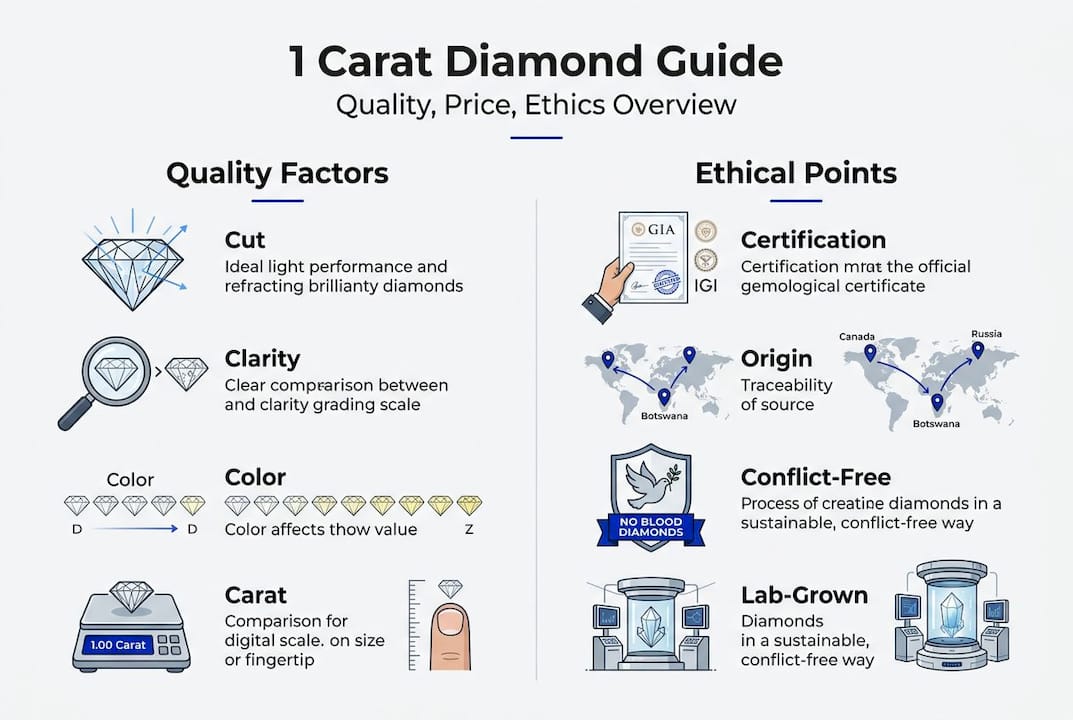
Once you have decided on natural or lab-grown, the next task is assessing the stone itself. The 4 Cs provide the universal framework, but knowing which grades to prioritise for a 1 carat stone makes all the difference.
- Cut is the most important C. A well-cut stone maximises light return and makes the diamond appear larger and more brilliant. Always aim for Excellent or Very Good cut grades from a reputable grading report.
- Colour grades run from D (colourless) to Z (visibly yellow). For a 1 carat stone, G or H colour offers near-colourless appearance at a significantly lower price than D-F grades. Most buyers cannot distinguish the difference with the naked eye.
- Clarity measures inclusions and blemishes. VS1 to SI2 is the practical sweet spot. Stones graded SI1 or SI2 often appear eye-clean while costing considerably less than VVS grades.
- Carat weight is straightforward at 1.00ct, but be aware that a stone cut to maximise weight rather than brilliance will sacrifice sparkle. Always prioritise cut over carat.
Beyond the 4 Cs, pay attention to fluorescence (a blue glow under UV light that can reduce price but rarely affects appearance), polish and symmetry grades (both should be Excellent or Very Good), and whether the stone carries a report from GIA, IGI, or another respected laboratory.
Good quality G-H/VS-SI stones typically cost £4,000 to £6,000 for natural diamonds and £1,400 to £3,000 for lab-grown equivalents. Understanding diamond clarity differences between natural and lab-grown stones helps you set realistic expectations before viewing stones in person.
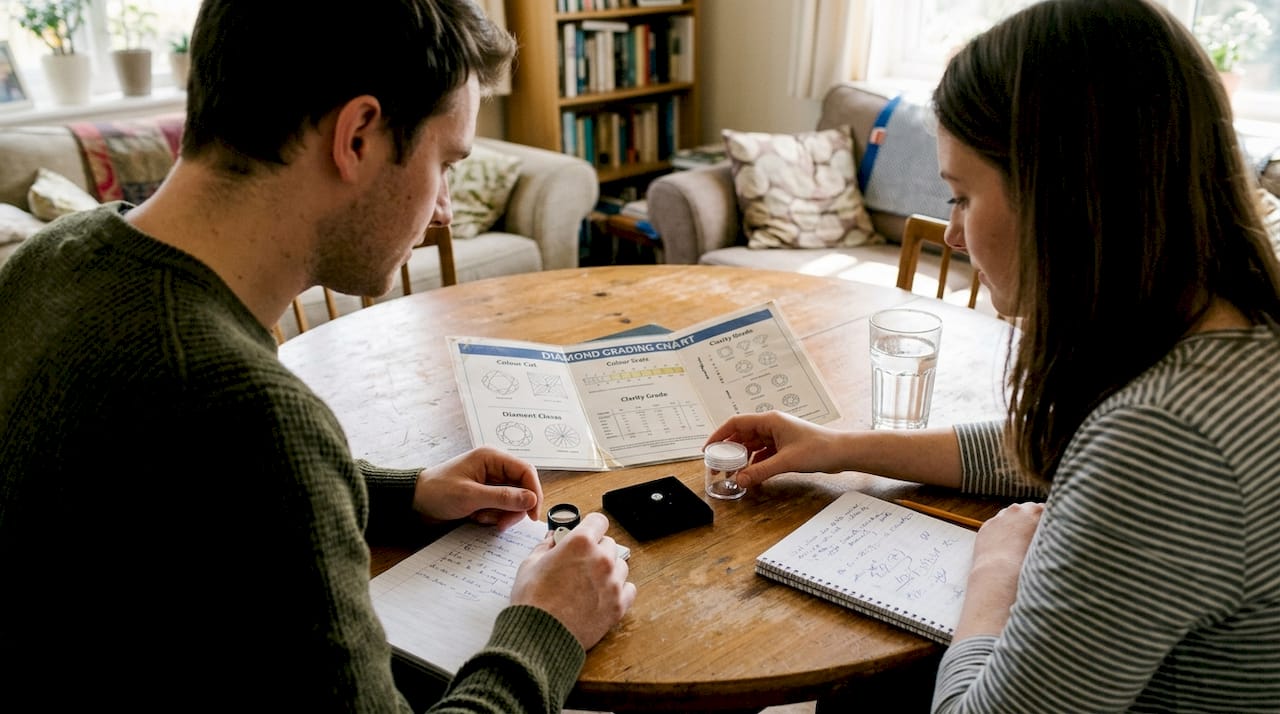
Pro Tip: Always ask to view the diamond under magnification and in natural light before purchasing. A stone that looks stunning under a jeweller’s spotlight may tell a different story in daylight.
Ethical sourcing and certification explained
For many UK buyers in 2026, knowing where a diamond came from matters as much as how it looks. The good news is that the industry has developed robust frameworks to address these concerns, though understanding them takes a little effort.
The Kimberley Process Certification Scheme is the international standard for conflict-free rough diamonds. It requires participating countries to certify that rough diamond exports are free from association with rebel movements or armed conflict. While the Kimberley Process is an important baseline, critics note it does not cover all human rights concerns, which is why additional standards matter.
The RJC Code of Practices goes further. The Responsible Jewellery Council sets requirements across the full supply chain, covering human rights, labour practices, environmental impact, and business ethics. Retailers who hold RJC certification have been independently audited against these standards.
| Certification | What it covers | Limitation |
|---|---|---|
| Kimberley Process | Conflict-free rough diamonds | Does not cover all human rights issues |
| RJC Code of Practices | Full supply chain ethics | Voluntary membership |
| GIA/IGI grading report | Stone quality and authenticity | Does not address sourcing ethics |
When buying a loose diamond, ask for:
- A Kimberley Process certificate for natural stones
- Evidence of RJC membership from the retailer
- A grading report from GIA, IGI, or equivalent
- Written confirmation of the stone’s country of origin where possible
“Ethical sourcing is not a marketing phrase. It is a verifiable chain of documentation that any reputable retailer should be able to provide without hesitation.”
Our guide to diamond sourcing covers how to read these documents and what questions to ask before you commit.
Buying tips and avoiding common pitfalls
Even well-informed buyers make avoidable mistakes. Here are the most common ones we see, and how to sidestep them.
- Buying without a grading report. An unverified stone is a gamble. Always insist on a report from a recognised laboratory before purchasing any 1 carat loose diamond.
- Overpaying for invisible upgrades. Moving from G to D colour or from VS2 to VVS1 clarity can add thousands to the price with no visible difference. Spend that budget on cut quality instead.
- Ignoring VAT. In the UK, diamonds are subject to 20% VAT. Make sure any quoted price includes VAT so you are comparing like for like. A stone advertised at £3,500 ex-VAT actually costs £4,200.
- Skipping insurance. A 1 carat diamond is a significant asset. Specialist jewellery insurance is relatively inexpensive and protects against loss, theft, and accidental damage.
- Shopping without legal recourse. Buying from a UK-registered retailer gives you Consumer Rights Act protection. Private sales and some overseas platforms do not offer the same safeguards.
For good quality G-H/VS-SI stones, expect to pay £4,000 to £6,000 for natural and £1,400 to £3,000 for lab-grown. If a price seems dramatically lower, ask why.
Pro Tip: Request a written receipt that includes the stone’s carat weight, colour grade, clarity grade, cut grade, and certificate number. This documentation is essential for insurance and future resale.
Our breakdown of better value comparison between lab-grown and mined diamonds is worth reading before you finalise your budget.
Finding your 1 carat diamond with confidence
Knowing what to look for is only half the journey. Finding a retailer who can actually deliver verified quality, transparent pricing, and genuine ethical credentials is where many buyers struggle. At Blackwell Jewellers, we have spent over 20 years building exactly that kind of trust across our Kent stores and online.
We stock both natural and lab-grown diamonds with full certification, and our in-house team can guide you through every grade and sourcing question without pressure. If you are ready to see what a properly certified, ethically sourced 1 carat diamond looks like in practice, our ethical 1 carat rings collection is a strong starting point. Every stone we sell comes with documented provenance, and our expert jewellers are on hand to answer questions, arrange viewings, and help you commission a bespoke piece that reflects exactly what you value.
Frequently asked questions
How much should I pay for a 1 carat loose diamond in the UK?
A good quality natural diamond in the G-H colour and VS-SI clarity range typically costs £4,000 to £6,000 including VAT, while a comparable lab-grown stone runs from £1,400 to £3,000.
Are lab-grown diamonds real diamonds?
Yes. Lab-grown and natural diamonds are structurally and chemically identical, sharing the same carbon crystal lattice. The only difference is how and where they were formed.
How can I be sure my diamond is ethically sourced?
Ask for a Kimberley Process certificate and confirm the retailer holds RJC certification. Request written documentation of the stone’s origin and do not accept verbal assurances alone.
Does a certificate add value to a 1 carat diamond?
Absolutely. A grading report from a recognised laboratory, combined with RJC-backed sourcing documentation, protects your investment, supports insurance claims, and significantly improves resale prospects.
Recommended
- What is an ethical diamond? A 2026 guide for UK buyers – blackwellonline
- How to Identify High-Quality Lab-Grown Diamonds: Expert Tips – blackwellonline
- Lab-Grown vs Mined: Which Diamond Gives Better Value? – blackwellonline
- The 4 Cs of Diamonds: The Complete 2025 Guide for UK Buyers – blackwellonline