
TL;DR:
- Designing a bespoke diamond ring creates a unique piece tailored to your story and preferences.
- The process involves clear communication with the jeweller, including moodboards and specific details.
Designing a bespoke diamond ring is the process of creating a wholly unique piece tailored exactly to your story, style, and preferences. Unlike buying off the shelf, commissioning a bespoke ring, known in the trade as a “commission piece,” puts every decision in your hands, from the diamond cut to the metal colour to the hidden engraving inside the band. The result is something no one else on earth owns. If you have ever looked at a ring in a shop window and thought “nearly, but not quite,” this guide is for you. Here is exactly how to create bespoke rings that genuinely mean something.
How to design bespoke diamond rings that are truly one-of-a-kind
The single most important thing to understand is this: bespoke jewellery design is a collaboration, not a transaction. You bring the vision. The jeweller brings the skill to make it real. The more clearly you can communicate your ideas, the better the outcome. That sounds obvious, but most people walk into their first consultation with a vague feeling and a couple of screenshots. You can do much better than that.
Start by asking yourself three questions. What story does this ring need to tell? What does the wearer love aesthetically? And what does the wearer actively dislike? That last question is the one most people skip, and it is a mistake.
How do you gather design inspiration for a custom ring?
A visual moodboard is the single most useful tool you can bring to a jeweller. Moodboards with likes and dislikes speed up the design brief and prevent misunderstandings. That means your moodboard should contain two sections: designs you love and designs you hate.

Collections of disliked designs are as important as liked ones for refining design direction and avoiding wasted time. A jeweller who sees ten rings you dislike immediately understands your taste boundaries. That saves weeks of back-and-forth.
Here is what to include in your design brief:
- Metal preference: yellow gold, white gold, rose gold, platinum, or a combination
- Diamond cut: round brilliant, oval, emerald, pear, cushion, or old cut
- Setting style: prong, bezel, pavé, channel, or tension
- Symbolic motifs: family crests, birth flowers, star constellations, initials
- Lifestyle notes: does the wearer work with their hands? That affects setting height and durability
Clients who provide images with notes such as “must be gold” or “old cut diamond” help jewellers understand exact preferences early on. The more specific your notes, the faster the design process moves.
Pro Tip: Annotate every image in your moodboard. A plain screenshot tells a jeweller you like the ring. A note saying “love the low profile setting but hate the thin band” tells them exactly what to keep and what to change.
Think about personalised design elements too. The same principle that applies to bespoke gifts of any kind applies here: specificity is what separates meaningful from generic.
How do you choose the right jeweller for a bespoke ring?
Not every jeweller who offers bespoke work is the right jeweller for your project. Portfolio diversity matters enormously. A jeweller who only makes solitaire rings in yellow gold is probably not your best choice if you want an art deco inspired cluster ring in platinum.
Ask these questions before committing:
- Can I see examples of your previous bespoke commissions?
- Do you work with ethical diamond sourcing, recycled metals, or heritage stones?
- What certifications do you hold? Certifications like the Responsible Jewellery Council and B Corp indicate provenance and traceability.
- What happens if the finished piece does not match the approved design?
That last question is one most clients overlook. Clear policies on resolving discrepancies if the final piece does not match approved designs are a mark of professionalism. A jeweller who cannot answer this question clearly is a risk you do not need to take.
Also ask about stone sourcing expertise and heritage techniques to ensure alignment with expectations. A jeweller who sources ethically and can explain exactly where your diamond came from is worth the extra effort to find.
What are the steps in the bespoke ring design process?
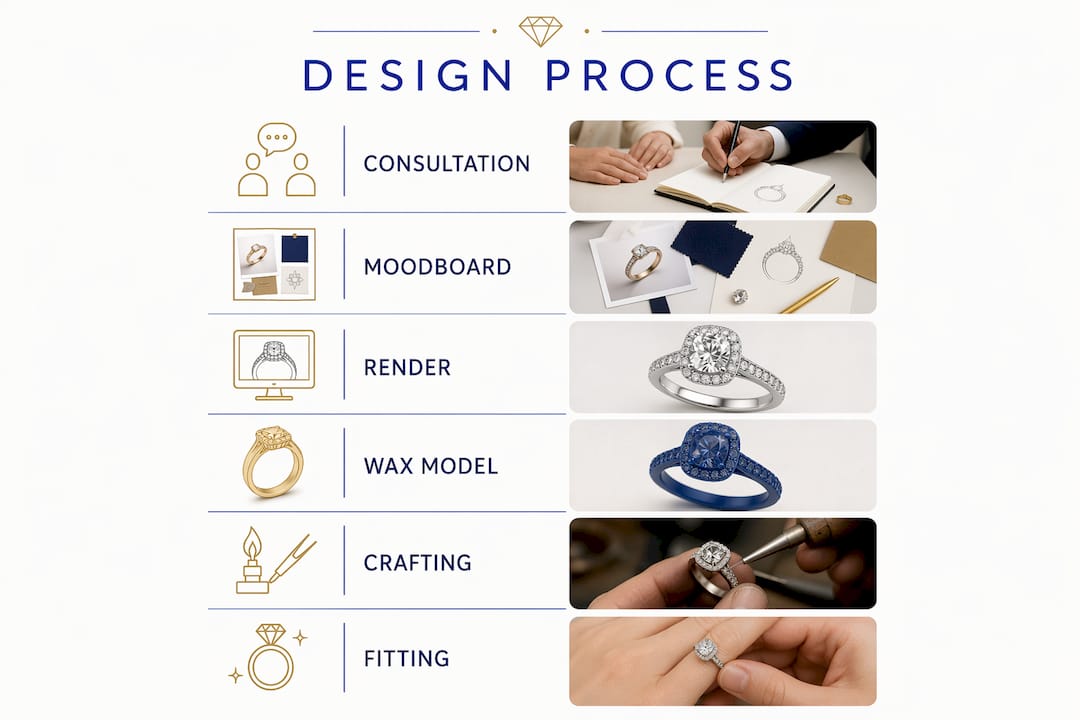
The design process for a truly personalised diamond ring follows a clear sequence. Here is how it typically unfolds:
- Initial consultation. You share your moodboard, brief, and budget. The jeweller asks questions and begins to understand your vision. This meeting shapes everything that follows.
- Concept sketches. The jeweller produces hand-drawn or digital sketches based on your brief. You review, give feedback, and the design evolves.
- Design refinement. Proportions, stone sizes, and details get finalised. This stage can involve several rounds of feedback, especially for complex designs.
- Technical design. The jeweller produces a CAD (computer-aided design) model or a detailed technical drawing. This is the blueprint for the physical ring.
- Wax model or 3D render. A physical wax model or a photorealistic 3D render lets you see the ring before any metal is cast. This is your last chance to request changes before making begins.
- Approval and deposit. Once you approve the design, making begins. Bespoke rings typically require a deposit of 40%–50% of the total price before work starts, since pieces made to specification cannot be resold.
Pro Tip: Always request a wax model or 3D render before approving the final design. Seeing the ring at scale, on your finger, reveals proportion issues that flat sketches simply cannot show.
Here is a quick reference for the design stages:
| Stage | What happens | Client involvement |
|---|---|---|
| Initial consultation | Brief and moodboard shared | High |
| Concept sketches | Jeweller produces design options | Medium |
| Refinement | Proportions and details finalised | High |
| CAD or technical drawing | Blueprint created | Low |
| Wax model or 3D render | Physical or digital preview | High |
| Approval and deposit | Making begins | Final sign-off |
You can read more about how bespoke jewellery design works if you want a deeper look at each stage before your first consultation.
How do stone and setting choices affect the meaning of your ring?
The diamond or gemstone you choose carries as much symbolic weight as the design itself. An oval diamond reads as romantic and elongating. An emerald cut reads as architectural and confident. A round brilliant is timeless. An old cut diamond has warmth and history that modern cuts simply do not replicate.
Setting styles affect both aesthetics and durability:
- Prong setting: maximises light into the stone, shows the diamond at its best, but the prongs can catch on fabrics
- Bezel setting: a metal rim surrounds the stone, offering excellent protection, ideal for active wearers
- Pavé setting: small diamonds set closely together along the band, adds brilliance and texture, requires more maintenance
- Channel setting: stones sit within a groove in the metal, clean and modern, very secure
Embedding personal details such as engravings, motifs, or hidden messages adds layers of sentiment and uniqueness to bespoke rings. These elements transform the ring into a deeply personal piece. A birth date engraved inside the band, a sapphire chosen because it matches someone’s eyes, a cluster of stones representing each member of a family. These are the details that make a ring irreplaceable.
Ethical and sustainable sourcing of diamonds and metals is a consideration that matters to a growing number of bespoke clients. Choosing a stone with a verified provenance means you know its story before it becomes part of yours.
What should you expect during making and fitting?
Once making begins, the ring goes through several distinct stages: casting the metal, assembling the setting, placing the stones, and polishing the finished piece. Each stage requires skill and time.
Timelines for bespoke rings range from four weeks for simple designs up to twelve weeks or more for complex pieces involving heritage techniques. Hallmarking adds an additional one to two weeks on top of making time. Build this into your planning, especially if the ring is for a specific occasion.
What to expect during making:
- Regular updates from your jeweller, ideally with photographs or short videos
- At least one check-in at the stone-setting stage
- A final fitting appointment where the ring is sized and any last adjustments are made
Photographic and video updates during creation foster client involvement and trust throughout the bespoke process. Seeing your ring take shape is genuinely exciting. A good jeweller knows this and keeps you in the loop.
Budget-wise, most bespoke rings start from around £7,000 to £10,000 due to the man-hours and materials involved. Price varies with stone type and size, number of stones, and complexity of setting. That is not a small investment, which is exactly why the design process deserves the care and attention this guide describes.
Key takeaways
Designing a bespoke diamond ring requires clear communication, careful stone and setting choices, and a jeweller whose skills and ethics align with your vision.
| Point | Details |
|---|---|
| Start with a detailed moodboard | Include both liked and disliked designs to give your jeweller precise direction from the outset. |
| Vet your jeweller thoroughly | Ask about ethical sourcing, portfolio diversity, and their policy on design discrepancies before committing. |
| Request a wax model or 3D render | Always preview the ring at scale before approving the design and paying the balance. |
| Build in realistic timelines | Simple rings take four weeks; complex pieces can take twelve weeks or more, plus hallmarking time. |
| Embed personal symbolism | Engravings, motifs, and stone choices rooted in personal meaning make a bespoke ring truly irreplaceable. |
Why bespoke rings are worth every bit of the effort
Here is my honest take after years of working with clients on bespoke commissions. The process is not always smooth. There are rounds of feedback that feel repetitive. There are moments when you second-guess a decision you made three weeks ago. And yes, the timeline can feel long when you are excited.
But the moment a client puts on a finished bespoke ring for the first time, something shifts. It is not just that they like it. It is that they recognise it. Like it was always theirs and the jeweller simply revealed it. That is a feeling no off-the-shelf ring can replicate, no matter how beautiful it is.
My advice? Embrace the process rather than rushing it. The back-and-forth with your jeweller is not a delay. It is the design. Every question you answer, every sketch you mark up, every detail you refine is adding a layer of meaning to the finished piece. The ring you end up with is not just a ring. It is a record of every decision you made.
And if you are worried about getting it wrong? You will not. Not if you communicate clearly, choose your jeweller carefully, and trust the process.
— James
Blackwelljewellers: your partner in bespoke diamond ring design
Blackwelljewellers has been crafting personalised jewellery for over 20 years from its Kent workshops, with stores in Maidstone, Gravesend, and Bexleyheath. The team specialises in bespoke ring commissions built around your brief, your budget, and your story.

Every bespoke piece at Blackwelljewellers is supported by in-house craftsmanship, ethical diamond sourcing, and transparent client communication throughout the making process. Whether you are starting with a clear vision or just a feeling, the team will help you shape it into something real. Get in touch with Blackwelljewellers to book your initial consultation and begin designing a ring that is genuinely yours.
FAQ
What does bespoke mean in jewellery?
Bespoke jewellery is a one-off piece designed and made to a specific client’s brief, with no two pieces identical. Every element, from the metal to the stone to the setting, is chosen by the client in collaboration with the jeweller.
How long does a bespoke diamond ring take to make?
Simple bespoke rings typically take around four weeks, while complex designs involving heritage techniques can take twelve weeks or more. Hallmarking adds an additional one to two weeks on top of the making time.
How much does a bespoke ring cost?
Most bespoke rings start from around £7,000 to £10,000, depending on stone type and size, number of stones, and setting complexity. A deposit of 40%–50% is typically required before making begins.
Can I use an ethical diamond in a bespoke ring?
Yes. Reputable jewellers source diamonds with verified provenance, and certifications like the Responsible Jewellery Council indicate traceability. Always ask your jeweller directly about their sourcing practices before committing.
What is the most important thing to bring to a bespoke ring consultation?
A detailed moodboard containing both designs you love and designs you dislike gives your jeweller the clearest possible brief. Annotated images with specific notes accelerate the design process and reduce misunderstandings significantly.
Recommended
- From Two Diamond Rings to One Masterpiece | Custom Ring Design & Remak – Blackwell Jewellers
- Designing Your Dream: How to Start Creating Your Own Bespoke Jewellery – blackwellonline
- How Bespoke Jewellery Design Works – blackwellonline
- How to Choose the Perfect Engagement Ring in 2025 – blackwellonline