
TL;DR:
- Most ethical diamond schemes, like Kimberley, only address conflict diamonds and do not cover broader social or environmental concerns.
- Verifying proven provenance, current certifications, and transparency in supply chain practices is essential for responsible diamond purchasing.
Buying a diamond should feel exciting. Instead, for most ethically-conscious UK consumers, it feels like trying to navigate a maze blindfolded. The ethical diamond selection checklist approach exists precisely because “conflict-free” on a tag means very little without the documentation to back it up. Mining practices, energy use, labour conditions, supply chain transparency — there is a lot to get your head around. This article cuts through the noise and gives you a genuinely practical guide to selecting a diamond you can feel proud of, whether you’re drawn to natural stones, lab-grown options, or the increasingly compelling world of pre-owned jewellery.
Table of Contents
- Understanding ethical diamond criteria
- Practical checklist for selecting ethical diamonds
- Exploring ethical diamond options: natural, lab-grown, and pre-owned
- Comparing ethical diamonds: a detailed side-by-side overview
- Making your ethical diamond decision: tips for UK buyers
- Rethinking ethical diamond buying: what most guides don’t tell you
- Trusted UK sources for ethical diamonds and bespoke jewellery
- Frequently asked questions
Key Takeaways
| Point | Details |
|---|---|
| Verify provenance and certifications | Look for credible certifications like the Kimberley Process to ensure diamonds are conflict-free. |
| Evaluate lab-grown sustainability | Assess lab-grown diamonds based on energy sources and transparent environmental claims, not just labels. |
| Consider pre-owned as a sustainable choice | Buying second-hand diamonds extends their life and reduces demand for mining if authenticated properly. |
| Check metal settings and longevity | Sustainable metals and durable designs significantly reduce jewellery’s overall footprint. |
| Demand transparency and verified claims | Ethical buying relies on verifiable documentation and supplier openness, not marketing buzzwords. |
Understanding ethical diamond criteria
Right. Before you start ticking boxes, you need to know what you’re actually looking for. Ethical diamond criteria aren’t just about avoiding conflict stones (though that’s a big part of it). They cover the full journey of a diamond — from where it came from, to how it was extracted, to who handled it along the way.
Provenance is your starting point. This is essentially the diamond’s biography. Where was it mined? Under what conditions? Was the mining community fairly compensated? These aren’t just nice questions; they’re the foundation of responsible diamond sourcing.
The most widely recognised framework here is the Kimberley Process, an international certification scheme designed to prevent conflict diamonds from entering the legitimate trade. As a UK buyer, you’re actually in a stronger position than you might think. The UK is a founding member of the Kimberley Process Certification Scheme, which gives weight to domestic diamond trading standards.
Key ethical criteria to understand before you shop:
- Conflict-free certification: Ask for Kimberley Process documentation and check it’s current, not just a vague claim.
- Environmental responsibility: How much land was disturbed? Was water contaminated? Were restoration commitments made?
- Labour protections: Were miners paid fair wages? Were working conditions safe?
- Supply chain transparency: Can the seller trace the diamond back to its source, or do they just shrug?
- Clear documentation: Grading reports, certificates, and provenance paperwork should come as standard, not as a special request.
Getting your head around this ethical diamond guide is genuinely worth the hour it takes. Knowledge is the best defence against greenwashing.
Practical checklist for selecting ethical diamonds
Here’s the thing — a checklist only works if it’s specific. Generic advice like “buy from reputable sellers” is about as useful as a chocolate teapot. So here’s what you actually need to check.
-
Verify the grading report. Legitimate reports come from recognised labs: GIA (Gemological Institute of America), IGI (International Gemological Institute), or GCAL (Gem Certification and Assurance Lab). Every report has a unique number. Type it into the lab’s website and confirm it matches the stone in front of you. If the seller squirms at this request, walk away.
-
Confirm diamond origin documentation. This isn’t just a Kimberley Process certificate. Ask for country of origin, mine name if possible, and the chain of custody. Some ethical retailers now provide this as standard. If yours doesn’t, ask yourself why.
-
Ask about lab-grown disclosure. If you’re considering a lab-grown diamond, the seller must disclose this clearly. Ethical lab-grown diamond buying depends on verification of energy sources, supply chain transparency, and credible environmental claims — not just a “greener” label.
-
Check the energy source for lab-grown stones. Lab-grown doesn’t automatically mean eco-friendly. The production process is energy-intensive. Ask what powers the facility. Renewable energy matters.
-
Review metal settings. Check whether the setting uses recycled gold or platinum. This is an often-overlooked part of your overall environmental footprint.
-
Request supporting evidence for any environmental claims. “We care about the planet” is marketing. Third-party audits, certifications, and carbon data are evidence. There’s a big difference.
-
Check seller transparency. Do they publish sourcing policies? Do they have a physical presence you can visit and hold accountable? Online-only sellers with vague ethics pages deserve extra scrutiny.
Pro Tip: Cross-reference your diamond’s grading report number with the lab’s official website before completing any purchase. Takes two minutes. Saves a lot of heartache.
For more on navigating your purchase, these diamond buying tips are worth bookmarking. And if you’re exploring lab-grown diamond options, there’s solid guidance there too.
Exploring ethical diamond options: natural, lab-grown, and pre-owned
So you’ve got your checklist. Now let’s look at what you’re actually choosing between. There are three main categories and each has its own ethical character.
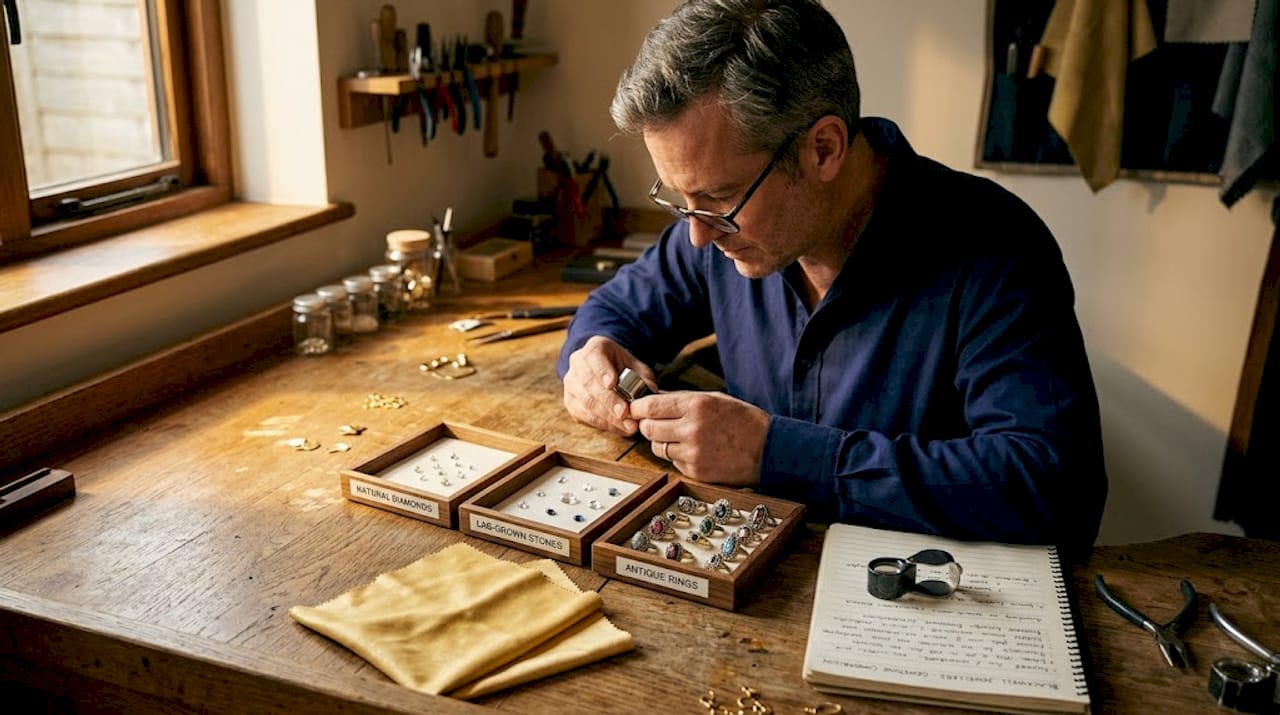
Natural mined diamonds — the traditional choice — can absolutely be ethical, but the burden of proof is higher. Verified provenance, Kimberley Process compliance, and responsible mining practices need to be documented, not just claimed. A natural diamond from a certified Canadian or Botswanan mine with a full grading report? Genuinely ethical. A diamond with vague origins and a photocopied certificate? Less so.
Lab-grown diamonds are often presented as the obvious ethical choice, and they can be. But here’s the nuance that most “ethical diamond” articles gloss over. Pandora, for instance, leads with lab-grown diamonds made using 100% renewable energy, and they disclose carbon footprint as what they call “the fifth C.” That’s genuinely impressive. Not every lab, however, runs on wind and solar. Some use coal-heavy grids. The environmental story changes dramatically depending on where and how the diamond was grown.
Pre-owned diamonds are the dark horse of ethical gemstone selection and, honestly, a bit of an underrated gem (sorry). Buying second-hand extends a diamond’s life, removes any new mining from the equation entirely, and often delivers remarkable value. The sustainability credentials are hard to argue with. That said, second-hand diamond jewellery requires careful hallmark verification and grading report checks to ensure authenticity and ethical standards. Condition, authenticity, and accurate valuation all need verifying before you buy.
Here’s a quick summary of what to watch for across all three:
- Natural: Insist on documented provenance and current certifications.
- Lab-grown: Verify energy source, not just the “eco” marketing.
- Pre-owned: Check hallmarks, grading reports, and seller authentication processes.
Pro Tip: If you’re considering pre-owned, look at sellers who have their own in-house jewellers inspecting and restoring pieces. That’s a meaningful quality signal, not just a sales line.
Browse Blackwell’s second-hand jewellery options or explore the ethical diamond collections for a sense of what verified sourcing actually looks like in practice.
Comparing ethical diamonds: a detailed side-by-side overview
Right, let’s put it all on the table. Literally.
| Feature | Natural mined | Lab-grown | Pre-owned |
|---|---|---|---|
| Provenance | Traceable if certified | Fully traceable | Existing stone, varies |
| Sustainability | Variable, mine-dependent | High if renewable energy used | Excellent (no new mining) |
| Certification | GIA, IGI, Kimberley Process | GIA, IGI, GCAL | Original report preferred |
| Environmental footprint | Higher, land and water impact | Lower, but energy-dependent | Lowest of the three |
| Cost | Higher, reflects rarity | Lower than natural | Often best value |
| Longevity | Exceptional | Exceptional | Exceptional if authenticated |
The honest summary: lab-grown diamonds from verified renewable-powered producers have a 90% lower carbon footprint than mined diamonds and often use recycled precious metals in settings. That’s a meaningful environmental case. But it’s not universal.
A few things worth noting before you decide:
- Pre-owned diamonds score best on sustainability when authenticated properly. No new mining, no new production energy.
- Natural diamonds carry tradition and rarity that many buyers genuinely value. There’s nothing wrong with that, provided the sourcing is verified.
- Lab-grown diamonds are ideal for buyers who want new, ethically verifiable stones at accessible prices — provided you scrutinise the energy story.
For a deeper look at alternatives, these ethical diamond alternatives cover the full spectrum of sustainable options available to UK buyers.
Making your ethical diamond decision: tips for UK buyers
Nearly there. Here’s how to pull everything together into an actual purchase decision.
- Lead with certifications, not marketing. Beautiful photography and sustainability slogans are easy. GIA reports, Kimberley Process certificates, and third-party audits are not. Always prioritise documented evidence.
- Consider bespoke. A bespoke jeweller who sources recycled metals and allows you to specify diamond origin gives you control that off-the-shelf buying simply doesn’t. It’s more personal, often better value long-term, and lets you build the ethical credentials into the piece from the start.
- Repair rather than replace. An existing ring with a replaced stone or a restored setting is a more sustainable choice than a brand-new purchase. Expert repairs extend life considerably and cost far less than replacement.
- Use a credit card for purchase protection. This isn’t an ethics point exactly, but it’s good sense. Credit card consumer protections in the UK are genuinely useful if a seller’s claims don’t hold up post-purchase.
- Buy from sellers with physical accountability. Online-only sellers with no fixed address are harder to challenge. A jeweller with stores you can walk into is a different kind of accountable.
Pro Tip: When exploring bespoke options, ask specifically about recycled metal sourcing. It’s a small question that tells you a lot about a jeweller’s values.
Explore bespoke ethical jewellery or look into jewellery repairs as a sustainable first step before committing to a new purchase.
Rethinking ethical diamond buying: what most guides don’t tell you
Here’s where I’m going to say something slightly uncomfortable. Most ethical diamond guides — even the good ones — give certifications more credit than they deserve.
The Kimberley Process is genuinely important. The UK’s founding membership matters. But the scheme, by design, addresses conflict diamonds in a fairly narrow sense. It doesn’t cover every dimension of ethical concern. Some state-controlled mining operations technically pass Kimberley checks while still being linked to problematic governance and labour conditions. The certificate is a floor, not a ceiling.
Lab-grown diamonds are similar. Lab-grown diamond sustainability varies significantly depending on electricity source, which means “lab-grown = ethical” is simply not automatic. A stone grown in a facility powered by fossil fuels may actually have a higher carbon footprint than you’d expect. The industry knows this. Not all sellers advertise it.
And here’s the point that almost no guide makes: the most impactful thing you can do for diamond sustainability is keep the jewellery you already have, or buy and maintain pre-owned pieces with expert care. Repairability and longevity often have a bigger sustainability impact than the initial origin of the diamond. A ring that lasts fifty years because it’s been properly maintained is a dramatically better environmental choice than two or three replacement pieces over the same period.
Ethical buying isn’t passive. It’s not about finding a seller with the right badges and handing over your card. It’s about asking questions, reading documentation, understanding industry challenges, and being willing to hear an honest “I don’t know” from a seller as a better sign than confident greenwashing.
The checklist matters. The questions you ask with it matter more.
Trusted UK sources for ethical diamonds and bespoke jewellery
If you’ve worked through this checklist and you’re ready to actually buy, you want a seller who walks the walk. Blackwell Jewellers has been doing exactly that for over 20 years, with physical stores across Kent (Maidstone, Gravesend, and Bexleyheath) and a trusted national online presence.
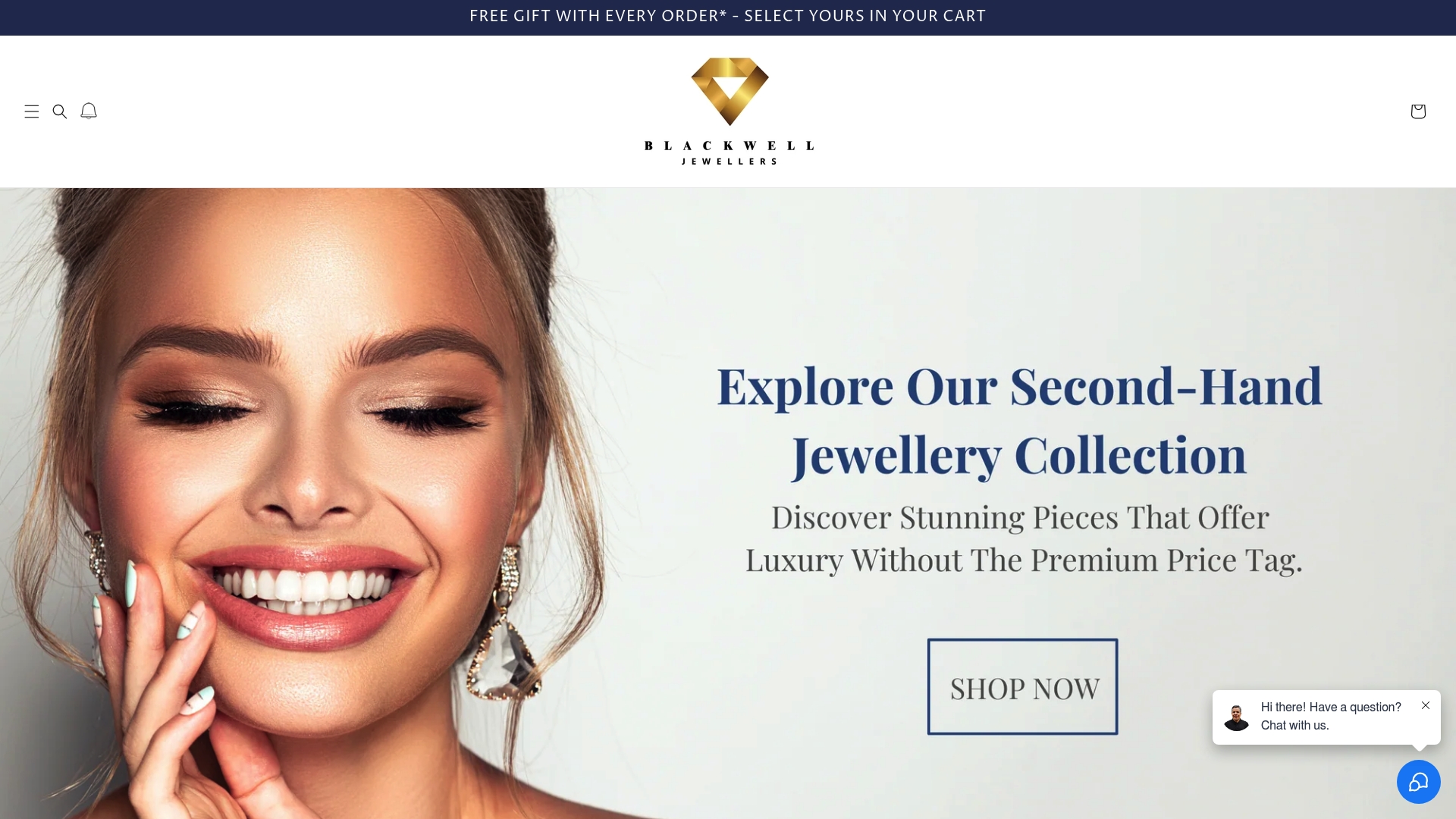
Every pre-owned piece in the Blackwell collection is inspected, authenticated, hallmarked, and restored by in-house jewellers before it goes on sale. That’s not a policy statement; it’s how the business has operated since day one. Their ethical diamonds in Maidstone collection comes with clear grading documentation and transparent sourcing. Their bespoke jewellery service lets you specify recycled metals and verified diamond origins from the ground up. And if you’d rather restore than replace, their expert repair team can extend the life of what you already own. That’s ethical buying made genuinely accessible.
Frequently asked questions
What is the Kimberley Process and why is it important for ethical diamonds?
The Kimberley Process Certification Scheme prevents conflict diamonds entering the legitimate trade, providing a foundational layer of ethical sourcing assurance. It’s essential, but it covers a defined scope and should be treated as a starting point rather than a complete ethical guarantee.
Are lab-grown diamonds always more ethical than mined diamonds?
Not automatically. Lab-grown sustainability depends heavily on electricity source and the transparency of environmental claims, meaning a lab-grown diamond produced using fossil-fuel energy may not be as green as marketed.
How can I verify a second-hand diamond’s authenticity and ethical sourcing?
Check hallmark stamps, verify the grading report number directly with the issuing lab, and inspect any stone inscriptions against the paperwork. Buying second-hand diamonds requires careful documentation review, including condition photos and seller return policies, before committing.
What should I ask a jeweller about the ethical claims of their diamonds?
Ask about diamond origin, which certification labs were used, where the production energy came from, and whether any third-party environmental audits exist. Ethical diamond buying is built on documentation and transparency, not marketing language, so any confident jeweller should answer these questions without hesitation.
Recommended
- What is an ethical diamond? A 2026 guide for UK buyers – blackwellonline
- Ethical diamond alternatives UK: sustainable sparkle guide – Blackwell Jewellers
- Diamond buying tips for UK buyers: choose with confidence – Blackwell Jewellers
- Diamond clarity guide UK: savvy ethical jewellery choices – Blackwell Jewellers