

TL;DR:
- Bespoke handmade jewelry in Kent is designed and crafted from scratch, tailored to each client’s personal preferences. The process involves detailed consultations, traditional craftsmanship techniques, ethical material choices, and mandatory hallmarking, ensuring lasting quality. It typically takes 4-6 weeks to complete and offers meaningful, customized pieces that carry personal or family significance.
Bespoke handmade jewellery is defined as a piece designed and crafted entirely from scratch to a client’s personal specification, as opposed to buying something off the shelf. If you’re in Kent and thinking about commissioning something truly one-of-a-kind, understanding the full custom jewellery process matters before you spend a penny. The journey covers everything from your first conversation with an artisan through to hallmarking, final polish, and delivery. Get it right, and you end up with something that could sit in your family for generations. Get it wrong (usually by skipping the brief or rushing the timeline), and you end up with an expensive disappointment.
How does the bespoke jewellery design consultation in kent typically start?
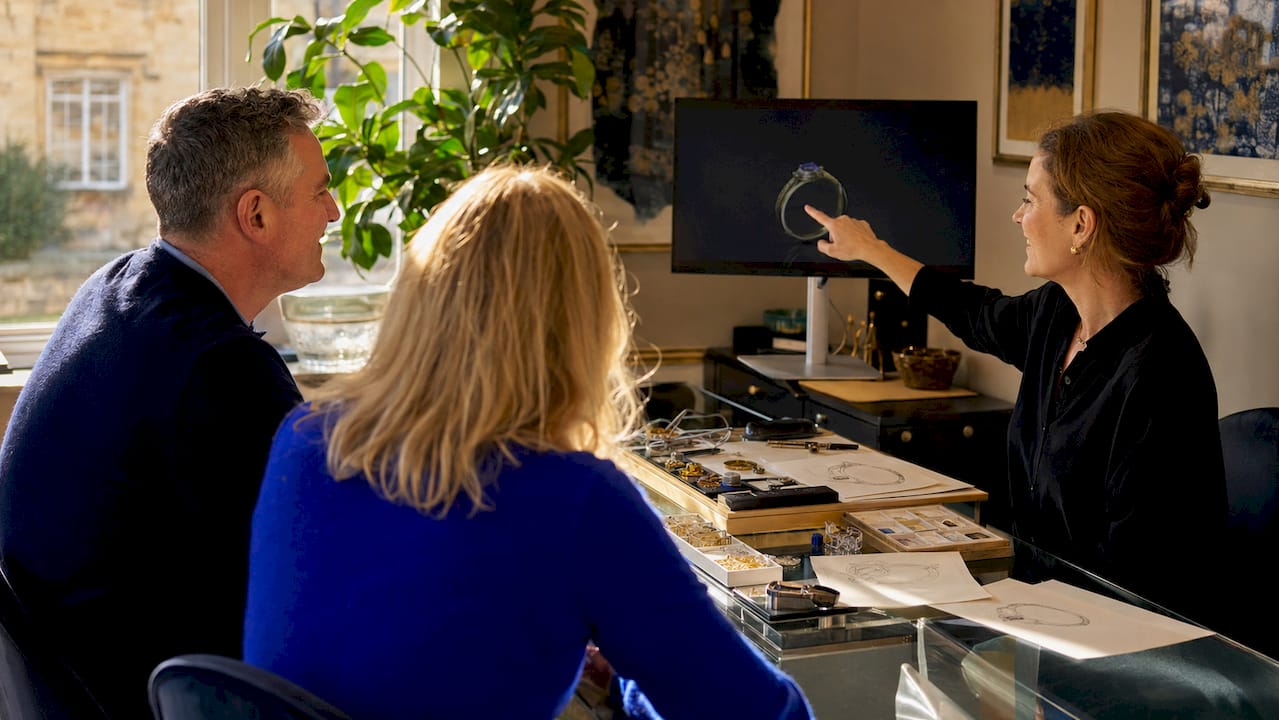
The whole thing kicks off with a conversation. Personalised consultation is the foundation of every bespoke commission, giving you the space to articulate your ideas and the artisan the chance to shape them into something buildable. This is not a five-minute chat. Expect to discuss your personal story, the occasion, your style preferences, and your budget with real honesty.
Most Kent artisans will ask you to bring inspiration. That might be:
- Photos saved on your phone
- A piece of existing jewellery you love (or want to repurpose)
- A rough sketch, even if it looks like a toddler drew it
- Fabric swatches or colour references for gemstone choices
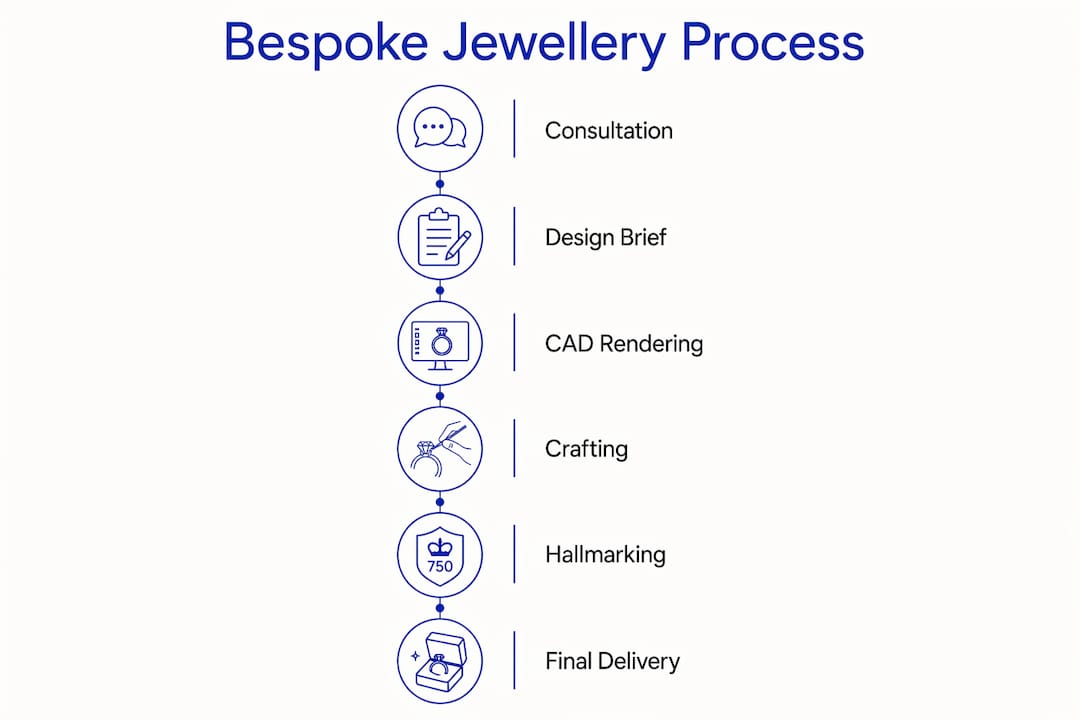
From there, the artisan creates a design brief. Many now use CAD (computer-aided design) software to produce a 3D render before any metal is touched. Others work from hand-drawn sketches, which honestly has its own charm. Either way, you should see a visual representation of your piece before the making begins.
Timelines and budgets get locked in at this stage too. Be upfront about what you can spend. A good artisan will tell you honestly what’s achievable within your budget rather than oversell you something you’ll regret.
Pro Tip: Bring a reference photo of your hand or the intended wearer’s hand to the consultation. Scale is everything in jewellery design, and what looks perfect on a mood board can feel enormous (or tiny) in real life.
What traditional craftsmanship methods are used in bespoke jewellery making?
This is where the real magic happens, and it’s genuinely worth understanding what goes into it. Artisan techniques used by Kent jewellers include goldsmithing, silversmithing, hand piercing, soldering, and stone setting, all of which require years of training to do well. These are not shortcuts. They are the reason a bespoke piece looks and feels different from mass-produced jewellery.
Here’s a rough order of how the physical making typically unfolds:
- Metal preparation. The artisan cuts, shapes, and files raw metal sheet or wire into the basic form of your design. Some workshops hand alloy their own metal, blending recycled gold with new material to hit the required carat.
- Forming and soldering. Sections are shaped using hammers, mandrels, and formers, then joined using solder and a jeweller’s torch. Each join must be clean and structurally sound.
- Stone setting. Gemstones are set by hand using techniques like bezel setting, claw setting, or pavé. Each method holds the stone differently and affects the overall look.
- Filing and refining. The piece is filed, sanded, and refined through progressively finer grades of abrasive to remove tool marks and prepare the surface.
- Polishing. A final polish brings the metal to a mirror shine or a brushed finish, depending on your design brief.
Bespoke pieces built using these traditional goldsmithing techniques are designed to last as family heirlooms, not just for a season. That durability is a direct result of handwork, not machinery.
Pro Tip: Ask your artisan whether they hand alloy their metal. Workshops that blend their own alloys from recycled precious metals often produce a denser, more consistent result than those using pre-rolled commercial sheet.
How are materials selected and personalised for bespoke pieces?
Material selection is where your piece becomes genuinely yours. Choosing metals and gemstones involves balancing aesthetics, ethics, and budget in equal measure. There is no single right answer, but there are informed choices.
For metals, the main options are:
- 9ct gold (37.5% pure gold): more affordable, very durable, slightly warmer or cooler in tone depending on alloy
- 18ct gold (75% pure gold): richer colour, higher value, slightly softer
- Sterling silver (92.5% pure silver): accessible price point, beautiful finish, requires more maintenance
- Platinum (95% pure): the most durable precious metal, hypoallergenic, and the most expensive
For gemstones, you choose between natural stones (mined from the earth) and lab-created stones (chemically identical, more affordable, and lower environmental impact). Neither is inherently better. It depends entirely on what matters to you.
Many Kent workshops now use recycled precious metals and ethically sourced gemstones as standard. If that matters to you (and it should), ask about it directly at the consultation stage.
Personal elements take this further. Engraving a date, a name, or a short phrase inside a ring is the most common request. Memorial jewellery incorporating ashes is increasingly popular and deeply meaningful. Some clients bring old family gold to be melted down and recast into a new design, which is one of the most powerful ways to connect family history into a new piece.
What is hallmarking and why does it matter for bespoke jewellery in kent?
Hallmarking is not optional. UK law requires all bespoke fine jewellery made from precious metals to be hallmarked before sale, guaranteeing the purity and quality of the metal used. This is your legal assurance that what you’ve paid for is exactly what you’ve received.
The hallmark is applied after the piece has been polished to its final finish. It is sent to an assay office (the UK’s main offices are in London, Birmingham, Edinburgh, and Sheffield), where it is tested and stamped with a series of marks.
| Hallmark Component | What It Certifies |
|---|---|
| Sponsor’s mark | Identifies the maker or manufacturer |
| Metal and fineness mark | Confirms the metal type and purity (e.g., 925 for sterling silver) |
| Assay office mark | Shows which UK office tested and approved the piece |
| Date letter (optional) | Records the year of hallmarking |
Hallmarking protects your investment in a very practical way. Without it, you have no independent verification of what the metal actually is. With it, you have a permanent, legally recognised record stamped into the piece itself. Always check that your bespoke commission will be hallmarked before you agree to anything.
What does the final delivery and care of a bespoke piece involve?
The finish line is closer than you think, but it still matters. Final delivery is not just handing over a box. A good artisan treats this stage with the same care as every other part of the process.
Here’s what to expect at and after delivery:
- Final inspection. The artisan checks every element: stone security, solder joins, surface finish, and hallmark clarity.
- Thoughtful packaging. Your piece arrives in presentation packaging that reflects the care that went into making it. This matters, especially if it’s a gift.
- Care instructions. You’ll receive guidance on cleaning, storage, and what to avoid (chlorine, ultrasonic cleaners for certain stones, and so on).
- Unused materials returned. If your commission involved personal materials such as memorial ashes, any unused portion is respectfully returned to you alongside the finished piece.
- Future services. Ask about resizing, repairs, and remodelling options upfront. A piece you commission today may need adjusting in ten years, and knowing your artisan offers that continuity is reassuring.
On timing: the custom handmade process in Kent typically takes 4–6 weeks from concept to delivery. That timeline accounts for design approval, handcrafting, hallmarking, and finishing. Plan accordingly, especially if you have a specific date in mind.
Key takeaways
Bespoke handmade jewellery in Kent is a structured, collaborative process that moves from personal consultation through traditional handcrafting, material selection, legal hallmarking, and careful delivery to produce a piece built to last generations.
| Point | Details |
|---|---|
| Consultation sets everything | Share your story, budget, and references clearly so the artisan can build an accurate design brief. |
| Handcrafting takes real skill | Traditional goldsmithing techniques like soldering and stone setting create durability that mass production cannot match. |
| Materials are your choice | Gold, silver, platinum, and ethical gemstones all carry different costs and qualities; recycled metals are widely available. |
| Hallmarking is legally required | UK assay offices certify metal purity and protect your investment with a permanent stamp on the piece. |
| Allow 4–6 weeks minimum | The full process from concept to delivery requires time; rushing it compromises quality at every stage. |
Why bespoke jewellery is worth every penny (and the wait)
Right, here’s my honest take on this. People often come to bespoke jewellery thinking it’s just a more expensive version of buying something ready-made. It isn’t. It’s a completely different category of thing.
When you commission a bespoke piece, you’re not just buying an object. You’re directing the creation of something that carries your story, your choices, and your relationships inside it. I’ve seen clients bring in their grandmother’s broken gold chain to be recast into a ring for their daughter’s 21st. That piece has three generations of meaning in it. You cannot buy that off a shelf in a shopping centre.
The misconception I hear most often is that bespoke means unaffordable. That’s simply not true. Working with a Kent artisan on a sterling silver piece with a modest gemstone can be surprisingly accessible, especially when you compare it to the markup on branded high-street jewellery. The design journey from sketch to finished piece is also far more transparent than most people expect.
My advice: trust the process, be honest about your budget from day one, and resist the urge to rush. The 4–6 week timeline exists because the work demands it. A piece made with that level of attention will outlast almost anything else you own.
— James
Commission your bespoke piece with Blackwelljewellers in maidstone
Blackwelljewellers has been crafting and curating jewellery in Kent for over 20 years, with stores in Maidstone, Gravesend, and Bexleyheath. Their bespoke service in Maidstone offers personalised client consultations, in-house handcrafting, ethical material sourcing, and full UK hallmarking as standard.

Whether you’re commissioning an engagement ring, a memorial piece, or a completely original design, Blackwelljewellers handles every stage with the care it deserves. Their team works with you from the initial brief through to final delivery, and they also offer professional jewellery repairs if you need existing pieces restored alongside your new commission. If you’re ready to start, visit the bespoke Maidstone page and get the conversation going.
FAQ
What is bespoke handmade jewellery?
Bespoke handmade jewellery is a piece designed and crafted entirely to a client’s individual specification, using traditional artisan techniques rather than mass-production methods. Every element, from the metal choice to the gemstone setting, is chosen and made specifically for that one person.
How long does a bespoke jewellery commission take in kent?
The process typically takes 4–6 weeks from the initial consultation to final delivery. This allows time for design approval, handcrafting, hallmarking at a UK assay office, and finishing.
Does bespoke jewellery have to be hallmarked in the UK?
Yes. UK law requires all precious metal jewellery to carry a hallmark before it can be sold, confirming the metal’s purity and the maker’s identity. Hallmarking takes place after the piece is polished and is carried out by an independent UK assay office.
Can i use my own gold or gemstones in a bespoke commission?
Absolutely. Many Kent artisans actively encourage clients to bring existing gold or family pieces to be melted down and incorporated into a new design. This is one of the most meaningful ways to connect family history into a bespoke commission.
Is bespoke jewellery more expensive than ready-made?
Not always. Bespoke pieces in sterling silver or 9ct gold can be comparable in price to branded high-street jewellery, with the significant advantage of being made entirely to your specification. Costs vary based on metal, gemstones, and complexity, so discussing your budget openly at the consultation stage is the best way to understand what’s achievable.