
TL;DR:
- Kent jewellers provide expert in-house assessments, deep provenance knowledge, and genuine relationships that chains cannot match.
- They prioritize authenticity, detailed inspections, hallmark verification, and independent evaluations to safeguard buyers’ investments and trust.
Most people assume a jeweller is a jeweller. Walk into a shop, pick something shiny, hand over your card. Job done, right? Wrong. The difference between a good jeweller and a great one is enormous, and in Kent, where independent expertise runs deep, that gap can mean everything. We’re talking about the difference between a piece that holds its value, tells an honest story, and sits proudly on your finger for decades, versus one that lets you down the moment you need to prove what it’s worth.
Table of Contents
- What makes Kent jewellers unique?
- How jewellers safeguard authenticity and value
- Ethical sourcing: conflict-free, lab-grown and vintage options
- Matching jewellery to your values and lifestyle
- Why true expertise matters more than trends
- Discover quality, expertise, and choice with Kent jewellers
- Frequently asked questions
Key Takeaways
| Point | Details |
|---|---|
| Local expertise matters | Kent jewellers combine deep knowledge with independent assessments to ensure your jewellery’s authenticity and value. |
| Ethical sourcing options | You can choose between Kimberley-certified, lab-grown, or vintage jewellery to match your ethical priorities. |
| Certification protects buyers | Hallmarks, appraisals, and independent gemmologist reports are essential for peace of mind and resale value. |
| Tailored to your needs | Whether seeking bespoke, pre-owned, or antique pieces, Kent jewellers guide you to the right choice with expert advice. |
What makes Kent jewellers unique?
Here’s the thing about Kent. It’s not London, which is both a blessing and a downside. You’re not drowning in anonymous chain stores that churn through customers like a conveyor belt. What you do get is real, locally rooted expertise, the kind where someone actually cares whether you walk out happy.
Independent Kent jewellers bring something chains simply cannot replicate. They offer in-house gemmological assessment, deep knowledge of local tastes, and genuine relationships with their customers. They know whether you’re shopping for a Georgian mourning ring or a modern ethical diamond engagement piece, and they’ll guide you accordingly.
That guidance matters more than most buyers realise. When you’re looking at authentic, bespoke jewellery or considering a second-hand piece, the expertise of whoever is advising you shapes every part of the decision. And in Kent, that expertise is genuinely impressive.
Here’s what a standout local jeweller typically brings to the table:
- In-house assessment: Real jewellers who can physically inspect a piece rather than sending you off with a leaflet
- Third-party gemmological links: Connections to independent specialists who carry no conflicts of interest
- Provenance knowledge: Understanding where pieces came from, who made them, and what their story is
- Bespoke capability: The skill to design and make pieces from scratch, or restore antiques with care and precision
- Hallmark literacy: The ability to read and verify British hallmarks, which most buyers find baffling
Specialists like Rufus Valuations in Ashford are a good example of the independent expertise that exists across Kent, conducting gemmological assessments for insurance and probate purposes using FGA, DGA, and MIRV standards, complete with detailed reports and photographs. That level of rigour protects you enormously as a buyer.
“The best jewellers don’t just sell pieces. They translate jewellery, helping you understand what you’re actually buying, and why it matters.”
How jewellers safeguard authenticity and value
Right, let’s get into the nuts and bolts. When you buy a piece of jewellery, whether it’s brand new, pre-owned, or antique, you want to know it’s exactly what it claims to be. That’s not paranoia. That’s common sense.
Here’s how a genuinely expert jeweller protects you, step by step:
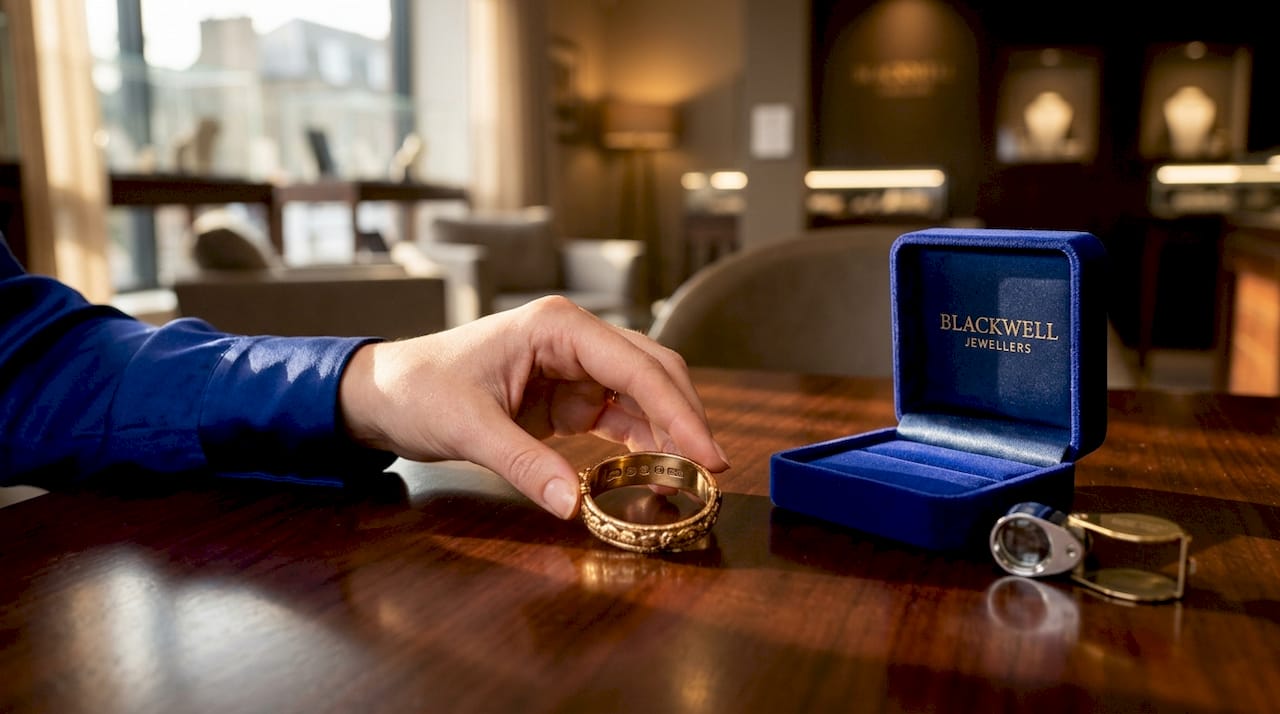
- Visual and physical inspection: Examining the piece under magnification to check for repairs, damage, replaced stones, or signs of misrepresentation
- Hallmark verification: Reading the marks stamped into the metal that legally confirm its purity, origin, and date of assay
- Stone assessment: Checking cut, colour, clarity and carat (the famous 4 Cs), alongside any accompanying certificates
- Independent valuation: Commissioning a report from a qualified gemmologist who has no stake in the sale
- Restoration documentation: If a piece has been restored, recording exactly what work was done and what materials were used
Hallmarks are the unsung heroes of pre-owned jewellery. Most buyers glance at them and move on. But those tiny symbols are actually legal proof of quality, telling you the metal fineness, which assay office tested it, and often the year it was tested. For trusted gold buyers in Kent, these marks are the starting point of every honest transaction.
Here’s something that surprises most buyers: when it comes to diamonds, cut matters more than carat for sparkle. A well-cut smaller stone will outshine a poorly cut larger one every single time. Your jeweller should be flagging this for you, not just quoting you a weight figure and waiting for your eyes to light up.
| What to check | Why it matters | Who verifies it |
|---|---|---|
| Hallmark | Proves metal purity and legality | Assay office, independent valuer |
| Diamond certificate | Confirms 4 Cs grading | GIA, IGI, or independent gemmologist |
| Provenance | Tells the ownership and origin story | Jeweller, auction records |
| Restoration record | Shows what repairs were done | In-house jeweller |
| Insurance valuation | Establishes replacement value | Qualified gemmologist |
Pro Tip: Never rely solely on the certificate provided by the seller of a diamond. A truly independent gemmologist, someone who has nothing to gain from the sale, gives you a far more reliable assessment. The Goldsmith’s Company confirms that independent validation consistently outperforms seller-provided documentation.
Ethical sourcing: conflict-free, lab-grown and vintage options
Let’s talk ethics, because this is where jewellery shopping gets genuinely interesting and occasionally a bit awkward.
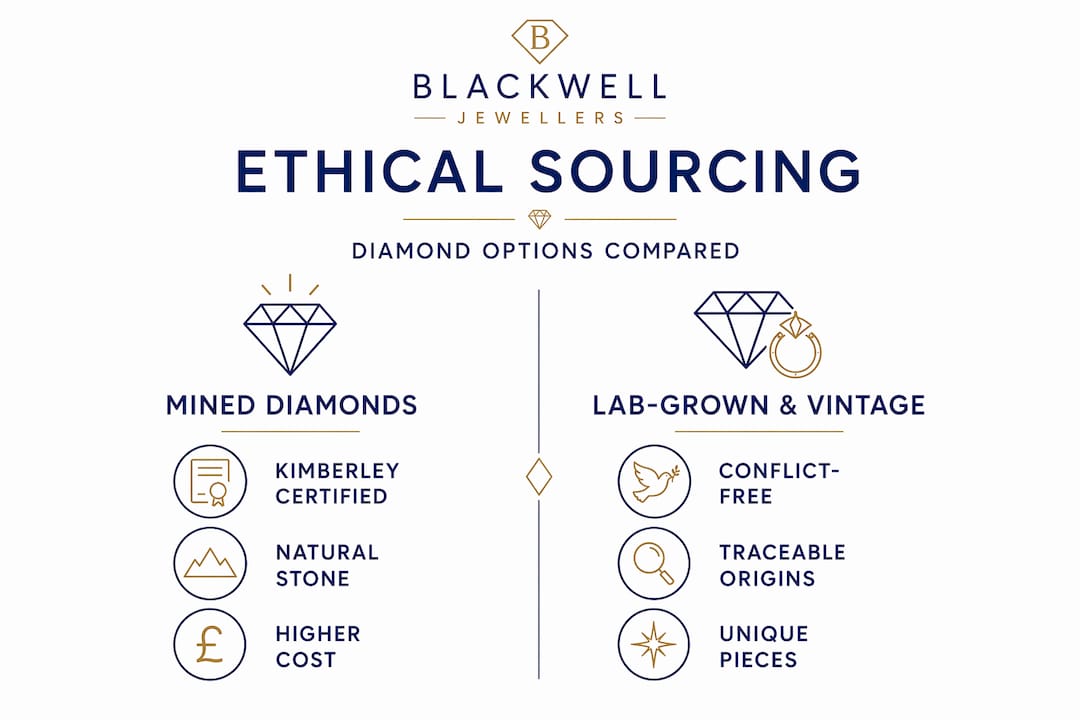
If you care about where your diamond came from (and most buyers do, once they think about it), you’ve got three main routes to consider. Each one comes with its own set of advantages, compromises, and conversations to have with your jeweller.
Mined diamonds with Kimberley Process certification
The Kimberley Process is an international certification scheme designed to prevent conflict diamonds from entering the legitimate market. It’s not perfect. Critics argue that the definition of “conflict diamond” is too narrow. But it does provide a baseline assurance that the stone you’re buying didn’t fund an armed conflict. Ask your jeweller for the paperwork.
Lab-grown diamonds
These are, scientifically speaking, identical to mined diamonds. Same carbon structure. Same sparkle. The difference is they’re grown in a controlled environment, which means full traceability and zero mining impact. You can explore ethical lab grown diamonds if you want to see what’s available close to home. They’re typically 50 to 70 percent less expensive than mined equivalents, which is not nothing.
Vintage and antique pieces
Here’s the slightly thorny option. Vintage jewellery is often beautiful, genuinely one-of-a-kind, and represents a kind of recycling that is inherently ethical in its own way. You’re not creating new demand for mining. You’re giving an existing piece a new life. However, pieces made before the Kimberley Process (pre-2003) carry no such certification, and the full provenance can be murky. That doesn’t make them bad choices. It just means the ethical calculus is different.
| Type | Ethical guarantee | Traceability | Cost | Uniqueness |
|---|---|---|---|---|
| Kimberley-certified mined | Good | Moderate | High | Medium |
| Lab-grown | Excellent | Full | Lower | Medium |
| Vintage/antique | Varies | Limited | Variable | Very high |
The choice between ethical diamond sourcing routes ultimately depends on what matters most to you. Some buyers want complete traceability above all else. Others prioritise the romance of a piece with genuine history. There’s no wrong answer, but there is a wrong way to go about it, and that’s buying without asking the questions.
Pro Tip: If you’re considering lab-grown, ask your jeweller about lab-grown options that come with IGI or GIA grading reports. That certificate tells you you’re genuinely getting what you paid for.
Studies suggest that lab-grown diamond demand has grown significantly among younger buyers in the UK, with many prioritising traceability and environmental impact over traditional sourcing narratives.
Matching jewellery to your values and lifestyle
So you’ve absorbed the theory. Now what? Let’s make this practical, because frankly, all the knowledge in the world is useless if you walk into a jeweller feeling like you need a geology degree to have a conversation.
Here’s what we’d suggest asking before you buy anything:
- “Can I see the hallmarks, and can you explain what they mean?” Any decent jeweller will be delighted to walk you through this. If they seem reluctant, that’s a red flag.
- “Is this stone certified, and by whom?” Seller-provided certification is a starting point. Independent grading is the gold standard.
- “What’s the provenance of this piece?” For pre-owned and antique items especially, you want to know as much of the story as possible.
- “What repair or restoration work has been done?” If it’s a pre-owned piece, it may have had work done. That’s not necessarily a problem, but it should be disclosed.
- “Do you offer an independent valuation?” If the shop sells and valuates, ask whether that valuation is done by someone external.
The difference between a lab-grown vs natural engagement rings decision, for example, isn’t just about ethics. It’s about what the piece means to you, how you weigh heritage against traceability, and what your budget actually allows.
And this is exactly why local jewellery sourcing matters so much. A local jeweller in Kent who knows you, understands your values, and can show you pieces in person will serve you infinitely better than scrolling through listings at 11pm wondering what “VS2” actually means.
Bespoke and heirloom revivals are worth a special mention here. If you have a family piece that’s seen better days, or you want something entirely unique, bespoke is genuinely magical. You bring the brief, the jeweller brings the skill, and what comes out the other side is yours in a way nothing off a shelf ever could be.
Pro Tip: Bring your lifestyle into the conversation. A ring with deep stone settings, for instance, catches more on clothing and may not suit an active lifestyle. A good jeweller will flag this. A great one will redesign accordingly.
Why true expertise matters more than trends
Right, here’s our honest take, and it might ruffle a few feathers.
Most buyers spend enormous energy worrying about carats, trends, and keeping up with what’s fashionable. Fair enough. Jewellery is personal, and wanting something beautiful isn’t wrong. But the buyers who end up most satisfied, both emotionally and financially, are the ones who prioritised expertise over everything else.
The hallmarking field guide makes the point clearly: cut matters more than carat for sparkle, hallmarks are essential for pre-owned valuation, and an independent gemmologist consistently outperforms a seller-provided certificate. These aren’t opinions. They’re the professional consensus.
We see buyers come in regularly having made purchases elsewhere based on glittery marketing and a big number on the carat weight. Then they discover the stone was poorly cut, the hallmark doesn’t match the claimed purity, or the “antique” piece was restored so heavily it barely qualifies. Regret is expensive, both financially and emotionally.
The truth is, in a market full of marketing hype, the thing that actually protects you is straightforward: authentic expertise. Local jewellers in Kent who have invested years in understanding gemmology, hallmarking, provenance and restoration are worth their weight in gold (yes, pun intended). They’ll guide you towards pieces that hold value, sit beautifully, and tell a genuine story. Understanding how lab-grown diamonds are made, for instance, demystifies a whole category of purchase and prevents you from being sold something under false pretences.
Expertise isn’t glamorous. It doesn’t photograph well for Instagram. But it’s the thing that means you never have buyer’s regret. And for a purchase this significant, that matters more than any trend.
Discover quality, expertise, and choice with Kent jewellers
If everything we’ve covered has got you thinking (good), then the obvious next step is connecting with jewellers who genuinely live these standards every day.
At Blackwell Jewellers, we’ve been doing exactly this for over 20 years across Kent, with stores in Maidstone, Gravesend and Bexleyheath. Whether you’re looking for second-hand jewellery in Kent that’s been properly inspected, authenticated and restored, or you want to explore bespoke jewellery services that bring your exact vision to life, we’ve got the expertise and the honesty to guide you properly. We also offer expert jewellery repairs for pieces that deserve a second life. Come in, ask the awkward questions, and leave with something you truly trust.
Frequently asked questions
What does an independent gemmologist do for jewellery in Kent?
Independent gemmologists offer unbiased assessments and detailed written reports, confirming authenticity and fair value without any financial stake in the sale. Specialists like Rufus Valuations in Ashford operate to FGA, DGA, and MIRV standards, providing reports with photographs suitable for insurance and probate purposes.
How do I know if a diamond from a Kent jeweller is ethically sourced?
Ask for a Kimberley Process certificate confirming conflict-free origin, or choose a traceable lab-grown stone which carries full traceability and no mining impact.
Why are hallmarks important when buying pre-owned jewellery in Kent?
Hallmarks are legal proof of metal quality, origin, and date of testing, making them essential for insurance valuations, resale, and confirming a piece is genuinely what the seller claims.
Can vintage jewellery also be ethical?
Vintage pieces represent a form of ethical re-use, avoiding new mining demand entirely, though they may not carry modern sourcing certifications due to their age and the limited documentation available from earlier eras.
What should I ask a Kent jeweller before buying a bespoke or antique piece?
Ask about provenance, hallmarking, ethical sourcing certifications, what restoration work has been done, and whether an independent gemmological valuation is available or can be arranged before purchase.
Recommended
- Find trusted gold buyers in Kent for quality and ethics – Blackwell Jewellers
- How to find trusted watch and jewellery repair in Kent – blackwellonline
- Find trustworthy pawn shops near you: Kent’s local guide – Blackwell Jewellers
- Find a trusted pawnbroker in Kent for quality jewellery – Blackwell Jewellers