

Most people assume that choosing a blue stone ring simply means picking a sapphire. The reality is far more interesting. From the icy shimmer of aquamarine to the violet-tinged depth of tanzanite, blue stones span a remarkable range of colours, price points, and practical qualities. The stone you choose affects not just how your ring looks, but how long it lasts, what it costs to maintain, and whether it aligns with your values around ethical sourcing. This guide walks you through every major option, helping you find the right blue stone ring for your lifestyle, budget, and personal style.
Table of Contents
- Why blue stones are a jewellery classic
- Understanding the most popular blue stones: sapphires, topaz, aquamarine and more
- How to choose the best blue stone ring for you
- Buying blue stone rings in the UK: sources and prices
- Caring for your blue stone ring: tips for lasting beauty
- Find your perfect blue stone ring at Blackwell Jewellers
- Frequently asked questions
Key Takeaways
| Point | Details |
|---|---|
| Sapphire is the top choice | For everyday rings, sapphire blends stunning blue colour and outstanding durability. |
| Consider all blue stones | Blue topaz and aquamarine are affordable options, while tanzanite and Blue John work best for occasional wear. |
| Lab-grown is ethical | Lab-grown sapphires and topaz offer equal beauty with a smaller environmental impact and lower price. |
| UK offers variety | Explore bespoke jewellers, vintage sellers, and high street retailers for a full spectrum of blue stone rings. |
| Proper care is essential | Regular gentle cleaning and professional inspections will keep your blue stone ring looking its best. |
Why blue stones are a jewellery classic
Blue has carried deep symbolic meaning across cultures for centuries. It represents loyalty, trust, and calm, which is precisely why blue stone rings have long been chosen for engagements, anniversaries, and meaningful gifts. There is something about a blue stone that feels both timeless and personal.
The range of blue hues available is genuinely striking. Sapphires offer that rich, velvety midnight blue that most people picture first. Aquamarine brings a pale, almost translucent sea-blue that suits lighter settings beautifully. Tanzanite shifts between blue and violet depending on the light. Each stone creates a completely different mood on the finger.
Sapphires, in particular, have earned their place as the go-to choice for rings worn every day. Mohs hardness of 9 makes sapphire second only to diamond in durability, meaning it resists scratching and chipping far better than most alternatives. That practical strength, combined with its beauty, is why sapphire remains the benchmark.
“Sapphire is the primary blue stone used in rings, prized for its exceptional hardness and depth of colour, making it ideal for everyday jewellery.”
Key reasons blue stones remain so popular:
- Versatility: Blue complements white gold, yellow gold, rose gold, and platinum equally well
- Symbolism: Associated with loyalty and sincerity, making them ideal for meaningful gifts
- Range: From affordable topaz to rare untreated sapphires, there is a blue stone for every budget
- Longevity: Harder stones like sapphire and topaz hold up well to daily wear
Understanding the most popular blue stones: sapphires, topaz, aquamarine and more
Not all blue stones are equal in terms of wearability or cost. Understanding the differences helps you make a choice you will be genuinely happy with for years.
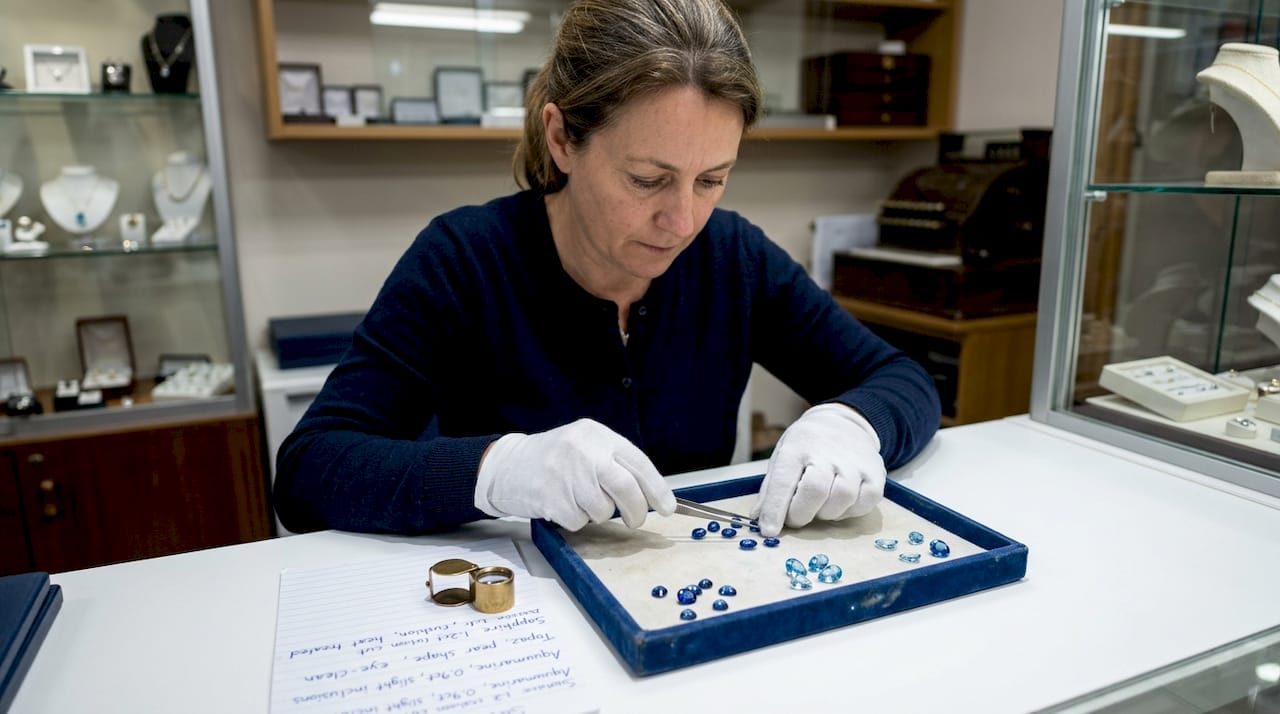
Our sapphire ring guide covers the full picture for sapphire buyers, but here is how the main contenders compare:
| Stone | Colour range | Mohs hardness | Typical UK price | Best for |
|---|---|---|---|---|
| Blue sapphire | Deep to pale blue | 9 | £390–£1,560 per carat | Daily wear, engagement rings |
| Blue topaz | Sky to Swiss blue | 8 | £20–£150 per carat | Everyday rings, gifts |
| Aquamarine | Pale to medium blue | 7.5–8 | £50–£300 per carat | Dress rings, occasional wear |
| Tanzanite | Blue-violet | 6–7 | £200–£600 per carat | Special occasion pieces |
| Blue zircon | Bright electric blue | 6–7.5 | £30–£200 per carat | Statement rings |
| Blue John | Purple-blue banded | 4 | £50–£400 per piece | Collector pieces only |
Blue topaz, aquamarine, and tanzanite each bring distinct qualities: topaz sits at Mohs 8 and is typically colour-enhanced for a vivid result; aquamarine ranges from 7.5 to 8 and suits rings worn with care; tanzanite at Mohs 6 to 7 is better suited to occasional wear rather than daily use.
Here are the standout facts for each stone:
- Sapphire: The royal choice. Princess Diana’s iconic ring, now worn by the Princess of Wales, brought sapphire back into mainstream consciousness.
- Blue topaz: Extremely affordable and widely available. Our blue topaz ring in 9ct yellow gold is a popular choice for gifting.
- Aquamarine: Named after seawater, it is the birthstone for March. Aquamarine engagement rings are growing in popularity for their romantic, ethereal quality.
- Tanzanite: Found only in a small area of Tanzania, making it geographically rarer than diamonds. Spectacular but fragile.
- Blue zircon: Often confused with cubic zirconia, but it is a completely natural gemstone with exceptional brilliance.
- Blue John: A uniquely British stone, found only in Derbyshire. Extremely soft and best kept as a collector’s piece rather than a wearable ring.
How to choose the best blue stone ring for you
With so many options, making the right choice comes down to a few honest questions about how you live and what you value.
Daily wear or special occasions? If you want a ring you can wear every day without worrying, sapphire or blue topaz are your safest bets. Tanzanite and Blue John are genuinely beautiful but require careful handling and are better reserved for evenings out.
Ethical sourcing matters to you? Lab-grown sapphires are worth serious consideration. Lab-grown sapphires have identical properties to natural stones but offer clear ethical and cost advantages. Heat treatment is standard practice across the industry, but untreated natural sapphires are rare and command a premium. Understanding the difference between lab-grown and mined stones helps you decide what matters most to you.
Budget considerations: Blue topaz offers genuine beauty at a fraction of the cost of sapphire. For those who want something unique without a high price tag, choosing ethical jewellery through lab-grown or pre-owned routes is increasingly popular.
Key questions to ask yourself before buying:
- How often will you wear it, and in what situations?
- Do you want a stone that is naturally occurring or are you open to lab-grown?
- Is colour consistency important, or do you enjoy the character of natural variation?
- Are you buying for yourself or as a gift with a specific meaning in mind?
Pro Tip: Do not overlook vintage and bespoke rings when searching for something truly individual. A pre-owned sapphire ring from the 1980s or an Edwardian aquamarine piece carries history and character that a brand-new ring simply cannot replicate. Bespoke design also lets you specify the exact shade of blue you want.
Buying blue stone rings in the UK: sources and prices
The UK has a strong tradition of independent jewellers, vintage dealers, and bespoke craftspeople, giving buyers genuinely good options at every price point.
| Source type | What they offer | Typical price range |
|---|---|---|
| Independent bespoke jewellers | Custom designs, ethical sourcing | £500–£5,000+ |
| Pre-owned and vintage dealers | Edwardian, Art Deco, 1980s pieces | £200–£2,500 |
| Online retailers | Wide selection, competitive pricing | £50–£3,000 |
| Hatton Garden specialists | Loose stones and custom settings | £390–£1,560 per carat |
For bespoke work, UK jewellers such as Lily Arkwright specialise in lab-grown sapphires, while Crystal Myths in Hatton Garden offer loose stones for custom settings. For pre-owned and vintage pieces, Regal Antiques carries Edwardian and vintage sapphire rings, with prices around £735 for quality period pieces.
When buying pre-owned or bespoke, always ask:
- Is the stone certified or hallmarked?
- Has the setting been inspected for structural integrity?
- Is there documentation of any treatments applied to the stone?
- What is the seller’s returns or guarantee policy?
Our own bespoke blue stone rings and blue zircon ring selections are fully authenticated and inspected before sale. For something truly special, our sapphire and diamond rings in 18ct white gold combine classic elegance with verified quality.
Caring for your blue stone ring: tips for lasting beauty
Even the hardest stone benefits from proper care. The durability of each stone directly affects which cleaning methods are safe: sapphire at Mohs 9, topaz at Mohs 8, aquamarine at 7.5 to 8, and tanzanite at just 6 to 7 each require a slightly different approach.
Here are the five most important care rules for blue stone rings:
- Clean sapphires and topaz with warm soapy water and a soft brush. Both are robust enough for gentle home cleaning without risk of damage.
- Avoid ultrasonic cleaners for tanzanite and aquamarine. The vibrations can cause fractures in softer or included stones. Stick to a damp cloth and mild soap.
- Store rings separately to prevent harder stones from scratching softer ones. A fabric-lined box with individual compartments is ideal.
- Remove rings before swimming or using cleaning products. Chlorine and harsh chemicals can affect both the metal setting and certain stone treatments.
- Check claw settings regularly, especially on vintage mounts where metal may have thinned over time. A loose claw is the most common cause of stone loss.
Pro Tip: Book a professional inspection at least once a year, particularly for rings with claw or prong settings. A jeweller can spot early signs of wear before a stone is lost. This is especially important for pre-owned rings where the setting history is unknown.
Find your perfect blue stone ring at Blackwell Jewellers
Knowing what you want is the first step. Finding it from a source you can trust is the next.

At Blackwell Jewellers, we have spent over 20 years helping customers across Kent and the UK find blue stone rings that genuinely suit them. Whether you are drawn to the classic depth of an 18ct white gold sapphire and diamond ring or prefer the responsible choice of an ethical diamond ring, our team brings real expertise to every conversation. Every pre-owned piece in our collection is inspected, authenticated, and hallmarked before it reaches you. We also offer bespoke design consultations for customers who want something entirely their own. Visit one of our Kent stores or browse our full collection online to find the blue stone ring that is right for you.
Frequently asked questions
What is the most durable blue stone for a ring?
Sapphire’s Mohs hardness of 9 makes it the most durable blue stone for rings, second only to diamond. It is the best choice for daily wear and active lifestyles.
Are lab-grown blue sapphires considered real gemstones?
Yes. Lab-grown sapphires share identical properties to natural stones, including the same hardness, chemical composition, and optical qualities. They are genuine gemstones, not simulants.
Can I wear a tanzanite ring every day?
Tanzanite’s hardness of 6 to 7 makes it vulnerable to scratching and chipping with regular wear. It is best reserved for special occasions rather than everyday use.
What should I look for when buying a pre-owned blue stone ring?
Always check for hallmarking, a sound setting, and a reputable seller. Vintage sapphire rings from established dealers typically come with provenance information and have been inspected for structural integrity.
Why are some sapphires much more expensive than others?
Untreated sapphires command a premium because they are rare. Price also rises with carat weight, clarity, and origin, with stones from Kashmir and Burma historically the most sought-after.