
TL;DR:
- Selling gold in Bexleyheath requires proper preparation, including separating items by karat and obtaining multiple quotes. Only licensed dealers paying by bank transfer adhere to UK laws, and accepting the first offer or selling a mixed collection can result in significant losses. Conduct research, verify dealer credentials, and bring valid ID for a fair and legal transaction.
Cash for gold is the process of exchanging your gold items for immediate payment through licensed dealers who conduct transparent, regulated transactions. If you’re thinking about selling gold in Bexleyheath, the good news is that the process is straightforward when you know what to expect. The tricky part? Most sellers leave money on the table because they skip the preparation. This guide covers the gold selling process in Bexleyheath from start to finish, including how to value your items, what the law requires, and how to spot a buyer worth trusting.
How to prepare your gold items before selling in Bexleyheath
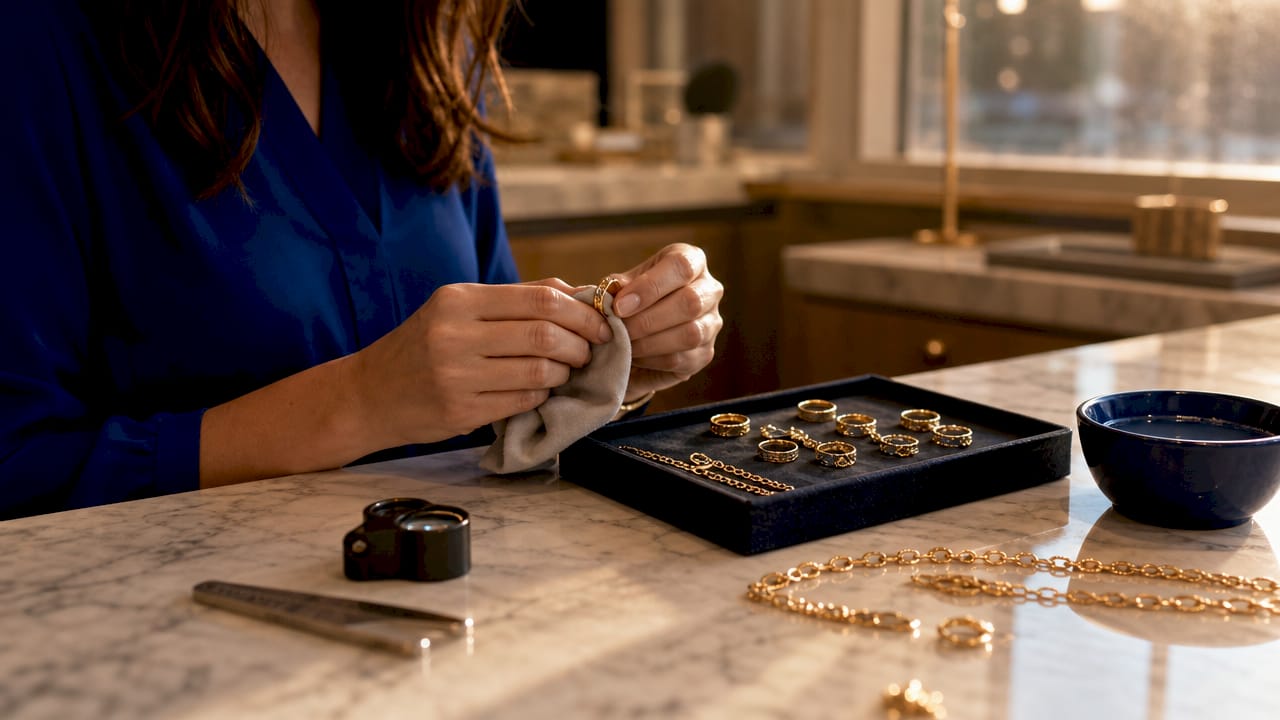
Preparation is where most sellers either win or lose. The single biggest mistake is throwing everything into a bag and hoping for the best.
Separating gold by karat before you walk through any door is non-negotiable. If you hand a dealer a mixed pile of 9ct and 18ct pieces, they will value the entire lot at the 9ct rate. That is not a scam. That is just how bulk buying works. Separate your items first and you protect yourself from that outcome.
UK gold hallmarks tell you the purity instantly:
- 375 = 9ct gold (37.5% pure gold)
- 585 = 14ct gold (58.5% pure gold)
- 750 = 18ct gold (75% pure gold)
- 916 = 22ct gold (91.6% pure gold)
- 999 = 24ct gold (99.9% pure gold)
Look for these stamps on clasps, inside ring shanks, or on the back of pendants. A jeweller’s loupe (a small magnifying glass, available cheaply online) makes this much easier.
Weigh each group separately using a digital jewellery scale. These cost under £15 and measure in grams, which is the unit dealers use. Knowing your weights before you go means you can check a dealer’s scales against your own figures.
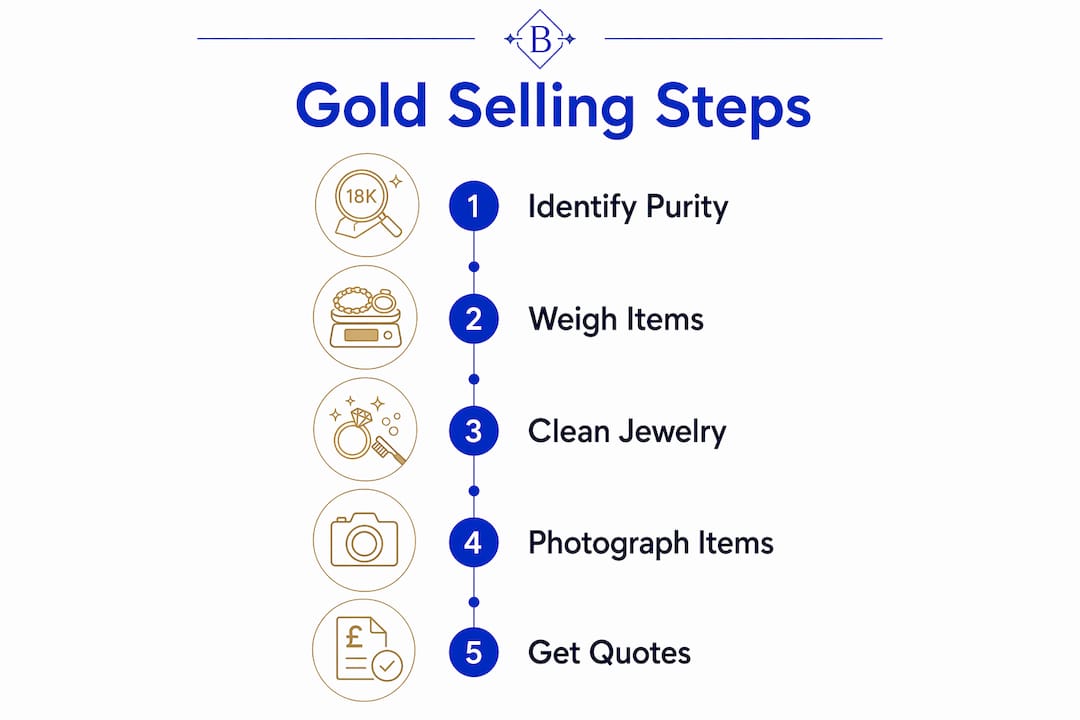
Give items a gentle clean with warm water and mild washing-up liquid. Avoid anything abrasive. You are not trying to restore them. You just want the hallmarks visible and the surface presentable.
Pro Tip: Photograph every item before you leave the house. Note the weight and hallmark for each piece. This takes ten minutes and gives you a personal record if anything is disputed later.
What payout can you expect? Gold pricing explained
Gold spot prices fluctuate daily, and that daily movement directly affects every offer you receive. Sample rates in 2026 show 9ct gold trading at around £37.93 per gram, 18ct at £75.86 per gram, and 22ct at £92.64 per gram. These are melt values, meaning the raw worth of the gold content before any dealer margin.
No buyer pays 100% of melt value. They need to cover testing, processing, and their own margin. What matters is how close to melt value they get.
| Buyer type | Typical payout (% of melt value) | Speed of payment |
|---|---|---|
| Specialist gold dealer | 85–90% (scrap), up to 95–98% (bullion) | Same day or next day |
| High-street jeweller | 75–90% | Same day |
| Pawnbroker | 70–85% | Same day |
| Online/postal buyer | 60–80% | 2–7 days after receipt |
| Cash-for-gold kiosk | 50–70% | Immediate |
Reputable high-street buyers typically offer 75–90% of melt value, while specialist dealers reach 85–90% for scrap gold. That gap between a kiosk and a specialist dealer can mean a significant difference in pounds when you are selling a meaningful weight of gold.
Pro Tip: Get at least three quotes before you accept anything. Reputable dealers provide written quotes and transparent pricing formulas. If a buyer refuses to show you their calculation, walk away.
You can value your gold at home before visiting any dealer, which puts you in a much stronger negotiating position.
What does UK law say about selling gold?
The law is actually on your side here, and knowing it makes you a much harder target for dodgy operators.
The Scrap Metal Dealers Act 2013 requires every dealer in England and Wales to hold a council-issued licence, carry out identity checks on sellers, and use cashless payments only. Cash payments for scrap metal and gold are illegal. Full stop. If a buyer offers you cash in hand, that is not a bonus. That is a red flag.
Here is what a legitimate dealer must do:
- Hold a valid scrap metal dealer’s licence issued by the local council.
- Ask for your photo ID (passport or driving licence) and proof of address.
- Pay by bank transfer or cheque only.
- Keep records of every transaction.
Valid photo ID and proof of address are legally required under anti-money laundering rules. Bring both every time, regardless of the buyer.
Watch for these red flags before you commit to any sale:
- No physical premises or a reluctance to give a business address
- Cash-only payment offers
- Refusal to test gold purity on-site
- No written quote or pricing breakdown
- Pressure to decide immediately
“Check for licences, physical addresses, Google reviews, and transparent pricing policies before selling gold.” — Avoid Gold Scams UK
Membership of the London Bullion Market Association (LBMA) or the British Numismatic Trade Association (BNTA) adds another layer of credibility for specialist buyers. These are not guarantees, but they are positive signals.
Where to sell gold in Bexleyheath for the best price
Bexleyheath has genuine options for selling gold, and the best results usually come from combining local visits with a bit of advance research.
Local family-run jewellers often offer superior value through personal trust, transparent pricing, and same-day bank transfers. The trade-off with online buyers is that while lower overheads can occasionally produce slightly higher offers, you lose the ability to inspect the process in person and payment is delayed. For most sellers, the certainty and speed of a trusted local dealer wins.
Here is a practical checklist for selling gold in Bexleyheath:
- Research buyers in advance. Check Google reviews and confirm they have a physical address.
- Ring ahead and ask whether they buy gold and what their current rate per gram is for your karat.
- Bring your photo ID and proof of address to every appointment.
- Take your pre-weighed, separated items and your written notes.
- Ask for a written quote before agreeing to anything.
- Compare at least three offers before you sell.
Blackwelljewellers operates a store in Bexleyheath and has over 20 years of trading experience across Kent, including locations in Maidstone and Gravesend. They follow UK regulations, offer transparent pricing, and pay by bank transfer. You can find trusted jewellers in Bexleyheath to compare your local options before you commit.
For sellers who want to understand the wider picture across the county, this guide to selling gold in Kent covers the key considerations in more detail.
Online and postal buyers are worth considering for convenience, but factor in the wait. You post your items, they assess them, and payment arrives days later. If you are not happy with the offer, getting items returned takes more time still. For most people selling in Bexleyheath, a local visit is faster and less stressful.
Key takeaways
Selling gold in Bexleyheath pays best when you separate items by purity, get multiple written quotes, and use only licensed dealers who pay by bank transfer.
| Point | Details |
|---|---|
| Separate by karat first | Mixed lots are valued at the lowest purity rate, which reduces your payout significantly. |
| Know your melt value | Check the daily spot price and calculate your gold’s worth before visiting any buyer. |
| The law bans cash payments | The Scrap Metal Dealers Act 2013 requires all gold purchases to be paid by bank transfer or cheque. |
| Get three quotes minimum | Written quotes from multiple buyers protect you and reveal the true market rate for your items. |
| Bring ID every time | Photo ID and proof of address are legally required under anti-money laundering rules. |
James’s take: the mistake that costs sellers the most
The number one thing I see sellers get wrong is accepting the first offer. Not because the first buyer is necessarily dishonest. It is because gold buying is a market, and markets have spread. Two buyers on the same high street can offer meaningfully different prices for the same piece.
The second mistake is selling a mixed bag. I have seen sellers hand over a collection of 9ct, 18ct, and even 22ct pieces in one go, watch the dealer weigh the lot together, and accept a rate based on 9ct. That is hundreds of pounds lost in under a minute. Separate everything before you leave home. It takes ten minutes and it genuinely changes the outcome.
The third thing I would say is this: do not be embarrassed to ask questions. Ask the dealer to show you their calculation. Ask what the spot price is today. Ask why their rate differs from the competitor down the road. A good dealer will answer every one of those questions without flinching. A bad dealer will get uncomfortable. That discomfort tells you everything.
Local, established jewellers with physical premises and real reputations to protect are almost always the safer bet over anonymous online buyers. The best way to sell gold jewellery in the UK consistently comes back to preparation, comparison, and choosing buyers who operate transparently.
— James
Blackwelljewellers in Bexleyheath: fair prices, no guesswork
Blackwelljewellers has been buying and selling pre-owned gold, silver, and diamond jewellery for over 20 years across Kent. Their Bexleyheath store follows all UK regulations, including the Scrap Metal Dealers Act 2013, and pays by bank transfer on the day.

Every item is tested and valued transparently, with pricing based on current spot rates and karat purity. You can bring your separated, weighed items and get a written quote with no obligation. Their second-hand jewellery service covers gold buying alongside a full range of pre-owned pieces, so whether you are selling a single ring or a full collection, the process is the same: straightforward, regulated, and fair.
FAQ
What items can I sell for cash for gold in Bexleyheath?
Most licensed buyers accept gold jewellery, coins, and scrap gold in any condition. Hallmarked pieces, broken chains, and old rings all qualify as long as the gold content can be verified.
Is it legal to sell gold for cash in Bexleyheath?
Cash payments for gold are illegal under the Scrap Metal Dealers Act 2013. All payments must be made by bank transfer or cheque from a licensed dealer.
How do I know if a gold buyer in Bexleyheath is legitimate?
Check that the buyer holds a council-issued scrap metal dealer’s licence, has a physical premises, and asks for your photo ID. Refusal to provide a written quote or offer cashless payment is a warning sign.
How much will I get for my gold in Bexleyheath?
Specialist dealers typically pay 85–90% of melt value for scrap gold. High-street jewellers offer 75–90%, while pawnbrokers and kiosks tend to offer less. Getting three written quotes gives you the clearest picture.
Do I need ID to sell gold in Bexleyheath?
Yes. Valid photo ID and proof of address are legally required under UK anti-money laundering rules. Every reputable dealer will ask for both before completing a purchase.