

TL;DR:
- Proper home jewelry cleaning involves gentle methods tailored to material type, such as soaking for metals and wiping for organic stones. Using soft tools like microfiber cloths and avoiding harsh abrasives prevents damage and extends jewelry longevity. Regular maintenance with mild soap and careful drying preserves the appearance of fine and delicate pieces alike.
Cleaning jewellery at home is defined as a gentle, material-aware process using mild dish soap, warm water, and soft tools to restore shine without causing damage. Done correctly, it is one of the most effective ways to maintain your pieces between professional services. The key word there is correctly. Get it wrong and you can scratch a diamond setting, dissolve a pearl’s nacre, or strip the plating off a gold-filled ring before you’ve even had your morning coffee. This guide covers the safest jewellery cleaning methods for every material type, from robust gold and platinum to fragile pearls and porous gemstones.
What tools do you need for cleaning jewellery at home?
The right tools make all the difference. You do not need a professional ultrasonic machine or expensive branded kits. What you do need is softness, mildness, and a bit of patience.
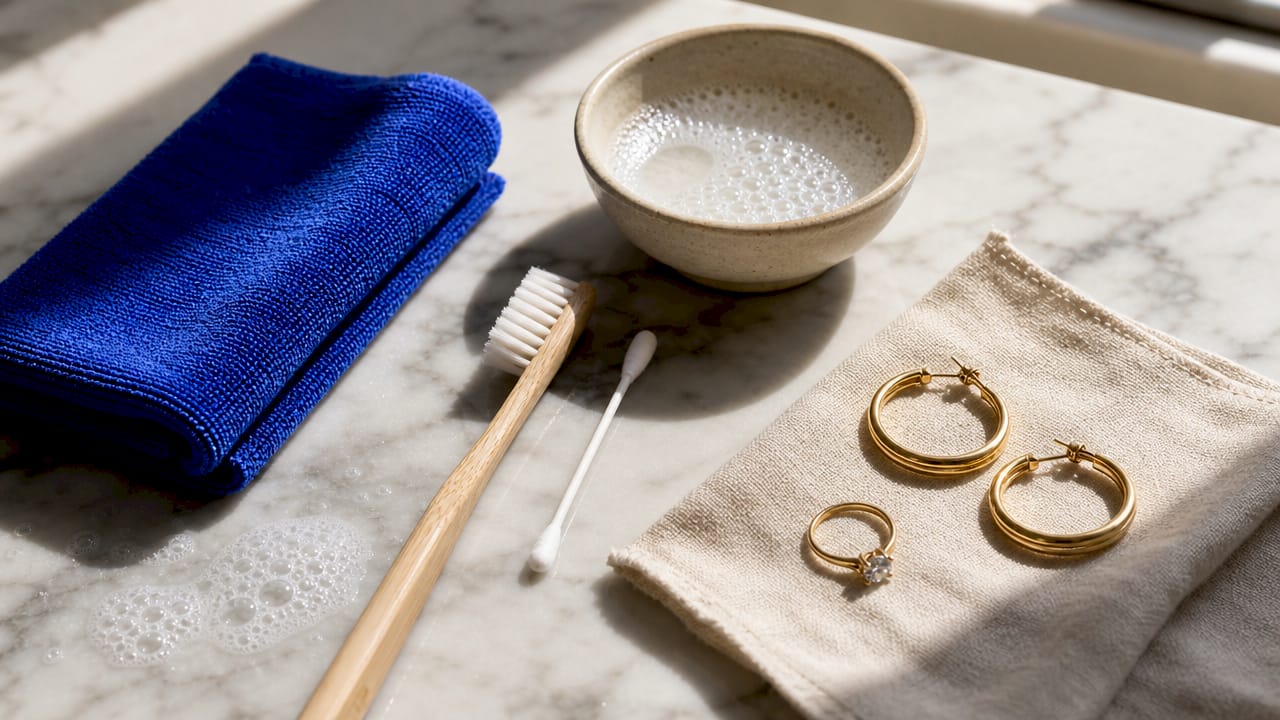
Here is what to gather before you start:
- Mild dish soap (Fairy Original works perfectly; avoid anything with moisturisers or antibacterial agents)
- Warm water (not hot; heat can loosen settings and damage certain stones)
- Soft-bristle toothbrush (a baby toothbrush is ideal; adult brushes are often too stiff)
- Lint-free microfiber cloths (two of them; one for drying, one for polishing)
- Cotton swabs for tight crevices and underneath settings
- Baking soda for tarnish removal on silver
- Aluminium foil for the ionic silver cleaning method (more on that later)
- A small bowl for soaking
| Tool | Best Use | Caution |
|---|---|---|
| Soft-bristle toothbrush | Gold, platinum, diamonds | Do not use on pearls or soft stones |
| Microfiber cloth | Drying and polishing all metals | Replace regularly to avoid trapped grit |
| Cotton swab | Crevices, prong settings | Gentle pressure only |
| Baking soda paste | Silver tarnish removal | Avoid on plated items or soft gems |
| Mild dish soap | General soak for most metals | Skip moisturising formulas |
Pro Tip: Never use paper towels or standard kitchen cloths to dry jewellery. They feel soft but contain wood fibres that cause micro-scratches on metal and stone surfaces. Microfiber only.
How to clean gold, platinum, and diamond jewellery safely
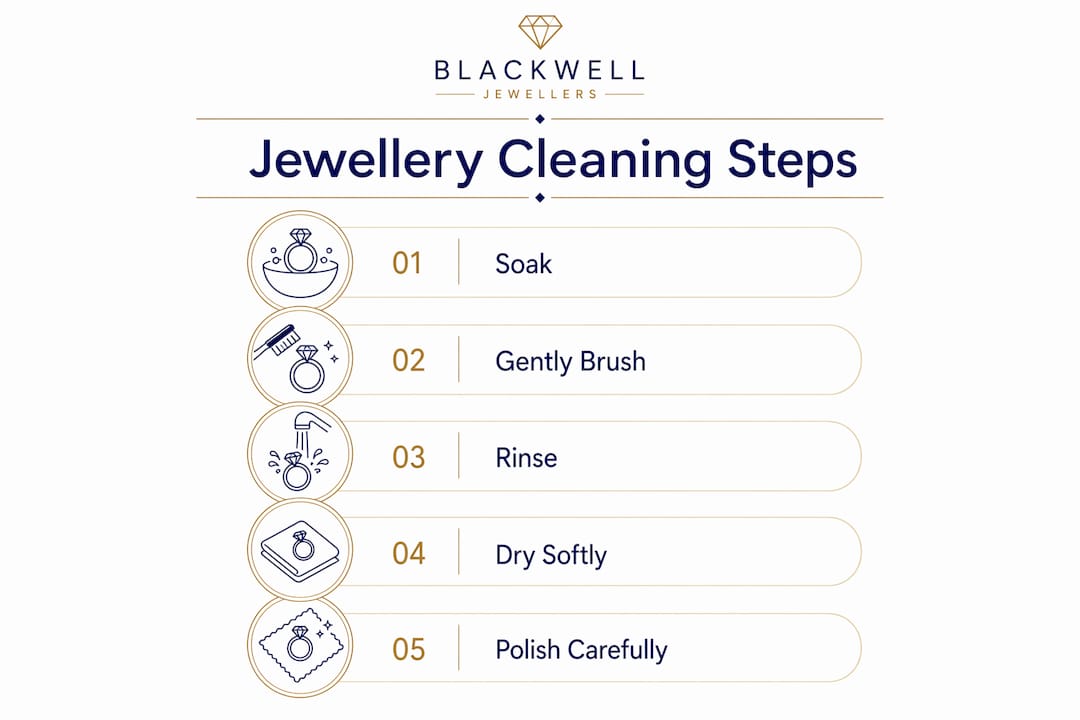
The standard cleaning process for fine jewellery is straightforward: soak, brush gently, rinse thoroughly, and dry properly. Most gold, platinum, and diamond pieces respond brilliantly to this routine.
Follow these steps:
- Fill a small bowl with warm (not hot) water and add two to three drops of Fairy Original or similar mild dish soap.
- Place your piece in the bowl and soak for 15–30 minutes. This loosens oils, lotions, and grime without any scrubbing required.
- Use a soft baby toothbrush to gently scrub around settings, under stones, and along any textured surfaces.
- Rinse the piece thoroughly under running warm water. Make sure all soap residue is gone.
- Pat dry gently with a clean microfiber cloth.
- Leave the piece to air dry for a further 10–15 minutes before storing or wearing.
That sixth step matters more than people realise. Trapped moisture under settings or inside hollow links accelerates tarnish and can weaken adhesives over time.
A word on ultrasonic cleaners: they are popular, but they are not risk-free at home. Ultrasonic and steam cleaners can loosen prong settings, crack certain gemstones, and destroy glued pieces entirely. Unless you know exactly what your jewellery is made from and are confident it can handle the vibration, leave ultrasonic cleaning to the professionals.
Pro Tip: The back of a stone setting collects more grime than the front. Use a cotton swab to clean behind each gem individually. This is where the real dullness lives, and clearing it out makes a visible difference to how the stone catches light.
How should you clean delicate jewellery like pearls and porous stones?
Pearls, opals, turquoise, malachite, and coral all fall into the “handle with extreme care” category. The soaking method that works brilliantly for gold will ruin pearls. Full stop.
Here is why: pearls are organic. Their nacre (the lustrous outer layer) is sensitive to acids, moisture, and chemicals. Soaking weakens the silk thread on strung pearl necklaces and can cause the nacre to lift or dull permanently. Porous stones like turquoise and opal absorb liquids and can stain, crack, or lose their colour entirely if submerged.
The correct approach for these pieces:
- Dampen a soft microfiber cloth with plain water or a very diluted solution of mild baby shampoo (one drop in a cup of water)
- Wipe each pearl or stone individually with light, even strokes
- Never rub aggressively or use circular scrubbing motions
- Lay the piece flat on a dry towel to dry; never hang a pearl necklace while wet as the thread stretches under the weight
- Allow extensive drying time, at least one to two hours, before storing
Wiping pearls gently after every wear is the single most effective thing you can do to preserve them. Body oils and perfume are the real enemies. A quick wipe takes ten seconds and adds years to the life of the piece.
Avoid ultrasonic cleaners, steam cleaners, and any chemical jewellery dips for these materials. They are not just unhelpful; they cause irreversible damage to delicate stones and organic gems. If you are unsure what your stone is, treat it as porous and use the wipe method. The safest default is always the gentler option.
How do you remove tarnish from silver jewellery at home?
Tarnish on silver is silver sulphide, a chemical reaction between silver and sulphur compounds in the air. It is not damage. It is chemistry. And you can reverse it at home without scratching your pieces.
The most reliable DIY approach uses a baking soda paste. Baking soda applied gently lifts tarnish without scratching because its particles are softer than silver. Mix one part baking soda with two parts water to form a paste, apply it to small sections of the piece with a microfiber cloth, work in gentle circular motions, then rinse thoroughly and dry.
Here is a quick comparison of common tarnish removal methods:
| Method | Best For | Avoid On |
|---|---|---|
| Baking soda paste | Sterling silver, solid silver | Plated silver, pearls, soft gems |
| Mild soap and warm water soak | Light tarnish, general grime | Pearls, porous stones |
| Aluminium foil and bicarbonate bath | Heavily tarnished sterling silver | Glued pieces, plated jewellery |
| Commercial silver dip | Quick results on solid silver | Anything with stones or plating |
The aluminium foil method is worth knowing. Line a bowl with aluminium foil, add hot water and a tablespoon of bicarbonate of soda, and place your silver piece in so it touches the foil. The ionic reaction transfers the tarnish from the silver to the foil. It sounds like a school science experiment. It works brilliantly.
What you must avoid: bleach and harsh chemicals destroy silver finishes and can permanently pit the metal. Toothpaste is another common mistake. It feels like a mild abrasive but it is far too coarse for silver and will leave visible scratches.
Pro Tip: Regular gentle wiping after wearing silver reduces tarnish buildup dramatically. A quick polish with a microfiber cloth every few days means you rarely need to resort to paste cleaning at all.
What mistakes damage jewellery and how do you avoid them?
Most jewellery damage from home cleaning comes from three things: the wrong materials, too much moisture, and impatience. Here is what to watch for.
Common mistakes to avoid:
- Using toothpaste, bicarbonate of soda, or abrasive powders on plated jewellery (they strip the plating)
- Soaking glued pieces, costume jewellery, or anything with foil-backed stones (the adhesive dissolves)
- Skipping the drying step and storing pieces while still damp
- Using paper towels, rough cloths, or old T-shirts to dry (all cause micro-scratches)
- Cleaning all pieces with the same method regardless of material
Good habits that protect your jewellery long-term:
- Wipe pieces with a microfiber cloth after every wear to remove oils and sweat
- Store pieces separately in soft pouches or lined boxes to prevent scratching
- Remove jewellery before swimming, cleaning, or applying perfume and lotions
- Store jewellery safely in a cool, dry place away from direct sunlight
Professional checks are worth scheduling once a year for pieces you wear regularly. A jeweller can spot loose prongs, worn clasps, and thinning plating before they become expensive problems. Knowing when to visit a professional is as much a part of good jewellery care as the cleaning itself. Home care maintains; professional care preserves.
Key takeaways
Effective home jewellery care requires matching your cleaning method to the material, using only mild soap and soft tools, and drying thoroughly before storage.
| Point | Details |
|---|---|
| Match method to material | Gold and platinum suit soaking; pearls and porous stones need wiping only. |
| Use the right tools | Soft baby toothbrush, microfiber cloths, and mild dish soap cover most cleaning needs. |
| Dry thoroughly every time | Pat dry with microfiber cloth then air dry 10–15 minutes to prevent tarnish from moisture. |
| Remove tarnish gently | Baking soda paste lifts silver tarnish safely; avoid bleach, toothpaste, and abrasive powders. |
| Maintain regularly | A quick wipe after every wear reduces buildup and extends time between deep cleans. |
Why simple routines beat occasional scrubbing every time
Here is something I have seen repeatedly working with jewellery: people neglect their pieces for months, then attack them with whatever they can find in the kitchen cupboard. Toothpaste. Bleach. Nail polish remover. The results are not pretty.
The truth is, frequency and gentleness outperform intensity every single time. A thirty-second wipe with a microfiber cloth after you take your ring off at night does more for its long-term appearance than a monthly aggressive scrub. It removes the oils and sweat before they oxidise and bond to the metal. Prevention is genuinely easier than cure here.
What I also think gets overlooked is material awareness. People treat all jewellery the same, and that is where the damage happens. A solid 18ct gold ring and a pearl pendant are not the same thing. They do not want the same treatment. Taking two minutes to identify what your piece is made from before you clean it is not being a nerd about it. It is just being sensible.
You also do not need expensive products. Fairy washing-up liquid and a baby toothbrush will clean a diamond ring as effectively as anything sold in a fancy jewellery shop. The best homemade jewellery cleaner is warm water and mild dish soap. That is it. Save your money.
— James
How Blackwelljewellers can help you care for your pieces
At-home cleaning keeps your jewellery looking its best day to day. But some things genuinely need a professional’s hands.

Blackwelljewellers offers expert jewellery repair services across its Kent stores in Maidstone, Gravesend, and Bexleyheath, covering everything from prong retipping and clasp replacement to full restoration of pre-owned pieces. If you have picked up something from the second-hand jewellery collection and want it professionally cleaned and checked before wearing, the in-house team handles exactly that. Every piece sold by Blackwelljewellers is inspected, hallmarked, and restored before it reaches you. For anything beyond what a soft brush and soapy water can fix, the team is ready.
FAQ
What is the safest way to clean jewellery at home?
The safest method is soaking in warm water with a few drops of mild dish soap for 15–30 minutes, then gently brushing with a soft toothbrush and rinsing thoroughly. This works for most gold, platinum, and diamond pieces without risk of damage.
Can you clean silver jewellery at home without specialist products?
Yes. A paste made from baking soda and water applied gently with a microfiber cloth removes tarnish from sterling silver effectively. Rinse thoroughly afterwards and dry completely before storing.
Should you soak pearls to clean them?
No. Soaking pearls weakens the silk thread and damages the nacre. Wipe them with a barely damp cloth using a diluted baby shampoo solution instead, then lay flat to dry.
How often should you clean your jewellery at home?
A light wipe with a microfiber cloth after every wear is the most effective routine. A deeper soak and brush clean every two to four weeks suits pieces worn regularly, such as rings and bracelets.
Is toothpaste safe for cleaning jewellery?
No. Toothpaste is too abrasive for most metals and gemstones and will cause micro-scratches on surfaces. Stick to mild dish soap and warm water for safe results.