

Your favourite gold necklace loses its lustre after a few months of wear, dulled by everyday grime and oils. You wonder if it’s damaged or simply needs attention. Cleaning gold jewellery every 4 to 8 weeks maintains optimal appearance without damage, yet most owners neglect this simple routine. This guide covers the cleaning, storage, polishing, and professional care techniques that preserve your gold jewellery’s shine and value for years.
Table of Contents
- Introduction To Gold Jewellery Maintenance
- Prerequisites: What You Need Before You Start
- Step-By-Step Home Cleaning Techniques
- Polishing And Handling: Techniques And Frequency
- Storage Best Practices
- Professional Maintenance: When And Why To Seek Expert Help
- Common Mistakes And How To Fix Them
- Expected Outcomes And Maintenance Benchmarks
- Maintain Your Gold Jewellery With Blackwell Jewellers
- Frequently Asked Questions
Key takeaways
| Point | Details |
|---|---|
| Regular cleaning prevents buildup | Clean every 4 to 8 weeks using mild soap and warm water to remove oils and residue. |
| Safe tools protect gold | Use soft-bristle brushes and jeweller’s cloths; avoid abrasive products that scratch surfaces. |
| Proper storage extends lifespan | Store pieces individually in lined pouches to prevent scratches and tarnish. |
| Professional checkups detect issues early | Annual inspections identify loose settings and structural problems before they worsen. |
| Avoid common mistakes | Never use toothpaste, over-polish, or store jewellery together without protection. |
Introduction to gold jewellery maintenance
Gold jewellery demands consistent attention to preserve its aesthetic appeal and monetary worth. Proper maintenance preserves gold jewellery’s aesthetic appeal and value by preventing damage that reduces both beauty and resale potential. Neglecting care routines invites specific types of deterioration.
Daily exposure to oils, lotions, and environmental pollutants creates a film that dulls gold’s natural shine. Scratches accumulate from contact with hard surfaces and other jewellery pieces. Settings loosen over time, risking gemstone loss if left unaddressed.
Effective maintenance encompasses four core practices:
- Regular cleaning removes buildup before it bonds to metal surfaces
- Strategic storage prevents physical damage between wears
- Gentle polishing restores lustre without removing metal
- Professional inspections catch structural issues early
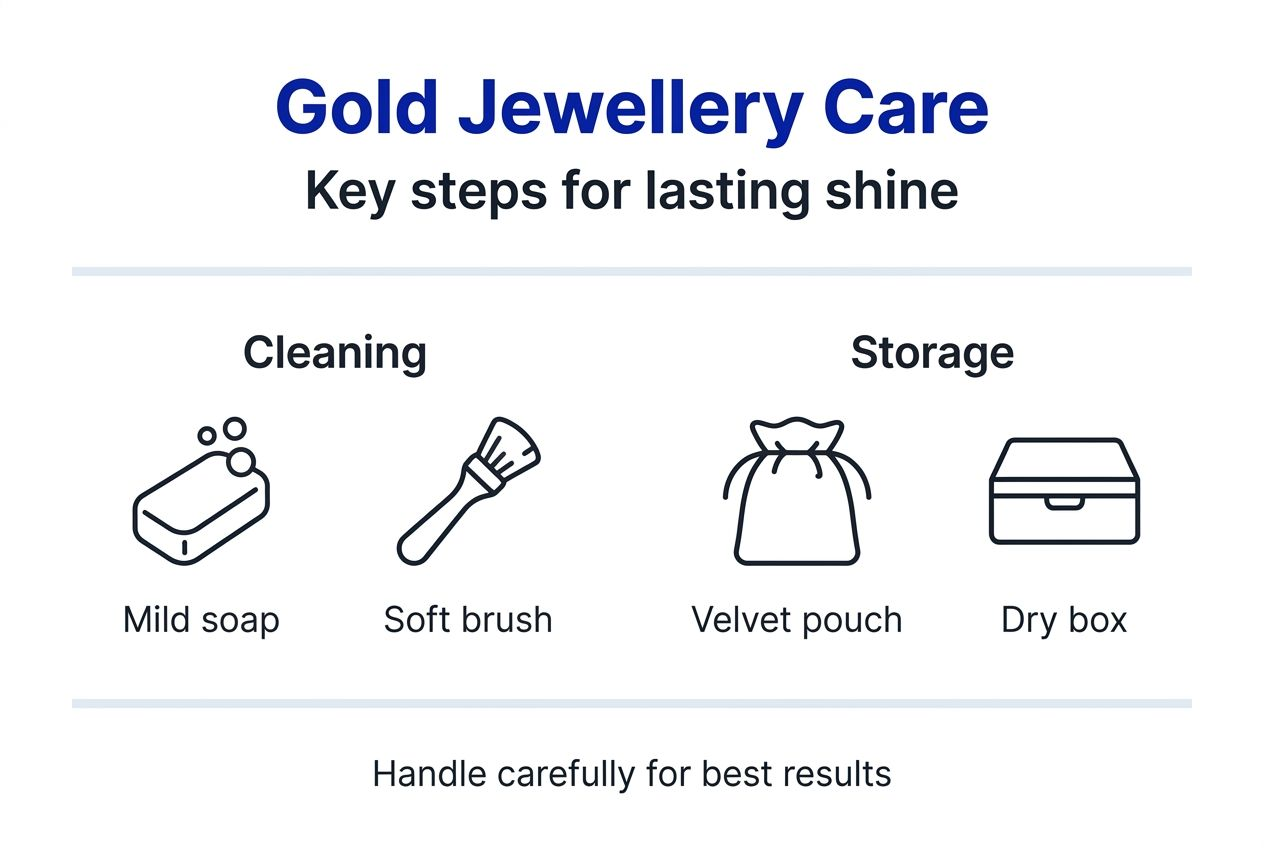
Understanding these phases helps you develop a sustainable care routine. Each practice addresses specific damage types whilst complementing the others. Together, they form a comprehensive approach to jewellery maintenance essentials that protects your investment.
Prerequisites: what you need before you start
Gathering the correct supplies prevents accidental damage during home maintenance. Your toolkit should include gentle cleaning agents and soft materials that won’t scratch gold surfaces.
Essential items for safe cleaning:
- Mild washing-up liquid free from harsh detergents
- Soft-bristle toothbrush or jewellery brush
- Lint-free microfibre cloths
- Small bowl for soaking
- Jeweller’s polishing cloth
Knowing your jewellery’s composition matters enormously. Check karat markings to identify gold purity, as lower karat pieces contain more alloy metals. Note whether gemstones are present, since some require special handling. Pearls and opals, for instance, cannot tolerate water soaking.
Avoiding harsh chemicals and abrasive household products is critical to prevent damage. Common household items marketed as cleaning shortcuts often cause harm. Toothpaste contains abrasives that create microscratches. Baking soda and vinegar can react with certain alloys. Bleach corrodes gold and weakens settings.
| Item | Safe for Gold | Notes |
|---|---|---|
| Mild washing-up liquid | Yes | Use sparingly in warm water |
| Toothpaste | No | Abrasives cause scratches |
| Ammonia solutions | Caution | Only for plain gold, never gemstones |
| Ultrasonic cleaners | Professional use | Can loosen settings if misused |
Pro Tip: Test any cleaning method on a small, inconspicuous area first. This reveals potential reactions before treating the entire piece.
Understanding safe cleaning methods for gold jewellery ensures your approach matches your jewellery’s needs. When unsure about composition or appropriate methods, consult a professional before proceeding.
Step-by-step home cleaning techniques
A systematic cleaning process delivers consistent results whilst minimising damage risk. Follow these steps every 4 to 8 weeks, adjusting frequency based on how often you wear each piece.
- Fill a small bowl with warm water and add 2 to 3 drops of mild washing-up liquid. The water should feel comfortably warm to touch, never hot.
- Submerge your gold jewellery and let it soak for 10 to 15 minutes. This loosens oils and residue without scrubbing.
- Gently brush crevices and detailed areas using a soft-bristle brush. Pay attention to chain links, prong settings, and engraved surfaces where grime accumulates.
- Rinse thoroughly under running lukewarm water. Ensure all soap residue washes away, as dried soap leaves a cloudy film.
- Pat dry with a lint-free microfibre cloth, then allow pieces to air dry completely before storing.
Cleaning gold jewellery every 4 to 8 weeks maintains optimal appearance without damage. Pieces worn daily benefit from weekly cleaning, whilst occasional-wear items need monthly attention.
Pro Tip: Place a mesh strainer in your sink before rinsing. This catches pieces if they slip from your hands, preventing loss down the drain.
Never rush the drying process with heat sources like hairdryers. Rapid temperature changes can stress metal and loosen gemstone settings. Patience ensures water doesn’t get trapped in hollow areas or behind stones.
For stubborn buildup, repeat the soaking process rather than scrubbing harder. Aggressive brushing scratches gold surfaces and wears down softer karat alloys. When home methods prove insufficient, professional cleaning recommendations suggest seeking expert help.
Maintaining consistency matters more than intensity. Regular gentle cleaning prevents the deep grime buildup that requires aggressive intervention. Integrate cleaning into your monthly routine to keep gold looking brilliant.
Polishing and handling: techniques and frequency
Polishing restores shine to gold surfaces dulled by everyday wear. Use a jeweller’s polishing cloth specifically designed for precious metals. These cloths contain micro-abrasives gentle enough for gold yet effective at removing tarnish.
Apply light pressure in straight, consistent strokes rather than circular motions. Circular polishing can create swirl marks visible under certain lighting. Work methodically across the entire surface to maintain even lustre.
Frequency guidelines:
- Polish solid gold pieces every 3 to 6 months
- Limit polishing on gold-plated items to twice yearly
- Avoid polishing engraved or textured surfaces frequently
- Never polish antique pieces without professional guidance
Over-polishing can wear down plating and engravings, so limit frequency to preserve detail. Each polishing session removes microscopic amounts of metal. Whilst negligible on solid gold, this loss accumulates over years and becomes visible on plated pieces.
Handling practices protect gold between cleaning sessions. Always put jewellery on last when dressing, after applying cosmetics and fragrances. Remove pieces before swimming, showering, or exercising. Chlorine and sweat accelerate tarnishing and can weaken settings.
When handling, hold pieces by their edges or structural elements rather than gemstones. Oils from fingers transfer to stones, dulling their brilliance. This habit also prevents accidentally loosening prong settings.
Store your polishing cloth in a sealed bag between uses. Exposure to air diminishes its effectiveness over time. Replace cloths when they become heavily soiled or lose their polishing ability.
Recognise when polishing alone cannot restore shine. Deep scratches, worn surfaces, and structural damage require guidance on polishing and abrasive risks from professionals. Amateur attempts to polish out serious damage often worsen the problem.
Storage best practices
How you store gold jewellery between wears significantly impacts its condition. Proper storage prevents the scratches, tarnishing, and chemical damage that occur when pieces contact each other or harmful substances.
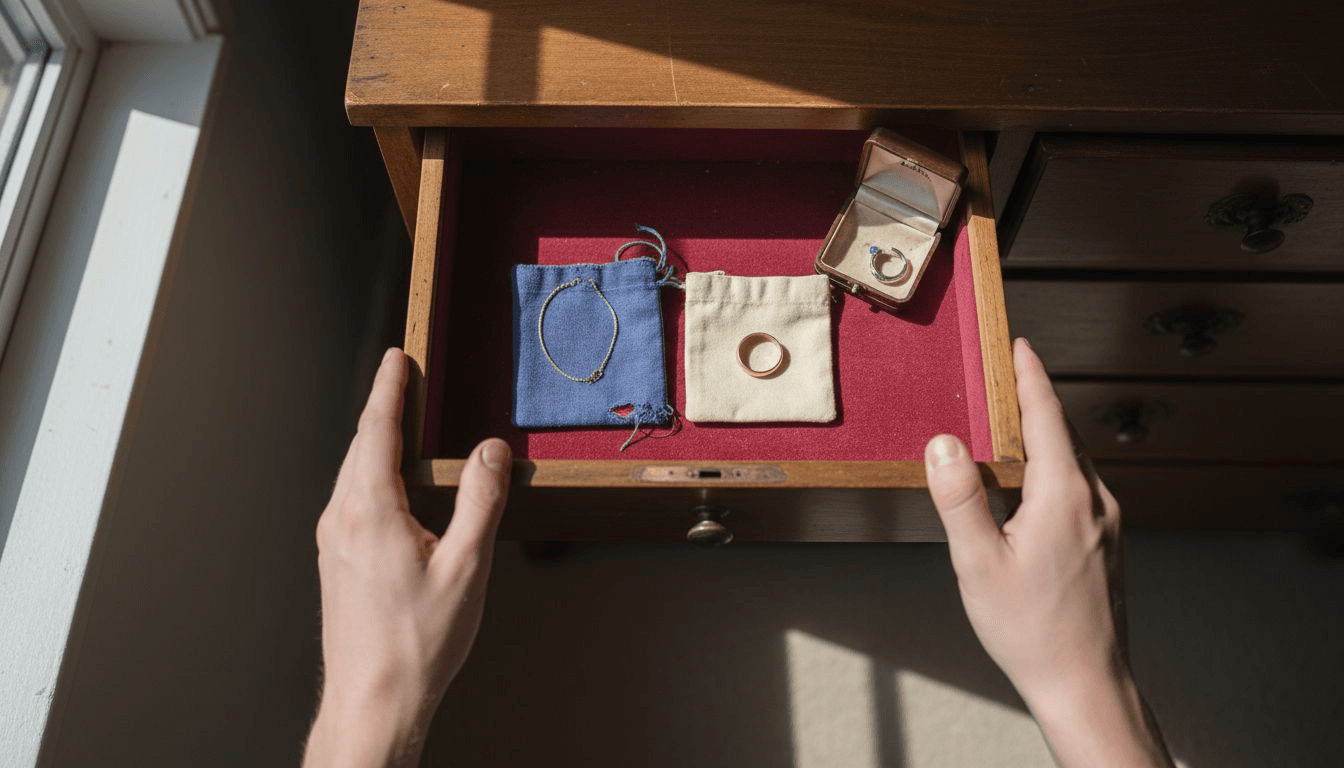
Store each piece individually in soft pouches or lined compartment boxes. This prevents harder stones from scratching softer gold surfaces. Chains benefit particularly from separate storage, as tangling stresses links and clasps.
Key storage principles:
- Use acid-free tissue or anti-tarnish strips in storage containers
- Maintain moderate temperature and low humidity
- Keep jewellery away from direct sunlight and heat sources
- Store in a dry location, avoiding bathrooms where humidity fluctuates
Temperature and humidity control matter more than most owners realise. Excessive moisture accelerates tarnishing, particularly in lower karat gold containing copper alloys. Aim for relative humidity below 50% in storage areas.
| Storage Solution | Pros | Cons |
|---|---|---|
| Lined jewellery box | Organised, protective compartments | Can scratch if pieces touch |
| Individual pouches | Maximum protection, prevents contact | Requires more storage space |
| Anti-tarnish strips | Reduces tarnishing | Must be replaced periodically |
| Wall-mounted organisers | Space-efficient, decorative | Exposed to air and light |
Chemical exposure poses serious risks. Store gold away from cleaning products, perfumes, and cosmetics. Even fumes from harsh chemicals can react with gold alloys over time. Never store jewellery in the same drawer as medication or household chemicals.
Pro Tip: Photograph your jewellery collection with detailed close-ups. These images help with insurance claims and make it easier to spot changes in condition during regular inspections.
When travelling, use padded jewellery rolls that secure pieces individually whilst protecting them from impact. Avoid placing loose jewellery in luggage pockets where it can shift and tangle.
Learn more about how to store jewellery safely to implement these principles effectively. Small changes to storage habits prevent damage that accumulates over years.
Professional maintenance: when and why to seek expert help
Home care handles routine cleaning, but professional maintenance catches problems you cannot see. Annual checkups by qualified jewellers identify loose settings, worn prongs, and structural weaknesses before they cause gemstone loss or breakage.
Professionals use specialised equipment for thorough inspection and cleaning. Ultrasonic cleaners remove buildup from areas brushes cannot reach. Steam cleaning sanitises whilst lifting stubborn residue. Loupe examination reveals microscopic damage invisible to the naked eye.
Signs your jewellery needs professional attention:
- Stones feel loose or move when touched
- Clasps no longer close securely
- Visible damage to prongs or settings
- Deep scratches or dents in metal surfaces
- Jewellery hasn’t been professionally serviced in over 12 months
Professional polishing differs significantly from home methods. Jewellers use buffing wheels and compounds matched to gold’s specific karat. They can remove deep scratches and restore high polish without removing excessive metal. This expertise proves particularly valuable for antique or sentimental pieces.
Structural integrity inspections protect your investment. Jewellers check prong thickness, assess wear patterns, and test clasp strength. They identify problems early, when repairs remain simple and inexpensive. Waiting until a stone falls out or a chain breaks often means more extensive and costly restoration.
Understand when to bring your jewellery to a professional for maintenance by establishing a regular service schedule. Annual checkups cost relatively little compared to replacing lost gemstones or repairing broken pieces.
Avoid common jewellery repair mistakes by seeking professional help early. Amateur repair attempts often worsen damage, increasing restoration costs. Following jewellery care tips 2026 reduces the risk of preventable damage.
Common mistakes and how to fix them
Well-meaning maintenance efforts sometimes damage gold jewellery. Understanding frequent errors helps you avoid costly mistakes.
The toothpaste myth persists despite evidence of harm. Many believe toothpaste’s mild abrasiveness safely cleans gold. In reality, toothpaste abrasives cause 25% more micro-scratches than recommended methods. These scratches accumulate, creating a dull, hazy appearance that requires professional polishing to remove.
Fix: Use only mild washing-up liquid and water for home cleaning. If you’ve used toothpaste previously, have your pieces professionally polished to restore their finish.
Over-polishing wears down gold surfaces faster than normal wear. Enthusiastic owners polish weekly, removing microscopic metal layers with each session. Gold-plated pieces suffer particularly, as aggressive polishing exposes the base metal underneath.
Fix: Limit polishing to every 3 to 6 months for solid gold, twice yearly for plated pieces. Mark your calendar to track frequency.
Ultrasonic cleaners require professional judgement. Home ultrasonic units generate powerful vibrations that loosen dirt but also stress settings. Used incorrectly, they shake gemstones loose or crack fragile stones like emeralds and opals.
Fix: Reserve ultrasonic cleaning for professional services. Jewellers assess whether specific pieces can safely tolerate this method.
Storing jewellery together invites scratches. Tossing multiple pieces into a single box allows harder materials to scratch softer gold. Chains tangle, stressing links and clasps.
Common storage errors:
- Mixing gold with harder metals like platinum
- Storing chains without fastening clasps
- Keeping jewellery in humid bathroom environments
- Using abrasive storage materials
Fix: Implement individual storage using soft pouches or lined compartments. Fasten chain clasps before storing to prevent tangling.
Understanding mistakes that damage your jewellery helps you develop better habits. Small changes prevent the cumulative damage that degrades gold jewellery over years. When in doubt, research proper methods or consult professionals rather than risking irreversible harm.
Expected outcomes and maintenance benchmarks
Proper maintenance delivers measurable improvements in jewellery condition. Understanding realistic expectations helps you gauge whether your care routine works effectively.
After implementing regular cleaning, expect visible shine restoration within the first session. Oils and residue lift away, revealing gold’s natural lustre. The surface should appear bright and reflective without hazy buildup or dull spots.
Quality indicators of effective maintenance:
| Benchmark | What to Look For | Frequency |
|---|---|---|
| Surface cleanliness | No visible residue or film | After each cleaning |
| Shine restoration | Bright, reflective finish | Every 4 to 8 weeks |
| Setting security | Stones don’t move when touched | Annual professional check |
| Structural integrity | No bent prongs or weak links | Annual professional check |
Microscratches should remain minimal with proper technique. Inspect pieces under good lighting after polishing. The surface should appear smooth and even, without visible swirl marks or deep scratches. Accumulating scratches indicates you’re using abrasive materials or excessive pressure.
Cleanliness shows immediately after proper washing. No soap residue should remain visible. Water spots indicate incomplete drying. The metal should feel smooth to touch, not tacky or filmy.
Structural integrity requires professional verification. You cannot reliably assess prong thickness or setting strength without magnification. Annual inspections catch wear before it causes failure.
Maintenance intervals follow this rhythm:
- Clean at home every 4 to 8 weeks
- Polish every 3 to 6 months
- Professional inspection annually
- Professional deep cleaning every 1 to 2 years
Following these benchmarks extends jewellery lifespan significantly. Well-maintained gold pieces last generations, whilst neglected items deteriorate within years. The difference comes down to consistent, gentle care.
Verify your gold’s authenticity if you notice unexpected tarnishing or discolouration. Genuine gold resists tarnishing better than plated or fake pieces. Learn to spot fake gold jewellery to ensure you’re caring for genuine items.
Maintain your gold jewellery with Blackwell Jewellers
Proper care preserves your jewellery’s beauty, but professional expertise ensures longevity. Blackwell Jewellers offers comprehensive maintenance services across Kent and online, helping you protect your investment through expert cleaning, inspection, and repair.

Our experienced jewellers provide thorough inspections that identify issues before they escalate. Annual checkups catch loose settings, worn prongs, and structural weaknesses you cannot see at home. Professional ultrasonic cleaning removes stubborn buildup whilst preserving delicate details.
Browse our curated collection of authenticated gold pieces, including stunning options like this 9ct yellow gold cubic zirconia fish brooch or elegant white gold princess cut ethical diamond ring. Each piece comes with expert care guidance tailored to its specific composition.
Visit Blackwell Jewellers to schedule professional maintenance or explore our collection. Our team provides personalised advice to keep your gold jewellery brilliant for years.
Frequently asked questions
How often should I clean my gold jewellery at home?
Clean gold jewellery every 4 to 8 weeks using mild washing-up liquid and warm water. Daily-wear pieces benefit from weekly cleaning, whilst occasional-wear items need monthly attention. This frequency prevents buildup without over-handling that risks damage.
Can I use household toothpaste to clean my gold jewellery?
Never use toothpaste on gold jewellery. Its abrasive particles create microscratches that dull surfaces and accumulate over time. Instead, use mild washing-up liquid in warm water with a soft-bristle brush for safe, effective cleaning.
When should I take my gold jewellery to a professional?
Schedule annual professional inspections even if jewellery appears fine. Seek immediate professional help if stones feel loose, clasps fail to close securely, or visible damage appears. Professionals detect problems invisible to the naked eye before they cause gemstone loss or structural failure.
Does storage location affect gold jewellery condition?
Storage location significantly impacts jewellery condition. Humid environments like bathrooms accelerate tarnishing, whilst direct sunlight and heat stress metal. Store gold in a dry, moderate-temperature location away from chemicals and use individual soft pouches to prevent scratching.
Recommended
- How to Clean Your Jewellery at Home (Properly) – blackwellonline
- Safe Cleaning Methods for Gold, Silver and Platinum Jewellery – blackwellonline
- Jewellery care tips 2026: 60% fewer losses with pro checks – blackwellonline
- 3 Easy Jewellery Care Hacks Everyone Should Know – blackwellonline
- 6 Expert Footwear Care Tips for Long-Lasting Comfort – YDA UK