
Many people assume all diamonds come with a heavy ethical and environmental price tag. Concerns about conflict sourcing, habitat destruction, and exploitative labour practices have left consumers searching for alternatives. Lab grown diamonds solve these issues entirely. Created using advanced technology that replicates natural diamond formation, these stones offer identical beauty and durability without the ethical baggage. If you live in Kent and want to purchase a stunning, sustainable diamond for an engagement ring or special gift, this guide shows you exactly where to find reputable local jewellers specialising in lab grown diamonds and how to verify authenticity before you buy.
Table of Contents
- Key takeaways
- Understanding lab grown diamonds and how they differ
- Finding reliable lab grown diamond jewellers near me in Kent
- What to consider when buying lab grown diamonds for engagements or gifts
- Verifying authenticity and quality of lab grown diamonds purchased locally
- Discover local lab grown diamonds at Blackwell Jewellers in Kent
- Frequently asked questions
Key Takeaways
| Point | Details |
|---|---|
| Ethical and environmental benefits | Lab grown diamonds offer genuine diamonds with significantly lower land disruption and cleaner energy inputs compared with mined stones, reducing environmental impact and avoiding conflict sourcing. |
| Verify authenticity before purchase | Always request certification from recognised gemological laboratories such as IGI or GIA to confirm origin, quality and authenticity of the stone. |
| Kent jewellers specialising locally | Look for Kent based jewellers who explicitly specialise in lab grown diamonds and can show certificate documentation and transparent sourcing information. |
| Bespoke design and aftercare | In store you can discuss bespoke settings, custom designs and aftercare services such as cleaning, resizing or inspection to protect your investment. |
Understanding lab grown diamonds and how they differ
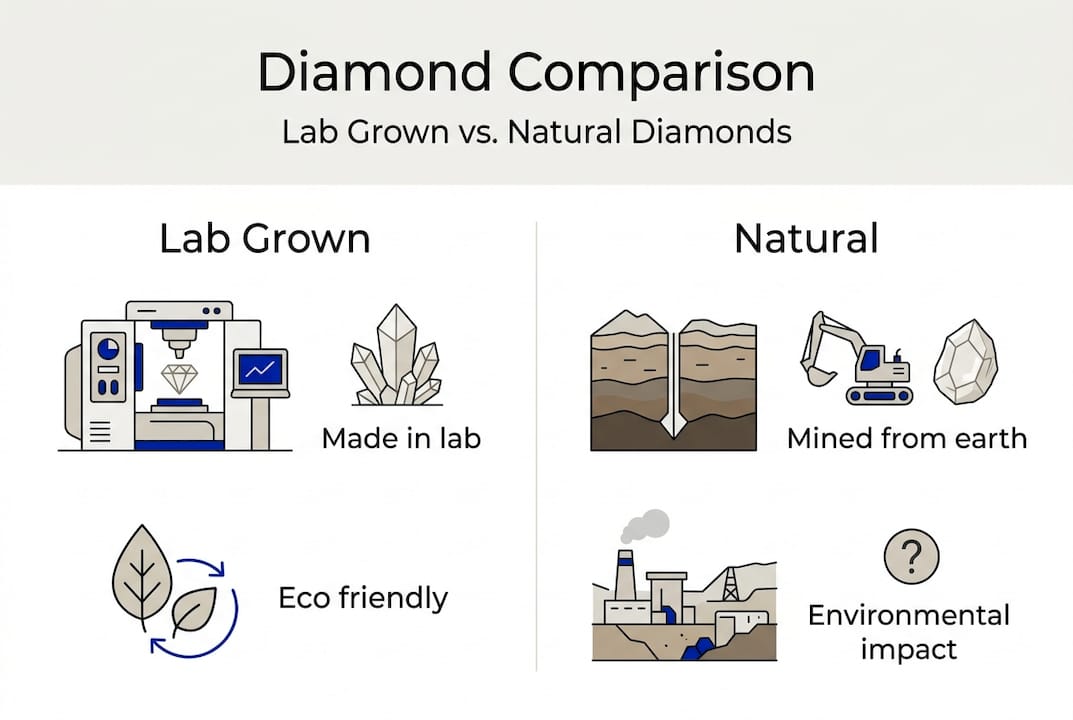
Lab grown diamonds form through two primary methods: High Pressure High Temperature (HPHT) and Chemical Vapour Deposition (CVD). Both processes replicate the natural conditions that create diamonds deep within the Earth’s mantle, but in controlled laboratory environments. The result is a genuine diamond, not a simulant like cubic zirconia or moissanite.
Lab grown and natural diamonds share identical chemical composition (pure carbon in a crystalline structure), physical properties (hardness, refractive index, thermal conductivity), and visual characteristics. Jewellers and gemologists cannot distinguish them without specialised equipment. The only meaningful difference lies in their origin.
Mined diamonds carry significant ethical concerns. Extraction damages ecosystems, displaces communities, and consumes enormous amounts of water and energy. Conflict diamonds, though less common today due to the Kimberley Process, still enter supply chains in regions with weak governance. Labour exploitation remains a persistent issue in certain mining operations.
Lab grown diamonds sidestep these problems entirely. Production requires substantially less land disruption, uses renewable energy in many facilities, and operates under transparent labour standards. The environmental footprint shrinks dramatically compared to traditional mining.
| Factor | Lab grown diamonds | Natural diamonds |
|---|---|---|
| Origin | Laboratory using HPHT or CVD technology | Mined from the Earth’s mantle |
| Cost | 30-40% less expensive for equivalent quality | Higher due to extraction and scarcity |
| Ethics | No conflict sourcing or exploitative labour | Risk of conflict sourcing in certain regions |
| Environmental impact | Significantly lower energy and land use | Extensive habitat destruction and water consumption |
| Authenticity | Certified as genuine diamonds | Certified as genuine diamonds |
Pro Tip: Always request certification from recognised gemological laboratories such as IGI (International Gemological Institute) or GIA (Gemological Institute of America) when purchasing any diamond. These certificates verify the stone’s origin, quality characteristics, and authenticity, giving you complete peace of mind about your investment.
Finding reliable lab grown diamond jewellers near me in Kent
Locating trustworthy jewellers in Kent requires a combination of online research and in-person visits. Start by searching for jewellers who explicitly specialise in lab grown diamonds rather than those who stock them as an afterthought. Read customer reviews on Google, Trustpilot, and social media to gauge reputation and service quality.
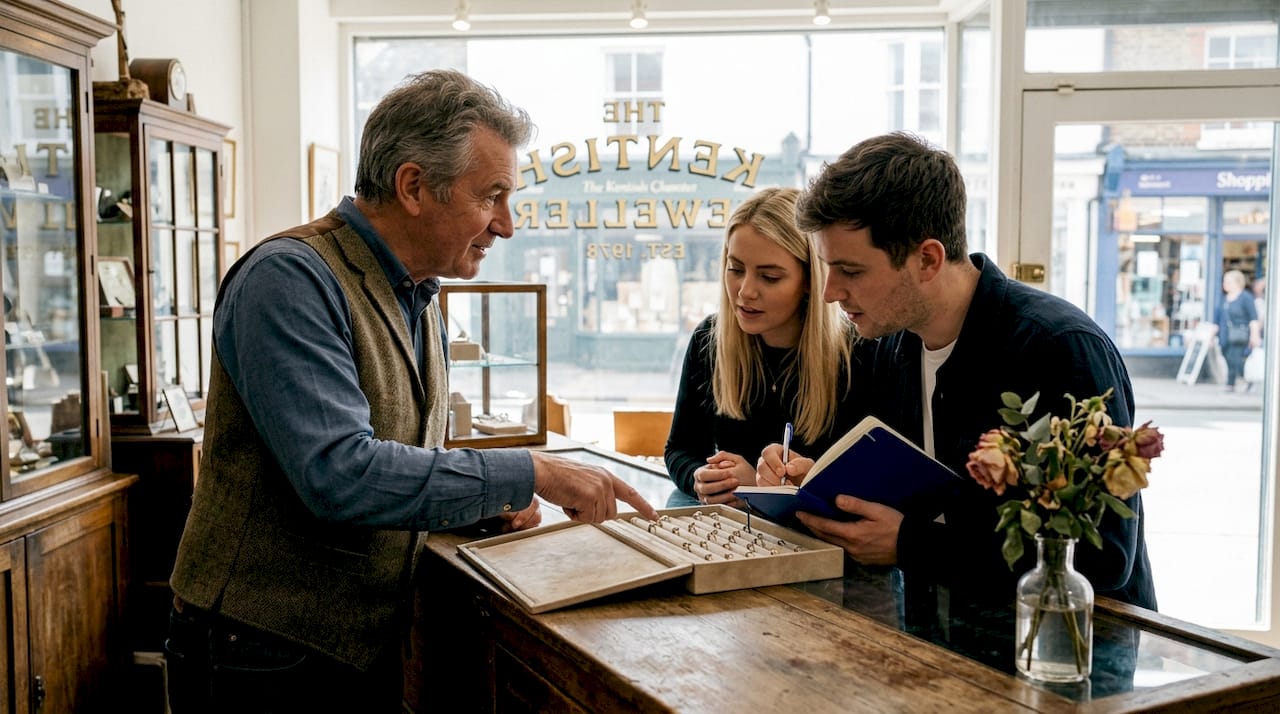
Look for specific indicators of reliability. Established jewellers should display certifications from gemological institutes, offer transparent information about diamond sourcing, and provide clear return or exchange policies. A reputable jeweller welcomes questions and provides detailed documentation for every stone.
Visiting physical stores gives you invaluable insights. Observe how staff interact with customers. Do they rush you, or do they take time to explain options? Can they show you diamonds under magnification and explain inclusions or clarity grades? Local jewellers provide personal service and expertise that online retailers cannot match.
When you visit, ask these essential questions:
- Where do your lab grown diamonds come from, and which production method do you use?
- Can you provide certification from IGI, GIA, or another recognised laboratory?
- What warranty or guarantee do you offer on lab grown diamonds?
- Do you provide aftercare services such as cleaning, resizing, or inspection?
- Can you create custom settings or bespoke designs using lab grown stones?
Pro Tip: Choose jewellers who offer bespoke design services and in-house craftsmanship. This ensures you can create a truly personalised piece that reflects your style and values whilst receiving expert guidance throughout the design process. Local expertise means you can return for adjustments, maintenance, and future purchases with confidence.
What to consider when buying lab grown diamonds for engagements or gifts
Purchasing a diamond for an engagement or significant gift requires careful evaluation of quality, cost, and personal preference. The traditional 4 Cs (cut, colour, clarity, and carat weight) remain the foundation of diamond assessment, regardless of origin.
Cut determines how well a diamond reflects light, directly affecting its brilliance and sparkle. Excellent or ideal cut grades maximise fire and scintillation. Colour grades range from D (colourless) to Z (light yellow or brown), with D-F considered colourless and most desirable. Clarity measures internal inclusions and external blemishes, graded from Flawless to Included. Carat weight indicates size, though two diamonds of identical carat weight can appear different sizes depending on cut proportions.
Lab grown diamonds cost less than natural diamonds of equivalent quality, typically 30-40% lower. This price difference allows you to purchase a larger stone, higher colour or clarity grade, or invest more in a custom setting without exceeding your budget. The savings come from streamlined production and supply chains, not inferior quality.
Certification remains non-negotiable. Every lab grown diamond should include a certificate from IGI, GIA, or another accredited laboratory detailing the 4 Cs, origin, and any treatments. This documentation protects your investment and provides essential information for insurance purposes.
Consider the recipient’s style preferences carefully. Some people prefer classic round brilliant cuts, whilst others favour princess, emerald, or oval shapes. Metal choice (platinum, white gold, yellow gold, rose gold) and setting style (solitaire, halo, pavé) should complement the diamond and reflect personal taste.
| Consideration | Lab grown diamonds | Natural diamonds |
|---|---|---|
| Cost for 1 carat, VS2 clarity, G colour | £1,200-£1,800 | £3,500-£5,000 |
| Ethical sourcing | Guaranteed conflict-free and transparent | Requires Kimberley Process certification |
| Quality consistency | Highly controlled production yields consistent quality | Natural variation in quality and characteristics |
| Resale value | Lower secondary market demand currently | Established resale market |
| Environmental impact | Minimal land disruption and lower carbon footprint | Significant habitat destruction and energy use |
Follow these steps to evaluate and finalise your diamond choice:
- Set a realistic budget that includes the diamond, setting, and any customisation.
- Determine your priorities among the 4 Cs based on what matters most visually.
- Request to view multiple certified diamonds within your parameters.
- Examine each stone under magnification and in various lighting conditions.
- Compare certifications to verify grades and ensure consistency with visual inspection.
- Select a setting that enhances the diamond’s beauty and suits the wearer’s lifestyle.
- Confirm warranty, return policy, and aftercare services before finalising purchase.
Verifying authenticity and quality of lab grown diamonds purchased locally
Authenticity verification protects you from fraud and ensures you receive exactly what you pay for. Verification through certificates and expert appraisal forms the cornerstone of confident diamond purchasing.
Certification from IGI or GIA provides independent, third-party confirmation of a diamond’s characteristics and origin. These certificates include a unique identification number often laser-inscribed on the diamond’s girdle (the widest part of the stone). You can verify this number on the laboratory’s website to confirm authenticity and view the full grading report.
Request a professional appraisal from a qualified gemologist independent of the seller. This appraisal should examine the diamond under magnification, verify it matches the certificate, and assess current market value for insurance purposes. Reputable jewellers welcome independent appraisals and provide all necessary documentation.
Common scams include misrepresenting simulants as lab grown diamonds, inflating clarity or colour grades, or providing fake certificates. Protect yourself by purchasing only from established jewellers with verifiable reputations, insisting on recognised certifications, and obtaining independent appraisals for significant purchases.
Follow these verification steps:
- Confirm the certificate comes from IGI, GIA, or another accredited laboratory.
- Check the certificate number matches any laser inscription on the diamond.
- Verify the certificate online through the laboratory’s official website.
- Request to examine the diamond under magnification to observe inclusions matching the certificate plot.
- Obtain an independent appraisal from a qualified gemologist not affiliated with the seller.
- Review the jeweller’s return policy and ensure it provides adequate protection.
Pro Tip: Store all certificates, appraisals, receipts, and warranty documents in a secure location such as a fireproof safe or bank safety deposit box. These documents prove ownership, support insurance claims, and maintain value if you ever decide to sell or upgrade your diamond. Digital copies provide additional security.
“Purchasing a lab grown diamond without proper certification is like buying a house without a survey. You might get lucky, but you are taking an unnecessary risk. Always insist on independent verification from recognised gemological laboratories to protect your investment and ensure you receive genuine quality.” — Expert gemologist advice on authentication importance
Discover local lab grown diamonds at Blackwell Jewellers in Kent
Now that you understand how to evaluate, purchase, and verify lab grown diamonds, it is time to explore your local options in Kent. Blackwell Jewellers offers a carefully curated selection of ethical lab grown diamonds, all crafted in-house by expert jewellers with over 20 years of experience.

Our Kent locations in Maidstone, Gravesend, and Bexleyheath provide personalised consultations where you can examine certified lab grown diamonds, discuss bespoke design options, and receive expert guidance tailored to your specific needs. We specialise in creating custom engagement rings and meaningful gifts that reflect your values and style.
Every lab grown diamond at Blackwell Jewellers comes with full certification, transparent sourcing information, and comprehensive aftercare services. Our in-house craftsmanship ensures exceptional quality, and our commitment to sustainability means you can enjoy stunning luxury without ethical compromise. Visit us today to begin your lab grown diamond journey with trusted local experts who prioritise your satisfaction and peace of mind.
Frequently asked questions
Are lab grown diamonds as durable as natural diamonds for everyday wear?
Yes, lab grown diamonds possess identical hardness (10 on the Mohs scale) and structural integrity as natural diamonds. They resist scratching, chipping, and damage equally well, making them perfect for engagement rings and jewellery worn daily. Proper setting and occasional professional inspection ensure lasting beauty.
How can I tell if a jeweller in Kent truly specialises in lab grown diamonds?
Genuine specialists display extensive lab grown diamond inventory, provide detailed education about production methods, and offer certifications from recognised laboratories for every stone. They should answer technical questions confidently, explain the differences between HPHT and CVD processes, and demonstrate in-house expertise through bespoke design capabilities and aftercare services.
Will a lab grown diamond lose value faster than a natural diamond?
Lab grown diamonds currently have lower resale values than natural diamonds due to newer market presence and ongoing production. However, they cost significantly less initially, meaning your overall investment remains lower. Most people purchase diamonds for personal enjoyment rather than investment, making the ethical and cost benefits more relevant than potential resale considerations.
Can I insure a lab grown diamond the same way as a natural diamond?
Yes, insurance companies treat lab grown diamonds identically to natural diamonds for coverage purposes. You will need a professional appraisal and certificate to establish value and characteristics. Many insurers offer specific jewellery policies covering loss, theft, and damage at competitive rates for certified lab grown diamonds.
What questions should I ask about certification when buying locally?
Ask which laboratory issued the certificate (IGI and GIA are most reputable), whether the certificate number is laser-inscribed on the diamond, if you can verify the certificate online, and whether the jeweller provides independent appraisal services. Request to see the actual certificate and confirm all details match the diamond you are purchasing before finalising the transaction.