

Vermeil is gold-plated sterling silver with a meaningfully thicker gold layer than standard gold-plated jewellery, and for most buyers it is the better choice for durability and sensitive skin. Standard gold-plated pieces use a thin gold layer over base metals such as brass or copper, which wears faster and can cause skin reactions when the plating breaks down. Before you buy either, here are the three checks that matter most:
- Look for a 925 stamp (confirms sterling silver base in vermeil)
- Ask for a micron thickness disclosure (vermeil is typically around 2.5 microns; standard plating often around 0.5 microns)
- Check the description says “gold plated silver” or “gold plated vermeil silver” — not just “vermeil” or “gold”
Key takeaways
Vermeil is the more durable, skin-safer choice for regular wear, provided the retailer discloses the 925 sterling silver base and a stated gold layer thickness.
| Point | Details |
|---|---|
| Thickness drives durability | Vermeil is typically ~2.5 microns; standard plated often ~0.5 microns — that gap determines lifespan. |
| Base metal is the skin-safety factor | Sterling silver (925) in vermeil is far less likely to cause reactions than brass or nickel bases in standard plated pieces. |
| “Vermeil” alone is not enough | UK law requires “gold plated silver” wording; a 925 stamp and micron disclosure are the real proof of quality. |
| Care extends lifespan significantly | Gentle cleaning, dry storage, and removing pieces before water or exercise can double the usable life of both materials. |
| Blackwelljewellers verifies before selling | Every pre-owned piece is hallmark-checked and condition-assessed in-house — so you know exactly what you’re buying. |
Table of Contents
- What exactly is gold vermeil?
- What does “gold plated” actually mean?
- Gold plated vs vermeil: a side-by-side comparison
- How long does each type actually last?
- Which is better for sensitive skin?
- How to clean and care for plated and vermeil jewellery
- UK hallmarking and labelling: what the law actually says
- Which should you actually buy?
- How Blackwelljewellers verifies and restores plated and vermeil pieces
- An honest word on buying vermeil in the UK
- Blackwelljewellers: verified stock, in-house repairs, and honest advice
- Sources
What exactly is gold vermeil?
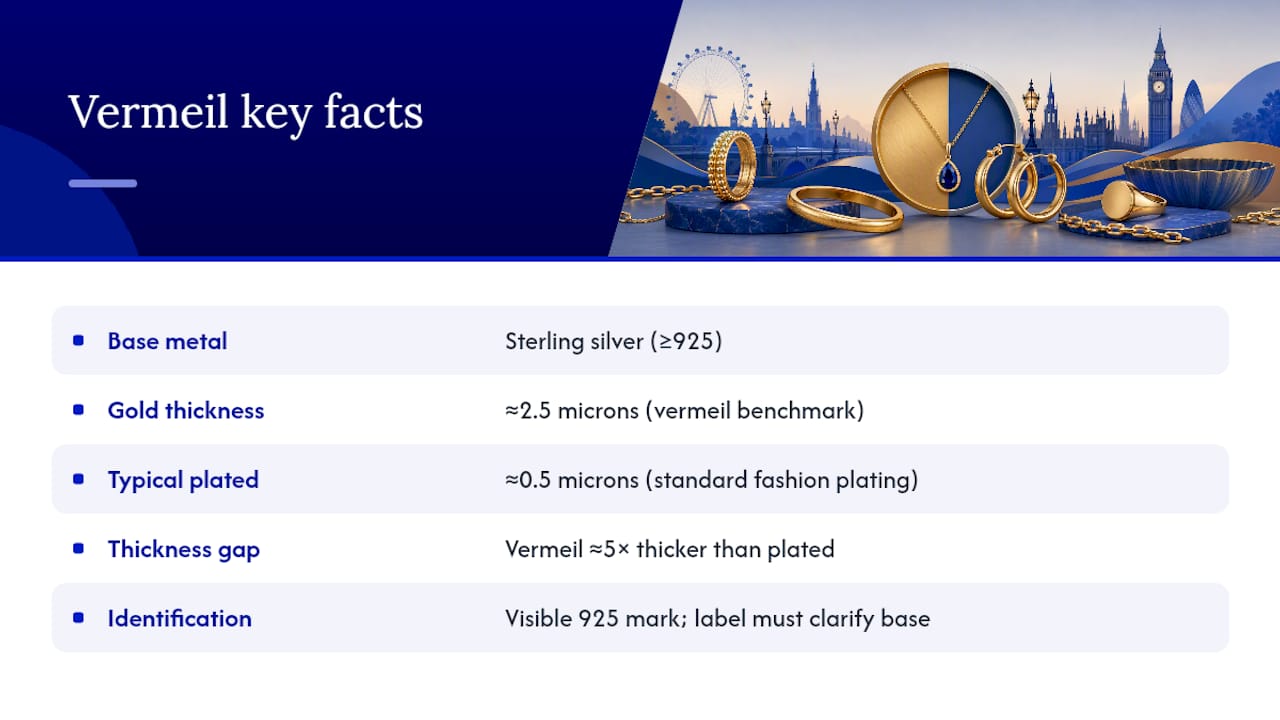
Vermeil (pronounced “ver-MAY,” if you want to sound like you know what you’re doing at a jewellery counter) is sterling silver that has been electroplated with gold, as explained in our comprehensive What Is Gold Vermeil Jewelry? Quality, Care & Why It Matters — Urbalenti™ NYC guide. The silver base must be at least 925 parts per thousand pure silver — hence the 925 stamp you should always look for.
The gold layer itself can be applied at various purities: 9ct, 14ct, and 18ct are all used in retail descriptions, with higher carats giving a richer colour but slightly softer gold. What separates vermeil from ordinary plated jewellery is thickness. Industry references typically cite around 2.5 microns as the benchmark for a quality vermeil layer, compared with the much thinner coatings found on standard plated pieces.
Thickness callout: At approximately 2.5 microns, a vermeil gold layer is roughly five times thicker than the 0.5-micron coating typical of standard gold-plated fashion jewellery — and that gap is the single biggest reason vermeil outlasts it.
The electroplating process deposits gold ions onto the silver surface under an electrical current, bonding the layers at a molecular level. A well-made vermeil piece has a satisfying weight to it, a consistent finish, and — crucially — a visible 925 mark. AssayAssured notes that “vermeil” alone on a label can be misleading; the description should always clarify the silver base.
What does “gold plated” actually mean?
Gold plated is a broader term. It covers any metal substrate with a gold layer applied, and that substrate can be brass, copper, nickel, or even silver. The gold layer is usually much thinner than vermeil: standard plated pieces often sit around 0.3–0.8 microns, with some “flash plated” fashion items going even thinner.
That thinness is why gold-plated jewellery is cheaper. Less gold, faster production, lower cost — simple. The trade-off is lifespan. A 0.5-micron layer over brass will show wear at friction points (clasps, ring shanks, bracelet links) within months of daily use.
Watch for these signals that a piece is standard gold plated rather than vermeil:
- No 925 stamp anywhere on the piece
- No micron thickness stated in the product description
- Very low price relative to similar-looking pieces
- Description says “gold tone,” “gold colour,” or just “gold” with no “plated” qualifier.
- Lightweight feel with no hallmark documentation
The Assay Office London warns that marketing terms for gold-layered jewellery can mislead, and that shoppers should look for clear “gold plated silver” wording rather than relying on vague finish descriptions.
Gold plated vs vermeil: a side-by-side comparison
| Dimension | Gold vermeil | Standard gold plated |
|---|---|---|
| Gold layer thickness | Typically ~2.5 microns | Typically 0.3–0.8 microns |
| Base metal | Sterling silver (925) | Brass, copper, nickel, or silver |
| Durability / lifespan | 2–5 years with regular wear; longer with care | Months to 1–2 years with regular wear |
| Hypoallergenic / skin-safe | Generally yes (silver base; low nickel risk) | Variable — nickel or copper bases can irritate |
| Cost / value | Mid-range; higher than plated, far below solid gold | Budget to mid-range |
| Care and re-plating | Re-platable; professional re-plating restores finish | Re-platable, but thin layers mean more frequent work |
| Appearance / finish | Rich, consistent; holds colour longer | Can look identical initially; fades faster |
| UK hallmarks and labelling | Should carry 925 stamp; described as “gold plated silver” | No gold hallmark permitted; base metal should be stated |
One column worth flagging: the “UK hallmarks and labelling” row. Retailers who omit the base metal or skip the micron disclosure are leaving you with no way to verify what you’re actually buying. Ask. If they can’t answer, walk away.
How long does each type actually last?
Lifespan is where the gold plated vs vermeil debate gets real. The short answer: vermeil lasts longer, but neither is permanent.
Gold thickness (microns) drives almost everything. Friction is the enemy — rings and bracelets wear faster than earrings or pendants simply because they contact more surfaces. Skin chemistry matters too: people with more acidic sweat tend to accelerate plating wear. Add perfume, hand cream, chlorine from swimming pools, and the occasional bash against a hard surface, and you’ve got a recipe for a patchy finish.
For vermeil at around 2.5 microns, realistic lifespan with daily wear is roughly 2–5 years before noticeable wear-through at friction points. Worn occasionally (weekends, evenings), a well-made vermeil piece can look excellent for considerably longer. Standard gold-plated items at 0.5 microns or below often show wear within three to six months of daily use, though occasional-wear pieces can hold up for a year or two.
The wear stages tend to follow a predictable pattern. First, the finish at high-friction points (ring shanks, clasp edges) starts to look slightly duller. Then a faint colour shift appears as the base metal begins to show through. Finally, the underlying metal is exposed — silver in vermeil (which tarnishes but retains value), brass or copper in standard plated pieces (which can leave a greenish mark on skin).
Pro Tip: When buying for daily wear, choose vermeil with a stated micron thickness and a 925 hallmark. For trend pieces you’ll wear a handful of times, standard plated is perfectly acceptable — just don’t expect it to last a season of heavy use. You can learn more about spotting fake gold jewellery to sharpen your eye before you shop.
Which is better for sensitive skin?
If your skin reacts to jewellery, the base metal is almost always the culprit — not the gold layer itself.
Vermeil’s sterling silver base is the key advantage here. When the gold plating on a vermeil piece eventually wears, the silver underneath is unlikely to cause the green discolouration or itching that copper and nickel bases produce.
Standard gold-plated pieces are a different story. Brass contains zinc and copper; some cheaper base metals include nickel, which is one of the most common contact allergens. Once the thin gold layer wears through, those metals sit directly against your skin.
Steps to reduce your risk:
- Check for a 925 stamp — it confirms sterling silver, not a base metal
- Ask about nickel content explicitly, especially for earrings and rings
- Prefer vermeil or solid precious metals for pieces worn close to skin daily (rings, earrings, bracelets)
- Avoid pieces with no base metal disclosure — if the retailer won’t say, assume the worst
Pro Tip: If you’ve had reactions before and aren’t sure whether a piece is safe, try wearing it on your wrist for a few hours before committing to daily use. For persistent sensitivity, rhodium-plated sterling silver or solid 9ct gold are worth the extra spend — both sit well on reactive skin. Blackwelljewellers stocks authenticated pre-owned gold and silver pieces that carry full hallmark documentation.
How to clean and care for plated and vermeil jewellery
The golden rule (sorry) for both materials: gentle is everything. Abrasives, harsh chemicals, and ultrasonic cleaners will strip plating faster than normal wear.
Here’s a simple maintenance routine:
- After each wear, wipe the piece with a soft, dry cloth to remove sweat, oils, and product residue.
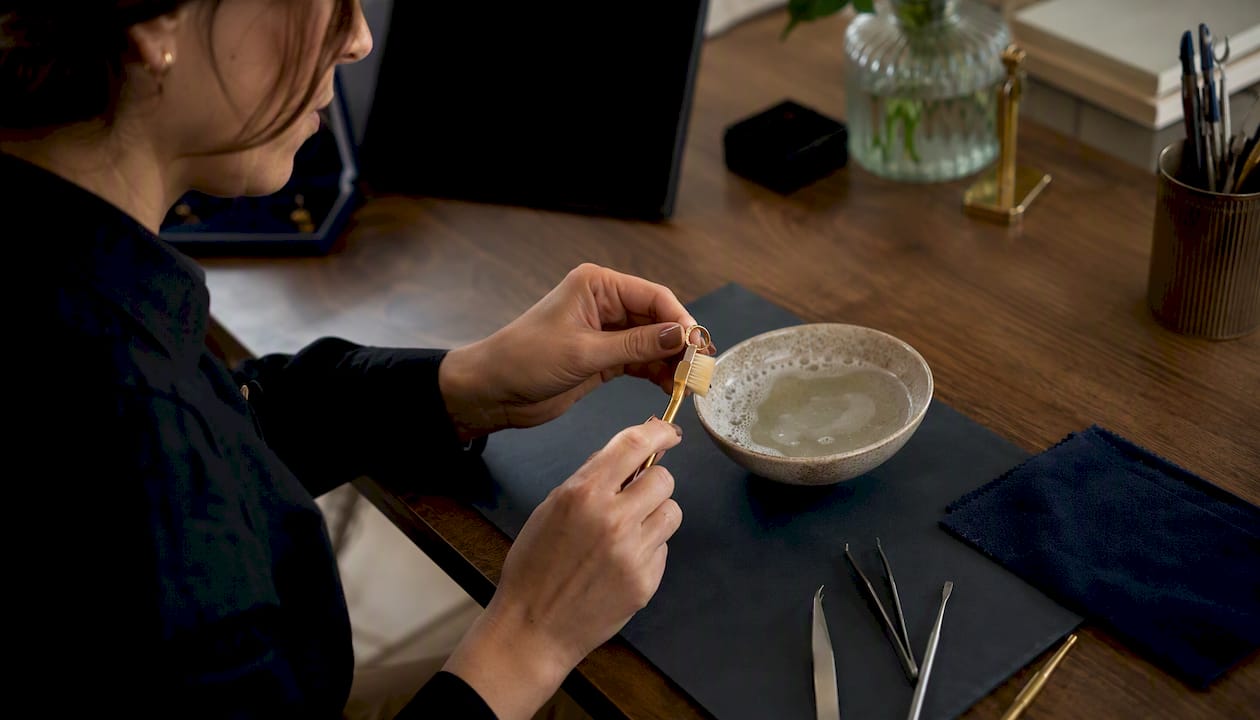
- For a deeper clean, use lukewarm water with a tiny drop of mild washing-up liquid. Dip a soft cloth or a very soft toothbrush, clean gently, then rinse with clean water.
- Dry thoroughly with a lint-free cloth immediately — never leave plated jewellery to air-dry, as water spots accelerate tarnish.
- Store separately in a soft pouch or an airtight zip-lock bag with an anti-tarnish strip. Pieces knocking against each other cause micro-abrasions that shorten plating life.
- Remove before swimming, showering, exercising, applying perfume or hairspray, and sleeping. These are the fastest ways to kill a plated finish.
When to seek re-plating: if the gold colour has faded noticeably at friction points, or if the base metal is showing through, professional re-plating will restore the finish. Re-plating extends useful life but the cost should be weighed against the piece’s value — re-plating a £20 fashion piece rarely makes financial sense, while restoring a vermeil necklace you love absolutely does.
Pro Tip: Never use silver-polishing cloths or dips on gold-plated or vermeil pieces — they’re designed to remove tarnish from silver, but they’ll strip the gold layer at the same time. For safe cleaning methods across all precious metals, see Blackwelljewellers’ guide to safe cleaning for gold, silver and platinum.
UK hallmarking and labelling: what the law actually says
This is the section most jewellery guides skip. Don’t let them.
In the UK, the way a gold-plated piece is described is governed by the Hallmarking Act 1973 and associated guidance. The rules are specific, and retailers who ignore them are — technically — misleading you.
Gov states clearly: when the word “gold” or a gold fineness (such as “18ct”) is used in a description, the item must also be described as silver, and “gold” must be directly followed by “plated.” A correct description looks like: “18ct gold plated silver ring.” A description that says “18ct gold vermeil ring” with no mention of silver is an example regulators cite as potentially misleading.
The November 2022 Hallmarking guidance notes go further, setting out that plated layers must satisfy fineness requirements and giving examples of prohibited descriptions. Worth bookmarking if you’re a serious buyer.
On hallmarks: gold-plated silver articles are hallmarked as silver, not gold. A standalone gold fineness mark on a plated silver piece is not permitted because it would mislead consumers about the article’s composition. Items over 7.78g that contain precious metal are more likely to require a full hallmark; lighter items may carry a 925 stamp instead.
The term “vermeil” has no independent legal status in UK law. It is supplementary wording only. A retailer can use it, but they must still say “gold plated silver” and disclose the base metal. The Assay Office London is explicit that marketing terms for gold-layered jewellery can mislead without that clear statement.
Key legal markers to check at point of sale:
| What to check | What it tells you |
|---|---|
| 925 stamp | Confirms sterling silver base |
| “Gold plated silver” in description | Legally required wording when gold is mentioned |
| Micron thickness stated | Voluntary but the mark of a transparent retailer |
| No standalone gold fineness mark | A gold hallmark alone on a plated piece is a red flag |
| Weight over 7.78g | More likely to require a full Assay Office hallmark |
Regulatory note: UK hallmarking rules limit post-hallmarking plating thickness to 2 micrometres, which can create a technical conflict with retail claims of 2.5+ micron vermeil plating. If a retailer claims 2.5 microns on a hallmarked piece, it is worth asking how the plating was applied relative to hallmarking.
For a deeper dive into reading UK hallmark stamps, Blackwelljewellers has a thorough guide to understanding gold hallmarks and purity in the UK.
Which should you actually buy?
Here’s a practical decision framework, because “it depends” is the most useless answer in jewellery retail.
Choose vermeil when:
- You wear the piece daily (rings, everyday necklaces, bracelets)
- You have sensitive skin or a history of metal reactions
- You want a piece that retains some intrinsic value even if the plating wears
- You’re spending enough that re-plating later makes financial sense
Standard gold plated is fine when:
- You’re buying a trend piece you’ll wear occasionally for one season
- Budget is the primary constraint and longevity isn’t critical
- The piece is for occasional evenings out, not daily wear
Scenario-based quick guide:
- Wedding jewellery or anniversary gift → Vermeil minimum; solid gold or platinum for heirloom pieces
- Everyday necklace or stacking ring → Vermeil with 925 stamp and micron disclosure
- Fashion earrings for a specific outfit → Standard plated is acceptable
- Gift for someone with sensitive skin → Vermeil or solid precious metal only
- Pre-owned piece of unknown origin → Get it verified before wearing regularly
On price: a sensible premium for genuine vermeil over standard plated is real and justified. If two pieces look identical and one is half the price with no 925 stamp and no micron disclosure, you know which one is which.
Questions to ask the seller before you buy:
- What is the base metal?
- What is the gold layer thickness in microns?
- Does the piece carry a 925 hallmark?
- What is your re-plating policy?
- Is there a warranty or returns policy if the plating fails early?
How Blackwelljewellers verifies and restores plated and vermeil pieces
Every pre-owned piece that comes through Blackwelljewellers’ doors goes through a structured verification process before it goes on sale or back to a customer. Here’s what that looks like in practice.
Verification checklist:
- Visual inspection under magnification for plating condition, wear points, and finish consistency
- Hallmark check: confirming 925 stamp or full Assay Office mark, and cross-referencing with the piece’s weight
- Metal testing where hallmarks are absent or unclear
- Condition report noting plating thickness (where measurable), wear stage, and any structural issues
Restoration and re-plating workflow:
- Assessment: determine whether re-plating is viable and cost-effective for the piece
- Cleaning: ultrasonic or hand-clean to remove residue and prepare the surface (ultrasonic is used on solid metal components, not on fragile stones or settings)
- Re-plating or rhodium plating: applied in-house to the required thickness
- Polish and final quality check before return or sale
A real example from our workshop: A customer brought in a vermeil necklace that had worn through at the clasp and chain links after several years of daily wear. The sterling silver base was in excellent condition — no structural damage, hallmark intact. After cleaning, re-plating to a consistent gold finish, and a final polish, the piece was returned looking as good as new. The customer extended its life by years for a fraction of the cost of a replacement.
The advantage of in-house workmanship is straightforward: the same team that inspects the piece does the restoration, so nothing gets lost in translation between assessor and technician. For anyone considering whether re-plating is worth it, Blackwelljewellers’ jewellery repairs service covers the full range of options.
An honest word on buying vermeil in the UK
The single most common mistake customers make is trusting the word “vermeil” on a label without checking anything else. It’s a pretty word. It sounds premium. And it means absolutely nothing on its own without a 925 stamp and a clear “gold plated silver” description.
The second most common mistake is buying on appearance alone. A £15 gold-plated brass ring and a £60 vermeil ring can look identical in a product photo. Six months of daily wear will tell you which is which — but by then, the return window is long closed.
The check that matters most, every single time: 925 stamp plus micron disclosure. If a retailer can show you both, they know what they’re selling. If they can’t, they probably don’t — or they’d rather you didn’t ask.
Blackwelljewellers: verified stock, in-house repairs, and honest advice
Buying pre-owned vermeil or gold-plated jewellery with confidence is genuinely possible — you just need a seller who has done the verification work before you hand over your money.

Blackwelljewellers’ authenticated second-hand jewellery collection includes gold and silver pieces that have been inspected, hallmark-verified, and restored by in-house jewellers across our Kent stores in Maidstone, Gravesend, and Bexleyheath, as well as online. Every piece comes with transparent provenance — you know the base metal, the condition, and the hallmark status before you buy.
If you already own a piece that needs re-plating or assessment, our jewellery repair and replating service handles everything in-house. Book an assessment, get a clear quote, and decide whether restoration makes sense for your piece. No guesswork, no vague promises — just straight answers from people who work with these materials every day.
Sources
- Gov
- Mixed Metals
- Hallmarking guidance notes (November 2022)
- Understanding Gold Vermeil - Assay Assured