
TL;DR:
- The value of old gold jewelry in Kent depends on its weight, purity, and the current London Bullion Market spot price. Dealers typically pay 70 to 85 percent of the spot price, with higher rates for higher purity and bulk sales. Knowing the melt value and comparing multiple offers helps sellers maximize their return.
The value of your old gold jewellery in Kent is calculated from three things: its weight, its carat purity, and the live gold spot price set by the London Bullion Market. That is the industry term you will hear from any reputable appraiser, and it is the number that drives every offer you receive. Dealers in the UK typically pay between 70% and 95% of that spot price, depending on purity and quantity. Blackwelljewellers, with stores in Maidstone, Gravesend, and Bexleyheath, is one of the most established local options for a fair, transparent valuation. Knowing how the maths works before you walk through any door puts you in a far stronger position.
How much is my old gold jewellery worth in Kent? Understanding the basics
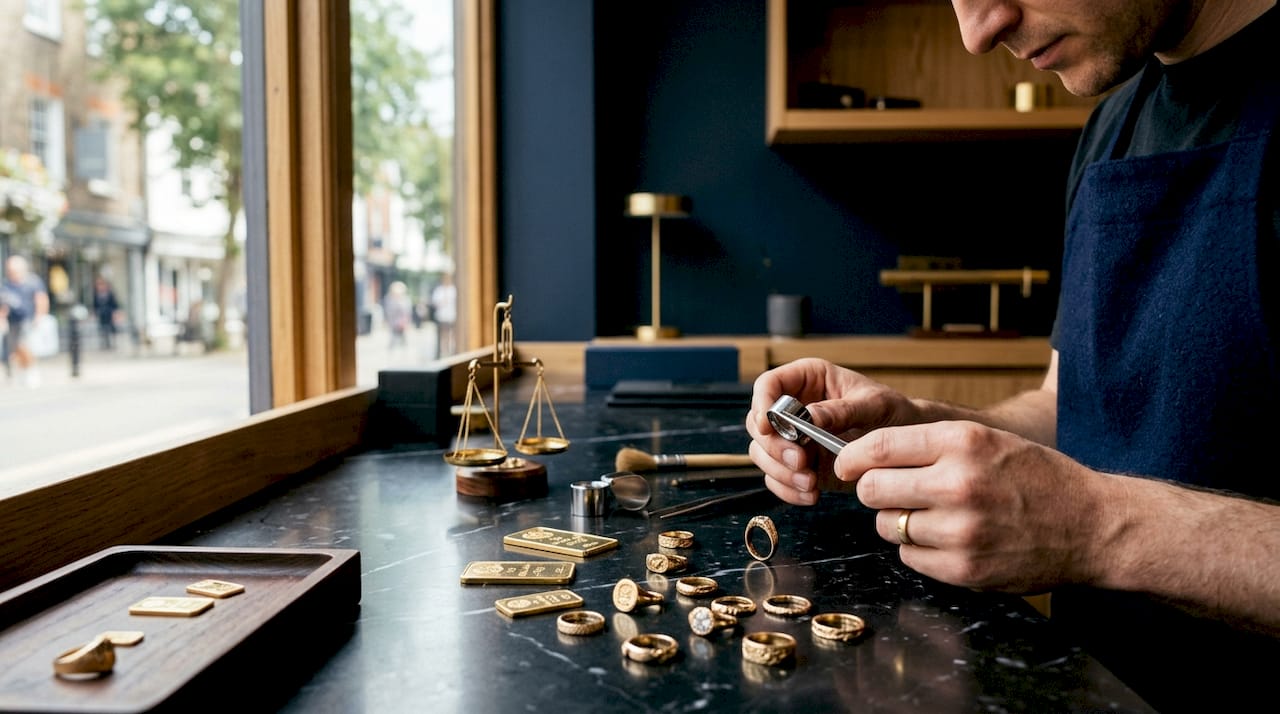
Gold value is measured using the term melt value, which is the raw worth of the metal if it were melted down and refined. Every offer you receive from a Kent dealer is based on this figure, adjusted downward to cover refining costs, testing, and profit. The London Bullion Market publishes the spot price twice daily, at 10:30am and 3pm London time, so gold prices update constantly. That means the value of your jewellery can shift from one morning to the next.
The three variables that determine your payout are fixed and non-negotiable: weight in grams, purity in carats, and the spot price on the day. Understanding each one separately makes the whole process far less mysterious.
How is gold purity measured and what carats are common in UK jewellery?
Carat is the standard measure of gold purity in the UK. It tells you what fraction of your jewellery is actually gold, with the rest being other metals like copper or silver. The higher the carat, the more gold, and the more it is worth per gram.
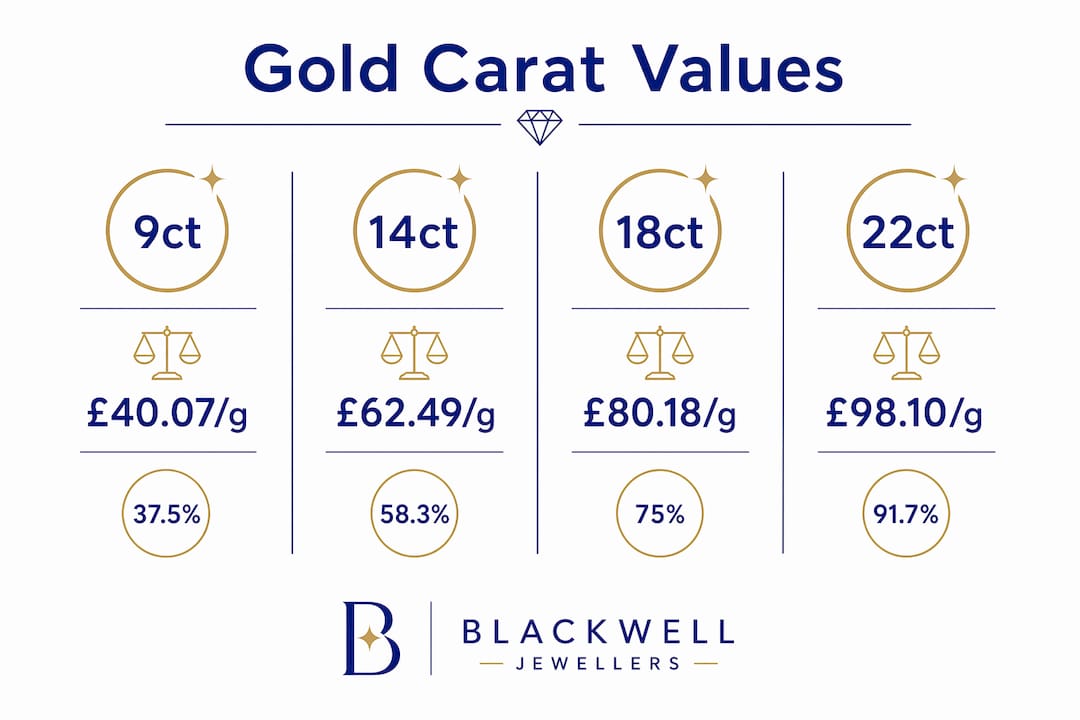
Here is a breakdown of the most common carats found in UK jewellery, with their purity percentages and approximate 2026 spot prices:
| Carat | Pure gold content | Approx. spot price per gram (2026) | Typical jewellery |
|---|---|---|---|
| 9ct | 37.5% | £40.07 | Everyday rings, chains |
| 14ct | 58.5% | £62.51 | Mid-range rings, bracelets |
| 18ct | 75% | £80.14 | Fine jewellery, engagement rings |
| 22ct | 91.7% | Not publicly listed | Traditional wedding bands |
| 24ct | 99.9% | Not publicly listed | Bullion, investment pieces |
9ct gold is by far the most common carat in UK jewellery. Most high street rings, chains, and earrings you find in a drawer are 9ct. Hallmarks stamped on your piece, typically a small number like “375” for 9ct or “750” for 18ct, confirm the purity. If you cannot find a hallmark, a reputable jeweller can test the piece for you.
Purity directly affects the melt value calculation. A 9ct ring weighing 5 grams contains only 1.875 grams of pure gold. An 18ct ring of the same weight contains 3.75 grams. That difference doubles the scrap value, which is why carat matters so much.
How do you calculate the scrap gold value of your jewellery?
The formula is straightforward. Multiply the weight of your piece in grams by the purity percentage, then multiply that result by the current spot price per gram. That gives you the theoretical melt value. From there, a dealer will pay you a percentage of that figure.
For example: a 9ct gold chain weighing 10 grams contains 3.75 grams of pure gold (10 × 37.5%). At a spot price of £40.07 per gram, the melt value is roughly £150. A dealer paying 80% of spot would offer you around £120.
Most UK dealers pay 70–85% of the spot price, with better rates available for higher purity pieces or larger quantities. Some dealers offer up to 95% for 18ct or 22ct gold in significant weights. The gap between spot and payout covers refining costs, testing, business overheads, and margin.
Pro Tip: Use an online gold calculator before visiting any dealer. It gives you a solid baseline figure so you know immediately if an offer is fair or suspiciously low.
Here are the key factors that influence your final payout:
- Purity (carat): Higher carat means a higher percentage of the spot price offered.
- Weight: Heavier pieces attract better rates from many dealers.
- Dealer type: Specialist gold buyers often pay more than general pawnbrokers.
- Market timing: Selling when spot prices are near highs improves your return.
- Quantity: Selling multiple pieces together can improve your rate.
- Condition: This does not affect scrap value at all.
That last point surprises most people. Condition does not affect scrap value. A broken 9ct chain is worth exactly the same as an intact one of equal weight. So do not let a dealer use scratches or damage as a reason to reduce your offer below the melt value calculation.
What local factors in Kent affect the value you receive?
Kent has a varied market for selling gold jewellery, from independent jewellers and pawnbrokers to cash-for-gold shops. The quality of offers varies considerably between them, and knowing where to go makes a real difference.
Getting quotes from at least three local dealers is the single most effective way to protect yourself from undervaluation. Prices between buyers in the same town can differ by 10–20%, which on a collection of jewellery adds up quickly.
Pro Tip: Always verify a buyer’s credentials before selling. Look for membership of the National Association of Jewellers or a clear physical premises with a trading history. Anonymous cash-for-gold operations with no fixed address carry real risk.
The main selling options available to Kent residents include:
- Retail jewellers: Established shops like Blackwelljewellers offer transparent pricing and professional appraisals. They tend to pay fairly and provide written valuations.
- Pawnbrokers: A good option if you want cash quickly or prefer a loan against your jewellery rather than an outright sale. Blackwelljewellers offers pawnbroking services across its Kent locations.
- Cash-for-gold buyers: Convenient but often pay at the lower end of the 70–85% range. Always compare their offer against your calculated melt value.
- Professional appraisers: Services like Rufus Valuations in Kent provide insurance valuations for high-value pieces. These are particularly useful if you plan to sell privately or need documentation for probate.
Jewellery valuation services in Kent recommend updating appraisals every 2–3 years, or whenever gold prices shift significantly. If you had a piece valued in 2022, that figure is almost certainly out of date given how much the market has moved.
What are the best steps for selling old gold jewellery in Kent?
Preparation makes a measurable difference to the price you walk away with. Sellers who arrive knowing their piece’s weight, carat, and approximate melt value consistently negotiate better outcomes than those who arrive blind.
Follow these steps to get the best return when selling gold jewellery in Kent:
- Identify the hallmark. Look for a stamped number (375, 585, 750) or a carat mark (9ct, 18ct). This confirms purity without needing a test.
- Weigh your pieces. Use a digital kitchen scale accurate to 0.1 grams. Separate pieces by carat before weighing.
- Calculate your baseline melt value. Use the formula above or an online gold calculator to establish what your jewellery is theoretically worth at spot.
- Get a professional appraisal for high-value items. Branded pieces, antique jewellery, or anything with gemstones may be worth significantly more than scrap value. A professional appraisal from a qualified jeweller protects you from selling a valuable piece for its metal weight alone.
- Collect at least three quotes. Visit or contact multiple Kent dealers. Use your melt value calculation as a reference point during each conversation.
- Negotiate. You are not obliged to accept the first offer. If a dealer knows you have done your homework, they are more likely to improve their rate.
- Keep records. Request a written receipt and valuation from whoever you sell to. This matters for tax purposes and peace of mind.
For a broader view of where to sell gold jewellery in Kent, Blackwelljewellers has a useful guide on selling gold for cash that covers reputable local options in detail.
What are current gold price trends and does timing matter?
Gold prices are near historic highs in early 2026. The London Bullion Market updates the spot price twice daily, and prices have been elevated by a combination of global economic uncertainty, inflation concerns, and strong central bank demand. That is good news if you are selling.
Timing the market perfectly is genuinely difficult. Gold can rise or fall by several percent in a week based on currency movements, geopolitical events, or changes in interest rate expectations. Trying to pick the exact peak is a fool’s errand. What you can do is monitor the spot price over a few weeks and sell when prices are clearly elevated rather than in a visible dip.
A simple comparison of how carat spot prices have shifted illustrates why timing matters:
| Carat | Approx. spot price per gram (2026) | Indicative payout at 80% |
|---|---|---|
| 9ct | £40.07 | £32.06 |
| 14ct | £62.51 | £50.01 |
| 18ct | £80.14 | £64.11 |
These figures reflect the current elevated market. Selling during a period when 9ct gold is at £40 per gram rather than £30 per gram adds £8 per gram to your payout at 80% of spot. On a 20-gram collection, that is £160 more in your pocket simply from timing. Use a gold price tracker to monitor movements before committing to a sale.
Key takeaways
The value of old gold jewellery in Kent is determined by carat purity, weight, and the live London Bullion Market spot price, with dealers typically paying 70–85% of that figure.
| Point | Details |
|---|---|
| Melt value drives every offer | Calculate weight × purity percentage × spot price to establish your baseline before visiting any dealer. |
| Condition is irrelevant for scrap | A broken or scratched piece fetches the same scrap price as a perfect one of equal weight and carat. |
| Get three quotes minimum | Offers across Kent dealers can vary by 10–20%, so comparing quotes is the easiest way to improve your return. |
| High-value pieces need appraisal | Antique, branded, or gemstone jewellery may be worth far more than scrap value. Always get a professional assessment first. |
| Timing improves returns | Gold is near historic highs in 2026. Monitoring spot prices and selling during elevated periods adds meaningful value. |
What I have learned from years of watching people sell gold in Kent
Here is something most articles will not tell you: the biggest mistake sellers make is not accepting a low offer. It is selling the wrong piece for scrap in the first place.
I have seen people bring in antique Georgian gold brooches and accept a scrap price because nobody told them the piece had collector value. I have seen signed pieces from known makers go for melt weight because the seller did not know to ask. Scrap value is a floor, not a ceiling. For anything that looks old, unusual, or well-made, get a proper appraisal before you accept any offer.
The second thing I would tell you is to be sceptical of any buyer who will not show you their calculation. A reputable dealer will tell you the weight they measured, the carat they tested, the spot price they are using, and the percentage they are paying. If a buyer just quotes you a lump sum with no breakdown, walk away. You have no way of knowing whether the figure is fair.
The current gold market is genuinely favourable for sellers. Prices are high, demand is strong, and reputable Kent jewellers are actively buying. That means you have real negotiating power right now. Use it. Get your quotes, know your melt value, and do not settle for the first number someone puts in front of you.
— James
Blackwelljewellers: trusted gold valuations across Kent
Blackwelljewellers has been buying and valuing gold jewellery across Kent for over 20 years, with stores in Maidstone, Gravesend, and Bexleyheath. The team provides transparent, calculation-based offers with no pressure and no guesswork.

Whether you have a single ring or a full collection, Blackwelljewellers offers professional appraisals, fair payout rates, and honest advice on whether selling for scrap or holding for resale makes more sense for your specific pieces. The second-hand jewellery service covers buying, selling, and part-exchange, with all pieces authenticated and valued by in-house experts. If you prefer a loan against your jewellery rather than an outright sale, the Maidstone pawnbroking service offers a straightforward alternative. Pop into your nearest store or get in touch online for a no-obligation quote.
FAQ
What determines the value of old gold jewellery in Kent?
The value is determined by weight in grams, carat purity, and the current gold spot price from the London Bullion Market. Dealers then pay a percentage of the calculated melt value, typically 70–85%.
Does the condition of my gold jewellery affect its scrap price?
No. Condition has no effect on scrap gold value. Only weight and purity matter when calculating what a dealer will pay.
How do I find the carat of my gold jewellery?
Look for a hallmark stamped on the piece. Common UK marks include 375 (9ct), 585 (14ct), and 750 (18ct). A jeweller can also test the piece if no hallmark is visible.
How often should I get my gold jewellery valued in Kent?
Professional appraisers recommend updating valuations every 2–3 years, or whenever gold prices shift significantly, to keep insurance and resale figures accurate.
Is now a good time to sell old gold in Kent?
Gold prices are near historic highs in early 2026, making current market conditions favourable for sellers. Monitoring the spot price over a few weeks before selling helps you avoid selling during a short-term dip.