

Selling gold coins can feel overwhelming when you’re unsure whether you’ll get a fair price or encounter unscrupulous buyers. With gold spot prices fluctuating and various buyer options available, knowing how to navigate the UK market in 2026 is essential. This comprehensive guide walks you through identifying your coins, understanding their true value, preparing for sale, choosing trustworthy buyers, and handling legal considerations. You’ll gain the confidence to secure the best possible price whilst avoiding common pitfalls that cost sellers hundreds of pounds.
Table of Contents
- Understanding Gold Coins And Fair Pricing In The UK
- Preparing To Sell: What You Need And How To Get Accurate Pricing
- Selling Your Gold Coins: Choosing Trusted Buyers And The Selling Process
- Handling Special Cases And Legal Considerations When Selling Gold Coins
- Sell Your Gold Coins Safely With Blackwell Jewellers
Key takeaways
| Point | Details |
|---|---|
| Bullion coins fetch 85-98% of spot price | UK Sovereigns and Britannias typically achieve the highest payouts from specialist dealers |
| Accurate weighing is essential | Gold spot prices are quoted per gram, so precise measurements directly impact your final offer |
| Valid ID is legally required | Anti-money laundering regulations mandate photo identification and proof of address for all gold sales |
| Sovereigns and Britannias are CGT-exempt | These legal tender coins avoid capital gains tax, unlike other gold assets with a £3,000 annual allowance |
| Get multiple quotes before selling | Comparing at least three buyers ensures you identify the best rate and avoid undervalued offers |
Understanding gold coins and fair pricing in the UK
The UK gold coin market divides into two distinct categories that determine how much you’ll receive. Bullion coins derive value primarily from their gold content and include popular pieces like Sovereigns and Britannias. Numismatic coins carry additional worth based on rarity, historical significance, age, or proof status. Understanding which category your coins fall into shapes your entire selling strategy.
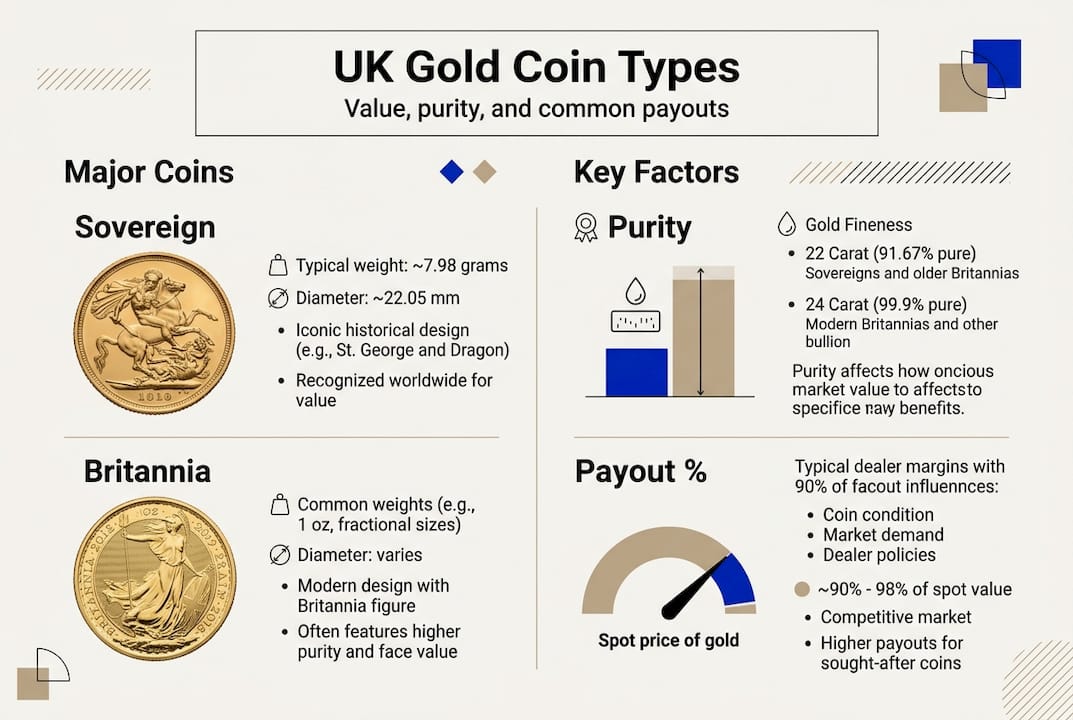
Hallmarking provides the foundation for authenticating gold coins and determining purity. British gold coins typically display marks indicating fineness, with 916 representing 22 carat gold (91.6% pure gold content). Full Sovereigns contain 7.98 grams of 22ct gold, whilst Britannias may be 22ct or 24ct depending on the year of minting. These marks aren’t decorative, they’re your guarantee of genuine precious metal content that buyers verify before making offers.
Pricing benchmarks vary dramatically based on coin type and buyer. Bullion coins pay 85-98% of spot price, with current 24ct gold trading around £119-122 per gram in 2026. Specialist dealers typically offer the higher end of this range, whilst general buyers may quote closer to 85%. Scrap gold receives significantly lower rates, often 60-75% of spot price, because it requires refining before resale. Understanding gold hallmarks and purity helps you calculate realistic expectations before approaching buyers.
The table below maps common UK gold coins to their specifications and typical valuation percentages:
| Coin type | Hallmark/Purity | Weight | Typical payout (% of spot) |
|---|---|---|---|
| Full Sovereign | 916 (22ct) | 7.98g | 90-98% |
| Half Sovereign | 916 (22ct) | 3.99g | 88-96% |
| Britannia (22ct) | 916 | 7.98g | 90-98% |
| Britannia (24ct) | 999 | 31.1g | 92-98% |
| Rare/proof coins | Varies | Varies | Premium above spot |
Pro tip: Never clean your coins as it can reduce their resale value. Collectors and dealers prefer original patina and surface characteristics that prove authenticity and age. Even gentle cleaning can diminish numismatic value by thousands of pounds for rare pieces.
Preparing to sell: what you need and how to get accurate pricing
Proper preparation separates sellers who maximise returns from those who leave money on the table. Following these steps ensures you enter negotiations armed with knowledge and realistic price expectations.
-
Accurately weigh your coins in grams using a calibrated digital scale. Spot prices are quoted per gram, so even small measurement errors translate to significant pricing differences. A Full Sovereign should weigh 7.98 grams, any deviation suggests wear or potential authenticity issues.
-
Check the current live spot price for gold before contacting buyers. Prices fluctuate daily based on global markets, and knowing today’s rate prevents accepting outdated or manipulated quotes. Reputable dealers display live prices prominently on their websites.
-
Gather valid photographic identification (passport or driving licence) and recent proof of address (utility bill or bank statement dated within three months). Anti-money laundering regulations require all UK gold buyers to verify seller identity, and missing documents delay or prevent sales.
-
Research your specific coin’s characteristics beyond weight and purity. Year of minting, mint marks, condition grade, and rarity factors all influence numismatic value. Coins with proof finishes, limited mintages, or historical significance command premiums that standard bullion pricing doesn’t capture.
-
Document your coins with clear photographs showing both sides, any hallmarks, and overall condition. These images help when requesting quotes remotely and provide evidence of condition should disputes arise later.
Pro tip: Use a trusted digital scale for precise weighing at home before visiting dealers. Kitchen scales lack the precision needed for valuable coins. Jeweller’s scales accurate to 0.01 grams cost under £20 and pay for themselves by preventing underweight measurements that cost you money.
Understanding valuing gold at home empowers you to calculate baseline expectations. Multiply your coin’s pure gold weight by the current spot price, then apply the typical payout percentage for your coin type. This calculation reveals whether buyer quotes reflect fair market rates or lowball offers designed to exploit uninformed sellers.
Selling your gold coins: choosing trusted buyers and the selling process
Selecting the right buyer dramatically impacts your final payout and transaction security. The UK market offers several options, each with distinct advantages and limitations.
Specialist bullion dealers focus exclusively on precious metals and typically offer the highest payouts, often 90-98% of spot price for common bullion coins. They possess expertise to recognise rare varieties and pay appropriate premiums. Many operate both physical locations and postal services with insured shipping. Local jewellers and gold dealers provide face-to-face transactions where you watch testing and weighing, building trust through transparency. Auction houses suit rare numismatic pieces that benefit from competitive bidding amongst collectors, though fees can reach 15-25% of hammer price. Pawnshops offer immediate cash but typically pay the lowest rates, often 50-70% of spot price, because they need profit margin for potential resale delays.
| Selling method | Typical payout | Trustworthiness | Fees | Convenience |
|---|---|---|---|---|
| Specialist dealers | 90-98% spot | High | None to low | Moderate |
| Local jewellers | 85-92% spot | Moderate to high | None | High |
| Auction houses | Variable (premiums possible) | High | 15-25% commission | Low |
| Pawnshops | 50-70% spot | Variable | None | High |
| Online buyers | 80-95% spot | Variable | Postage/insurance | Moderate |
Specialist dealers pay higher rates because they maintain efficient resale channels and lower overhead than general retailers. Local dealers enable watching testing and weighing, providing reassurance that you’re receiving accurate assessments. Avoiding pawnshops protects you from accepting dramatically undervalued offers driven by their business model rather than fair market pricing.
The typical in-person sale follows a structured process. Upon arrival, you’ll present identification for AML verification whilst the dealer examines your coins. Testing involves checking hallmarks under magnification, weighing on calibrated scales, and sometimes using electronic testing equipment or acid tests for authenticity. The dealer then calculates an offer based on current spot price, coin condition, and their payout percentage. You’re free to negotiate or decline, and payment occurs immediately via cash or bank transfer once you accept.
Pro tip: Get multiple quotes from at least three buyers and never sell to door-to-door buyers. Comparing offers reveals market rate consistency and identifies outliers. Door-to-door buyers operate outside regulated premises, making recourse impossible if disputes arise, and they universally offer below-market rates to fund their mobile operations.
Understanding getting top prices when selling gold involves timing sales during price peaks, maintaining coins in original condition, and building relationships with reputable dealers who offer loyalty premiums to repeat sellers.
Handling special cases and legal considerations when selling gold coins
Certain scenarios require additional attention beyond standard bullion sales. Numismatic coins with rarity, proof status, or historical significance can fetch substantial premiums above gold content value. These pieces belong at specialist auction houses or numismatic dealers who access collector markets willing to pay for scarcity. A rare Victorian Sovereign in exceptional condition might achieve 150-300% of its gold value, whilst the same coin in poor condition sells for standard bullion rates.
Damaged coins present valuation challenges. Significant wear, scratches, or mounting holes reduce numismatic value to essentially zero, leaving only gold content worth. Buyers calculate payout based on recoverable pure gold weight, which may be less than the coin’s original specification if material has worn away. Bent or holed coins often face additional deductions because refiners charge more to process damaged metal.
Inherited coins require checking probate status before sale. Executors must ensure the estate has been properly administered and beneficiaries have legal ownership. Selling inherited gold without proper authority can create legal complications and tax issues. If you’ve received coins through inheritance, verify that probate is complete and you hold clear title before approaching buyers.
UK tax treatment of gold coins follows specific rules. Sovereigns and Britannias are capital gains tax exempt because they qualify as legal tender, regardless of profit made. Other gold coins and bullion face capital gains tax on profits exceeding the annual allowance of £3,000 in 2026. Keep purchase receipts and sale documentation to calculate any potential liability. Consult a tax advisor if selling substantial quantities or high-value pieces to ensure compliance.
Anti-money laundering regulations apply universally to gold sales in the UK. Every buyer must verify your identity and record transaction details. This protects both parties by creating an audit trail and preventing criminal use of precious metal sales for money laundering. Legitimate buyers welcome these requirements as they demonstrate regulatory compliance and protect against accusations of facilitating illegal activity.
Always verify buyer credentials to avoid scams and legal issues. Check for membership in trade organisations like the British Jewellers’ Association, read independent reviews, and confirm physical business addresses. Unlicensed buyers operating from temporary locations or offering to meet in public places rather than business premises raise immediate red flags.
Understanding avoiding gold selling scams protects you from common tactics like bait-and-switch pricing, inaccurate scales, or pressure to accept immediate offers without comparison shopping. Legitimate dealers provide written quotes, allow time for consideration, and maintain transparent testing processes you can observe.
Sell your gold coins safely with Blackwell jewellers
Navigating the gold coin market requires expertise, transparency, and trustworthy partnerships. After understanding the complexities of valuation, buyer selection, and legal requirements, you need a dealer who combines all these elements into a straightforward, fair transaction.

Blackwell jewellers brings over 20 years of established trading to every gold coin transaction, with physical stores across Kent and comprehensive online services for national convenience. Our expert team provides accurate valuations based on current market rates, transparent testing processes you can observe, and competitive payouts that reflect true gold content and numismatic value. Whether you’re selling common bullion coins or rare collectible pieces, we offer the specialised knowledge and fair pricing that turns your gold into maximum value. Visit Blackwell jewellers today to receive a no-obligation quote from trusted professionals who prioritise your confidence and satisfaction throughout the selling process.
FAQ
How do I confirm if my gold coins are genuine?
Check for proper hallmarks indicating purity (such as 916 for 22ct gold), verify weight matches specifications for your coin type, and examine details under magnification for quality consistent with genuine minting. Professional appraisal from specialist dealers provides definitive authentication using electronic testing equipment and decades of experience identifying counterfeits. Understanding spotting fake gold jewellery techniques applies equally to coins and helps you perform preliminary checks before seeking professional verification.
What identification do I need to sell gold coins in the UK?
Valid photographic identification (passport or driving licence) and recent proof of address (utility bill or bank statement dated within three months) are legally required to comply with Anti-Money Laundering regulations. All UK gold buyers must verify and record seller identity before completing transactions, regardless of sale value. Prepare these documents in advance to speed up the selling process and avoid delays that might cause you to miss favourable pricing windows when spot prices are elevated.
Is there capital gains tax on selling gold coins in the UK?
UK gold Sovereigns and Britannias are exempt from capital gains tax because they qualify as legal tender issued by the Royal Mint. Other gold coins and bullion face potential capital gains tax on profits exceeding the annual allowance of £3,000 in 2026. Keep purchase receipts and sale documentation to calculate any liability accurately. Consult a qualified tax advisor if selling substantial quantities or if your total capital gains from all sources approach the annual threshold.
How long does it take to sell gold coins?
In-person sales at local dealers or specialist shops typically complete within 30-60 minutes, including identification verification, testing, negotiation, and payment. Postal services require shipping time plus processing, usually 3-5 business days total from posting to receiving payment. Auction sales take longest, often 4-8 weeks from consignment to receiving proceeds after the auction and settlement period. Choose your selling method based on whether you prioritise speed or potentially higher returns from competitive bidding.
Should I sell gold coins individually or as a collection?
Sell common bullion coins in batches to streamline transactions and reduce per-coin handling time, as they’re valued primarily by weight rather than individual characteristics. Sell rare or numismatic coins individually to ensure each piece receives proper evaluation and appropriate premium pricing based on its specific attributes. Collections with historical themes or complete date runs may command additional value when sold intact to collectors seeking comprehensive sets, so consult specialist dealers before breaking up cohesive collections.