

Jewellers do far more than craft beautiful pieces. They guide design decisions, translate personal stories into wearable art, and champion ethical sourcing practices that align with your values. Whether you’re commissioning a bespoke engagement ring or seeking sustainably sourced jewellery, understanding the jeweller’s multifaceted role empowers you to make informed, meaningful choices that reflect both craftsmanship and conscience.
Table of Contents
- The Evolving Role Of Jewellers In Bespoke Design
- Ethical Sourcing And Sustainability In Jewellery Design
- The Bespoke Jewellery Design Process: Jeweller As A Guide
- Choosing The Right Jeweller For Your Bespoke Piece
- Discover Bespoke Jewellery With Blackwell Jewellers
- Frequently Asked Questions
Key takeaways
| Point | Details |
|---|---|
| Personalised bespoke expertise | Jewellers specialise in crafting unique, meaningful pieces that reflect individual stories and preferences. |
| Ethical sourcing commitment | Responsible jewellers prioritise conflict-free gemstones, recycled metals, and transparent supply chains. |
| Collaborative design process | Working with dedicated bespoke jewellers ensures superior quality, tailored service, and aligned values. |
| Sustainability leadership | Industry leaders now use recycled materials, saving thousands of tonnes of CO2 emissions annually. |
| Informed commissioning | Understanding design stages and sourcing practices helps you select the right jeweller for your vision. |
The evolving role of jewellers in bespoke design
Jewellers have transformed from skilled craftspeople into creative collaborators who shape every aspect of bespoke jewellery. They work closely with clients to understand personal narratives, translating emotions and milestones into distinctive designs. This partnership ensures each piece carries genuine meaning beyond aesthetic appeal.
Bespoke jewellery allows creation of unique pieces with deep personal meaning, distinguishing it entirely from mass-produced alternatives. A jeweller’s expertise influences everything from material selection to final finishing techniques. Their knowledge of gemstone properties, metal characteristics, and structural integrity ensures your vision becomes a wearable reality.
Choosing a jeweller who specialises exclusively in bespoke work dramatically improves both experience and outcome. These specialists understand the nuances of individual style and can guide you through decisions that affect longevity, wearability, and emotional resonance. They invest time in understanding your story rather than pushing stock designs.
Key considerations when evaluating a jeweller’s bespoke capabilities include:
- Portfolio diversity demonstrating adaptability across styles and techniques
- Client testimonials highlighting communication quality and design satisfaction
- Workshop facilities enabling in-house craftsmanship and quality control
- Willingness to iterate designs until they perfectly match your vision
Understanding how bespoke jewellery design works empowers you to participate actively in the creative process. The best jewellers welcome questions, explain technical choices clearly, and adapt their approach to your comfort level. This collaborative dynamic produces pieces that feel authentically yours.
Pro tip: Select jewellers who emphasise open communication and demonstrate genuine interest in aligning with your individual style preferences rather than imposing their signature aesthetic.
Ethical sourcing and sustainability in jewellery design
Jewellery production historically involved significant environmental costs and traceability challenges. Modern jewellers increasingly recognise their responsibility to address these issues through ethical sourcing and sustainable practices. This shift reflects growing consumer demand for transparency and accountability throughout supply chains.
Recycled metals carry approximately one-third the environmental impact of newly mined alternatives. Pandora achieved exclusive use of recycled silver and gold in 2024, saving 58,000 tonnes of yearly CO2 emissions. This industry milestone demonstrates how large-scale adoption of sustainable materials creates measurable environmental benefits.

The Responsible Jewellery Council establishes global ethical standards that over 1,500 member companies adhere to, promoting responsible practices across mining, manufacturing, and retail. These certifications provide assurance that jewellers prioritise worker welfare, environmental protection, and conflict-free sourcing. Membership signals a commitment beyond basic legal compliance.
| Practice | Environmental Impact | Ethical Benefit |
|---|---|---|
| Recycled metals | 67% lower CO2 emissions | Reduces mining demand |
| Conflict-free gemstones | Minimal additional impact | Prevents human rights abuses |
| Fairtrade gold | Controlled extraction standards | Fair wages for miners |
| Lab-grown diamonds | 90% less energy intensive | Eliminates mining conflicts |
Understanding definitions of ethics and bespoke design helps you evaluate jewellers’ commitments beyond marketing claims. Ask specific questions about material origins, certification memberships, and supply chain transparency. Genuine ethical practitioners welcome these enquiries and provide detailed answers.
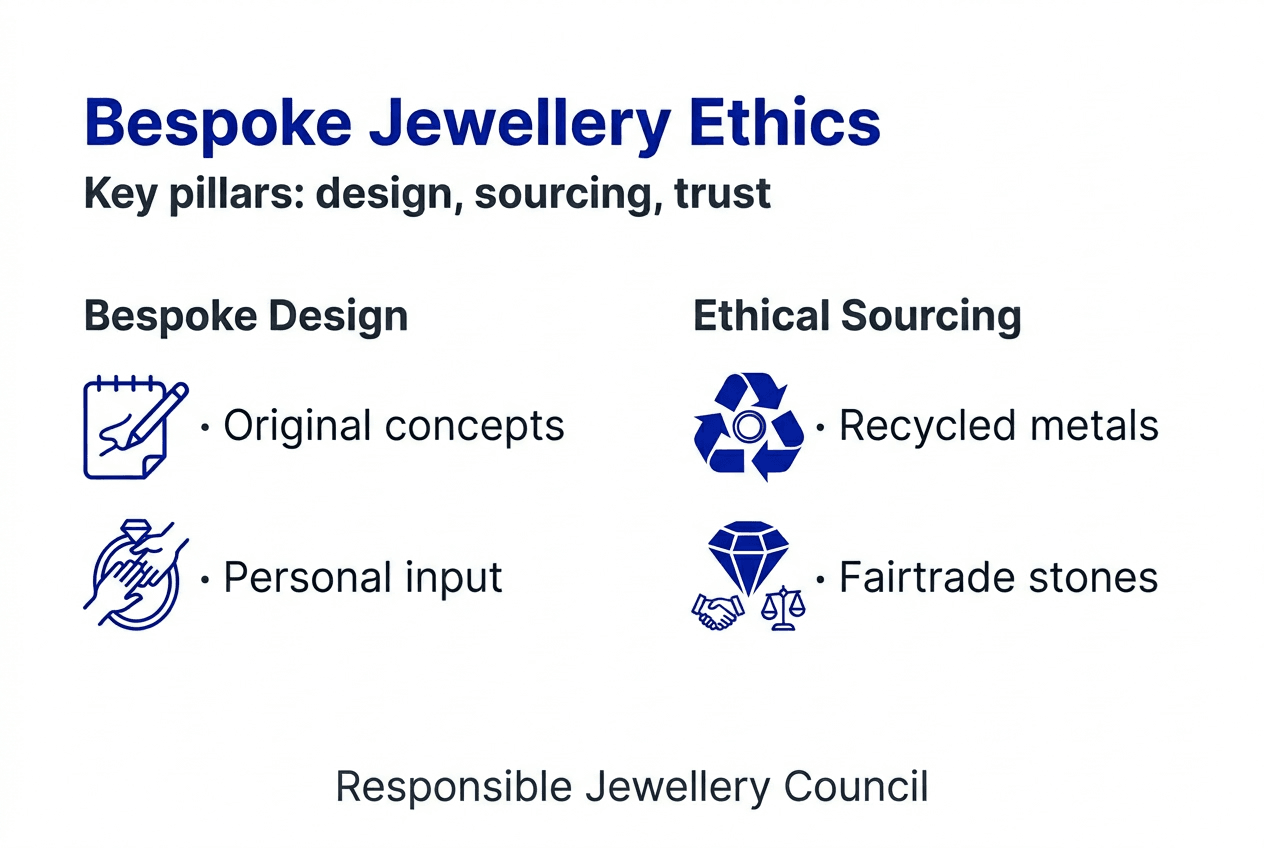
Pro tip: Request documentation of certifications like B Corp status or evidence of Fairtrade gold and recycled material usage before commissioning, ensuring your jeweller’s values align with your expectations.
The bespoke jewellery design process: jeweller as a guide
Commissioning bespoke jewellery involves collaborative stages where your jeweller acts as both creative partner and technical expert. Understanding this journey helps you prepare effectively and communicate your vision clearly. The process transforms abstract ideas into tangible, wearable art.
Bespoke engagement ring design typically involves research, jeweller selection, and stone selection as foundational steps. Each phase builds upon previous decisions, creating a coherent design narrative. Your jeweller guides you through choices that affect aesthetics, durability, and symbolic meaning.
The typical bespoke design process follows these stages:
- Initial consultation gathering inspiration through moodboards, reference images, and conversation about personal significance
- Jeweller selection based on portfolio alignment, ethical standards, and communication compatibility
- Material and stone choices guided by budget, preferences, and responsible sourcing priorities
- Design sketches presenting multiple concepts for feedback and refinement
- Final approval ensuring every detail matches your vision before crafting begins
- Expert craftsmanship transforming approved designs into finished pieces
Your jeweller’s expertise proves invaluable when navigating technical decisions. They explain how different metals age, which gemstone cuts maximise brilliance, and how design elements affect structural integrity. This knowledge prevents costly mistakes and ensures long-term satisfaction.
Creating your own bespoke jewellery requires clear communication about both aesthetic preferences and ethical priorities. Share inspiration freely but remain open to professional guidance. Jewellers often suggest improvements based on wearability, proportion, and technical feasibility.
Key elements jewellers help you define include:
- Metal type and finish affecting colour, durability, and maintenance requirements
- Gemstone selection balancing visual impact with ethical sourcing
- Setting styles influencing both security and aesthetic character
- Sizing considerations ensuring comfortable, practical wear
The most successful bespoke projects involve iterative dialogue where initial concepts evolve through collaborative refinement. Understanding how to choose the perfect engagement ring demonstrates how research and jeweller expertise combine to create meaningful outcomes.
Pro tip: Communicate your style preferences and ethical priorities explicitly during initial consultations, enabling your jeweller to guide design decisions that honour both aesthetics and values from the start.
Choosing the right jeweller for your bespoke piece
Selecting the appropriate jeweller significantly influences both your commissioning experience and final piece quality. Style compatibility ensures your aesthetic vision translates accurately, whilst service quality affects communication, transparency, and overall satisfaction. Ethical alignment guarantees your values remain central throughout creation.
Dedicated bespoke jewellery houses provide a higher quality and tailored experience than general jewellers. Specialists invest in developing bespoke-specific skills, maintain closer client relationships, and prioritise individual vision over production efficiency. This focus produces superior outcomes and more satisfying partnerships.
| Evaluation Criteria | What to Assess | Why It Matters |
|---|---|---|
| Style compatibility | Portfolio alignment with your aesthetic preferences | Ensures design vision translates accurately |
| Bespoke experience | Years specialising in custom commissions | Indicates technical skill and creative problem-solving |
| Ethical standards | Certifications, recycled materials, sourcing transparency | Confirms values alignment throughout creation |
| Client service | Responsiveness, communication clarity, revision willingness | Affects satisfaction and collaborative quality |
Reviewing portfolios reveals both technical capability and creative range. Look for diversity demonstrating adaptability rather than repetitive signature styles. Client testimonials offer insights into communication quality, deadline reliability, and post-sale support.
Ethical evaluation extends beyond surface claims to verifiable practices:
- Request specific certifications like Responsible Jewellery Council membership
- Ask about recycled metal percentages and conflict-free gemstone sourcing
- Enquire about supply chain transparency and third-party audits
- Evaluate willingness to discuss sourcing details openly
Understanding the value of handcrafted bespoke jewellery helps justify investment in specialist jewellers over mass-market alternatives. Bespoke pieces appreciate through emotional significance, superior craftsmanship, and timeless personal relevance.
Consider how jewellers approach personalising jewellery gifts when evaluating their collaborative approach. The best practitioners ask probing questions, offer creative suggestions, and demonstrate genuine investment in bringing your vision to life.
Schedule consultations with multiple jewellers before committing. Compare their listening skills, creative suggestions, and transparency about processes and pricing. Trust your instincts about communication chemistry alongside evaluating technical credentials.
Discover bespoke jewellery with Blackwell Jewellers
Blackwell Jewellers combines over 20 years of family-run expertise with a commitment to ethical sourcing and exceptional bespoke craftsmanship. Our Kent-based workshops enable in-house creation where your vision transforms into reality under expert guidance. We prioritise transparent provenance, responsible materials, and collaborative design that honours your unique story.

Whether you’re commissioning an engagement ring, anniversary piece, or meaningful gift, our specialists guide you through every decision with patience and expertise. We source conflict-free gemstones, utilise recycled metals, and maintain rigorous quality standards that ensure structural integrity and lasting beauty. Explore Blackwell Jewellers bespoke services to begin your creative journey with a team that values craftsmanship, ethics, and individual expression equally. Learn more about our bespoke jewellery design process and discover how collaboration creates pieces of enduring significance.
Frequently asked questions
What is the role of a jeweller in bespoke design?
Jewellers translate your personal stories and ethical values into unique wearable pieces through collaborative design. They guide material selection, ensure structural quality, and apply expert craftsmanship to match your aesthetic vision whilst honouring practical wearability.
How important is ethical sourcing when working with a jeweller?
Ethical sourcing proves vital for reducing environmental impact and guaranteeing conflict-free materials throughout creation. Many jewellers now adopt certifications and utilise recycled or Fairtrade metals to align with evolving client values and environmental responsibility.
What are the key steps when commissioning bespoke jewellery?
Commissioning involves initial design consultation, careful jeweller selection, collaborative material and stone choices, and final design approval before crafting begins. Your jeweller supports you throughout each stage, ensuring the finished piece perfectly matches your original vision and practical requirements.
How can I choose the right jeweller for my bespoke piece?
Evaluate jewellers’ portfolios for style alignment, review client testimonials for service quality, verify ethical certifications, and assess communication compatibility during consultations. Choosing a dedicated bespoke specialist typically delivers superior personalised experiences compared with general jewellers offering custom services alongside mass production.