

If you’re heading to a pawnbroker near Bexleyheath, here’s the short version: bring valid photo ID, proof of address dated within three months, and the item you want to pawn. That’s the bare minimum. Turn up without any of those and you’re going home empty-handed. No exceptions, no workarounds.
The longer version is a bit more nuanced, and getting it right can genuinely make the difference between walking out with a fair loan and walking out with nothing. So let’s go through it properly.
Table of Contents
- 1. What you absolutely must bring to a Bexleyheath pawnbroker
- 2. What items do pawnbrokers in Bexleyheath actually accept?
- 3. What are the legal KYC checks you’ll go through?
- 4. What will a pawnbroker actually pay you, and how does it work?
- 5. Practical tips for a smooth visit to a Bexleyheath pawn shop
- 6. How does the repayment and redemption process work?
- Blackwelljewellers: pawnbroking with people who actually know jewellery
- Key takeaways
1. What you absolutely must bring to a Bexleyheath pawnbroker
No fluff here. These are the non-negotiables for any pawnbroking transaction near Bexleyheath:
- Valid photo ID. A current passport or full UK driving licence. Expired documents won’t cut it.
- Proof of address. A utility bill or bank statement dated within the last three months. A letter from your dentist doesn’t count.
- The item itself. It must be in your possession. You can’t pawn something you’ve left at home.
- Evidence of ownership or provenance, if you have it. Purchase receipts, certificates, original packaging. Not always mandatory, but it helps enormously.
- Your pawn ticket, if you’re redeeming. If you’re coming back to collect an item, keep your pawn ticket safe — it’s your proof of loan and your key to getting your item back.
That’s your checklist. Screenshot it, write it on your hand, do whatever works for you.
2. What items do pawnbrokers in Bexleyheath actually accept?
Good question, and one worth answering before you lug something across town unnecessarily. Pawnbrokers accept a fairly specific range of goods, and they all share one thing in common: they need to hold genuine resale value.
Here’s what typically makes the cut:
- Jewellery. Gold, silver, platinum, diamond rings, necklaces, bracelets. This is the bread and butter of most pawnbrokers.
- Watches. Particularly branded pieces. A Rolex or TAG Heuer will get a far better reception than a supermarket special.
- Precious metals. Gold bullion, silver coins, scrap gold. Weight and purity matter here.
- Designer handbags and luxury accessories. Chanel, Louis Vuitton, Hermès. Authenticity is everything.
- Rare coins and collectibles. These can be accepted, though not every pawnbroker will have the expertise to value them confidently.
Items must be authentic, undamaged, and in full working order where that’s relevant (a watch that doesn’t run, for instance, will be valued lower). Blackwelljewellers, which has a Bexleyheath pawnbroking service alongside its Maidstone and Gravesend stores, specialises particularly in jewellery and precious metals, including pre-owned and new pieces. If you’re unsure whether your item qualifies, a quick call ahead saves everyone time.
3. What are the legal KYC checks you’ll go through?
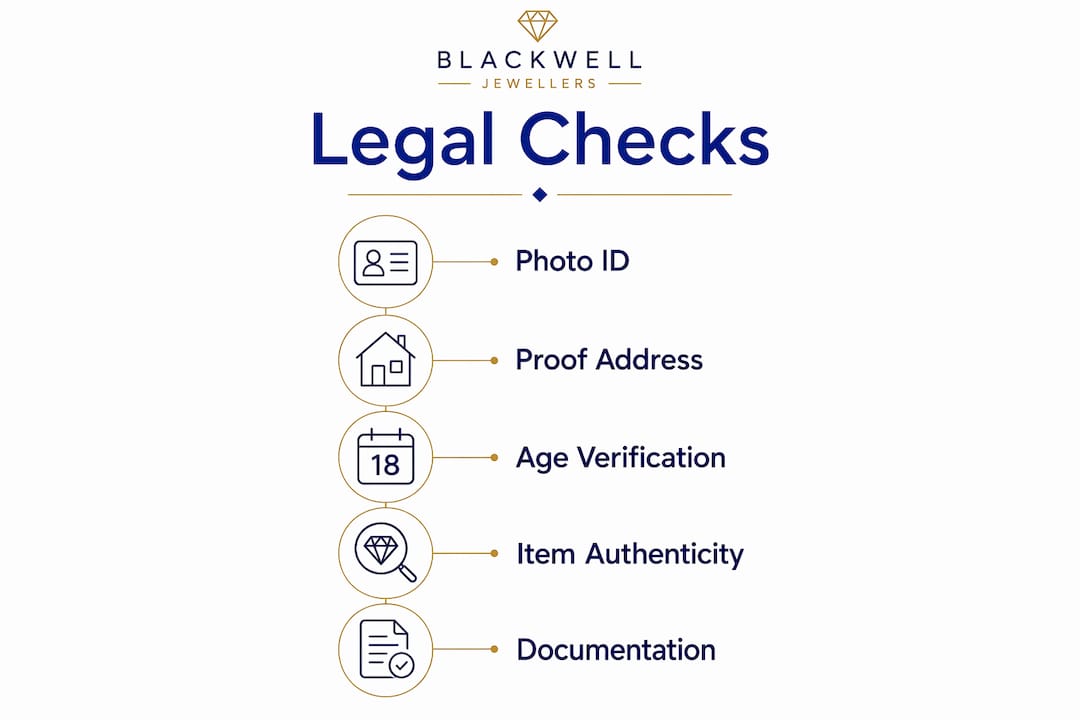
Pawnbroking in the UK is a regulated financial service, recognised by both the FCA and HMRC. That means it comes with proper compliance requirements, not just a handshake and a nod.
The process is called customer due diligence (CDD), and it’s part of anti-money laundering (AML) regulations. In practice, it means:
- Your ID will be scanned or photographed digitally.
- Your proof of address will be verified.
- You may be asked to explain where the item came from and how you came to own it.
- A digital record of the transaction, including photographs of the item, will be created.
This isn’t the pawnbroker being nosy. KYC compliance protects you as much as it protects them. It prevents stolen goods from entering the chain and shields legitimate customers from fraud.
One more thing: only adults can pawn items. The Consumer Credit Act 1974 makes this clear. If you’re under 18, no pawnbroker can legally take your goods, full stop.
Pro Tip: Bring purchase receipts, diamond certificates, or a watch’s service history. These documents help the pawnbroker verify provenance quickly and can genuinely improve the valuation you’re offered.
Blackwelljewellers adheres strictly to all FCA and AML requirements across its stores. You won’t be dealing with a grey-area operation.
4. What will a pawnbroker actually pay you, and how does it work?
Here’s the bit most people want to know. Pawnbroking loans are typically short term, with an average loan value of around £300, though this varies significantly depending on what you’re pawning. A gold ring and a diamond bracelet will attract very different offers.
The process goes like this:
- You bring your item in. The pawnbroker appraises it.
- They make you a loan offer based on their assessment of the item’s value and resale potential.
- If you agree, you sign a credit agreement and receive cash in store.
- You get a pawn ticket. This is your receipt, your proof of the loan, and your redemption key. Guard it.
- You have six months to repay the loan plus interest and reclaim your item.
- If you can’t repay in full, you can often extend by paying the interest only, keeping the loan alive.
If you don’t repay and don’t extend, the pawnbroker is entitled to sell the item. Under the Consumer Credit (Realisation of Pawn) Regulations 1983, they must follow specific notice procedures before doing so. If the sale raises more than you owed, you’re entitled to the surplus.
5. Practical tips for a smooth visit to a Bexleyheath pawn shop
Right, let’s get practical. A few things that separate a smooth transaction from a wasted trip:
- Clean your items before you go. A dirty ring or a tarnished watch signals neglect. A clean, well-presented item suggests it’s been cared for, which matters to appraisers.
- Bring all provenance documents you can find. Original boxes, certificates, receipts. Even partial documentation helps. Full provenance can meaningfully improve your loan offer.
- Check your ID is in date. Sounds obvious. You’d be surprised.
- Know roughly what your item is worth. A quick look at recent sold prices on reputable platforms gives you a realistic baseline. You don’t want to accept £50 for something worth £400.
- Read the loan terms before you sign. Interest rates vary. Understand what you’re agreeing to.
- Keep your pawn ticket somewhere safe the moment you leave. Losing it creates a real headache. For loans over £75, recovering a lost ticket requires a sworn statement before a magistrate or commissioner for oaths, which costs time and money.
Pro Tip: Building a relationship with a trusted local pawnbroker like Blackwelljewellers pays off over time. Repeat customers who are known, verified, and reliable often receive better service and more considered appraisals.
If you’re pawning diamond rings or other high-value jewellery, a specialist jeweller-pawnbroker will give you a far more accurate valuation than a generalist shop.
6. How does the repayment and redemption process work?
Once you’ve taken a loan, the clock starts. Here’s how the repayment side works in plain terms.
The redemption period under UK law is a minimum of six months from the date of the credit agreement. Within that window, you can redeem your item at any point by paying the original loan amount plus the accrued interest. Pawnbrokers pay cash in store when the loan is agreed, and you repay cash (or by other agreed means) when you redeem.
If six months feels tight, many pawnbrokers will allow you to extend by paying the interest only. This keeps the loan running without you having to repay the full principal. It’s worth asking about this option upfront, before you sign, so you know what flexibility you have.
What happens if you don’t redeem? For loans of £75 or under with a standard six-month term, ownership of the item passes to the pawnbroker automatically at the end of the period. For loans over £75, the pawnbroker must sell the item and account for any surplus above what you owed. That surplus comes back to you.
The pawn ticket is central to all of this. Surrender it, pay what’s owed, and your item is returned. Lose it, and you’re looking at a formal process to prove your claim. For smaller loans (under £75), this can be handled with standard forms at the pawnbroker’s discretion. For larger loans, you’ll need a sworn affidavit. Neither is fun. Keep the ticket.
Blackwelljewellers: pawnbroking with people who actually know jewellery
Most pawnbrokers will look at your gold ring and give you a number. Blackwelljewellers will look at your gold ring and understand it. There’s a difference, and it shows up in the valuation.

Blackwelljewellers has been trading for over 20 years, with stores in Bexleyheath, Maidstone, and Gravesend. The team specialises in jewellery and precious metals, which means when you bring in a diamond piece or a hallmarked gold bracelet, you’re talking to people who appraise these things every single day. Not a generalist with a price guide. An actual jeweller.
The pawnbroking service is fully FCA-compliant, transparent on terms, and straightforward on process. If you want to know what your item is worth before you commit to anything, that conversation is available. And if you’d rather sell outright than take a loan, the second-hand jewellery side of the business handles that too.
For Bexleyheath residents ready to take the next step, visit the pawnbroking service page to see exactly how the process works and what to expect when you walk through the door.
Key takeaways
Visiting a pawnbroker near Bexleyheath requires valid photo ID, proof of address dated within three months, and the item itself — with provenance documents significantly improving both compliance and valuation.
| Point | Details |
|---|---|
| ID and proof of address | Bring a current passport or driving licence plus a utility bill or bank statement dated within three months. |
| Provenance documents help | Purchase receipts, certificates, and service history can improve your loan offer and speed up KYC checks. |
| Loan terms to know | Loans typically last six months, with an average loan value of approximately £300, and the option to extend by paying interest only. |
| Guard your pawn ticket | Losing it for a loan over £75 requires a sworn affidavit before a magistrate to recover your item. |
| Blackwelljewellers | Offers specialist jewellery pawnbroking across Bexleyheath, Maidstone, and Gravesend with full FCA compliance. |