
TL;DR:
- Ethical jewellery in 2026 emphasizes responsible sourcing, recycled materials, and transparent supply chains.
- Lab-grown diamonds are gaining popularity for their lower environmental impact and ethical advantages.
- Recycled and upcycled materials support sustainability by reducing mining and promoting circular economy practices.
Choosing jewellery that looks beautiful and does genuine good is no longer a niche concern. Across the UK, eco-conscious shoppers are asking harder questions about where their pieces come from, who made them, and what impact they leave behind. The UK jewellery market is growing, with sustainability now a primary driver of purchasing decisions. In 2026, new materials, certifications, and sourcing standards are raising the bar for what counts as truly ethical. Whether you’re buying your first sustainable piece or refining an existing collection, this guide will walk you through what matters most.
Table of Contents
- How to evaluate ethical jewellery in 2026
- Lab-grown diamonds: Leading the ethical revolution
- Recycled and upcycled materials: Minimising environmental impact
- Emerging ethical trends: Fairmined gold, artisanal brands, and tech solutions
- Why true ethical impact requires more than just a label
- Explore ethical jewellery options with us
- Frequently asked questions
Key Takeaways
| Point | Details |
|---|---|
| Transparency matters | Choosing jewellery with confirmed ethical sourcing is crucial for responsible purchases. |
| Lab-grown leads | Lab-grown diamonds are the most popular ethical choice in 2026 for affordability and sustainability. |
| Recycling rises | Recycled and upcycled materials offer a practical way to support lower-impact jewellery. |
| New tech empowers consumers | Blockchain and digital innovation help verify the sources and ethical claims of jewellery. |
| Go beyond the label | True ethical impact comes from ongoing awareness and consumer choice, not just certifications. |
How to evaluate ethical jewellery in 2026
Now that we’ve set the stage for why ethical choices matter, let’s look at how you can evaluate what truly counts as sustainable and responsible in 2026.
The term ‘ethical jewellery’ covers a wide range of considerations. At its core, it refers to pieces made with respect for people, the planet, and the communities involved in production. That means looking beyond the finished item and asking about every step in the supply chain, from the mine or lab to the workshop to the shop floor.
Here are the key criteria to assess when evaluating any piece:
- Materials: Are they recycled, lab-grown, or responsibly mined? Recycled gold and silver reduce the need for new extraction. Lab-grown stones eliminate the environmental damage associated with traditional mining.
- Certifications: Look for recognised standards such as the Responsible Jewellery Council (RJC) certification, Fairtrade gold hallmarks, or Fairmined accreditation. These are independently verified and carry real weight.
- Transparency: Can the seller tell you where the materials came from? Vague answers or marketing language without specifics are a warning sign.
- Production conditions: Were the workers paid fairly? Were safe working conditions maintained throughout the supply chain?
- Longevity: Ethical jewellery is also built to last. A well-made piece that lasts decades is far more sustainable than a cheaply produced item replaced every year.
The jewellery trends for 2025 already pointed toward growing consumer demand for provenance and accountability, and that momentum has only strengthened heading into 2026.
“Transparent sourcing is the foundation of trust between a jeweller and their customer. Without it, sustainability claims are just marketing.” — Industry perspective shared widely across the ethical jewellery sector.
Pro Tip: When reading a certification label, search the certifying body’s website directly to confirm the brand is a current, active member. Certificates can expire or be misrepresented, so a quick verification takes less than two minutes and gives you real confidence.
New hallmarking guidance in 2026 is also making it easier to identify recycled content and responsibly sourced metals at a glance. Staying informed about these updates helps you shop with far greater precision.
Lab-grown diamonds: Leading the ethical revolution
Once the key criteria are clear, the conversation must focus on the trend dominating 2026: lab-grown diamonds.
Lab-grown diamonds are chemically, physically, and optically identical to mined diamonds. The difference lies entirely in their origin. Created in controlled laboratory environments using either High Pressure High Temperature (HPHT) or Chemical Vapour Deposition (CVD) processes, they sidestep the ecological and humanitarian concerns tied to traditional diamond mining.
The UK jewellery market report confirms that lab-grown diamonds are rising sharply in popularity, driven by both affordability and sustainability credentials. For many UK buyers, they represent the clearest path to owning a diamond without compromise.
| Feature | Lab-grown diamond | Mined diamond |
|---|---|---|
| Price | 50 to 80% lower | Premium pricing |
| Environmental impact | Significantly lower | High land and water use |
| Ethical sourcing | Fully traceable | Variable, risk of conflict stones |
| Quality | Identical to mined | Identical to lab-grown |
| Resale value | Emerging market | Established market |
The benefits of choosing a lab-grown stone are considerable:
- Cost: You can purchase a larger, higher-quality stone for the same budget as a smaller mined diamond.
- Traceability: Every lab-grown diamond has a clear, documented origin with no ambiguity about sourcing.
- Reduced ecological footprint: Mining operations displace enormous volumes of earth and consume significant water resources. Lab production avoids both.
- Conflict-free guarantee: The risk of purchasing a stone linked to conflict zones is eliminated entirely.
For a thorough breakdown, our guide on lab-grown vs mined diamonds covers the full comparison in detail. If you’re considering updating your collection, transforming it with lab-grown diamonds is one of the most impactful steps you can take. You can also explore why lab-grown diamonds are the future of accessible luxury.
Pro Tip: Always ask for the grading certificate when buying a lab-grown diamond. Reputable sellers provide a certificate from an independent gemological laboratory such as the IGI or GIA, confirming the stone’s origin, cut, colour, and clarity.
Recycled and upcycled materials: Minimising environmental impact
While lab-grown diamonds stand out, the appeal of recycled and upcycled materials continues to redefine eco-conscious choices.
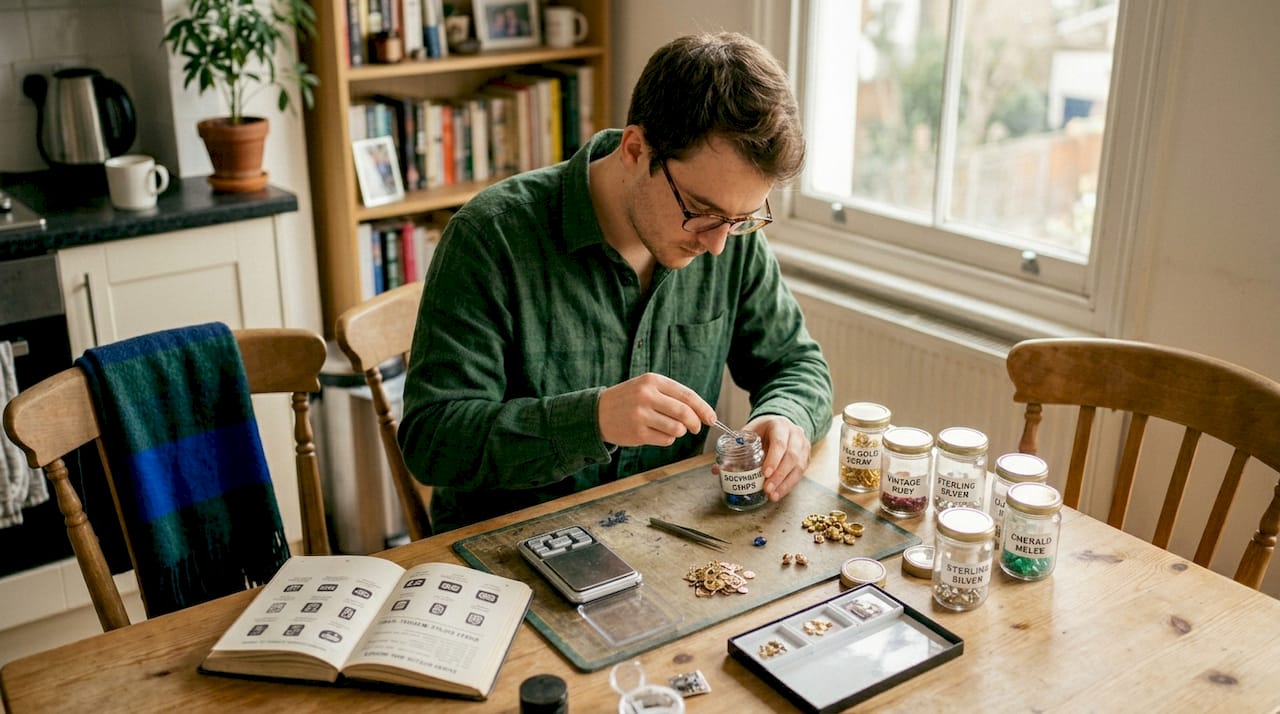
Recycled metals are exactly what they sound like: gold, silver, and platinum recovered from existing sources, whether that’s old electronics, industrial scrap, or previously owned jewellery, and refined back to jewellery-grade purity. Upcycled gems refer to stones removed from older or damaged pieces and reset into new designs, giving them a second life without any new extraction.
The advantages of choosing recycled or upcycled materials are significant:
- Reduced mining impact: No new land needs to be disturbed, and no new communities face displacement.
- Lower carbon footprint: Refining recycled metal uses considerably less energy than primary smelting from ore.
- Unique character: Vintage stones and repurposed metals often carry a history and individuality that mass-produced pieces simply cannot replicate.
- Supporting circular economy: Buying recycled keeps materials in use and reduces waste at every level.
- Local artisan opportunities: Many UK-based jewellers are building entire collections around upcycled materials, supporting skilled craftspeople closer to home.
The UK jewellery market shows increasing demand for sustainable options, with recycled materials at the forefront of this shift. Shoppers are no longer satisfied with vague green claims. They want specifics.
That said, watch out for misleading marketing. Terms like ‘eco-friendly’ or ‘sustainable’ are not regulated in the same way that hallmarks are. Always ask: what percentage of the metal is recycled? Where was it sourced? Is there documentation? Genuine upcycling comes with a story and, ideally, paperwork.
The 2025 jewellery trends already highlighted the rise of vintage-inspired and repurposed designs, and in 2026 this has matured into a fully established market segment rather than a passing moment.
Emerging ethical trends: Fairmined gold, artisanal brands, and tech solutions
Beyond materials, a wave of new technologies and certifications is shaping what ‘ethical’ means in 2026.
Fairmined and Fairtrade gold are two of the most credible certifications available to UK consumers. Both schemes work directly with artisanal and small-scale mining (ASM) communities, ensuring miners receive fair wages, operate in safe conditions, and follow environmental standards. The difference is subtle: Fairtrade focuses on community development premiums, while Fairmined emphasises environmental and labour practices at the mine itself. Either certification is a strong signal of genuine commitment.
| Sourcing method | Certification available | Artisan involvement | Supply chain transparency |
|---|---|---|---|
| Traditional mined | Limited, variable | Low | Often opaque |
| Fairtrade gold | Yes, independently verified | High | Strong |
| Fairmined gold | Yes, independently verified | High | Strong |
| Recycled metal | Emerging standards | Variable | Growing |
| Lab-grown stones | Grading certificates | N/A | Excellent |
Technology is also playing an increasingly important role. Here are the top three innovations driving transparency in 2026:
- Blockchain tracing: Some jewellers now record every stage of a stone or metal’s journey on a blockchain ledger, creating an immutable, publicly verifiable record from source to sale.
- QR code provenance tags: Pieces are sold with scannable codes linking directly to sourcing documentation, mine locations, and certification records.
- AI-assisted gemstone identification: Advanced imaging tools can now verify the origin and treatment history of stones with greater accuracy than ever before, reducing the risk of misrepresentation.
The UK consumer demand for responsible sourcing is actively driving these innovations, pushing brands to invest in systems that provide genuine accountability rather than surface-level claims.
These developments empower you as a buyer. You no longer have to take a brand’s word for it. The tools to verify ethical credentials are increasingly accessible, and the best jewellers welcome that scrutiny.
Why true ethical impact requires more than just a label
All these trends offer exciting opportunities, but a deeper look reveals new challenges in what it means to shop ethically.
Here’s a perspective that doesn’t get said often enough: a certification is a starting point, not a finish line. Labels and hallmarks confirm that a brand met a standard at a particular moment in time. They don’t guarantee that every piece in every collection maintains that standard, or that the brand’s overall practices align with your values.
Real ethical impact comes from the choices you make beyond the label. It means asking questions directly to the jeweller, not just reading the product description. It means considering longevity over novelty. A well-crafted pre-owned piece that lasts another 30 years is arguably more sustainable than a brand-new ‘eco-certified’ item produced in high volume.
Supporting local artisans and businesses with genuine accountability, people you can actually speak to and hold responsible, matters more than any single certification. We’ve seen customers make genuinely impactful choices not by following the latest trend, but by slowing down and asking better questions. That shift in behaviour, repeated across thousands of buyers, is what actually moves the needle.
Explore ethical jewellery options with us
If you’re ready to embrace these ethical trends in your own collection, here’s where you can take the next step.
At Blackwell Jewellers, we’ve spent over 20 years building a reputation on transparency, craftsmanship, and responsible buying. Every pre-owned piece in our collection is rigorously inspected, authenticated, and hallmarked before it reaches you. Our ethical diamonds and new collections are chosen with the same care.
Whether you’re drawn to lab-grown diamonds, recycled metals, or a beautifully restored vintage piece, our ethical jewellery collection offers options that align with your values without compromising on quality or beauty. Browse our range online or visit one of our Kent stores in Maidstone, Gravesend, or Bexleyheath to speak with our team directly. We’re here to help you make a choice you’ll feel genuinely good about.
Frequently asked questions
What makes jewellery ethical in 2026?
Ethical jewellery practices in 2026 are defined by responsible sourcing, recycled or lab-grown materials, transparent supply chains, and credible independent certifications. It’s the combination of all these factors, not just one, that distinguishes a genuinely ethical piece.
Are lab-grown diamonds really more sustainable than mined diamonds?
Lab-grown diamonds use significantly less energy and carry a smaller ecological footprint than mined diamonds in most production scenarios. They also eliminate the risk of conflict sourcing entirely.
How can I verify that jewellery is made from recycled materials?
Look for recognised hallmarks and ask the seller for specific sourcing documentation. Recycled materials in reputable jewellery are backed by independent eco-labels or certifications, not just marketing language.
What are the newest ethical jewellery trends for UK buyers?
Emerging ethical trends shaping 2026 include lab-grown gems, recycled metals, Fairmined and Fairtrade gold, artisan-led collections, and blockchain-powered supply chain transparency.