

TL;DR:
- Most inherited jewelry can be transformed into modern bespoke pieces, preserving stones, metal, and sentiment. Blackwelljewellers offers in-house remodelling services that include assessment, design, hallmarking, and handcrafting, with transparent quotes and realistic timelines. Remodelling options range from resetting stones to combining multiple heirlooms, often enhancing sustainability and personal significance.
Yes — most inherited jewellery can be remodelled into a modern bespoke piece, and the process is far more accessible than people expect. The stones, the metal, even the sentimental story can all survive the transformation intact. Your immediate next step? Photograph the piece from every angle, note any hallmarks stamped on the metal, and book a consultation with a trusted remodeller like Blackwelljewellers. That single conversation will tell you more about what’s possible than hours of online research.
Remodelling isn’t just about aesthetics, either. Repurposing family jewels keeps stones in daily circulation rather than sitting unworn in a drawer, and reusing existing gold and gems typically shifts your budget away from raw materials and towards design and craftsmanship — which is where the real magic happens anyway. Whether you’ve inherited a Victorian brooch, a cluster ring from the 1970s, or a plain gold band with enormous sentimental weight, there’s almost certainly something worth doing with it.
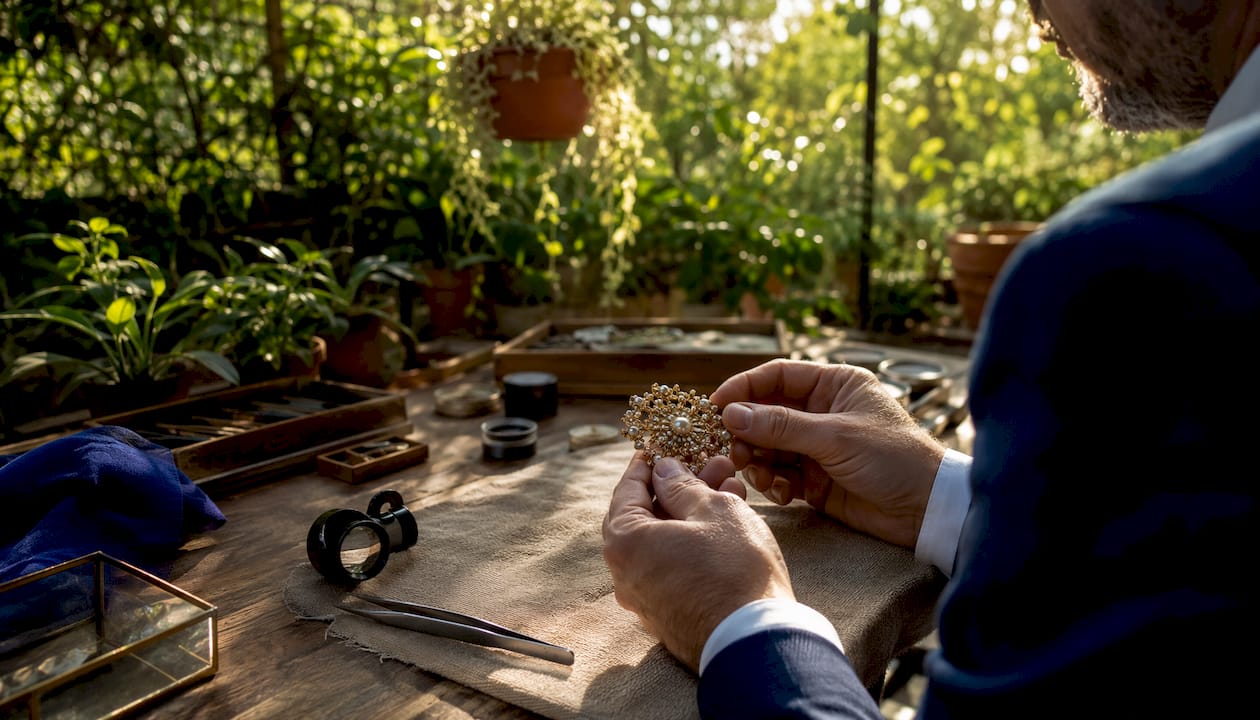
Table of Contents
- How does jewellery remodelling actually work, step by step?
- What can you actually do with inherited jewellery?
- Which modern design styles work well for remade heirlooms?
- Blackwelljewellers’ remodelling approach: what sets us apart
- How much does remodelling cost, and how long does it take?
- How do you choose the right remodeller?
- What to prepare before you start: photos, valuations and sending safely
- UK hallmarking, aftercare and insurance for remade pieces
- Key takeaways
- Why remodelling heirlooms is more interesting than people think
- Blackwelljewellers can take your heirloom from assessment to finished piece
- Useful UK sources and further reading
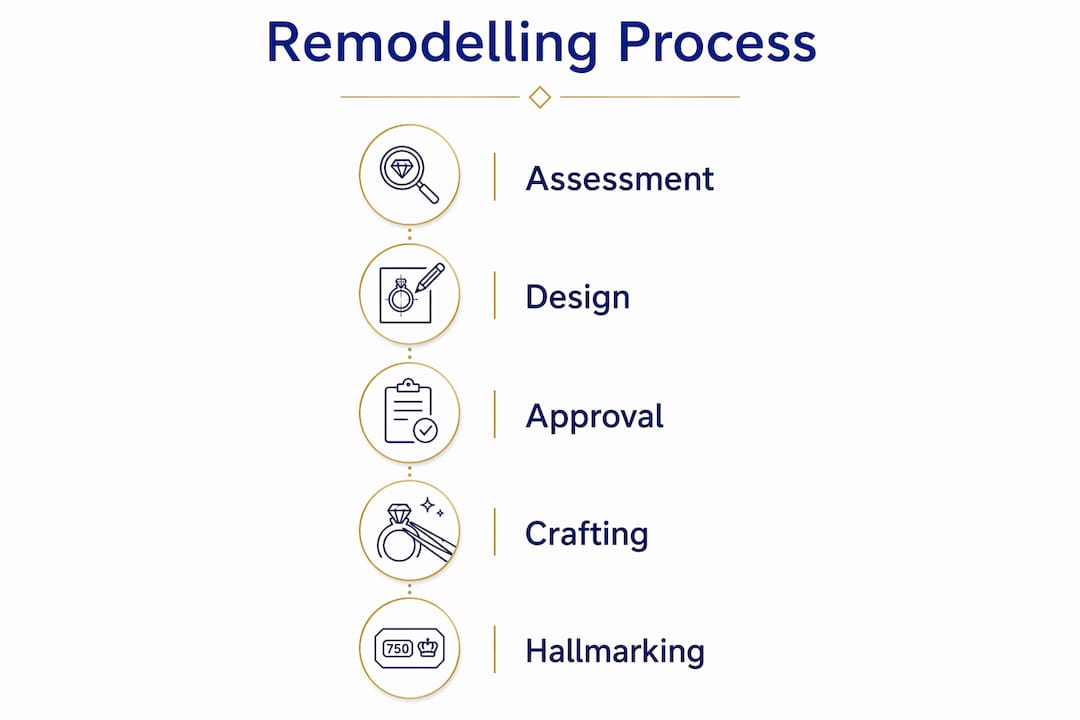
How does jewellery remodelling actually work, step by step?
The process sounds mysterious until someone walks you through it. Here’s the honest version, from first phone call to finished piece.
-
Initial consultation. You bring the piece (or send clear photographs) and talk through what you love about it, what you’d change, and roughly what you’d like the end result to look like. No commitment at this stage — it’s a conversation.
-
Assessment. The jeweller examines the metal (checking purity, weight and condition), evaluates any stones (checking for chips, inclusions, secure settings), and reads any hallmarks. This assessment determines what can be reused, what needs replacing, and whether any structural work is needed first.
-
Design brief and sketches or 3D render. Once the assessment is done, the design stage begins. Depending on the complexity, this might mean hand sketches, a CAD drawing, or a 3D-printed wax model. You’ll see what the finished piece will look like before a single stone is moved.
-
Cost estimate and approval. You receive a written quote covering labour, any new metal or stones required, and assay/hallmarking fees if applicable. Nothing proceeds until you’ve signed off on the design and the cost.
-
Dismantling, refining and recasting. The original piece is carefully taken apart. Stones are removed and stored safely. Metal may be refined and recast into a new mount, or worked directly depending on the design.
-
Setting and handmaking. Stones are set into the new mount by hand. This is the most time-intensive stage for complex pieces — prong work, pavé setting, and hand engraving all take real hours.
-
Finishing, hallmarking and delivery. The piece is polished, inspected, and — where required by UK law — submitted to an assay office for hallmarking. Under the Hallmarking Act 1973, gold items over 1g, silver over 7.78g, platinum over 0.5g, and palladium over 1g must carry an approved hallmark if described as such. Significantly altered pieces may need a fresh hallmark even if the original was valid. Once hallmarked, the piece is returned to you with updated paperwork.
Timeline reality check: simple resets can be completed in a few weeks. Bespoke commissions involving CAD design, hand finishing, and hallmarking commonly take several months — which surprises people who assume it’s a quick job. Build in that time, especially if you have a date in mind.
Pro Tip: Bring any existing valuation certificates, insurance documents, and family notes about the piece to your first consultation. Provenance speeds up the assessment and can affect the final design brief.
What can you actually do with inherited jewellery?
More than you’d think. Here are the most common remodelling options, with a quick sense of what each involves.
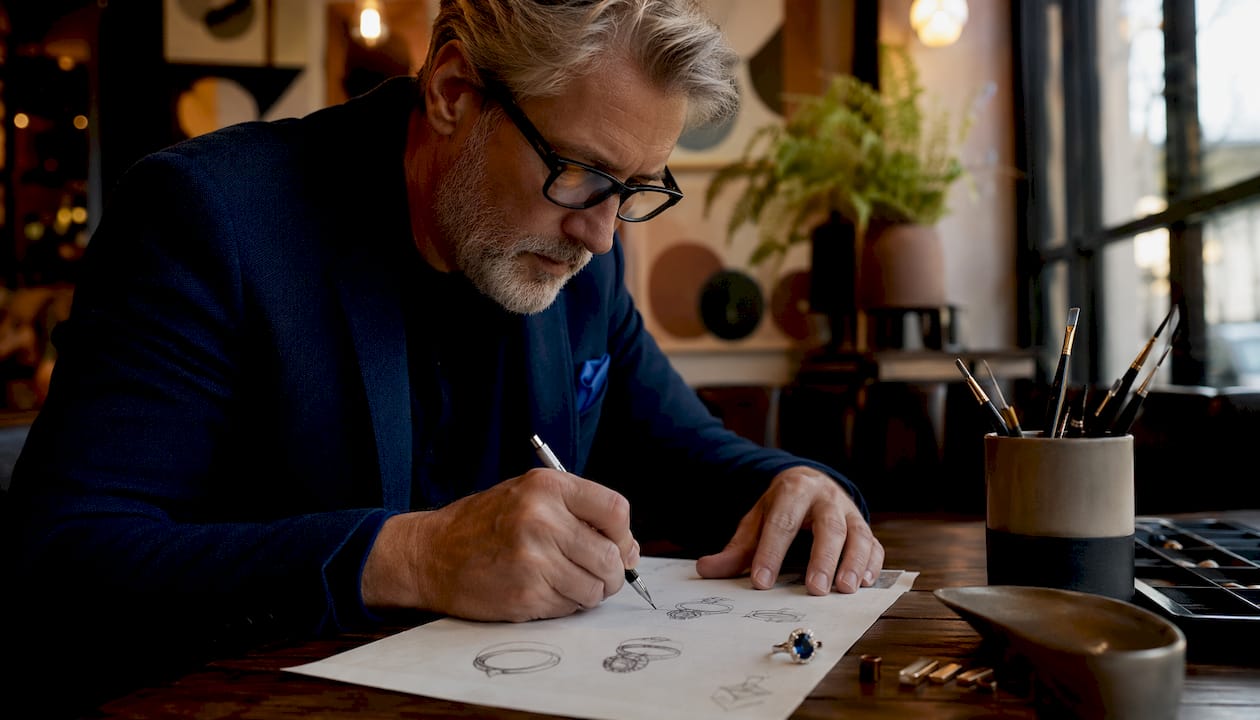
Reset the main stone into a new ring. The classic move. A grandmother’s solitaire diamond in a worn yellow gold mount gets lifted out and set into a sleek platinum band. The stone is unchanged; the silhouette is entirely modern. This works brilliantly when the stone itself is the star.
Convert a ring into a pendant. Rings that no longer fit, or that feel too old-fashioned to wear on a finger, often make stunning pendants. The stone stays central; the setting is redesigned to hang from a chain. It’s one of the quickest conversions and one of the most wearable outcomes.
Make studs or a brooch into earrings. A large vintage brooch with multiple stones can yield a pair of studs, a pendant, and sometimes a small charm — all from one piece. Three small diamonds from a cluster ring can become a modern pavé band or a trio of individual studs for different family members.
Combine multiple pieces into one ‘hero’ piece. This is where things get genuinely exciting. You can read about a real example of combining two diamond rings into a single bespoke commission — the kind of project that turns several unworn pieces into something worn every day.
Reuse the metal for a new mount. Even if the stones are too small, damaged, or simply not to your taste, the gold itself has real value. Heirloom metal can be melted down and recast as part of a new design, often credited against the cost of the project.
A few honest caveats: very small stones (under around 2mm) are tricky to reset without significant risk of loss. Fragile filigree work can be difficult to incorporate into a modern design without losing its character. And stones with existing chips or fractures need careful assessment before any heat or pressure is applied. A good jeweller will flag all of this upfront, not after the work has started.
The sentimental story doesn’t have to disappear, either. An engraved date from the original piece can be transferred to the inside of a new band. A motif from a Victorian setting — a leaf, a star, a crescent — can be echoed in the new design. Hidden stones set inside a ring shank are a lovely way to keep a smaller diamond in the piece without it dominating the design.
Which modern design styles work well for remade heirlooms?
Not every contemporary style suits every heirloom stone, so it’s worth thinking about this before your consultation. Here are the directions that tend to work best:
- Low-profile solitaires. A bezel or flush setting protects older stones (which may have been cut to older tolerances) and suits active hands. The stone sits close to the finger, reducing the risk of snagging, and the clean silhouette reads as genuinely modern.
- Sculptural statement rings. If the stone is large and confident, a bold architectural mount can lean into that rather than fighting it. Yellow gold with geometric forms is particularly strong right now — check current jewellery trends for what’s resonating.
- Mixed-metal modern classics. Combining the original yellow gold with white gold or platinum in the new mount is a practical way to honour the heirloom metal while achieving a contemporary look. It also avoids the cost of replacing all the metal.
- Minimalist pendant conversions. A single stone on a fine chain is one of the most wearable outcomes possible. It works for everyday wear in a way that a large dress ring simply doesn’t.
- Multi-stone cluster updates. Older cluster rings often have stones arranged in dated patterns. Resetting the same stones in a more organic or asymmetric arrangement gives the piece a completely different feel without losing any material.
Proportion matters more than people realise. An older Old Mine or Rose Cut diamond has a different silhouette to a modern brilliant — it sits higher, reflects light differently, and needs a setting that works with those characteristics rather than against them. Your jeweller should talk you through this; if they don’t, ask. Vintage ring styles can offer useful visual reference for understanding how different cuts behave in different settings.
There’s also the sustainability angle, which editorial coverage consistently highlights: reusing already-mined stones and metal is a genuinely lower-impact choice compared with sourcing new materials. For many clients, that’s as meaningful as the sentimental dimension.
Blackwelljewellers’ remodelling approach: what sets us apart
Blackwelljewellers is a family-run business with over 20 years of trading, with stores in Maidstone, Gravesend and Bexleyheath and a national online platform. The remodelling work is done by in-house goldsmiths — not outsourced — which means the team handling your consultation is the same team handling your piece.
Project example one: A client brought in two inherited diamond rings — one from her mother, one from her grandmother — neither of which she wore. The brief was to combine the stones into a single ring she’d actually put on every day. The result was a bespoke two-stone ring in recycled yellow gold, with both diamonds set side by side in a low-profile bezel mount. Both stones retained their original cuts; the design was entirely contemporary.
Project example two: A 1960s yellow gold brooch with a central sapphire and surrounding seed pearls. The pearls were too fragile to reset, but the sapphire was in excellent condition. It was lifted from the brooch and set into a simple white gold pendant, with a small diamond accent added to complement the stone’s colour. The client kept the original brooch frame as a display piece.
What differentiates Blackwelljewellers in practical terms: in-house authentication and hallmarking workflow, the option to credit heirloom metal against the cost of the new piece, local in-store collection and inspection (no posting your grandmother’s ring to a stranger), and written quotes before any work begins. You can also send photographs for a preliminary feasibility check before committing to anything.
How much does remodelling cost, and how long does it take?
Both questions have the same honest answer: it depends. But here’s a realistic framework.
| Project type | Indicative cost range | Typical timeline |
|---|---|---|
| Simple stone reset (existing metal) | From a few hundred pounds | 2–4 weeks |
| Ring-to-pendant conversion | From a few hundred pounds | 2–4 weeks |
| Full remake using heirloom metal | Variable; design/labour-led | 6 weeks |
| Bespoke commission with CAD | Editorial examples cite £2,500 for complex briefs | several months |
| Multi-stone rework | Depends on stone count and new metal | several weeks |
These are illustrative ranges, not fixed quotes. The main factors that push costs up are: additional new metal or stones required, CAD/3D rendering fees, complex hand-setting work (pavé, micro-pavé, hand engraving), assay office fees for hallmarking, and insurance during transit or workshop time.
The main factor that brings costs down is reusing your existing material. Heirloom gold credited against the project means you’re paying primarily for design and craftsmanship rather than raw metal — which is a genuinely different proposition from commissioning a piece from scratch.
Timeline realism is worth stressing. A simple reset is fast. A bespoke commission with multiple design rounds, hand finishing, and a trip to the assay office is not. Industry practice shows that clients who factor in realistic lead times are far happier with the experience than those who expect a two-week turnaround on a complex brief.
How do you choose the right remodeller?
This is where a lot of people go wrong — they focus on price and forget to ask the questions that actually matter. Here’s a checklist.
- Do they have in-house goldsmiths? Work done in-house means accountability. If the piece is outsourced to a third party, you lose visibility over who’s handling it and when.
- What’s their hallmarking process? Ask specifically: do they submit to a UK assay office, and will they provide documentation? Under the Hallmarking Act 1973, significantly altered pieces must be re-hallmarked if the original mark is unreadable or the article’s use changes. A remodeller who can’t explain this process clearly is a concern.
- Can they show previous remodelling examples? Before-and-after photographs, case studies, or client references are the clearest signal that they’ve done this before and done it well.
- How is the piece insured during the work? Ask whether your piece is covered under their workshop insurance and what happens if something goes wrong.
- Do they provide written quotes? A verbal estimate is not a quote. Get it in writing, itemised by labour and materials.
- Will they return original stones if asked? This should be a straightforward yes. Any hesitation is a red flag.
- What’s the payment structure? A staged payment plan (deposit, mid-point, completion) is standard for bespoke work. Requests for full payment upfront before any work begins are unusual.
Red flags to watch for: vague timelines with no written confirmation, reluctance to document provenance, inability to explain the hallmarking process, and no examples of previous remodelling work. These aren’t minor issues — they’re signs that the remodeller either lacks experience or lacks transparency.
When comparing written quotes, separate labour costs from material costs. Two quotes at the same total price can look identical but be very different: one might be charging heavily for new metal you don’t need, while another is charging fairly for skilled labour. Ask for the breakdown.
What to prepare before you start: photos, valuations and sending safely
Getting organised before your consultation saves time and money. Here’s exactly what to do.
Photography checklist:
- Clear macro shots from multiple angles (top, side, underneath)
- Close-up of any hallmarks (a magnifying glass helps; most smartphones can focus close enough)
- A shot showing scale — place a coin or ruler next to the piece
- Photos of any damage, chips, or worn areas
Paperwork to gather:
- Any previous valuations or insurance documents
- Original purchase receipts if available
- Family notes or provenance details (even informal ones help)
- Details of any previous repairs
Sending jewellery safely: if you’re not visiting a store in person, use a tracked, fully insured courier service. Royal Mail’s Special Delivery Guaranteed is the standard choice for jewellery in the UK — it covers items up to £2,500 as standard, with higher cover available. Declare the value accurately; under-declaring to save on postage is a false economy if something goes wrong. Blackwelljewellers offers in-store collection and inspection at their Kent locations, which removes the posting risk entirely for local customers.
The 2:1:1 rule comes up occasionally in remodelling conversations. It refers to a provision in the Hallmarking Act 1973 that allows additions to an existing hallmarked article without re-hallmarking, provided the addition is of the same precious metal, meets the fineness standard, and the added metal doesn’t exceed 50% of the article’s pre-addition weight. In practice, this means minor additions to an existing piece may not require a full re-hallmark — but ask your jeweller to confirm whether it applies to your specific project, because the conditions are precise.
Not ready to remodel yet? That’s fine. A piece can be professionally cleaned and stored, displayed in a jewellery box or shadow frame, or kept in its current form while you take time to decide. There’s no rush. The piece isn’t going anywhere, and a good remodeller will tell you the same.
UK hallmarking, aftercare and insurance for remade pieces
What hallmarking means for a remade piece
Under the Hallmarking Act 1973, any precious metal article described as gold, silver, platinum, or palladium must carry an approved hallmark if it exceeds the statutory weight thresholds: gold 1g, silver 7.78g, platinum 0.5g, palladium 1g. When a piece is significantly altered — recast, remounted, or changed in a way that makes the original hallmark unreadable — it must be submitted to a UK assay office for inspection and re-hallmarking as new ware.
Hallmarking fact: The UK operates four assay offices (London, Birmingham, Edinburgh, and Sheffield), each of which applies its own town mark alongside the standard fineness and sponsor’s marks. A remade piece submitted for hallmarking will carry the mark of whichever office inspects it — which may differ from the original.
This matters practically because it affects your timeline (assay office turnaround adds days to weeks depending on the office and the piece) and your paperwork. Always ask your remodeller to confirm the hallmarking plan before work begins.
Aftercare for remade pieces
The care a remade piece needs depends on its construction, but a few principles apply broadly. Clean with warm water and a soft brush; avoid ultrasonic cleaners for pieces with older stones or complex settings until a jeweller has confirmed they’re safe. Store pieces individually to prevent scratching. For jewellery care and storage, keeping pieces in separate pouches or compartments is the simplest way to maintain finish.
Rhodium plating on white gold wears over time — typically 1–3 years depending on how often the piece is worn. Blackwelljewellers offers rhodium plating as a standalone service; it’s a quick, affordable way to restore the bright white finish when it starts to look yellow or dull.
Insurance and valuation
Get the piece revalued after remodelling. The new piece has a different replacement value from the original, and your home insurance or specialist jewellery policy needs to reflect that. Ask your remodeller to supply a written description of the finished piece, including metal type and weight, stone details, and the hallmark reference. That document is what your insurer needs to update your cover. Keep it with your other important paperwork.
Key takeaways
Turning inherited jewellery into a modern bespoke piece is achievable for most heirlooms — the key is choosing a remodeller with in-house goldsmiths, a clear hallmarking process, and transparent written quotes.
| Point | Details |
|---|---|
| Photograph and document first | Clear macro shots, hallmark close-ups, and any existing paperwork speed up the consultation and assessment. |
| Reusing metal and stones saves money | Heirloom material credited against the project shifts spend to design and craftsmanship rather than raw materials. |
| Hallmarking is a legal requirement | Significantly altered pieces over statutory weight thresholds must be re-hallmarked by a UK assay office under the Hallmarking Act 1973. |
| Timelines vary widely | Simple resets can be completed in a few weeks, while bespoke commissions with CAD and hand finishing often require multiple months. |
| Blackwelljewellers offers in-house remodelling | In-store assessment in Kent, in-house goldsmiths, and written quotes before any work begins make them a practical starting point. |
Why remodelling heirlooms is more interesting than people think
There’s a version of this conversation that goes: “I’ve got my nan’s ring, it’s a bit old-fashioned, can you make it look modern?” And yes, that’s exactly what remodelling does. But the more interesting version — the one that actually makes the work worthwhile — is when someone comes in with a piece they genuinely can’t bear to part with, and the challenge becomes: how do we carry this forward?
The conventional wisdom is that remodelling is about aesthetics. New setting, new metal, done. What gets underestimated is how much of the design work is actually about the story. Which element of the original piece carries the most meaning? Is it the stone, the engraving, the metal itself, or just the fact that someone wore it every day for forty years? The answer changes everything about the design direction.
There’s also a sustainability dimension that I think gets treated as a marketing point when it’s actually a genuine argument. Reusing already-mined gold and stones isn’t just cheaper — it’s a more defensible choice at a time when the environmental cost of new extraction is increasingly hard to ignore. The piece you’re remodelling already exists. The materials are already in the world. Making something beautiful from them, rather than buying new, is a straightforwardly good outcome.
The one thing I’d push back on is the idea that remodelling is always the right answer. Sometimes a piece is better preserved as-is, displayed rather than worn, or simply passed on. The consultation is partly about figuring out which category you’re in. A good remodeller will tell you honestly if the piece is better left alone.
Blackwelljewellers can take your heirloom from assessment to finished piece
If you’ve got an inherited piece sitting in a box and you’re not sure what’s possible, the most useful thing you can do is get it in front of someone who can actually tell you. Blackwelljewellers’ in-house goldsmiths carry out assessments at their Kent stores in Maidstone, Gravesend and Bexleyheath — no posting required, no vague online estimates.

The service covers everything from a simple stone reset to a full bespoke commission: in-store inspection, design consultation, CAD or hand-drawn sketches, in-house handmaking, and the full hallmarking workflow through a UK assay office. Heirloom metal can be credited against the cost of the new piece, and you’ll receive a written quote before any work begins. For readers who need structural work done before remodelling can start, the jewellery repairs service covers that too. If you’d prefer to start with a quick feasibility check, send clear photographs via the website and the team will come back to you with an honest assessment of what’s possible.
Useful UK sources and further reading
- Hallmarking: practical guidance summary (GOV.UK) — the definitive reference for UK hallmarking requirements, weight thresholds, and what triggers re-hallmarking.
- Hallmarking guidance notes, November 2022 (GOV.UK PDF) — detailed technical notes on alterations, assay office submissions, and the treatment of recycled metal.
- Hallmarking Act 1973 (legislation.gov.uk) — the primary legislation governing hallmarking in the UK; useful if you want to understand the legal framework behind the practical guidance.
- How to repurpose old jewellery and reset gemstones (Harper’s Bazaar UK) — editorial overview of remodelling options and sustainability framing.
- Re-using gemstones and gold (Country Life) — practical perspective on the value case for remodelling, including indicative cost examples from industry briefs.
When selling or re-describing a remade piece, always retain the remodeller’s written documentation and the new hallmark certificate. These are what establish provenance and support an accurate insurance valuation going forward. This article is general information, not legal or professional advice — confirm current hallmarking requirements with GOV.UK or a qualified assay office for your specific piece.
Recommended
- Can you remake old jewellery into a new ring? – Blackwell Jewellers
- From Sketch to Reality: The Bespoke Jewellery Design Journey – blackwellonline
- Designing Your Dream: How to Start Creating Your Own Bespoke Jewellery – blackwellonline
- From Two Diamond Rings to One Masterpiece | Custom Ring Design & Remak – Blackwell Jewellers