
Selling gold in the UK can feel overwhelming when prices vary dramatically between buyers. One jeweller might offer £45 per gram for your 9ct bracelet whilst another quotes just £28 for the identical piece. This confusion stems from different testing methods, hidden fees, and varying profit margins across the industry. Understanding where reputable buyers operate, how they calculate offers, and which red flags signal unfair deals transforms this challenge into a straightforward transaction. This guide reveals exactly where to sell your gold for fair prices, how valuation works, and practical steps to protect yourself from scams whilst maximising returns on your jewellery.
Table of Contents
- Key takeaways
- Understanding how gold is valued and sold in the UK
- Choosing the best place to sell your gold
- Avoiding scams and protecting yourself when selling gold
- Special considerations for unique gold items and getting the best price
- Discover trusted services to sell and buy jewellery at Blackwell jewellers
- Where should I sell my gold FAQ
Key Takeaways
| Point | Details |
|---|---|
| Payout ranges | Reputable buyers typically pay between 70 and 98 percent of spot price, depending on shop type and the item’s condition. |
| Testing and weighing | Purity testing and accurate weighing are visible steps buyers use to determine offers. |
| Seek multiple quotes | Getting several quotes and watching the process helps ensure fairness. |
| Avoid scams | Avoid unverified buyers, especially door to door or cash only offers. |
| Auction option | Auctions can yield the best premiums for antiques or rare jewellery. |
Understanding how gold is valued and sold in the UK
Gold valuation hinges on three core factors that determine what buyers will pay. Purity comes first, indicated by hallmarks stamped into genuine pieces. A 375 hallmark signifies 9ct gold containing 37.5% pure gold, whilst 585 marks 14ct pieces at 58.5% purity, and 750 identifies 18ct gold at 75% pure content. These percentages directly affect value since buyers pay for actual gold content, not total item weight.
Spot prices fluctuate daily based on global markets, creating the baseline for all offers. As of February 2026, 9ct gold trades around £44.70 per gram, 14ct reaches approximately £68.30 per gram, and 18ct commands about £89.41 per gram. Professional buyers reference these figures but deduct refining costs and profit margins, explaining why final offers sit below spot rates. Understanding current prices helps you evaluate whether quotes reflect fair market value or exploitation.
| Karat | Purity | Approx. price per gram (Feb 2026) |
|---|---|---|
| 9ct | 37.5% | £44.70 |
| 14ct | 58.5% | £68.30 |
| 18ct | 75.0% | £89.41 |
| 22ct | 91.7% | £109.20 |
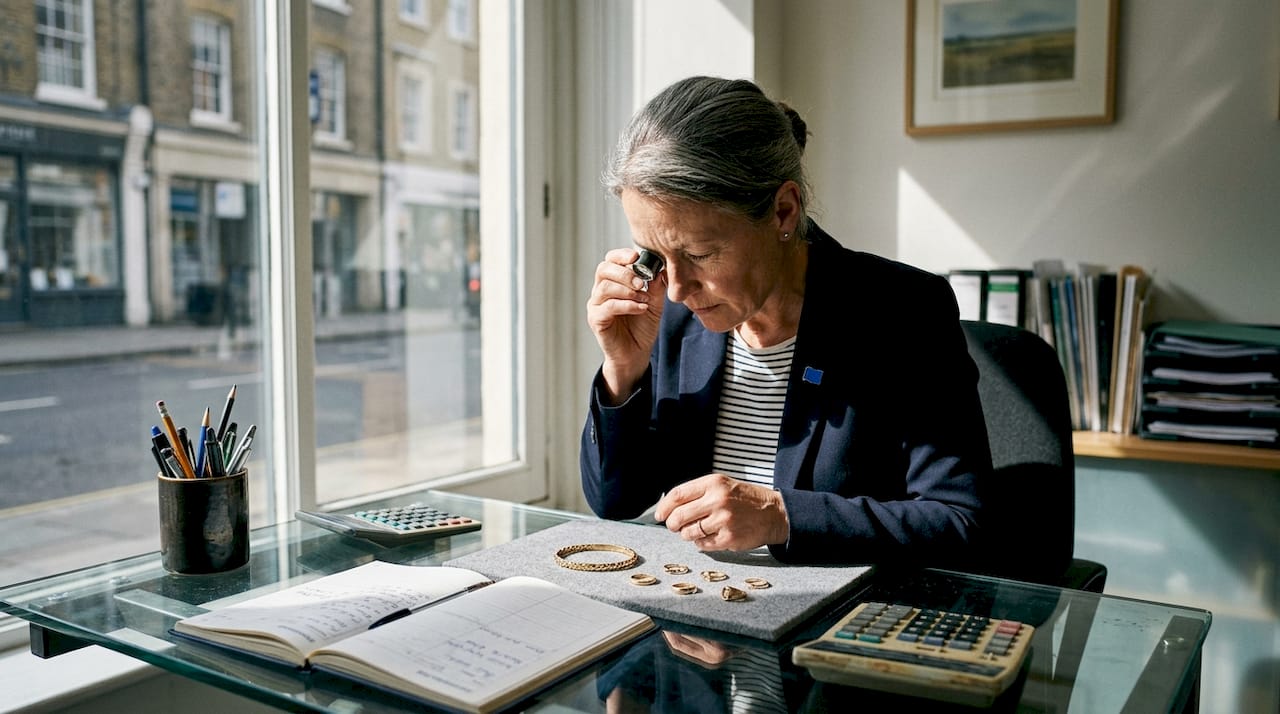
Testing methods separate legitimate buyers from questionable operators. Professional dealers test purity using acid tests or X-ray fluorescence (XRF) machines, both visible processes you should witness firsthand. Acid testing involves applying chemicals that react differently to various gold purities, whilst XRF technology analyses metal composition instantly without damaging items. Weight measurements occur on calibrated scales certified for accuracy, and reputable buyers show you the display during weighing.
Refining fees represent the cost of melting down jewellery and extracting pure gold, typically ranging from 2-10% depending on item condition and complexity. Intricate designs with solder joints or mixed metals cost more to process than simple bands. Buyers deduct these expenses alongside their profit margin, which explains why even honest dealers cannot pay full spot price. Transparency about these deductions distinguishes trustworthy businesses from those hiding true calculation methods.
Pro tip: Request a written breakdown showing item weight, tested purity, current spot price, and all deductions before accepting any offer. Legitimate buyers provide this documentation willingly, whilst those refusing likely manipulate figures.
Choosing the best place to sell your gold
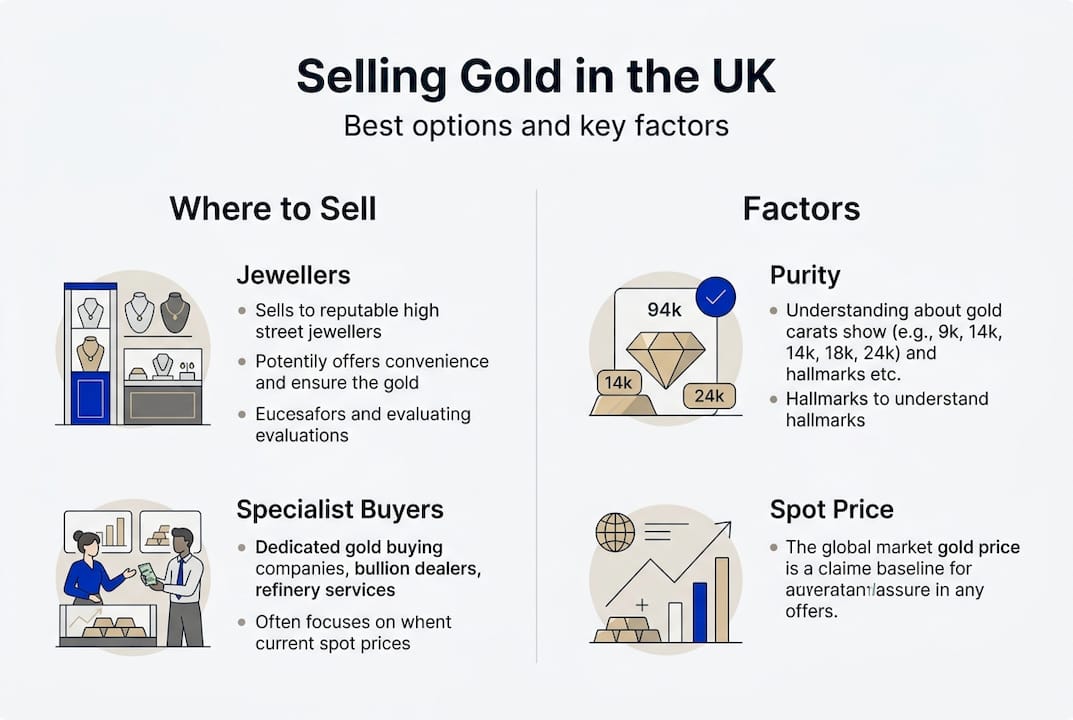
Local jewellers offer the most accessible option for selling gold, particularly established family businesses with physical premises. These buyers provide immediate cash payments after testing and typically pay 70-90% of spot price depending on item condition and current inventory needs. Walking into a shop allows you to observe the entire process, ask questions, and leave immediately if uncomfortable with the offer. The main advantage lies in face-to-face interaction and instant payment without shipping risks.
Specialist gold buyers focus exclusively on precious metals and often achieve the highest payouts at 95-98% of spot price. These businesses operate on lower profit margins by processing high volumes and maintaining streamlined operations. They invest in advanced testing equipment like XRF machines and employ trained assessors who accurately determine purity. The catch involves finding genuinely specialist operations rather than general pawnbrokers advertising as gold experts.
| Buyer type | Price range (% of spot) | Pros | Cons |
|---|---|---|---|
| Local jewellers | 70-90% | Immediate cash, observable process, established trust | Lower prices, varies by shop |
| Specialist gold buyers | 95-98% | Highest prices, expert testing | Fewer locations, appointment needed |
| Online buyers | 85-92% | Convenient, postal service, competitive rates | Shipping risks, delayed payment |
| Pawnbrokers | 50-70% | Quick cash, no questions | Significantly underpay, loan focus |
| Auction houses | Variable (often premium) | Best for antiques/rare pieces | Fees, time delay, uncertain results |
Online gold buyers have expanded significantly, offering postal services where you ship items for valuation. These companies typically pay 85-92% of spot price and provide insured shipping labels plus return options if you reject their offer. The convenience appeals to those without local specialist buyers, though you sacrifice the ability to watch testing and must trust the company’s assessment. Research thoroughly before posting valuable items, checking independent reviews and verifying business registration.
Pawnbrokers represent the least favourable option for outright sales, paying just 50-70% of spot price because their business model centres on loans rather than purchasing. They assume you might redeem items and price accordingly, building in risk premiums that devastate your returns. Only consider pawnbrokers if you need immediate cash and plan to buy back your jewellery within the loan period.
Auction houses suit antique, rare, or designer pieces that collectors value beyond melt weight. A Victorian mourning brooch or signed Cartier bracelet achieves premiums at specialist jewellery auctions that gold buyers cannot match. However, auction fees typically consume 15-25% of the hammer price, and results remain uncertain until bidding concludes. This route requires patience and works best when items possess historical or artistic significance.
Pro tip: Always obtain quotes from at least three different buyers before accepting any offer. Price variations of £50-100 per item commonly occur between reputable dealers, making comparison essential for maximising returns.
Avoiding scams and protecting yourself when selling gold
Scammers exploit gold sellers through various illegal tactics that UK law specifically prohibits. Door-to-door gold buyers and cash-only transactions violate the Scrap Metal Dealers Act 2013 in England and Wales, yet these practices persist in targeting vulnerable sellers. Legitimate dealers never cold-call homes or pay exclusively in cash, instead requiring bank transfers or cheques that create paper trails. Any buyer arriving uninvited or refusing electronic payment operates outside legal frameworks and likely significantly underpays.
The Scrap Metal Dealers Act 2013 mandates that all gold buyers must verify seller identity through photo ID and proof of address, maintain detailed transaction records, and pay via traceable methods. Buyers violating these requirements face prosecution and substantial fines, making compliance a clear indicator of legitimacy.
Pressure tactics signal dishonest intentions, particularly claims that offers expire immediately or that current prices represent unprecedented highs requiring instant decisions. Gold markets operate continuously during business hours, and reputable buyers allow time for consideration and comparison shopping. High-pressure environments exist solely to prevent you from seeking better offers elsewhere, a strategy honest dealers never employ.
Unverified online buyers present substantial risks despite convenient postal services. Scam websites mimic legitimate operations, then undervalue items drastically or claim pieces arrived damaged. Before shipping anything, verify the company holds proper licensing, check independent review platforms like Trustpilot for consistent positive feedback, and confirm physical business addresses through Companies House records. Legitimate online buyers provide clear contact information and transparent processes.
Practical steps to protect yourself:
- Demand to see valid Scrap Metal Dealer licence before proceeding with any transaction
- Insist on watching all testing and weighing processes from start to finish
- Request written valuations showing weight, purity, spot price, and deduction breakdowns
- Research current spot prices immediately before appointments using reliable sources
- Never sign documents without reading completely and understanding all terms
- Report suspicious buyers to Trading Standards or Action Fraud immediately
- Trust instincts if something feels wrong and walk away without hesitation
Red flags include buyers who rush assessments, test items out of sight, refuse to explain calculations, or discourage seeking second opinions. These behaviours indicate manipulation designed to confuse sellers and suppress prices artificially. Professional buyers welcome questions, explain processes clearly, and encourage informed decisions even if you ultimately sell elsewhere.
Special considerations for unique gold items and getting the best price
Antique and rare jewellery pieces often possess value exceeding their gold content alone. Victorian brooches, Edwardian rings, or Art Deco necklaces attract collectors willing to pay premiums for craftsmanship, historical significance, and design rarity. Selling these items to gold buyers results in melt-value offers that ignore collector demand, potentially costing hundreds or thousands of pounds. Specialist antique dealers or auction houses assess both material and artistic worth, directing pieces toward appropriate markets.
Gemstone-set jewellery requires separating stone value from metal content to avoid underselling. A 9ct gold ring with a quality sapphire might fetch £60 as scrap gold, yet the sapphire alone could worth £200-500 depending on size, colour, and clarity. Many gold buyers focus exclusively on metal and ignore or undervalue gemstones, making specialist jewellers or gemologists essential for accurate assessments. Remove valuable stones before selling gold if buyers cannot provide credible gemstone valuations.
Unmarked gold jewellery lacks hallmarks but may still contain precious metal, particularly pieces from countries with different marking systems or antique items predating standardised hallmarking. XRF testing accurately determines purity without hallmarks, using X-ray technology to analyse metal composition. Avoid buyers who refuse to test unmarked items or assume low purity without verification, as this often masks attempts to underpay for genuine gold.
Scrap and dental gold typically achieve lower prices, ranging from 60-75% of spot rates due to mixed metal content and higher refining complexity. Dental gold often contains alloys that complicate processing, whilst scrap pieces may include solder, clasps, or other non-gold components that reduce overall purity. These items still hold value, but expectations should align with their condition and composition.
Maximising returns on special items:
- Research comparable sales for antique or designer pieces before accepting offers
- Obtain independent gemstone appraisals for jewellery containing valuable stones
- Seek specialist antique dealers when items show age, craftsmanship, or historical significance
- Request XRF testing for unmarked pieces rather than accepting assumptions
- Consider removing gemstones yourself if buyers cannot provide fair valuations
- Photograph items thoroughly before shipping to online buyers as condition evidence
Pro tip: Understanding how to value gold at home before visiting buyers establishes realistic price expectations and helps identify unfair offers immediately, strengthening your negotiating position.
Discover trusted services to sell and buy jewellery at Blackwell jewellers
Navigating gold sales becomes significantly easier when working with established, transparent dealers who prioritise fair valuations. Blackwell Jewellers brings over 20 years of experience to precious metal transactions, offering expert assessments backed by professional testing equipment and certified scales. Our Kent-based stores provide face-to-face service where you observe the entire evaluation process, ask questions, and receive detailed explanations of how we calculate offers.

Beyond selling services, we maintain extensive collections of authenticated pre-owned jewellery and ethical diamond rings for those interested in purchasing quality pieces. Each item undergoes rigorous inspection and restoration by our in-house jewellers, ensuring authenticity and wearable integrity. Whether you are looking to sell gold or explore our curated collections, our team provides the guidance and transparency that builds lasting trust. Visit Blackwell Jewellers to discover comprehensive support for all your jewellery needs, or explore our detailed guide on the best way to sell gold jewellery for additional insights.
Where should I sell my gold FAQ
What is the highest price I can expect selling gold in the UK?
Specialist gold buyers typically offer the highest prices at 95-98% of current spot rates, though this varies based on item purity and condition. Reputable local jewellers pay 70-90% of spot, whilst online buyers range from 85-92%. Always compare multiple quotes since individual offers fluctuate based on business models and current inventory needs.
How do I know if a gold buyer is trustworthy?
Trustworthy buyers hold valid Scrap Metal Dealer licences, conduct all testing and weighing in your presence, and provide written valuations breaking down calculations. They require photo ID and proof of address whilst paying via bank transfer or cheque rather than cash. Check independent reviews and verify business registration through Companies House before proceeding.
Should I sell antique or rare jewellery via auction?
Antique or rare pieces often achieve premiums at specialist jewellery auctions that exceed melt value significantly. Auction suits items with historical significance, designer provenance, or exceptional craftsmanship that collectors seek. However, auction fees typically consume 15-25% of sale prices, and results remain uncertain, making this route best for genuinely special pieces rather than standard gold jewellery.
Is online selling safe and profitable for gold?
Online gold buyers offer competitive prices at 85-92% of spot rates with convenient postal services and insured shipping. Safety depends on thoroughly researching companies through independent reviews, verifying business registration, and confirming transparent processes before shipping items. Legitimate online buyers provide clear terms, return options if you reject offers, and traceable payment methods that protect both parties.
What proof of identity do I need when selling gold?
UK law requires all gold buyers to verify seller identity through government-issued photo ID such as a passport or driving licence, plus proof of address like a recent utility bill or bank statement. These requirements stem from the Scrap Metal Dealers Act 2013 and apply to all transactions regardless of value. Buyers who do not request identification operate illegally and should be avoided completely.