

TL;DR:
- Sending jewellery for repair is safe when using insured, tracked postage and a reputable repairer with proper intake procedures. Proper packing, thorough documentation, and choosing trusted services greatly reduce transportation risks. Following these steps ensures a reliable postal repair process, even for high-value items.
Sending jewellery away for repair is safe when you use discreet packaging, insured tracked shipping, and a professional repairer with a formal postal intake process. The risk is not the postal system itself. The main postal risk comes from sender failures: poor packaging, unverified repairers, and no insurance. Get those three things right and postal jewellery repair is genuinely reliable. This guide covers everything you need to know before sending jewellery for repair by post in the UK, from packing techniques to choosing the right service and protecting yourself if something goes wrong.
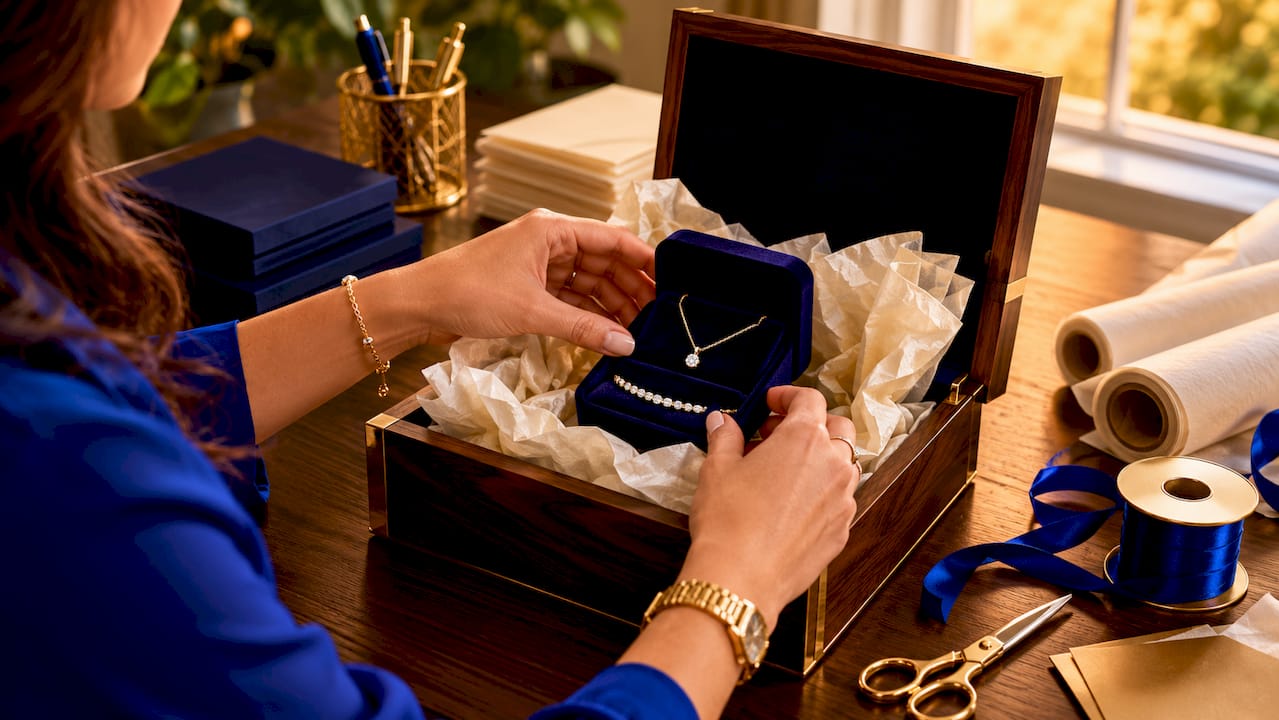
Can you send jewellery away for repair safely?
Yes, absolutely. Jewellery repair by post is practical and reliable when the repair service provides an insured and guided postal process. Repairers with formal intake systems minimise the risks of loss and damage compared to ad hoc mailing to a general address. The key is choosing a provider that treats postal repairs as a proper service, not an afterthought.
The industry term for this is “mail-in repair.” It is a well-established practice used by professional jewellers across the UK. When done correctly, with proper documentation and the right postal service, it carries very manageable risk. Think of it like online banking. Millions of people do it safely every day because they follow the right steps.
What are the best packaging methods for mailing jewellery?
Packaging is where most people go wrong. Get this right and you have solved the biggest single risk in the whole process.
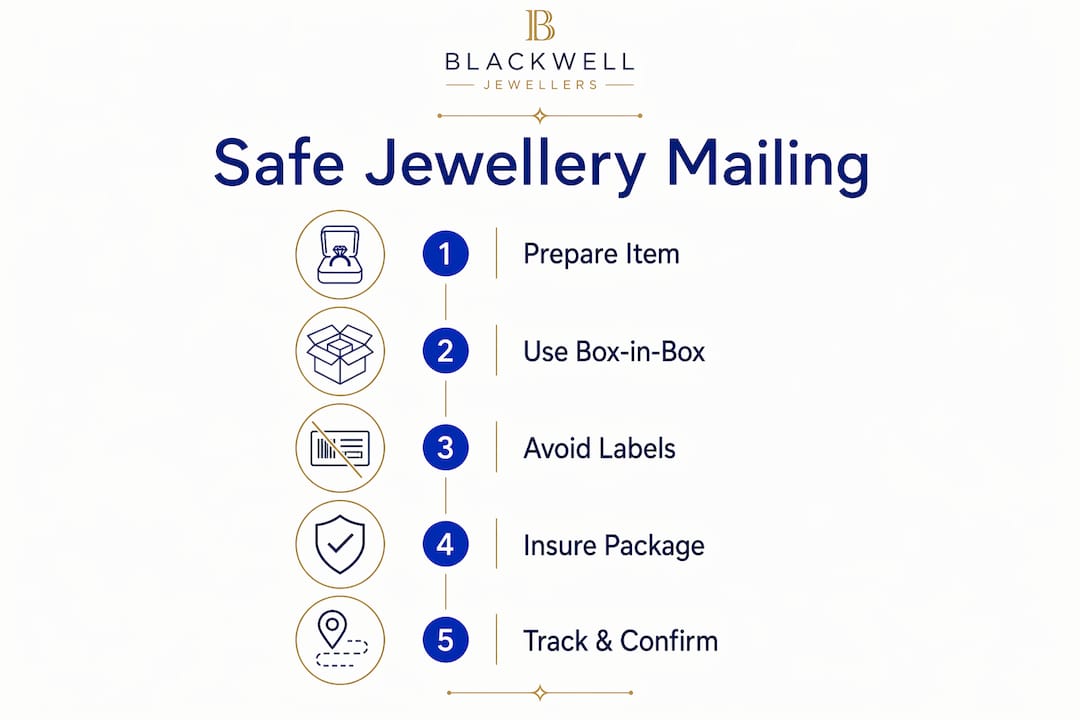
The gold standard is the box-in-box method: place your jewellery in a small inner box with padding, then place that box inside a larger outer box with void fill around it. The item should not move at all when you shake the package. Any movement during transit risks damage to settings, clasps, and stones.
For necklaces specifically, running the chain through a plastic straw before sealing prevents tangling entirely. It sounds almost too simple, but it works every time. Rings and earrings should be wrapped individually in tissue or bubble wrap before going into the inner box.
Pro Tip: Record a short video of yourself packing the item before you seal the box. Many insurance claims are denied because there is no proof of what was inside before dispatch. A 30-second video on your phone is your best evidence.
Here is a quick reference for packaging materials by jewellery type:
| Jewellery type | Inner protection | Outer packaging |
|---|---|---|
| Necklaces | Plastic straw for chain, tissue wrap | Padded inner box, void fill outer box |
| Rings | Individual bubble wrap or tissue | Small rigid inner box, padded outer box |
| Earrings | Tissue wrap, keep pairs together | Small inner box, padded outer box |
| Bracelets | Bubble wrap, avoid loose movement | Rigid inner box, void fill outer box |
| Brooches | Tissue wrap, pin secured | Rigid inner box, padded outer box |
One rule applies to all of them: never label the outer box with words like “jewellery,” “fragile,” or anything that signals valuable contents. Use a plain, nondescript outer box. You want it to look like you are posting a birthday card, not a diamond ring.
How do you choose a trustworthy jewellery repair service?
Not all repair services are equal, and this choice matters as much as your packaging. A reputable repairer will have a formal intake system with clear shipping instructions, insured returns, and a proper receipt process. If a repairer just gives you a general postal address and says “send it over,” that is a red flag.
When selecting a repair provider, look for these things:
- Written shipping instructions specific to their service
- Confirmation that they insure the item once it arrives
- Insured return shipping as standard
- A tracking number for the return parcel
- Direct signature required on delivery
- A formal receipt or job number issued on receipt of your item
- Verifiable reputation: reviews, years of trading, physical premises
The comparison between in-person and postal repair is worth thinking about. In-person repair lets you hand over the item directly and watch it logged. Postal repair adds transit risk but removes the need to travel, which matters if you are not near a specialist. The right postal service with the right repairer closes that gap considerably.
Blackwelljewellers, for example, operates physical stores across Kent including Maidstone, Gravesend, and Bexleyheath, alongside a national online repair service. That combination of physical presence and postal service gives you accountability that a purely online operation cannot match.
| Factor | In-person repair | Postal repair |
|---|---|---|
| Transit risk | None | Present, mitigated by insurance |
| Convenience | Requires travel | Post from anywhere in the UK |
| Documentation | Face-to-face receipt | Tracking, photos, video evidence |
| Accountability | Immediate | Dependent on repairer’s intake process |
| Best for | Local customers | Customers outside easy travel distance |
Which postal services offer the best security for valuable jewellery?
Royal Mail Special Delivery Guaranteed with direct signature is the recommended service for sending valuables in the UK. Direct signature means the parcel is handed to a named recipient and signed for, which reduces the risk of lost or stolen mail significantly. It also creates a clear paper trail.
A few practical points on using it well:
- Always hand the parcel directly to postal staff at the counter. Never use a drop box. Drop boxes remove the paper trail and add unnecessary touchpoints.
- Get a physical receipt with a tracking number at the counter. This is your proof of postage and your starting point for any claim.
- Declare the correct value of the item. Under-declaring to save on postage is a false economy if you ever need to claim.
- Use a tracked, hand-to-hand service with a physical receipt to establish a clear chain of custody. This is a key defence against postage loss.
On insurance: standard postal insurance limits often do not cover high-value jewellery. Royal Mail Special Delivery covers up to £2,500 as standard, but a diamond ring or antique gold piece can easily exceed that. For higher-value items, specialist insurers provide better claims acceptance than standard carrier policies. Check your home contents insurance too, as some policies cover items in transit.
Pro Tip: Take clear photographs of the item and the sealed package before you leave the house. If the package arrives damaged, you need evidence of its condition at the point of posting.
Step-by-step process for sending your jewellery for repair
Follow this in order and you will have covered every base.
-
Clean and photograph the item. Take photos in good light from multiple angles. Note any existing damage, scratches, or loose stones. This is your condition record.
-
Film the packing process. Record a video showing the item, its condition, and the packing process from start to sealed box. This establishes indisputable evidence for any insurance dispute.
-
Pack using the box-in-box method. Inner box with padding, outer box with void fill. No movement when shaken. Plain outer box with no identifying labels.
-
Contact the repairer before posting. Confirm their postal address, any specific instructions, and how they will acknowledge receipt. Get a job reference number if possible.
-
Post using Royal Mail Special Delivery with direct signature. Hand it to counter staff. Get your receipt and tracking number. Keep both.
-
Track the parcel and confirm receipt. Once the repairer confirms they have received it, get a written acknowledgement with a job number. This is your chain of custody.
-
Arrange the return safely. Confirm the repairer uses insured, tracked return shipping with direct signature. Do not accept a return sent via standard post for anything of value.
Pro Tip: Keep all your documentation in one place: photos, video, receipt, tracking number, and the repairer’s confirmation email. If anything goes wrong, you will be very glad you did.
Common mistakes when sending jewellery for repair
Most problems are avoidable. Here is what goes wrong and how to prevent it.
- No insurance or tracking. Sending jewellery without insurance or tracking is the most common mistake. If it goes missing, you have no recourse.
- Labelling the package as jewellery. This signals value to anyone handling the parcel. Use a plain box with no identifying marks.
- Not recording the item’s condition. Without photos or video, you cannot prove what you sent or its condition before transit.
- Using a drop box. Always hand parcels to counter staff and get a receipt. Drop boxes offer no paper trail.
- Choosing an unverified repairer. A repairer without a formal intake process, physical premises, or verifiable reviews is a risk not worth taking.
- Missed deliveries on return. If the return requires a direct signature and you are not in, the parcel goes back to the depot. Arrange a delivery day when you will be home.
“The safest postal repair experience starts before you even pack the box. Verify the repairer, document everything, and use the right postal service. The system works when you work the system.”
Key takeaways
Sending jewellery for repair by post is safe when you follow the right protocols at every stage, from packaging to postal service to repairer selection.
| Point | Details |
|---|---|
| Use box-in-box packaging | Double-box with void fill and no identifying labels to prevent damage and deter theft. |
| Document before you post | Photograph and video the item and packing process to support any insurance claim. |
| Use Royal Mail Special Delivery | Direct signature service creates a clear chain of custody and reduces loss risk. |
| Choose a verified repairer | Look for formal intake, insured returns, tracking, and a physical presence or strong reputation. |
| Check your insurance cover | Standard postal limits may not cover high-value items; check home contents or use a specialist insurer. |
What I have learned from watching people mail jewellery
Here is the honest truth: most people who have a bad experience with postal jewellery repair made at least one of the mistakes listed above. They skipped the video. They used a drop box. They picked a repairer based on price alone with no other checks. The postal system itself is not the villain in these stories.
What I find genuinely reassuring about the mail-in repair model, when it is done properly, is the paper trail. A well-documented postal repair actually gives you more evidence of what happened to your item than handing it over a counter and walking away. You have photos, a video, a tracked receipt, a delivery confirmation, and a written acknowledgement from the repairer. That is a proper chain of custody.
The one thing I would push back on is the idea that postal repair is only for low-value pieces. A reputable repairer with insured returns and Royal Mail Special Delivery can handle a high-value antique ring just as safely as a simple chain repair. The value of the item changes the insurance you need, not the fundamental process. Get the jewellery safety basics right and the value becomes almost irrelevant to the risk calculation.
My advice: treat every postal repair like it is your most valuable piece, regardless of what it is actually worth. The habits are the same. The effort is minimal. And the peace of mind is worth every extra minute.
— James
Blackwelljewellers: professional jewellery repairs by post
Blackwelljewellers has been repairing jewellery for over 20 years, with expert craftspeople working across stores in Maidstone, Gravesend, and Bexleyheath. The national jewellery repair service covers everything from ring resizing and clasp replacement to stone resetting and structural restoration, all handled in-house by experienced jewellers.

Postal repairs come with clear shipping instructions, insured returns, and direct communication throughout the process. You are not posting into a void. You are sending your piece to a team with a physical address, a verifiable reputation, and two decades of hands-on experience. If you are also looking for pre-owned jewellery that has already been professionally restored and hallmarked, Blackwelljewellers has that covered too.
FAQ
Is it safe to send jewellery by post for repair?
Yes, sending jewellery for repair by post is safe when you use Royal Mail Special Delivery with direct signature, double-box packaging, and a repairer with a formal insured intake process.
What is the best postal service for sending valuable jewellery in the UK?
Royal Mail Special Delivery Guaranteed with direct signature is the recommended option. It provides tracked, insured delivery with a physical receipt and reduces the risk of loss or theft.
Do I need extra insurance when mailing jewellery for repair?
Standard Royal Mail Special Delivery covers up to £2,500. For higher-value pieces, check your home contents insurance or use a specialist insurer, as standard carrier limits often fall short.
How should I pack jewellery before posting it for repair?
Use the box-in-box method: place the item in a padded inner box, then inside a plain outer box with void fill. For necklaces, thread the chain through a plastic straw to prevent tangling.
What should I do if my jewellery is lost in the post?
Use your tracking number, physical receipt, and any photos or video of the packed item to file a claim. Always obtain a receipt at the counter and never use a drop box, as these steps are your primary evidence.
Recommended
- Online jewellery repairs UK: get jewellery fixed by post – Blackwell Jewellers
- Can Broken Jewellery Be Fixed? In-Store Repair Services at Blackwell J – blackwellonline
- Most common jewellery repairs: your 2026 guide – Blackwell Jewellers
- The Top 10 Most Common Jewellery Repairs — And What They Mean for Your – blackwellonline