

TL;DR:
- Most jewelry repairs involve ring resizing, prong re-tipping, chain soldering, clasp replacement, stone setting, and polishing, accounting for over 80% of workshop volume. Daily wear causes structural issues like loose stones, broken clasps, or chain damage, which are urgent, while surface scratches and dullness are cosmetic. Regular professional inspections and prompt repairs save money, preserve value, and prevent irreversible damage to your jewelry.
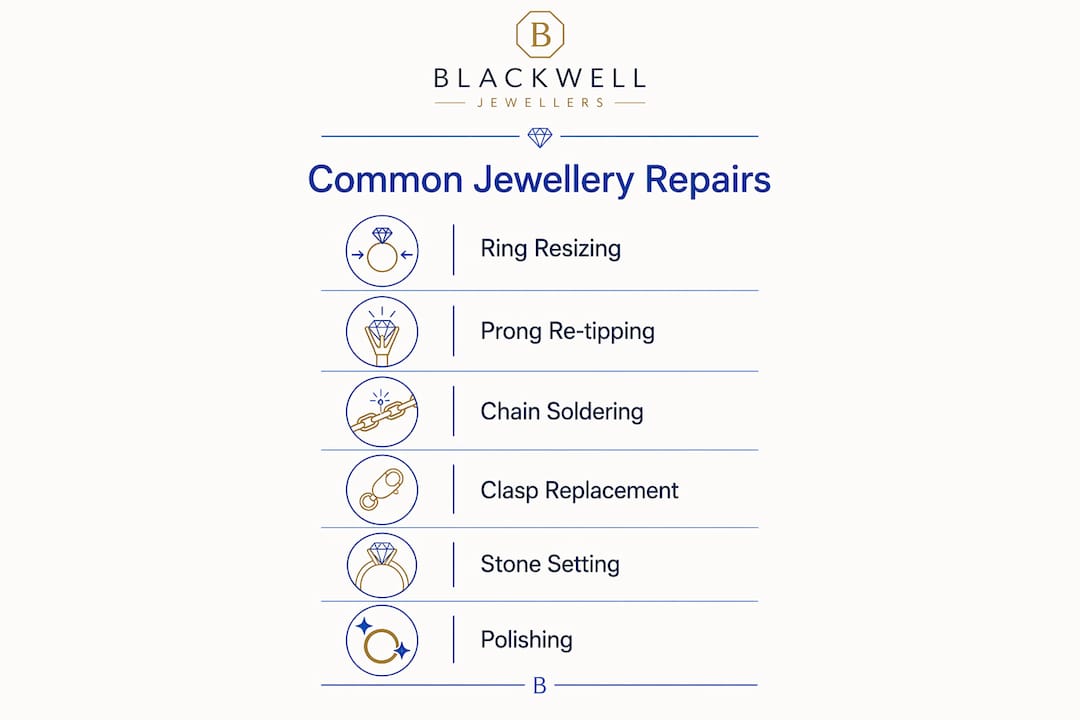
Ring resizing, prong re-tipping, chain soldering, clasp replacement, stone setting, and polishing are the most common jewellery repairs handled by professional workshops every single day. These six services, collectively known in the trade as structural and cosmetic restoration, account for over 80% of daily workshop volume at jewellers like OM Jewellers, Frizzante Fine Jewelers, and Blackwelljewellers. If your favourite ring feels loose, your necklace clasp keeps failing, or a stone looks a little wobbly, you are not alone. Most jewellery owners face at least one of these issues within a few years of regular wear. The good news? Every single one of them is fixable, often faster and more affordably than you think.
What causes the most common jewellery damages?
Daily wear is the single biggest culprit behind the repairs jewellers see most often. Your rings, bracelets, and necklaces are in constant contact with skin, clothing, surfaces, and chemicals. That friction adds up.
Here are the main causes behind the most frequent jewellery issues:
- Prong wear and stone loosening. Prongs are tiny metal claws holding your gemstones in place. Every time your ring snags on a jumper or scrapes a surface, those prongs flex slightly. Over months and years, they thin, bend, or break entirely.
- Clasp failure. Contact with soaps, sunscreen, and cleaners does not just dull your jewellery. It degrades the internal spring mechanisms inside clasps, causing premature failure. That necklace that keeps falling off? Probably a worn spring, not a manufacturing defect.
- Chain damage. Broken or kinked chains are almost always caused by snagging or accidental impacts. Thin chains, particularly box and snake styles, are especially vulnerable because they have very little flex tolerance.
- Ring sizing issues. Weight changes, pregnancy, ageing, and seasonal temperature fluctuations all affect finger size. A ring that fitted perfectly five years ago may now be dangerously loose or uncomfortably tight.
- Metal dulling and surface scratches. Normal abrasion from everyday activities scratches metal surfaces. White gold loses its rhodium plating over time, which is why it starts to look yellowish rather than bright white.
- Bent or broken links on bracelets. Accidental impacts, particularly on bangles and chain bracelets, can bend or snap individual links, compromising the whole piece.
The key distinction to understand is this: surface damage (scratches, dullness) is cosmetic. Structural damage (loose stones, broken clasps, cracked shanks) is urgent. Cosmetic issues affect appearance. Structural issues risk permanent loss of your gemstones or the piece itself.
Pro Tip: If you notice a stone rocking slightly when you press it gently, do not wait. A loose stone is one snag away from being lost forever. Book a professional inspection immediately.
How are the main types of jewellery repairs performed?
Understanding what actually happens during a repair removes the mystery and helps you have a much better conversation with your jeweller. Here is what each of the six core repairs involves:
-
Ring resizing. A jeweller cuts the shank (the band of the ring), either removes a small section to size down or adds a piece of matching metal to size up, then solders the join and refinishes the surface. The result is invisible when done correctly. Complex settings with stones set around the full band require more care, as resizing can stress channel or pavé settings.
-
Prong re-tipping. Worn prongs require professional re-tipping, not glue. A jeweller adds small amounts of metal to the worn prong tips using laser welding or traditional soldering, then reshapes them to cradle the stone securely. Gluing a prong is not a repair. It is a temporary fix that will fail and may damage the stone.
-
Chain soldering and repair. A broken chain link is rejoined using solder, a metal alloy that bonds under heat. For delicate chains, laser welding is preferred because it applies heat with extreme precision, avoiding damage to surrounding metal or any stones nearby. Standard soldering works well on heavier chains.
-
Clasp replacement. A worn or broken clasp is removed and a new one is attached, either by soldering or by opening and closing a jump ring. The jeweller matches the clasp style (lobster, spring ring, box clasp) to the original as closely as possible. This is one of the quicker fixes available.
-
Stone tightening and replacement. If a stone is loose but still present, a jeweller tightens the prongs or bezel around it. If the stone is lost, replacement requires sourcing a match for cut, colour, clarity, and carat weight. This is where the process gets more involved, particularly for unusual or vintage cuts.
-
Polishing and rhodium plating. Polishing removes surface scratches using progressively finer abrasives. Rhodium plating, applied by electroplating, restores the bright white finish on white gold rings and pendants. Rhodium plating typically lasts one to three years depending on wear.
Here is a quick comparison of what to expect in terms of complexity and typical turnaround:
| Repair type | Complexity | Typical turnaround |
|---|---|---|
| Clasp replacement | Low | 1 to 3 days |
| Chain soldering | Low to medium | 1 to 5 days |
| Ring resizing | Medium | 3 to 7 days |
| Prong re-tipping | Medium | 3 to 7 days |
| Stone replacement | High | 1 to 3 weeks |
| Rhodium plating | Low | 1 to 3 days |
Simple repairs like stone tightening and clasp replacements are often completed within a few business days. Complex restoration is agreed at consultation. Many customers are genuinely surprised by how quickly routine work gets done.
Pro Tip: Always ask for a written estimate before any work begins. A good jeweller will clean your piece first before quoting, because professional cleaning reveals hidden damage that grime can obscure. You want the full picture before you commit.
DIY fixes versus professional repairs: where is the line?
Some minor jewellery tasks are perfectly reasonable to handle at home. Others will cost you far more in the long run if you attempt them yourself.
Safe at home:
- Restringing elastic bracelets with fresh elastic cord (widely available from craft suppliers)
- Replacing a simple jump ring on a charm using two pairs of flat-nose pliers
- Gentle cleaning with warm water, mild washing-up liquid, and a soft toothbrush for gold and platinum pieces
- Untangling fine chains using a pin and a drop of baby oil on a flat surface
Leave it to the professionals:
- Soldering of any kind. Home soldering torches apply uncontrolled heat that can warp settings, crack stones, and destroy solder joins elsewhere on the piece.
- Gemstone resetting. Pushing prongs back with a tool sounds simple. It is not. You risk cracking the stone, snapping the prong, or misaligning the setting entirely.
- Rhodium plating. This requires electroplating equipment and chemical solutions. It is not a home job.
- Sizing rings with stones set around the band. One wrong move and you are looking at a cracked pavé or a popped channel stone.
Incorrect DIY repairs can reduce market value by up to 30 to 50%. That is a brutal number, particularly on a piece with real financial or sentimental worth. The common jewellery repair mistakes people make at home are almost always well-intentioned. They are also almost always avoidable.
The rule of thumb is straightforward: if the repair involves heat, gemstones, or structural metal, call a jeweller.
Tips for maintaining jewellery and avoiding repairs altogether
Prevention genuinely is better than cure here. A little routine care saves you money, stress, and the heartbreak of losing a stone you cannot replace.
- Get a professional inspection every 6 to 12 months. Regular inspections identify wear before it becomes catastrophic. A jeweller can spot a thinning prong or a weakening clasp spring long before you notice anything is wrong.
- Remove rings before cleaning, cooking, or applying cosmetics. Soaps, bleach, and hand creams all degrade metal finishes and clasp mechanisms over time. This one habit alone extends the life of your pieces significantly.
- Store pieces separately. Throwing all your jewellery into one box means chains tangle, harder stones scratch softer ones, and clasps snag on settings. Use a lined jewellery box with individual compartments, or small zip-lock pouches for travel.
- Take off fine chains during exercise or sleep. This is where most chain breaks happen. A thin gold chain does not stand a chance against a gym session or a restless night.
- Clean regularly but gently. Buildup of soap residue, skin oils, and dirt dulls metals and weakens clasps. A monthly gentle clean at home, combined with an annual professional polish, keeps pieces looking their best.
Pro Tip: When to bring your jewellery in for a check-up is a question worth asking proactively, not reactively. Knowing when professional maintenance is due before something breaks is always cheaper than fixing the damage after.
Repair decisions should always factor in the piece’s quality, material value, and emotional significance. Restoring quality pieces preserves long-term worth in a way that simply replacing them never quite does.
Key takeaways
The most effective approach to jewellery care is combining routine professional inspections with good daily habits, addressing structural damage immediately before it causes irreversible loss.
| Point | Details |
|---|---|
| Six core repairs dominate | Ring resizing, prong re-tipping, chain soldering, clasp replacement, stone setting, and polishing cover the vast majority of workshop repairs. |
| Structural damage is urgent | Loose stones and broken clasps risk permanent loss; cosmetic issues like dullness can wait but should not be ignored. |
| DIY has clear limits | Soldering, gemstone resetting, and rhodium plating require professional equipment; incorrect DIY can reduce value by up to 50%. |
| Inspections prevent disasters | Professional checks every 6 to 12 months catch wear before it becomes a costly or irreversible problem. |
| Turnaround is faster than expected | Most routine repairs complete in 1 to 7 days; many customers underestimate workshop speed and delay unnecessarily. |
Why I think most people wait too long to get repairs done
Here is my honest observation after years in this trade: the number one mistake jewellery owners make is not neglect. It is delay. People notice the wobbly stone, the stiff clasp, the slightly loose ring. They think “I’ll sort that soon.” Then six months pass and the stone is gone, the clasp has snapped mid-wear, or the ring has slipped off somewhere irretrievable.
The psychology behind it is understandable. Repairs feel like a hassle. You imagine weeks without your favourite piece, a complicated process, an eye-watering bill. The reality, as I have seen time and again, is almost always the opposite. Most repairs are quick, affordable, and far less disruptive than losing the piece entirely.
What I find genuinely frustrating is when someone brings in a piece that could have been saved with a £20 prong re-tip six months ago, but now needs a full stone replacement and structural rebuild because the prong snapped and the diamond went with it. That is a £20 problem that became a £300 problem through inaction.
My advice is simple: treat your jewellery like you treat your car. You would not ignore a warning light for six months. Do not ignore a loose stone either. Book the inspection, get the written quote, and make the decision based on the piece’s value to you. Whether that value is financial, sentimental, or both, it is almost always worth protecting.
— James
Get your jewellery repaired by experts at Blackwelljewellers
If any of this sounds familiar, Blackwelljewellers has you covered.

Blackwelljewellers offers a full range of professional jewellery repairs from their Kent workshops, including ring resizing, prong re-tipping, chain soldering, clasp replacement, stone setting, and rhodium plating. With over 20 years of in-house craftsmanship across stores in Maidstone, Gravesend, and Bexleyheath, the team brings the same rigour to repairs that they apply to authenticating their pre-owned jewellery collection. Every repair starts with a thorough inspection and a written quote, so you know exactly what you are getting before any work begins. Send your piece in or visit a store for a consultation.
FAQ
What are the most common jewellery repairs?
Ring resizing, prong re-tipping, chain soldering, clasp replacement, stone tightening or replacement, and polishing or rhodium plating are the six most frequent repairs. These six services cover over 80% of professional workshop volume.
How long does a typical jewellery repair take?
Most routine repairs such as clasp replacement or chain soldering complete within one to five business days. Complex work like stone replacement or full restoration is agreed at consultation and may take one to three weeks.
Can I repair jewellery myself at home?
Minor tasks like restringing elastic bracelets or replacing jump rings are safe at home. Soldering, gemstone resetting, and rhodium plating require professional equipment. Attempting these yourself risks reducing the piece’s value by up to 50%.
How often should I have my jewellery professionally inspected?
Professional inspections every 6 to 12 months are recommended. Regular check-ups catch thinning prongs and weakening clasps before they cause stone loss or structural failure.
Why does white gold turn yellow over time?
White gold is naturally a pale yellow metal alloyed with white metals and coated in rhodium plating to achieve its bright white appearance. The rhodium layer wears away with regular use, revealing the warmer tone beneath. Replating restores the finish and typically lasts one to three years.
Recommended
- The Top 10 Most Common Jewellery Repairs — And What They Mean for Your – blackwellonline
- Jewellery repairs in England: costs and how to choose – Blackwell Jewellers
- Common Jewellery Repair Mistakes (and How to Avoid Them) – blackwellonline
- How to repair a damaged ring: a practical UK guide – Blackwell Jewellers