
If you want the short answer: tungsten carbide wins on pure scratch resistance, platinum wins on long-term wearability and heirloom value, and titanium wins if you want strength without the weight. The trade-off you’re really weighing isn’t durability versus price. It’s scratch resistance versus resizability. The harder the metal, the less likely a jeweller can resize it, reshape it, or repair it if it takes a serious knock.
Here’s what “durable” actually breaks down into once you get past the marketing:
- Scratch resistance (hardness) — measured loosely on the Mohs scale, this tells you how easily the surface marks day to day
- Toughness — whether the metal bends and dents (survivable) or cracks and shatters (not survivable)
- Longevity in the real world — can it be resized when your finger changes, polished when it dulls, or repaired when it chips?
Quick verdicts before we go deeper: tungsten carbide for someone who never wants to see a scratch and won’t need resizing. Platinum, hallmarked at 950 fineness, for a ring that’s meant to be handed down. Titanium for tradespeople who want strength that doesn’t weigh their hand down. Every one of these has a catch, and that catch is the whole point of this guide.
Key Takeaways
The most durable wedding ring metal depends on whether you prioritise scratch resistance (tungsten, titanium) or long-term resizability and heirloom value (platinum, gold).
| Point | Details |
|---|---|
| Hardest surfaces | Tungsten carbide (Mohs ~8.5–9) resists scratches best but cannot be resized. |
| Best heirloom choice | Platinum at 950 fineness resizes easily and develops a desirable patina over decades. |
| Karat affects strength | 14ct gold balances hardness and value better than softer 18ct gold for daily wear. |
| Always check hallmarks | Marks like 950 or 585 confirm genuine metal content, especially on second-hand rings. |
| Where to start | Blackwelljewellers offers hallmarked second-hand platinum and gold rings plus in-house resizing and repair. |
Table of Contents
- Which metal is the most durable wedding ring metal?
- How do you choose the right metal for your lifestyle?
- What upkeep should you actually expect?
- What would Blackwelljewellers’ jewellers actually recommend?
- Scratch resistance vs brittleness vs resizability
- What do wedding rings cost, and how does karat change hardness?
- How Blackwelljewellers helps you get this decision right
- Frequently asked questions
- Sources
Which metal is the most durable wedding ring metal?
There’s no single “best” metal, and anyone who tells you otherwise is selling something. What there is, according to the GIA’s own guidance on everyday wear, is a genuine trade-off between hardness, maintenance, and how a metal behaves under 40 years of daily knocks. Here’s how the main contenders actually stack up.
| Metal | Scratch resistance | Weight | Hypoallergenic | Resizable/repairable | Typical UK price band |
|---|---|---|---|---|---|
| Tungsten carbide | Very high (Mohs ~8.5–9) | Heavy | Usually, cobalt-free versions | No | Low to mid |
| Titanium | High | Very light | Yes, medically graded | Difficult, specialist only | Low to mid |
| Platinum (950) | Moderate | Heavy | Yes | Yes, easily | High |
| Palladium | Moderate | Light to medium | Yes | Yes | Mid |
| 18ct gold | Soft | Medium | Depends on alloy | Yes, easily | Mid to high |
| 14ct/9ct gold | Moderate to soft | Medium | Depends on alloy | Yes, easily | Low to mid |
| Cobalt/stainless steel | High | Medium | Usually | Limited | Low |
| Sterling silver | Low | Light | No, tarnishes | Yes, easily | Low |
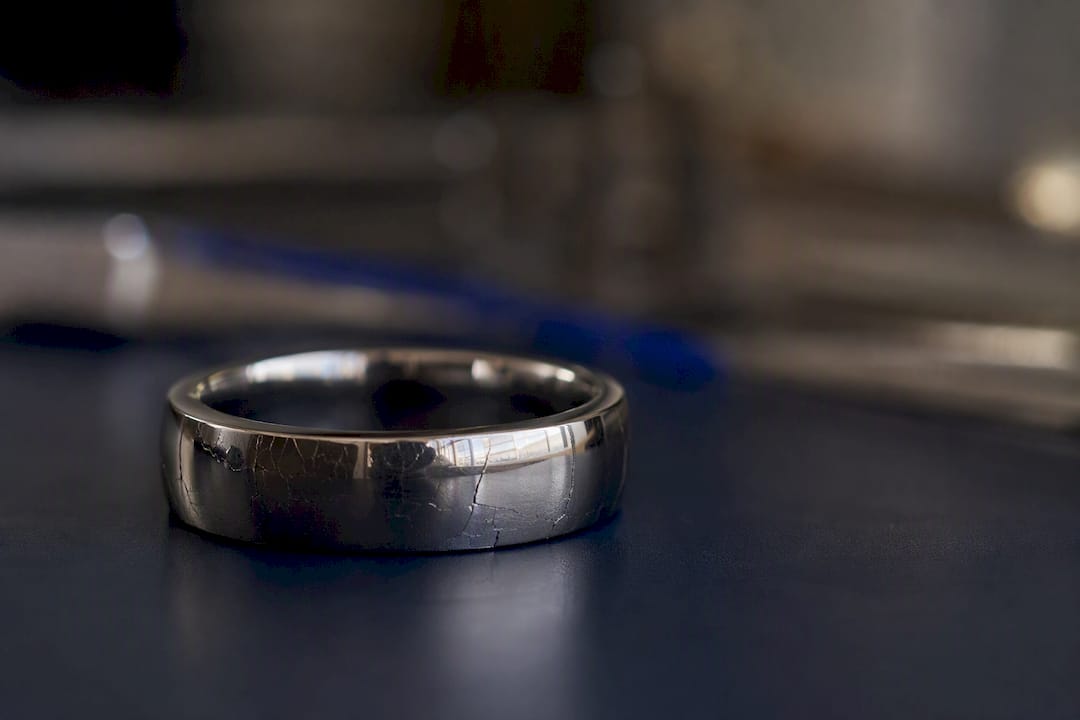
Tungsten carbide delivers the mirror finish that never seems to dull, and Jewelers Mutual confirms it holds a Mohs rating around 8.5 to 9, which is close to sapphire. The catch is brittleness. Drop it on a tiled floor and it can shatter rather than dent, and it cannot be resized under any circumstances. Best for: someone whose hands take a daily beating and whose ring size is settled for good.
Titanium trades a little hardness for a huge weight saving and genuine biocompatibility, which the GIA highlights as a reason titanium suits people with sensitive skin. Scratches here remove material rather than displace it, so the finish can look tired sooner than tungsten’s. Resizing needs a specialist and isn’t always possible. Best for: tradespeople and anyone who dislikes the feel of a heavy ring.
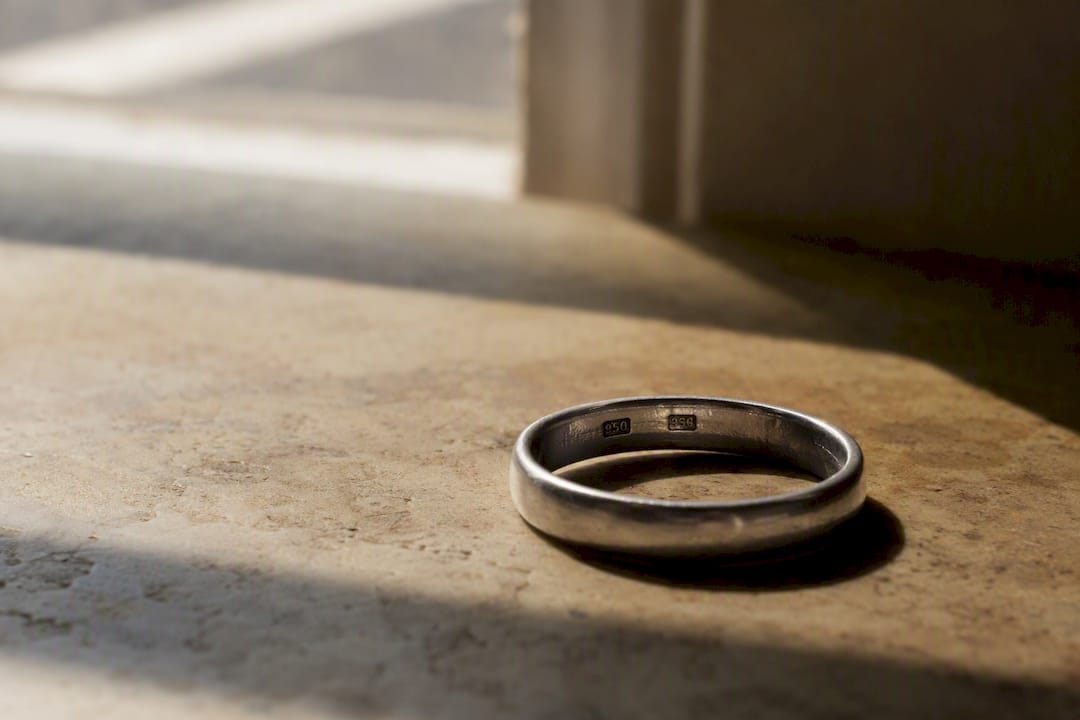
Platinum, hallmarked at 950 fineness, is the metal jewellers call “noble wear.” Anatole’s wedding metals guide notes it’s commonly used at 95% purity, and rather than losing metal to a scratch, it displaces, developing a soft patina that many people prefer over decades. It resizes and repairs beautifully. The trade-off is cost and weight; a platinum band feels substantial and costs more than its gold equivalent. Best for: an heirloom piece you want your grandchildren fighting over.
Palladium behaves like platinum’s lighter, more affordable cousin. It’s naturally white, hypoallergenic, and corrosion resistant, and Anatole describes it as similar in behaviour to platinum at a friendlier price point. It’s a strong pick if you want the white precious metal look without platinum’s weight or cost.
Gold’s durability depends entirely on karat. Anatole’s guide is clear that 14ct gold balances strength against gold content, which is why it’s the workhorse choice for everyday bands, while 18ct and 22ct gold are softer and show wear faster.
Cobalt, stainless steel, and ceramic sit in the “engineered material” bracket. Jewelers Mutual notes they offer strong scratch resistance and affordability but vary wildly in brittleness, and repairs often need a specialist workshop rather than your local jeweller.
Hallmarks matter here more than people realise. A ring stamped 950 tells you it’s genuine platinum; one stamped 585 confirms 14ct gold. UK hallmarking guidance exists specifically so buyers can verify metal content rather than take a seller’s word for it, and that matters even more when you’re buying second-hand.
How do you choose the right metal for your lifestyle?
Work through this in order, and the right metal usually becomes obvious by question three.
- How hard is your daily wear? Manual trades and gym-heavy routines favour tungsten or titanium. Office and low-impact lifestyles open up every option, including softer precious metals.
- Do you have sensitive skin? Nickel allergies rule out many white gold alloys unless rhodium plated; platinum, palladium, and pure titanium are safer defaults.
- Will your ring size likely change? Weight fluctuations, pregnancy, or simply not knowing yet all point away from tungsten and toward gold, platinum, or palladium.
- What’s your budget ceiling? Platinum sits at the top, gold and palladium in the middle, tungsten and steel at the accessible end.
- Sentiment or engineering? A family heirloom feel favours precious metals; if you just want something indestructible, engineered materials win.
Before you buy, ask the jeweller directly:
- What’s the hallmark, and can you show me the fineness stamp?
- Can this ring be resized, and by how much before it’s structurally unsafe?
- What’s your policy if the ring chips or cracks within the first year?
- Will white gold need rhodium re-plating, and how often?
Walk away if there’s no hallmark on a supposedly precious metal ring, if a seller can’t explain resizing limits, or if “no returns, no repairs” appears anywhere near a brittle material like tungsten or ceramic. Our guide to choosing wedding rings walks through this in more depth if you want the full checklist.
What upkeep should you actually expect?
Durability doesn’t mean maintenance-free, and the metals that need the least fuss aren’t always the ones people assume.
- Clean precious metal rings with warm soapy water and a soft brush every few weeks.
- Have platinum or gold professionally polished roughly once a year to smooth micro-scratches.
- Re-plate white gold with rhodium every one to three years, since the GIA notes maintenance expectations differ significantly by metal and some finishes wear faster than others.
- Have hallmarks and settings checked annually if the ring holds a stone.
Pro Tip: Take the ring off for heavy manual work or the gym, regardless of the metal. Tungsten resists scratches beautifully but shatters on hard impact, and even platinum can bend a prong loose against concrete or machinery. Get precious metal pieces properly valued for insurance too, since a 950 platinum band and a 9ct gold one insure very differently.
What would Blackwelljewellers’ jewellers actually recommend?
Two decades of resizing, repairing, and hallmark-checking rings across our Kent workshops has taught our jewellers one thing: the “best” metal question always comes back to how someone actually lives. For office-based customers wanting something to pass down, platinum still wins. For tradespeople and anyone who dislikes the drama of a resize, gold at 14ct is the honest, practical compromise. For someone who wants zero fuss and doesn’t mind never resizing, tungsten or titanium earns its keep.
Ask what the ring needs to survive, not just what it needs to look like on day one. A hallmark you can verify and a jeweller who’ll resize it in five years matter more than a spec sheet.
Blackwelljewellers services that plug directly into this decision:
- Bespoke sizing on new and pre-owned rings
- Hallmarked, authenticated second-hand platinum and gold pieces
- In-house repair, polishing, and rhodium re-plating
Scratch resistance vs brittleness vs resizability
This is the trade-off triangle nobody explains clearly enough before you buy. Push a metal towards maximum scratch resistance, and you almost always sacrifice toughness and resizability at the same time. Tungsten carbide sits at one extreme: Jewelers Mutual’s guidance is blunt that its hardness preserves the finish but makes it brittle under heavy impact, and resizing is off the table entirely, so getting the size right at purchase matters enormously.
Titanium sits somewhere in the middle. It won’t shatter like tungsten, but a scratch genuinely removes material rather than displacing it, and resizing means finding a specialist rather than your average high-street jeweller.
Platinum sits at the other end of the triangle. It’s softer than tungsten or titanium, so it does mark more easily day to day, but that same softness is why it displaces rather than fractures under an impact, and why any competent jeweller can resize or repair it without drama. Gold behaves similarly, just with more variation depending on karat.
None of these is objectively “better.” A tradesperson who never wants to think about their ring again should lean hard toward tungsten. Someone still figuring out their long-term weight, or who wants the option to reshape a ring in twenty years, should lean toward platinum or gold instead. The honest answer to “which is most durable” depends entirely on which kind of failure you’re trying to avoid: the cosmetic scratch, or the structural crack.
What do wedding rings cost, and how does karat change hardness?
Karat is the number people fixate on for value, but it’s also doing quiet work on durability. Gold in its pure 24ct form is far too soft for daily wear, so every wedding band alloys it with harder metals like copper, silver, or palladium. Anatole’s guide points out that 14ct gold strikes the common balance between strength and gold content, while 18ct and 22ct gold are noticeably softer and show wear more quickly because they contain less of the hardening alloy.
In practice, that means a 9ct or 14ct gold band will usually keep its shape and resist dents better than an 18ct band of the same design, even though 18ct carries more prestige and a higher gold content. If you want the deeper dive on this exact trade-off, our gold versus platinum comparison breaks it down further.
On price, expect roughly this shape across the UK market: tungsten and stainless steel at the accessible end, 9ct and 14ct gold in the low-to-mid range, 18ct gold and palladium sitting mid-to-upper, and platinum consistently at the top given its density and purity. A 14ct yellow gold wedding band typically costs meaningfully less than an equivalent platinum band, partly because platinum is denser and a ring simply contains more metal by weight for the same dimensions. That density is also why platinum feels so substantial on the hand, for better or worse depending on your preference.
A jeweller’s honest take on choosing between the two
I’ve fitted rings for scaffolders who need tungsten’s indifference to scratches, and I’ve fitted platinum bands for couples who want something their kids will inherit. Neither is wrong. The real question is whether you’re buying for the next five years or the next fifty, and whether sentiment matters more to you than never seeing a mark on the surface.
How Blackwelljewellers helps you get this decision right
Choosing between tungsten’s toughness, platinum’s heirloom quality, and gold’s practicality is easier when you’re holding the actual rings rather than reading a comparison table. Blackwelljewellers gives you that option without the wait times of a bespoke-only workshop: authenticated, hallmarked second-hand platinum and gold rings, ready to try on, alongside full bespoke sizing.

If durability and price are both on your mind, our hallmarked second-hand collection is worth a look before you commit to buying new. Every piece has been inspected, hallmark-verified, and restored in-house, so you get genuine 950 platinum or 14ct gold at a fraction of new pricing, with full provenance behind it. If you already own a ring that needs resizing, rhodium re-plating, or a structural repair, our jewellery repairs service handles exactly the maintenance this article has walked through. Book an in-shop inspection at one of our Kent stores, or start browsing the second-hand collection online today.
Frequently asked questions
What is the most durable wedding ring metal overall? Tungsten carbide offers the highest scratch resistance of any common ring metal, but platinum is generally considered the most durable choice long-term because it resizes, repairs, and ages well without ever needing replacement.
Is titanium or tungsten better for a wedding ring? Titanium is lighter and more biocompatible, making it a better fit for sensitive skin, while tungsten carbide holds its polish longer but is more brittle and impossible to resize.
Does 9ct or 18ct gold last longer? 9ct and 14ct gold generally resist dents and wear better than 18ct gold because they contain more hardening alloy, even though 18ct carries a higher gold content and price.
Can a tungsten or ceramic ring be resized? No. Both materials are prized for hardness precisely because they resist wear, but that same property makes them too brittle to resize, so getting the correct size before purchase is essential.
What does the hallmark on a ring actually tell me? A hallmark confirms the metal’s fineness, such as 950 for platinum or 585 for 14ct gold, giving buyers a verified guarantee of metal content rather than relying on a seller’s description.
Sources
- Wedding Ring Metals Guide: Gold, Platinum & More | Wedding Guide Anatole
- Strongest Metals for a Wedding Band | Jewelers Mutual
- Best ring material for everyday wear | GIA 4Cs blog