
TL;DR:
- Choosing a wedding ring requires selecting a durable, comfortable band that reflects your lifestyle and personal style.
- Setting a clear budget upfront helps in choosing quality metals, craftsmanship, and future maintenance needs.
- Matching rings are not mandatory; focus on comfort, style harmony, and how they fit your daily activities.
Choosing wedding rings means selecting bands that reflect your personality, fit comfortably every single day, and hold up to real life. Unlike engagement rings, which tend to be chosen in a rush of romantic excitement, wedding bands are a deliberate, practical decision. The industry term is wedding band selection, and it covers everything from metal type and karat to sizing, finish, and long-term maintenance. Get it right and you will barely notice the ring on your finger. Get it wrong and you will notice it constantly, for all the wrong reasons. This guide walks you through every factor you need to know before you buy.
How to choose wedding rings on any budget
Budget is the first decision, not the last. Set it before you walk into any shop or browse any website, because rings exist at every price point and the options are genuinely overwhelming without a number in mind.
The average groom spends around $510 on a wedding ring, though the range stretches from under £100 for alternative metals to several thousand for platinum or diamond-set bands. That figure tells you one thing clearly: there is no single “correct” amount to spend. What matters is spending wisely within your means.
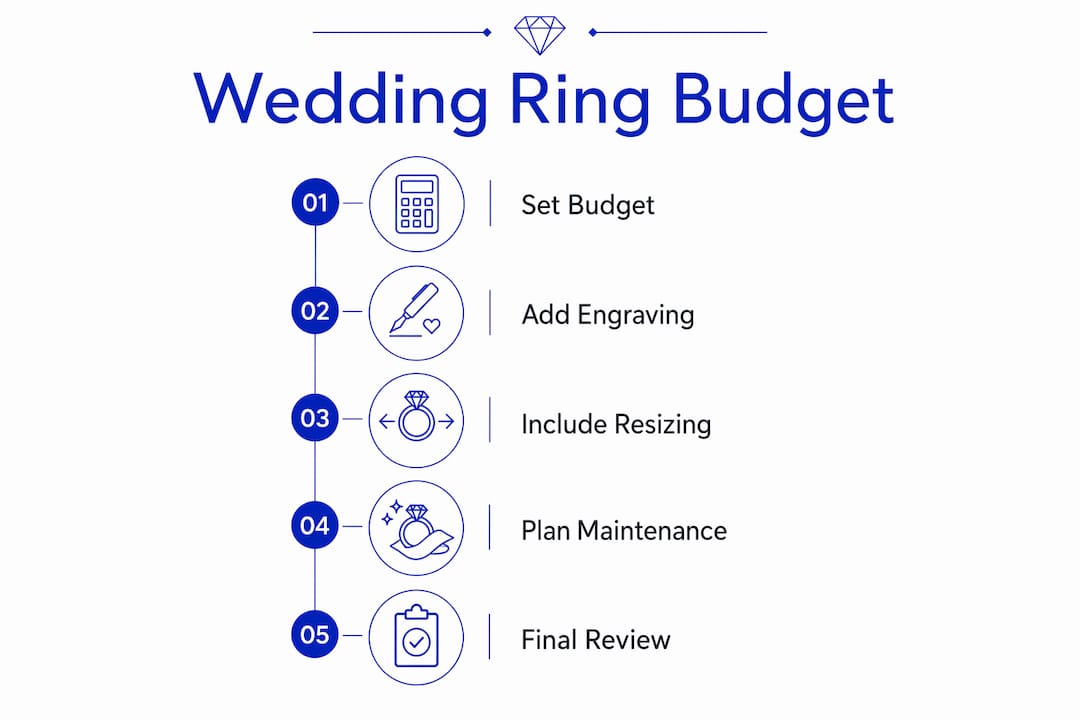
Here is what your budget actually needs to cover:
- The ring itself. Metal type, width, and any stone setting are the biggest cost drivers.
- Engraving. A personal inscription adds meaning but also adds cost, typically £30 to £80 depending on the jeweller.
- Resizing. Some metals cannot be resized at all (more on that shortly), and those that can will cost extra.
- Warranty or aftercare plan. Worth asking about upfront, especially for platinum or diamond-set rings.
- Maintenance over time. White gold rings need periodic rhodium plating, which is an ongoing expense couples often forget to factor in.
The smartest wedding ring buying tip here is to prioritise quality of metal and craftsmanship over size or embellishment. A slim, well-made platinum band will outlast and outperform a chunky, poorly finished gold one every time.
Pro Tip: Set aside roughly 10 to 15 per cent of your total ring budget for post-purchase costs like engraving, resizing, and first-year maintenance. You will thank yourself later.
Which metal is right for your wedding ring?
Metal choice is the single most consequential decision in the whole process. It affects durability, appearance, maintenance, and how the ring feels against your skin every day. According to GIA’s 4Cs blog, choosing a ring metal is about balancing durability, upkeep, style, and personal skin sensitivity. That is a useful framework.
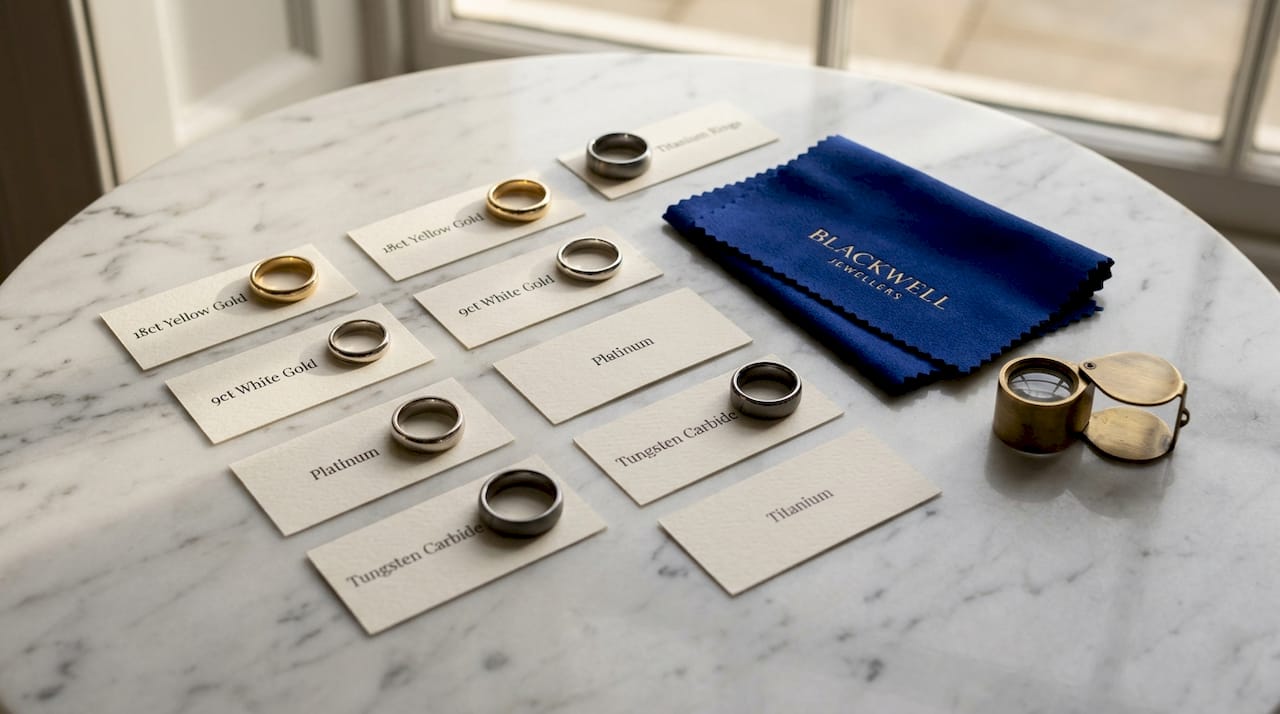
Here is a straightforward comparison of the most common options:
| Metal | Durability | Maintenance | Hypoallergenic | Resizable |
|---|---|---|---|---|
| 9ct gold | Good | Low | No (alloys vary) | Yes |
| 14ct / 18ct gold | Very good | Low | No (alloys vary) | Yes |
| White gold | Very good | Medium (re-plating) | No | Yes |
| Platinum | Excellent | Low | Yes | Yes |
| Titanium | Excellent | Very low | Yes | Limited |
| Tungsten carbide | Exceptional | Very low | Yes | No |
Gold is the traditional choice and for good reason. The karat system tells you how much pure gold is in the alloy: 24ct is pure gold but far too soft for daily wear. 14ct and 18ct gold offer a much better balance of durability and warmth of colour. Yellow gold suits warmer skin tones; white gold suits cooler ones. Rose gold sits somewhere in between and has surged in popularity over the past decade.
Platinum is denser, heavier, and genuinely hypoallergenic. It does not require rhodium plating to maintain its white appearance, unlike white gold. Platinum develops a patina over time that many wearers love, and it can be polished back to a high shine whenever you want. The trade-off is cost: platinum rings typically run 40 to 50 per cent more than equivalent gold ones. For a deeper look at how these two metals compare, the Blackwelljewellers guide on gold vs platinum rings is worth reading before you commit.
Alternative metals like tungsten carbide and titanium are gaining serious ground. Tungsten carbide is extremely hard and scratch resistant, making it ideal for anyone who works with their hands or leads an active lifestyle. It is also significantly more affordable than precious metals. The catch? Tungsten cannot be resized and may crack under extreme impact. If your weight fluctuates or you are not certain of your size, tungsten is a risk.
Pro Tip: If you have sensitive skin or a known nickel allergy, platinum or titanium are your safest bets. Many white gold alloys contain nickel, which causes reactions in a surprising number of people.
What style of wedding ring should you choose?
Style is where the fun starts, but it is also where couples most commonly make avoidable mistakes. The biggest one is choosing rings in isolation without considering how they will sit alongside an engagement ring.
Matching wedding bands do not have to be identical. Many couples opt for the same metal in different widths or finishes, which creates visual harmony without looking like a matching set from a catalogue. Discuss this together early. Turning up to a fitting with completely different ideas about style is awkward, and doing it two weeks before the wedding is worse.
Key style decisions to work through:
- Band width. Narrower bands (2 to 3mm) look delicate and suit smaller hands. Wider bands (6mm and above) make a bolder statement and tend to suit larger hands or those who want the ring to be a feature rather than a background detail.
- Profile. A flat profile sits flush against the finger. A court profile (rounded on the inside and outside) is the most comfortable for all-day wear. A D-shape profile is flat on the inside and rounded on the outside, sitting somewhere between the two.
- Finish. Polished is the classic choice. Brushed or matte finishes are increasingly popular and hide everyday scratches better than high-shine surfaces.
- Stones. Diamond-set eternity bands are a popular choice for women. Channel-set or flush-set stones are more practical for active wearers than claw settings, which can catch on fabric.
Non-traditional designs are genuinely worth considering if neither of you is particularly conventional. Materials like meteorite, fossil wood, and carbon fibre inlays are appearing in wedding rings with increasing frequency. They offer real durability alongside meaningful, personal symbolism. The Blackwelljewellers guide on wedding band designs covers the full range of profiles and finishes if you want to go deeper on this.
How do you get the right ring size?
Sizing is where more couples go wrong than anywhere else, and it is almost entirely avoidable with a bit of planning.
Follow these steps to get it right:
- Measure in the late afternoon. Fingers swell during the day due to heat and activity. Jewellers recommend measuring in the late afternoon when your finger is at its largest, so the ring fits comfortably at all times rather than just first thing in the morning.
- Account for band width. Wider bands fit snugger than narrower ones. As a general rule, size up by approximately half a size for every 2mm increase in band width beyond 4mm. This catches a lot of people out.
- Try both fit styles. A standard fit band has a flat inner surface. A comfort fit band has a rounded inner edge, making it noticeably easier to put on and take off, and more comfortable for extended wear. If you are choosing a wider band, comfort fit is almost always the better option.
- Measure the correct finger. Ring sizes differ between your dominant and non-dominant hand. Most people’s dominant hand is slightly larger. Measure the finger you will actually wear the ring on.
- Get professionally sized. Online sizing guides are fine for a rough estimate, but a professional fitting at a jeweller is always more accurate. If you are buying online, the Blackwelljewellers ring resizing guide explains what to do if the fit is not quite right after delivery.
Pro Tip: If you are choosing tungsten or titanium, get your size absolutely confirmed before ordering. These metals cannot be resized, so there is no safety net if you guess wrong.
What maintenance do wedding rings actually need?
Buying the ring is not the end of the story. Every metal requires some level of upkeep, and knowing what you are signing up for before you buy saves a lot of frustration later.
Here is what to expect by metal type:
- White gold. Requires rhodium plating every one to three years to maintain its bright white appearance. Without it, the ring will develop a slightly yellowish tint as the plating wears away. Budget roughly £30 to £60 per re-plate.
- Platinum. Develops a natural patina over time. This is not damage; it is a characteristic of the metal that many people find attractive. It can be polished back to a high shine at any point by a professional jeweller.
- Gold (yellow or rose). Relatively low maintenance. Occasional polishing and a professional clean once a year keeps it looking sharp.
- Tungsten and titanium. Almost no maintenance required. Tungsten’s scratch resistance means it holds its finish exceptionally well, though the trade-off is that it cannot be repaired if it cracks.
Regardless of metal, it is worth knowing the signs your ring needs repair before small issues become expensive ones. Loose stones, thinning shanks, and bent profiles are all fixable early on and much more costly to address once they worsen.
Key takeaways
Choosing the right wedding ring comes down to matching your metal, style, and size to your real lifestyle, not just your wedding day aesthetic.
| Point | Details |
|---|---|
| Set your budget first | Include engraving, resizing, and maintenance costs, not just the purchase price. |
| Match metal to lifestyle | Platinum suits sensitive skin and low maintenance; tungsten suits active wearers who will not need resizing. |
| Coordinate styles early | Discuss band width, profile, and finish together before any fitting appointment. |
| Size in the afternoon | Measure the correct finger late in the day and size up for wider bands. |
| Plan for upkeep | White gold needs re-plating; platinum needs polishing; all rings benefit from annual professional cleaning. |
What I have learned from years of watching couples choose rings
Here is something I see all the time: couples spend months agonising over the engagement ring and then try to choose wedding bands in a single afternoon, three weeks before the ceremony. That is backwards. The wedding band is the ring you will wear every day for the rest of your life. The engagement ring often comes off during cooking, gardening, or sport. The band stays on.
My honest observation is that most people underestimate how much their lifestyle should drive the decision. A nurse who scrubs in multiple times a day needs a different ring to a graphic designer who sits at a desk. A builder needs something fundamentally different to a teacher. Metal choice is not just about aesthetics; it is about what the ring will look like in ten years.
The other thing I would push back on is the idea that matching rings are obligatory. They are not. Some couples love the symmetry. Others find it slightly odd that two people with completely different tastes end up wearing identical jewellery. There is no rule here. What matters is that both rings feel right to the person wearing them, not that they look good in a flat-lay photograph.
Finally: ask questions. A good jeweller will not rush you, will not make you feel foolish for not knowing the difference between a court and a D-shape profile, and will tell you honestly when a metal is wrong for your lifestyle. If they do not, find a different jeweller.
— James
Find your perfect ring with Blackwelljewellers
If you are working through your wedding ring buying checklist and want expert guidance rather than guesswork, Blackwelljewellers is worth a visit. The team at their Kent stores in Maidstone, Gravesend, and Bexleyheath has spent over 20 years helping couples make this exact decision, and they bring genuine craft knowledge to every conversation.
For couples who want something truly personal, the bespoke design service in Maidstone lets you create a ring built around your exact specifications, from metal and width to finish and engraving. If budget is a consideration, the pre-owned jewellery collection includes authenticated, hallmarked rings at a fraction of new prices. And if your existing rings need attention, the jewellery repairs service handles everything from rhodium plating to stone resetting in-house.
FAQ
How much should you spend on a wedding ring?
There is no fixed rule. The average groom’s ring costs around $510, but the right amount depends entirely on your budget, metal preference, and design. Prioritise quality of craftsmanship over size or embellishment.
Can tungsten wedding rings be resized?
No. Tungsten cannot be resized due to its extreme hardness. Couples choosing tungsten should get professionally sized before purchasing and confirm their size with certainty, as there is no adjustment option after the fact.
What is the most durable metal for a wedding ring?
Tungsten carbide is the hardest and most scratch-resistant option, making it ideal for active lifestyles. Platinum offers excellent durability with the added benefit of being hypoallergenic and resizable, making it the preferred choice for long-term wearability.
When is the best time to measure your ring size?
Measure your ring size in the late afternoon, when fingers are at their largest due to daily activity and warmth. Also size up by approximately half a size if you are choosing a wider band, as wider bands fit more snugly than narrow ones.
Do wedding rings have to match?
No. Many couples choose the same metal in different widths or finishes rather than identical rings. The priority is that each ring suits the person wearing it, in terms of comfort, lifestyle, and personal style.