

TL;DR:
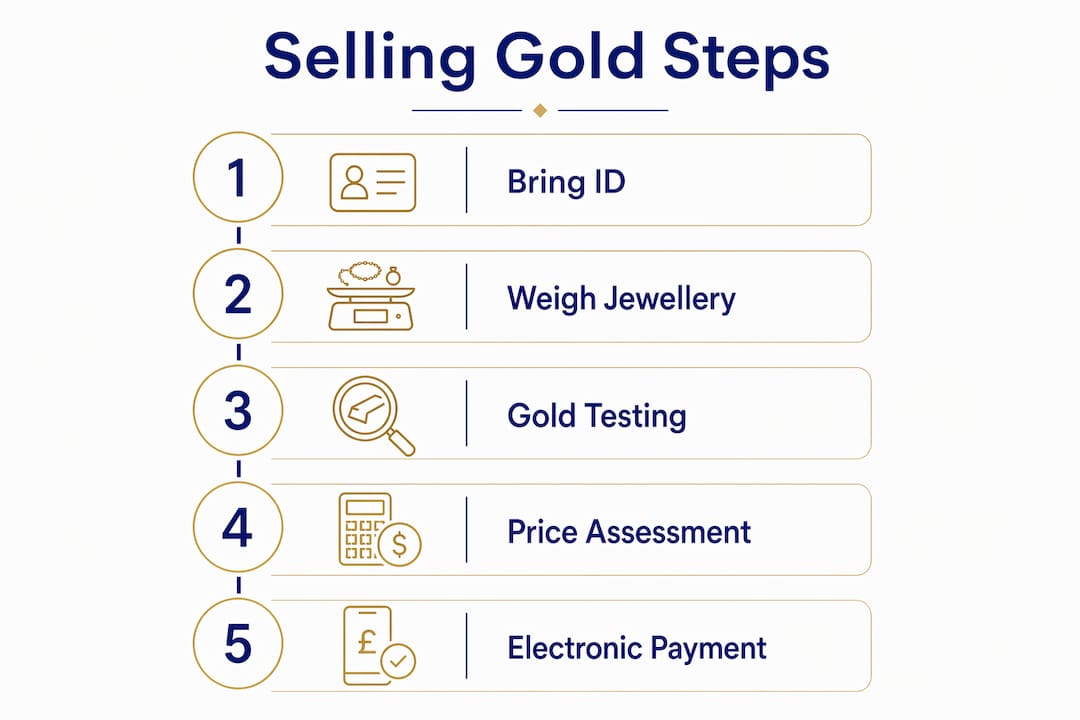
- Bringing gold jewelry into a Cash 4 Gold shop triggers a regulated process that includes ID checks and purity testing.
- Shops pay only melt value based on LBMA prices, with high-street shops offering 50-70% of spot price.
- All payments are electronic, and sellers should verify their gold’s weight and purity to ensure a fair deal.
Bringing gold jewellery into a Cash 4 Gold shop initiates a regulated process that most sellers do not fully expect. The industry term for this is “scrap gold buying,” and it covers everything from identity checks and purity testing to live market pricing and mandatory electronic payment. The whole visit takes 30 minutes to 2 hours, depending on how much you bring and how busy the shop is. Knowing what to expect before you walk through the door puts you in a much stronger position to get a fair deal.
What identification do you need to bring to a Cash 4 Gold shop?
You cannot sell gold without ID. Full stop. Dealers must verify identity for every transaction, regardless of value, under anti-money laundering regulations. No exceptions exist, and any shop that skips this step is operating illegally.
Here is exactly what you need to bring:
- Photo ID: A valid passport or UK driving licence. Both are accepted. An expired document is not.
- Proof of address: A utility bill or bank statement dated within the last three months. A mobile phone bill does not usually count.
- Your name must match across both documents. If it does not, the shop cannot legally process the sale.
The Scrap Metal Dealers Act 2013 is the law behind all of this. It was introduced specifically to tackle metal theft and money laundering, and it applies to every gold buying shop near you in Kent. If you turn up without the right documents, you leave empty-handed. Shops face unlimited fines and licence revocation for non-compliance, so they take this seriously. You should too.
Pro Tip: Take a photo of your utility bill on your phone before you leave the house. If you forget the paper copy, some shops will accept a clear digital image, though not all will.
How does a Cash 4 Gold shop test and assess your gold?
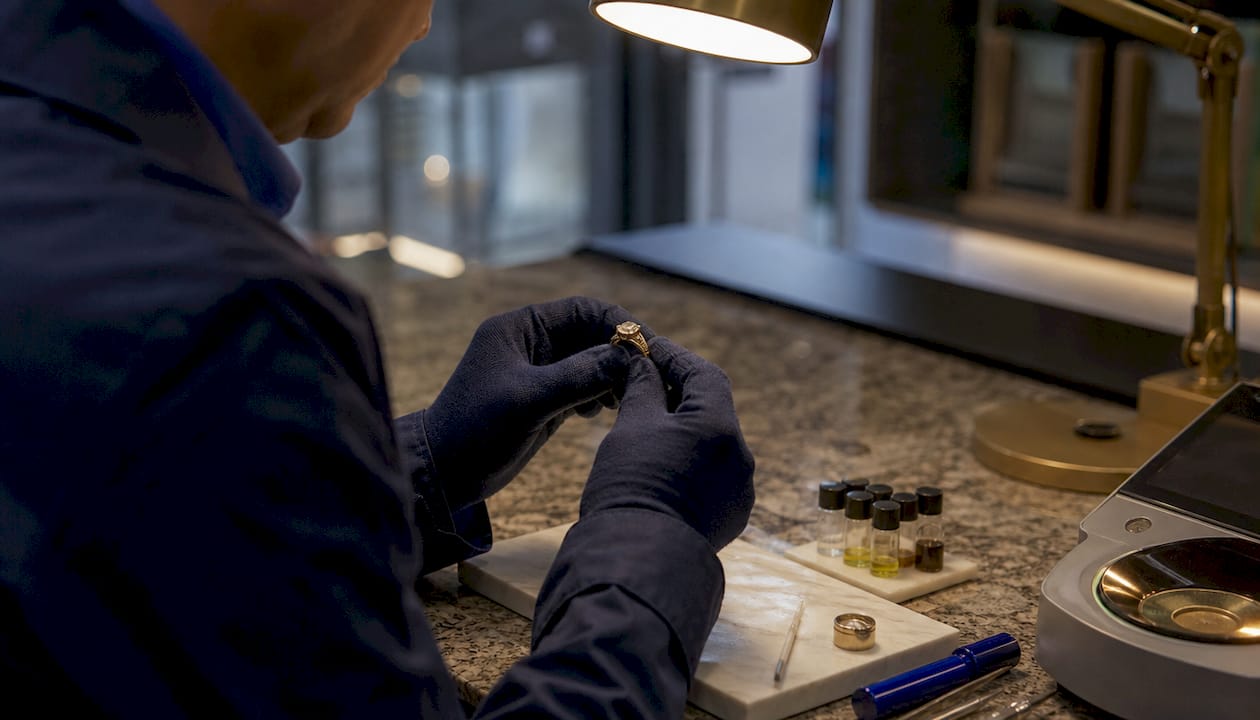
Testing is where the real work happens, and it is worth watching closely. Shops weigh your gold in front of you and use either acid tests or electronic testing equipment to assess purity. Senior valuers handle the appraisal to confirm quality and price accuracy.
The typical assessment follows this order:
- Visual inspection: The valuer checks for hallmarks. UK gold is hallmarked at 375 (9ct), 585 (14ct), or 750 (18ct). A hallmark gives the shop a starting point before any testing begins.
- Weighing: Your items go on a calibrated scale. The weight is recorded in grams. Watch this step carefully and note the figure yourself.
- Electronic testing: A probe touches the metal and reads its conductivity. This is fast, non-destructive, and accurate for most standard gold items.
- Acid testing: A small scratch is made on a testing stone, and acid is applied. The reaction confirms the carat. This method is older but still widely used for items without clear hallmarks.
- Condition assessment: Broken clasps, missing stones, or heavy wear do not usually affect the melt value, but the valuer notes them anyway.
The purity reading directly determines the price calculation. A 9ct ring and an 18ct ring of the same weight produce very different valuations. That is not a trick. It is just maths.
Pro Tip: Before you visit, weigh your gold at home on a kitchen scale. It will not be laboratory-precise, but it gives you a rough check against what the shop records. If their figure is significantly lower, ask them to reweigh it.
How does gold valuation and pricing work at Cash 4 Gold shops?
This is the part that surprises most sellers, and honestly, it should not. Gold valuations are based on the LBMA fix price, which is the London Bullion Market Association’s benchmark rate set twice daily. The shop applies a percentage of that rate to your gold’s melt value.
Here is what that looks like in practice:
| Buyer type | Typical payout rate |
|---|---|
| High-street Cash 4 Gold shop | 50–70% of spot price |
| Specialist bullion dealer | Up to 97–99% of spot price |
The gap is significant. High-street shops average 50–70% of spot price because they carry higher overhead costs: prime retail locations, marketing, and staff. That cost gets passed back to you in the form of a lower payout. This is the “convenience premium” at work.
Specialists may pay 15–25% more on total value for high-value items, simply because their overheads are lower. For a small 9ct chain worth £80 at melt value, the difference might feel minor. For a heavy 18ct bracelet worth £800 at melt value, that gap becomes very real money.
One thing that catches sellers off guard: cash-for-gold shops pay melt value only. Craftsmanship, designer branding, and sentimental history count for nothing in this transaction. A handmade Victorian brooch and a plain modern bangle of identical weight and purity fetch the same price. That is not unfair. It is just how the scrap gold model works.
The LBMA price also fluctuates throughout the day. A shop that quotes you at 9AM may offer slightly different numbers by 2PM. If gold is on a strong upward run, it can be worth asking for a fresh quote later in the day.
Pro Tip: Check the live gold spot price on the World Gold Council website before you visit. Divide your item’s weight in grams by 31.1 (troy ounce conversion), multiply by the spot price, then multiply by the carat purity fraction (e.g. 0.375 for 9ct). That gives you the theoretical melt value. Compare it to the shop’s offer.
What payment methods are used after you agree a price?
Here is something that genuinely shocks a lot of people: you cannot receive physical cash for gold. Not legally, anyway. Physical cash payments for gold sales are illegal under UK law. All payments must be electronic to create a traceable record. Violations carry unlimited fines and licence revocation for dealers.
What you can expect instead:
- Bank transfer: The most common method. Funds typically arrive within one to two working days, though some shops offer same-day transfers.
- Debit card payment: Some shops load funds onto a prepaid card or transfer directly to your debit card.
- Cheque: Less common now, but still used by some dealers. Clearing takes three to five working days.
- Receipt: You will receive a written receipt detailing the weight, purity, price per gram, and total paid. Keep this.
If a shop offers you a wad of notes, walk away. They are breaking the law, and that puts you in an awkward position too. Legitimate shops comply because the alternative is losing their licence entirely. The electronic payment requirement is not a bureaucratic inconvenience. It is the mechanism that keeps the whole system honest.
How do you get a fair deal and avoid common pitfalls?
Selling gold is not complicated, but it is easy to leave money on the table if you are not paying attention. Here is what actually matters:
- Watch the weighing. Stand at the counter and watch the scale. Note the figure. If the shop weighs your items out of your sight, that is a red flag.
- Know your purity. Check your hallmarks before you go. A 9ct and an 18ct piece look identical to the untrained eye but carry very different values.
- Get multiple quotes. Visit at least two or three gold buying shops before you commit. Payout rates vary more than you would expect, even between shops on the same high street.
- Verify the shop’s licence. Legitimate dealers are registered with their local council under the Scrap Metal Dealers Act 2013. You can check this online via your local authority’s website.
- Do not rush. Pressure tactics (“this offer is only valid today”) are a classic sign of a low-ball operation. A reputable shop will give you time to think.
- Consider your options for higher-value pieces. If your item has significant weight, unusual purity, or collector appeal, a specialist dealer or jeweller may offer considerably more than a standard cash-for-gold shop.
- Know your tax position. Capital gains exceeding £3,000 or proceeds above £50,000 must be declared via Self Assessment. Most casual sellers will not hit these thresholds, but it is worth knowing.
Pro Tip: Read the tips for maximising gold sale value before you visit any shop. Five minutes of preparation can genuinely change the outcome.
Key takeaways
Selling gold at a Cash 4 Gold shop is a regulated, step-by-step process where preparation, ID, and understanding melt value pricing are the three things that determine whether you walk away satisfied.
| Point | Details |
|---|---|
| ID is non-negotiable | Bring valid photo ID and a recent proof of address, or the shop cannot legally process your sale. |
| Payout rates vary widely | High-street shops typically pay 50–70% of spot price; specialist dealers can pay significantly more. |
| Cash payments are illegal | All gold sale payments must be electronic under the Scrap Metal Dealers Act 2013. |
| Melt value is all that counts | Craftsmanship and brand premiums are not factored in; only weight and purity determine your payout. |
| Multiple quotes save money | Visiting two or three buyers before committing is the single most effective way to improve your return. |
Selling gold in Kent: what I have actually seen
Right, here is my honest take after years of watching people walk into gold buying shops in Kent and come out looking mildly baffled.
The biggest misconception is not about the price. It is about the payment. People genuinely expect to walk out with a handful of notes, and when they hear “bank transfer,” they feel like they are being fobbed off. They are not. That is just the law, and any shop telling you otherwise is the one you should be worried about.
The second thing I see constantly is sellers who have no idea what carat their gold is. They bring in a bag of mixed pieces, hand it over, and trust whatever number comes back. That is like handing someone your car keys and asking them to tell you what it is worth. Know your hallmarks. 375 is 9ct. 585 is 14ct. 750 is 18ct. Write it on your hand if you have to.
Timing matters more than people realise. Gold prices move daily, and a sale on a strong market day versus a weak one can make a meaningful difference on heavier items. Check the LBMA fix price before you go, not after.
And finally: convenience has a price. Cash 4 Gold shops on the high street are quick and easy, but that ease costs you 30–50% of what a specialist might pay. For a small item, that trade-off is probably fine. For a heavy gold chain or a set of 18ct rings, it is worth taking the extra day to shop around.
— James
Selling gold in Kent? Blackwelljewellers can help
If you are in Kent and wondering whether a Cash 4 Gold shop is really your best option, it is worth knowing what else is available locally.

Blackwelljewellers has been buying and valuing pre-owned gold jewellery across Kent for over 20 years, with stores in Maidstone, Gravesend, and Bexleyheath. Every piece is assessed by experienced in-house jewellers who understand both melt value and the broader market for pre-owned pieces. That means you get a valuation grounded in real expertise, not just a quick weigh and a percentage. Browse the second-hand jewellery section to see what Blackwelljewellers buys and sells, or visit a store to get a no-obligation quote on your gold.
FAQ
What ID do I need to sell gold in the UK?
You need valid photo ID (passport or driving licence) and a recent proof of address such as a utility bill or bank statement. Both documents are mandatory under the Scrap Metal Dealers Act 2013.
Can I get cash for gold at a Cash 4 Gold shop?
No. Physical cash payments for gold sales are illegal under UK law. All payments must be made electronically, typically via bank transfer or debit card.
How is the value of gold jewellery calculated?
Shops use the LBMA daily fix price as a benchmark, then apply a payout percentage based on your gold’s weight and carat purity. High-street shops typically pay 50–70% of the spot price.
Does selling gold affect my taxes?
For most casual sellers it does not. Capital gains exceeding £3,000 or total proceeds above £50,000 must be declared via Self Assessment, but most individual sales fall well below these thresholds.
Is it worth getting multiple quotes before selling?
Yes. Payout rates vary significantly between buyers, and visiting two or three shops before committing is the most reliable way to improve your return without any extra effort.