

Kent couples who want a wedding ring that actually means something, rather than one pulled off a shelf between a Tuesday and a Thursday, are increasingly turning to handmade bespoke pieces. And honestly? Good call. A handmade wedding ring is crafted by a skilled artisan specifically for you, from the metal choice down to the finish, with no two pieces ever identical. In Kent, you have real options: local bespoke jewellers and studios, hands-on ring-making workshops, and accessible London resources like the jewellers of Hatton Garden for couples who want to combine a day trip with a design consultation.
Here is a quick overview of your main routes:
- Commission a bespoke ring through a Kent-based artisan jeweller such as Chloe May Jewellery
- Work with a specialist via The Wedding Secret Kent network
- Visit Hatton Garden in London, which is roughly an hour from most of Kent by train
- Attend a hands-on ring-making workshop where you forge the ring yourself
- Use a local jeweller like Blackwelljewellers in Maidstone, Gravesend, or Bexleyheath for bespoke design and expert guidance
How does the bespoke ring creation process actually work?
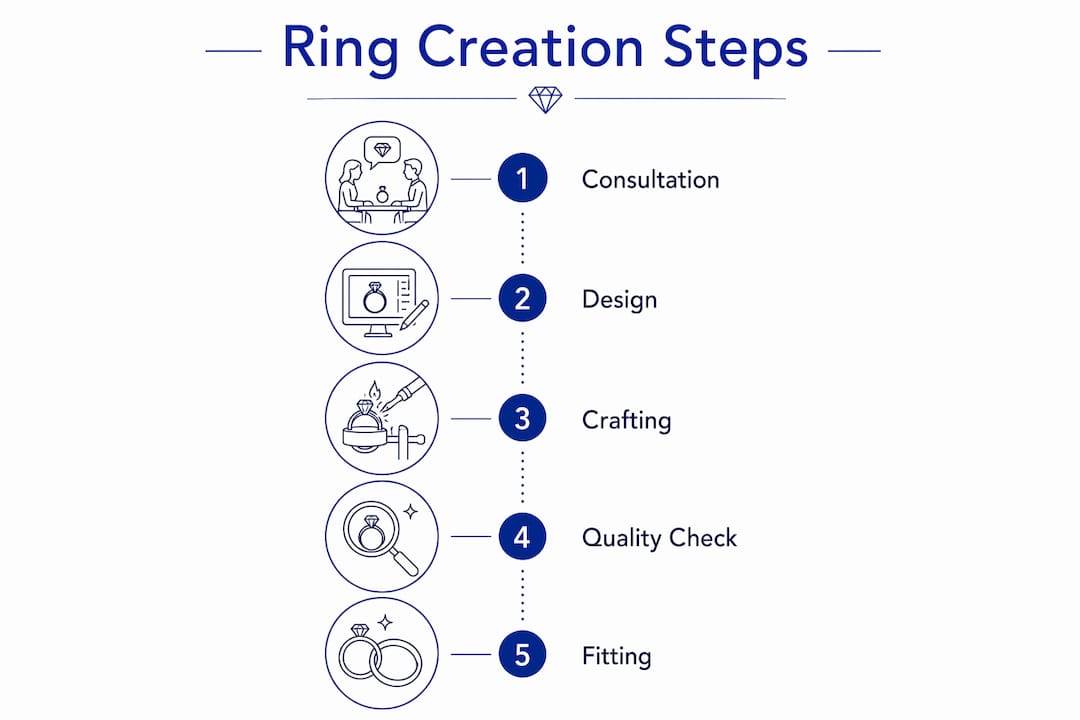
The process is more straightforward than most couples expect, but it does reward preparation. Here is how it typically unfolds from first conversation to finished ring.
1. Initial consultation You meet your jeweller, discuss your vision, and set a realistic budget. This is where bespoke consultations require real preparation to work well. Come with a rough idea of style, metal preference, and whether you want stones. Vague briefs produce vague rings.
2. Design development The jeweller produces sketches or CAD renders. You refine the design together, choosing metal (18ct gold, platinum, palladium), stone type if applicable, and surface finish. This stage can involve two or three rounds of revisions.
3. Artisan crafting Once the design is approved, the physical work begins. Techniques vary by jeweller and design but typically include:
- Forging: shaping metal by hand using hammers and stakes
- Soldering: joining metal components with precision heat
- Stone setting: securing gems by hand, whether claw, bezel, or pavé
- Finishing: polishing, texturing, or applying a brushed or hammered surface
4. Quality check and hallmarking Every piece sold in the UK must carry a hallmark from an Assay Office. This confirms metal purity and is a legal requirement, not a nice extra.
5. Fitting and handover You try the ring, confirm the fit, and collect your piece. Most jewellers offer at least one free resize within a set period.
Pro Tip: Bring reference images to your first consultation, even if they are not exactly what you want. Showing a jeweller what you like (and what you do not) saves at least one full revision round and keeps the timeline on track.
Which Kent jewellers and workshops can you actually visit?
Kent has a genuine artisan jewellery scene, and it is growing. The options below cover different styles of experience, from fully bespoke commissions to hands-on making days.
Chloe May Jewellery is one of the most frequently recommended names for bespoke artisan rings in Kent. The studio specialises in individually designed pieces with a strong emphasis on client collaboration, and the work reflects a distinctly contemporary aesthetic.
The Wedding Secret Kent connects couples with a network of specialist wedding suppliers, including jewellers who focus on custom wedding bands. It is a useful starting point if you want to compare styles and approaches before committing to a single maker.
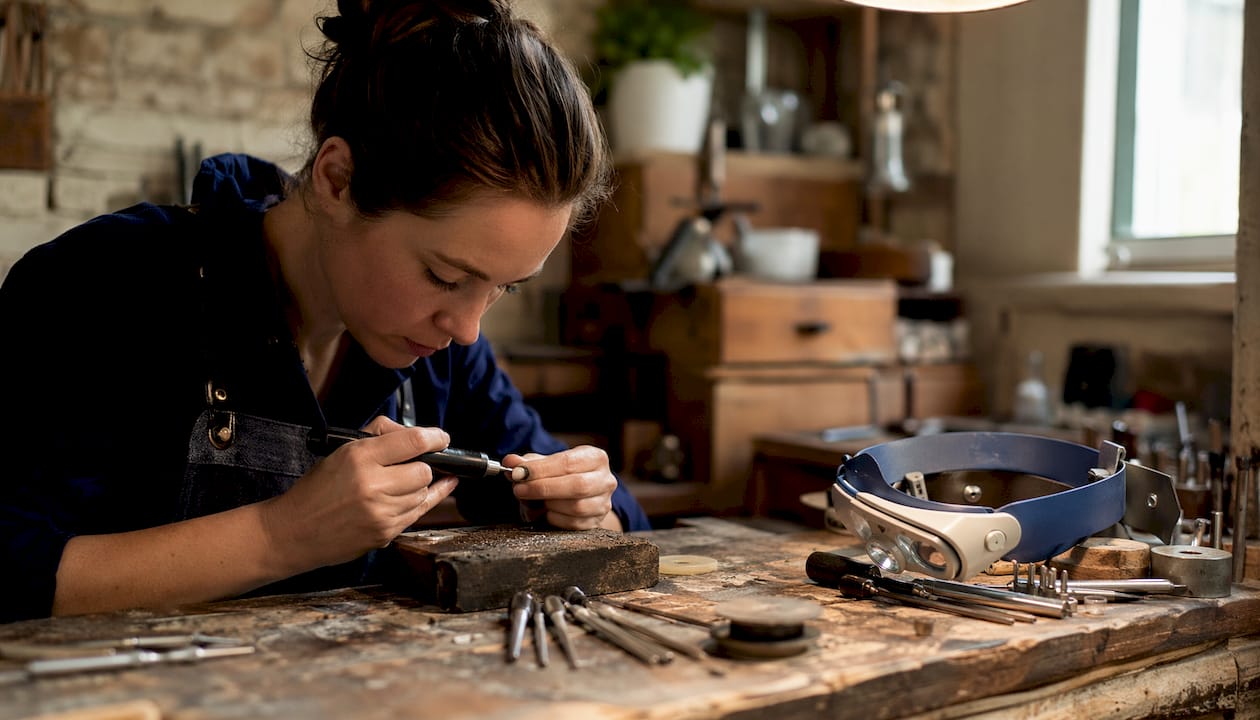
Hands-on workshops are available across Kent and allow couples to forge their own rings under expert supervision. No prior experience is needed. You will work with real metal, use proper tools, and leave with a ring you made yourself. The techniques covered typically include forging, soldering, and surface finishing.
For couples willing to travel, Hatton Garden houses around seventy jewellery stores and over three hundred jewellery-related businesses within a compact area of London. Independent ownership means no brand premiums, and many workshops offer GIA-certified diamonds alongside fully bespoke commissions. From most of Kent, it is a straightforward train journey.
Pro Tip: Book ahead for Hatton Garden visits, especially between november and february when engagement season peaks. Walk-ins are often welcome, but a booked appointment gets you a proper in-depth consultation and a curated stone selection.
What metals and styles are trending for Kent couples in 2026?
Choosing a metal is not just about looks. It affects durability, maintenance, and cost, so it is worth understanding the differences before you fall in love with a particular finish.
| Metal | Key properties | Typical price point |
|---|---|---|
| Platinum | Dense, durable, naturally white | Higher end |
| 18ct gold (yellow, white, rose) | Classic, versatile, workable | Mid to high |
| — | More affordable, slightly less pure | Budget-friendly |
| Palladium | Lightweight, white, hypoallergenic | Mid-range |
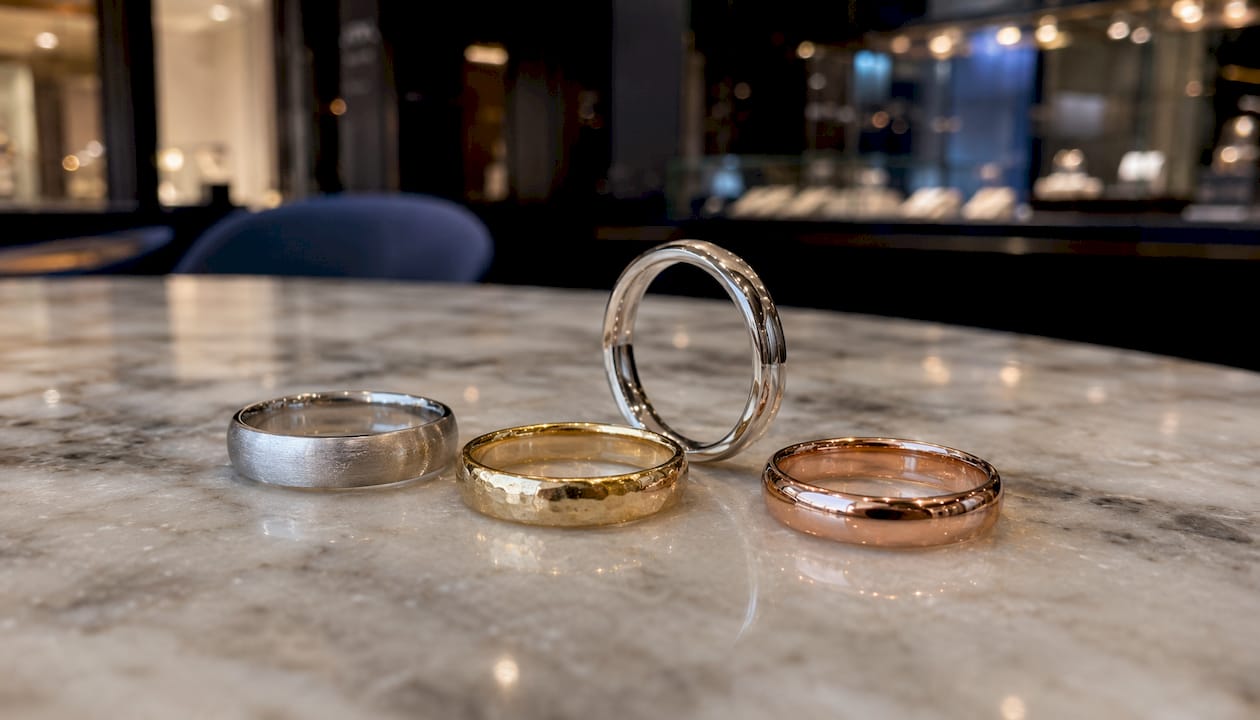
On the style front, minimalist bands with textured or hammered finishes are consistently popular. Architectural designs with clean geometric lines are gaining ground, particularly among couples who want something that reads as modern rather than traditionally bridal.
One trend worth knowing about: divorce rings are a growing category in bespoke jewellery, where original engagement or wedding rings are reconstructed into entirely new pieces. These commissions typically cost £2,000 and above, depending on complexity and materials. Clients gravitating toward architectural designs tend to choose chunky bands, signet-style settings, and asymmetrical forms worn on non-ring fingers as a deliberate statement of independence. It is a genuinely interesting shift in how people think about the meaning of a ring, and it shows how far bespoke design has moved beyond the traditional bridal brief.
Popular style options for Kent couples currently include:
- Plain polished bands in platinum or 18ct gold
- Hammered or forged texture finishes for a handcrafted look
- Mixed metal designs combining yellow and white gold
- Pavé or flush-set diamond bands
- Engraved personalisation inside or outside the band
What does a handmade wedding ring cost, and how long does it take?
Let’s be honest about money, because vague answers here are useless. Bespoke rings in the UK generally range from £850 for simpler designs up to £8,000 and beyond for mid-range commissions, with premium and luxury pieces exceeding £15,000. Most couples commissioning a handmade wedding band land somewhere in the £850–£8,000 range depending on metal, stones, and design complexity.
Factors that push the price up:
- Platinum over gold (denser metal, harder to work)
- Natural diamonds over lab-grown or alternative stones
- Intricate settings like pavé, filigree, or multi-stone configurations
- Engraving, mixed metals, or sculptural design elements
- Tight timelines requiring prioritised workshop time
On timing, budget at least 4–8 weeks from initial consultation to finished ring. Simpler designs at the lower end of that range, complex commissions at the upper end. If your wedding date is within six weeks of your first consultation, say so immediately. Most jewellers can accommodate urgent commissions, but it may affect availability and occasionally cost.
Key cost and timing facts at a glance:
- Entry-level bespoke bands start from around £850
- Mid-range commissions typically fall between £2,000 and £8,000
- Premium pieces with larger stones or rare materials exceed £15,000
- Standard timeline is 4–8 weeks from design sign-off
- Hallmarking is a legal requirement and is factored into the price
Why choose handmade over mass-produced?
Mass-produced rings are fine. There, said it. But they are designed for the average person, which means they are designed for nobody in particular. A handmade ring is built around your measurements, your preferences, and your story.
The practical advantages are real too. Artisan jewellers typically use heavier metal gauges than mass-market manufacturers, which means the ring wears better over decades. You also get full control over provenance: where the metal came from, whether the stones are ethically sourced, and who actually made the piece. For couples who care about that (and more do every year), it is a meaningful difference.
Benefits of going bespoke:
- Fully unique design, no two pieces identical
- Metal weight and quality chosen to your specification
- Ethical sourcing and transparent provenance
- Emotional significance of a piece made specifically for you
- Long-term durability from quality artisan construction
- Flexibility to incorporate existing stones or heirloom materials
The artisan jewellery near Kent scene has grown precisely because couples want this kind of control. A ring from a high-street chain is a transaction. A ring from an artisan is a collaboration.
What do Kent’s jewellers say about bespoke commissions?
The consistent advice from experienced bespoke jewellers is this: arrive at your first consultation with a clear budget and at least a rough sense of style. Vague briefs waste everyone’s time and often result in a design that satisfies nobody.
Kent’s bespoke jewellers emphasise client education as the foundation of a successful commission. Understanding the difference between metals, stone grades, and setting types before you sit down with a jeweller means the conversation moves faster and the design lands closer to what you actually want.
A typical bespoke commission unfolds in these stages:
- Budget and brief: agree your ceiling and your non-negotiables
- Stone selection: if using existing stones, have them assessed for suitability first
- Design review: approve sketches or renders before any metal is touched
- Crafting: the artisan works to the approved design
- Quality check: hallmarking and final inspection before handover
Pro Tip: If you are incorporating an existing stone, bring it to the first consultation. Stone characteristics, including size, cut, and condition, directly influence what designs are feasible and what the commission will cost.
Jewellery designers are also observing a broader shift: clients increasingly commission rings that symbolise personal empowerment and narrative shifts, not just romantic milestones. That trend is reshaping what bespoke means in 2026, and Kent’s artisans are responding to it.
How should you care for a handmade ring?
Handmade rings, particularly those with textured finishes or hand-set stones, need slightly more attention than a plain polished band. The good news is that the care routine is simple.
Clean your ring regularly with warm water, a drop of washing-up liquid, and a soft toothbrush. Avoid ultrasonic cleaners if your ring has pavé-set or tension-set stones, as the vibrations can loosen settings over time. Remove your ring before swimming in chlorinated water, as chlorine degrades gold alloys.
Have your ring professionally checked once a year. A jeweller will inspect the setting security, check for metal fatigue at stress points, and re-polish if needed. For rings with textured or hammered finishes, ask your jeweller whether re-polishing is appropriate, as it can soften the original texture. Store your ring separately from other jewellery to prevent scratching.
How do you verify the authenticity and quality of a handmade ring?
The hallmark is your starting point. Every piece of gold, silver, or platinum jewellery sold in the UK must be hallmarked by an Assay Office, confirming the metal’s purity. Look for the maker’s mark, the metal fineness mark, and the Assay Office symbol. If a ring lacks a hallmark, that is a legal issue, not just a quality concern.
Beyond the hallmark, ask your jeweller for a written description of the materials used, including metal carat and any stone specifications. For diamond rings, request a grading certificate from a recognised body such as the GIA (Gemological Institute of America) or IGI. A reputable artisan will provide this without hesitation.
Check the construction. Claw settings should be even and secure. Solder joins should be invisible. The interior of the band should be smooth and comfortable. If anything looks uneven or rough, raise it before you accept the piece.
What happens during fitting and resizing?
Fitting is usually straightforward. Your jeweller will have taken your ring size at the design stage, but fingers change slightly with temperature and time, so a final fitting before handover is standard practice. Most bespoke jewellers include at least one free resize within a defined period after purchase.
Resizing a handmade ring is more involved than resizing a plain mass-produced band, particularly if the ring has stones set around the full circumference or a complex surface finish. Going up a size is generally easier than going down. If your ring has pavé diamonds or a textured exterior, resizing may require re-setting stones or re-applying the finish, which adds time and cost.
Ask about resizing limits before you commission. Some designs, particularly full-eternity bands, cannot be resized at all without compromising the setting. Knowing this upfront saves a difficult conversation later.
How do you book a bespoke design consultation?
Most Kent jewellers and Hatton Garden workshops accept bookings by phone, email, or through their website. For bespoke commissions, a booked appointment is strongly preferable to walking in. It gives the jeweller time to prepare relevant stone selections and design references, and it means you get their full attention rather than a rushed conversation between other customers.
When booking, mention:
- Whether you want a wedding band, engagement ring, or both
- Your approximate budget
- Any stones or existing jewellery you want to incorporate
- Your wedding date, so the jeweller can confirm the timeline is achievable
For handmade jewellery in Maidstone and across Kent, Blackwelljewellers offers bespoke consultations at its stores in Maidstone, Gravesend, and Bexleyheath. The team works with couples from initial brief through to finished piece, with in-house expertise covering design, crafting, and hallmarking.
Key takeaways
Handmade bespoke wedding rings in Kent give couples full control over design, materials, and provenance, with commissions typically ranging from £850 to £8,000 and a standard timeline of 4–8 weeks.
| Point | Details |
|---|---|
| Cost range | Bespoke wedding rings in the UK range from £850 for simple designs to £8,000 and beyond for premium commissions. |
| Timeline | Budget 4–8 weeks from design sign-off to finished ring; tell your jeweller your wedding date at the first meeting. |
| Hallmarking | Every ring sold in the UK must carry a hallmark confirming metal purity. No hallmark means no legal sale. |
| Preparation matters | Arrive at your consultation with a clear budget, style references, and any stones you want to incorporate. |
| Blackwelljewellers | Offers bespoke wedding ring consultations across Kent stores in Maidstone, Gravesend, and Bexleyheath. |
Why handmade rings matter more than most guides admit
There is a version of this conversation that treats bespoke jewellery as a luxury upgrade, something you choose when you have money left over after the venue and the catering. That framing gets it backwards.
A wedding ring is the one thing from your wedding day you will wear every single day for the rest of your life. The flowers are gone by Sunday. The cake is eaten. The dress goes into a box. The ring stays on your finger. Given that, spending a bit more time and thought on it, and choosing something made specifically for you rather than for the statistical average of all possible wearers, seems less like an indulgence and more like basic common sense.
What bespoke also gives you, and this is the part the price guides miss, is a relationship with the person who made it. You can go back. You can ask questions. You can have it repaired by someone who knows exactly how it was built. That kind of accountability is genuinely rare in modern retail, and it is worth something that does not show up in any cost comparison.
The trend toward rings that carry personal narrative, whether that is a divorce ring marking independence or a wedding band incorporating a grandmother’s stone, reflects something real: people want objects that mean something specific, not objects that mean something general. Kent’s artisan jewellers are well placed to deliver exactly that.
Bespoke wedding rings in Kent, made properly, at Blackwelljewellers
Blackwelljewellers has been part of Kent’s jewellery scene for over 20 years, with stores in Maidstone, Gravesend, and Bexleyheath staffed by jewellers who actually make things. The bespoke service covers everything from initial design consultation through to finished, hallmarked piece, with in-house craftsmanship and transparent sourcing throughout.

If you want a bespoke wedding ring made by people who know Kent couples and understand what a ring needs to do for the next fifty years, Blackwelljewellers is worth a conversation. The team also holds a curated range of second-hand jewellery that includes authenticated, hallmarked rings at genuinely competitive prices, for couples who want quality without the full bespoke timeline. Book a consultation at any Kent store or browse online at blackwelljewellers.co.uk.