
TL;DR:
- Most people in the UK have a collection of old or broken gold items whose value they often underestimate. The worth of gold depends on its purity, weight, and current spot price, which varies daily. To maximize returns, sellers should identify their gold type, verify hallmarks, obtain multiple quotes, and deal with reputable buyers who show transparent calculations.
Most people in the UK have a drawer somewhere with a broken chain, an old ring, or a forgotten bracelet sitting in it. And most of those people have absolutely no idea what that pile of metal is actually worth. The gold market isn’t deliberately confusing (well, not always), but the lack of clear information leaves sellers vulnerable to low offers and dodgy dealers. This guide is here to fix that. By the end, you’ll understand exactly how gold is valued, what the process looks like in practice, and how to make sure you walk away with a fair price.
Table of Contents
- What determines the value of your gold?
- How the valuation process works in the UK
- Comparing buyers: bullion dealers vs. scrap gold buyers
- How to avoid common pitfalls and maximise your gold’s sale value
- The uncomfortable truth about selling gold in the UK
- Get expert support for selling your gold
- Frequently asked questions
Key Takeaways
| Point | Details |
|---|---|
| Buyer selection matters | Choosing the right type of buyer can increase your payout by 20% or more. |
| Understand hallmarks | Hallmarks ensure purity, legal compliance, and offer protection against fraud. |
| Compare offers | Don’t accept the first offer—compare several to get the best value. |
| Spot price impacts value | Gold’s daily market price is central to the amount you’ll receive. |
What determines the value of your gold?
Let’s start at the beginning, because this is where most sellers go wrong. They assume gold is gold. It isn’t.
The value of any gold item comes down to three core things:
- Purity (carat): How much of the item is actually gold. 24 carat is pure gold. 18 carat is 75% gold. 9 carat is 37.5% gold. The rest is alloy metals. So that ring your nan left you might be 9 carat, which means you’re only selling the gold content, not the whole weight.
- Weight: Measured in grams or troy ounces. This is where a decent set of scales matters. Even a few grams make a meaningful difference to your payout.
- The spot price: This is the live market price of gold at any given moment. It changes daily, sometimes hourly. The spot price is your baseline.
Beyond those three things, the form of your gold matters enormously. A gold coin is not the same as a snapped bracelet, even if they weigh identical amounts.
| Gold form | Typical buyer | % of spot price received |
|---|---|---|
| Investment coins (e.g. Sovereigns) | Bullion dealer | 97 to 99% |
| Gold bars / bullion | Bullion dealer | 97 to 99% |
| Gold jewellery (scrap) | Scrap gold buyer | 60 to 80% |
| Antique or designer jewellery | Specialist jeweller | Varies (sometimes above melt value) |
That table should make you stop and think. Because bullion dealers pay 97 to 99% of spot for investment items like Sovereigns, whereas scrap gold buyers typically pay 60 to 80%. That is a huge gap. Selling a Sovereign to a scrap buyer when a bullion dealer would give you almost full spot price is genuinely painful to think about.
Pro Tip: Before you sell anything, identify what you actually have. Jewellery, coins, and bars are valued differently and sold through different channels. Don’t lump them together.
For a deeper look at how to approach valuing your gold before you approach any buyer, it’s worth reading up on the full picture. The more informed you are going in, the better your outcome.
One more thing worth mentioning: sentimental value and sale value are completely different things. A buyer doesn’t care that your grandmother wore that locket every day. They care about carats and grams. Painful but true.
How the valuation process works in the UK
Right, so now you know what matters. But how do professionals actually work out what to offer you? Here’s the actual process, step by step.
-
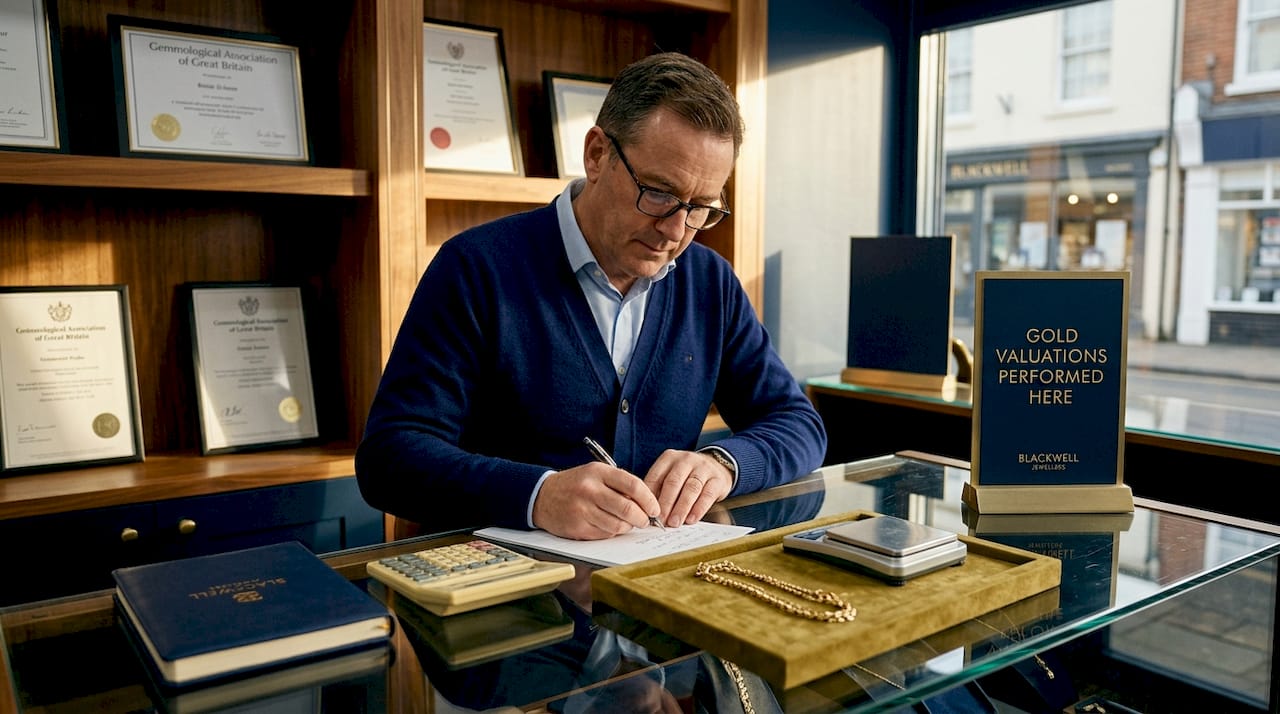
Identify the gold type. A reputable buyer will check for hallmarks first. Hallmarks are tiny stamps applied to gold items that tell you the purity, the assay office that tested it, and often the year and maker. In the UK, hallmarks are legally required on gold items over 1 gram, and they exist specifically to protect against fraud. No hallmark? That’s a red flag, and the item may require acid testing or XRF (X-ray fluorescence) analysis to verify purity.
-
Test if necessary. If there’s no clear hallmark, or the hallmark looks suspicious, a reputable buyer will test the metal. Acid testing is the traditional method. XRF testing is more accurate and non-destructive. Both can confirm purity quickly.
-
Weigh the item. A precise digital scale is used to weigh the gold in grams. This is straightforward, but it’s worth knowing that buyers weigh the whole item, including any non-gold elements like gemstones or clasps that don’t contribute to the gold value. A good buyer will account for this.
-
Apply the spot price. Once purity and weight are confirmed, the buyer calculates the gold content value using the current spot price. For example: a 10g item of 18 carat gold contains 7.5g of pure gold. If gold is £60 per gram, the pure gold content is worth £450.
-
Make an offer. The buyer then applies their margin and makes you an offer. A transparent buyer will show you their calculation. An opaque one won’t. Guess which one you should trust.
“No CGT on personal gold sales under £6,000. Hallmarks are legally required on items over 1 gram and protect against fraud.” The Goldsmiths’ Company
That CGT point is genuinely useful. Most casual sellers in the UK don’t realise that gold sales under £6,000 are generally exempt from capital gains tax for personal items. So unless you’re sitting on a serious gold stash, you probably don’t need to worry about the taxman getting involved.
If you want to have a go at valuing gold at home before you visit a buyer, you absolutely can. Knowing your own numbers before you walk in is genuinely empowering. And if you want to get your head around the stamping system, a solid explainer on gold hallmarks and purity will help you read those tiny marks with confidence. There’s also a brilliant overview in this jewellery hallmarking guide if you want the full picture.
Pro Tip: Ask any buyer to show you their calculation in writing before you accept an offer. Grams weighed, purity applied, spot price used, percentage offered. If they won’t show you, walk away.
Comparing buyers: bullion dealers vs. scrap gold buyers
Once you’ve established what your gold is worth, who you sell it to is just as important as knowing the price. This is where a lot of people leave serious money on the table.
Let’s compare the two main buyer types:
| Buyer type | Best for | Typical payout | Notes |
|---|---|---|---|
| Bullion dealer | Coins, bars, investment gold | 97 to 99% of spot | High transparency, specialist knowledge |
| Scrap gold buyer | Broken or worn jewellery | 60 to 80% of spot | Convenient but lower returns |
| High street jeweller | Jewellery with maker value | Varies widely | May pay above melt for desirable pieces |
| Online gold buyer | Most gold types | 70 to 90% of spot | Check reviews carefully |
| Pawnbroker | Quick cash needed | 50 to 70% of spot | Useful short-term option |
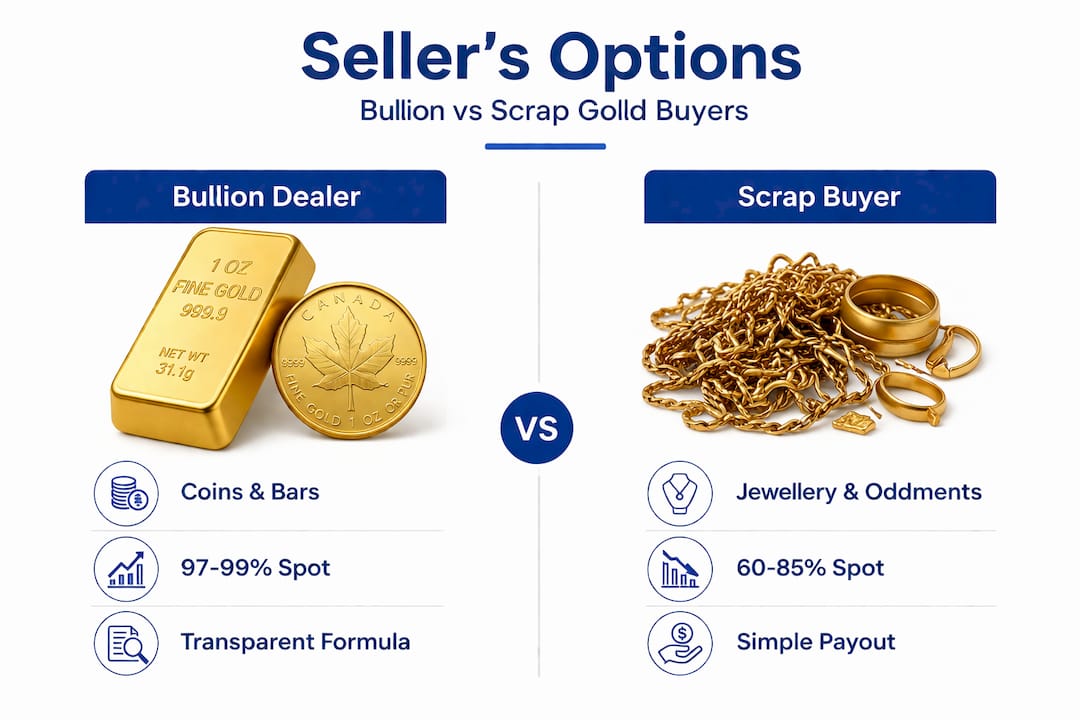
The numbers speak for themselves. Selling Sovereigns to a bullion dealer at 97 to 99% of spot is an entirely different proposition to taking them to a scrap buyer at 60 to 80%. On a single Sovereign worth around £400 at spot, that difference could be £70 to £150. On a larger collection, it’s genuinely significant money.
Here’s a quick checklist when evaluating any buyer:
- Do they display their buy prices publicly?
- Do they explain the calculation clearly?
- Are they registered and regulated?
- Do they offer to test your gold in front of you?
- Are there any hidden fees or commission charges?
If the answer to most of those is “no” or “I don’t know,” keep looking. For a thorough breakdown of your options, the guide on where to sell gold covers the landscape well. And if you want specific tactics for squeezing a better offer out of any buyer, the tips for best price when selling gold resource is genuinely practical.
How to avoid common pitfalls and maximise your gold’s sale value
Even people who’ve done their research make avoidable mistakes. Here are the most common ones, and exactly how to sidestep them.
-
Not checking hallmarks first. Before any sale conversation happens, look at your gold under good light with a magnifying glass. Understand what the stamps mean. As noted earlier, hallmarks are legally required on items over 1 gram in the UK. If a buyer doesn’t acknowledge or check them, that tells you something.
-
Accepting the first offer. This is probably the most expensive mistake UK sellers make. Get at least three quotes from different buyer types. It takes an afternoon, but it can add hundreds of pounds to your payout. Seriously.
-
Not knowing the spot price before you go. Gold spot prices are freely available online and update throughout the day. Check the price on the morning you sell. This gives you a benchmark to assess any offer against. If spot is £60 per gram and someone’s offering you £20 per gram for 18 carat gold (which is 75% pure, so £45 per gram in pure gold terms), you know immediately that’s a bad deal.
-
Selling jewellery with antique or designer value as scrap. Some pieces are worth considerably more than their melt value. A vintage Cartier bracelet or a Georgian mourning ring has collector value on top of gold content. Selling it as scrap is like binning a first edition because you needed shelf space.
-
Falling for high-pressure tactics. “This offer expires today” is classic pressure selling. Legitimate buyers don’t need to rush you. Take your time.
Pro Tip: Photograph your items before any sale. Note the weight yourself. Keep records. If something feels off, trust that instinct.
For specific guidance on getting the absolute best offer, getting the best price for your gold has you covered with actionable steps. It’s also worth knowing how to tell real gold from imitations before you even think about selling. A guide on spotting fake gold is incredibly useful here because some items that look gold simply aren’t, and some buyers will use that ambiguity against you. And to round it out, the article on avoiding gold selling scams is honestly required reading before you approach any buyer you haven’t used before.
The uncomfortable truth about selling gold in the UK
Here’s something most guides won’t say directly: the gold selling market in the UK relies on seller ignorance. Not entirely, and not every buyer is a villain. But the gap between what your gold is worth and what you’re offered is often filled by the assumption that you don’t know any better.
The sellers who walk away with the best prices are almost always the ones who did a bit of homework first. Not hours of it. Just enough to know their carat, know their weight, and know the spot price that morning. That alone puts you in a different category from most sellers.
We’ve seen it time and again. Someone comes in convinced they’re sitting on a small fortune, only to find their “gold” chain is gold-plated brass. Or the opposite: someone who nearly took a scrap offer on a piece of antique gold that was worth three times the melt value to the right buyer. Both situations are avoidable with basic knowledge.
The transparency gap is real, but it’s narrowing. More reputable buyers are now showing their calculations openly, because they know informed sellers will simply go elsewhere if they don’t. Demand that transparency every single time. It’s not rude. It’s your money.
The sellers who invest even a modest amount of time into understanding what they have and who they’re selling to consistently get 10 to 30% more than those who don’t. That’s not a small number. On a collection worth £500 at melt, that’s £50 to £150 extra in your pocket just for doing a bit of reading.
The uncomfortable truth is that urgency is the enemy of a good sale. If you need to sell quickly because you’re short of cash this week, you will almost certainly accept less than your gold is worth. If you can take a few days to get multiple valuations and understand the market, you’ll be in a much stronger position. That’s just reality.
Get expert support for selling your gold
Ready to sell your gold with actual clarity rather than guesswork? Blackwell Jewellers has been helping people across Kent and the rest of the UK understand and sell their gold fairly for over 20 years. We’re not a faceless online portal or a drive-through scrap operation.

Our team provides honest, transparent valuations and will walk you through every step of the calculation so you know exactly what you’re being offered and why. We also offer a full range of second hand jewellery services alongside expert jewellery repairs and trusted pawnbroking expertise for those who need a flexible short-term solution. Whether you’re clearing out an old jewellery box or selling a serious collection, we treat every customer with the same straightforwardness and respect. Come and see us in Maidstone, Gravesend or Bexleyheath, or get in touch online.
Frequently asked questions
What percentage of the spot price do most gold buyers pay in the UK?
Bullion dealers typically pay 97 to 99% of spot for investment items like Sovereigns, while scrap gold buyers generally offer 60 to 80% of the spot price for jewellery and broken pieces.
Do I need to pay tax on gold I sell in the UK?
Personal gold sales under £6,000 are generally exempt from capital gains tax, meaning most casual sellers in the UK won’t owe anything to HMRC on a straightforward gold sale.
What is a hallmark and why does it matter when selling gold?
A hallmark is a stamp that confirms the purity of a gold item, and in the UK hallmarks are legally required on items over 1 gram to protect both buyers and sellers from fraud and misrepresentation.
Should I clean my gold before selling it?
A gentle clean with warm soapy water and a soft cloth is absolutely fine and helps buyers assess the item clearly, but avoid harsh chemicals or abrasive materials that could damage hallmarks or the metal itself.
How can I avoid getting scammed when selling gold?
Always verify hallmarks, get at least three quotes from different buyer types, and only deal with reputable, transparent buyers who show you their calculation in full before you agree to anything.
Recommended
- Top Tips for Getting the Best Price When Selling Your Gold – blackwellonline
- How to value your gold in the UK: get the best price – blackwellonline
- Best Way To Sell Gold Jewellery in the UK (2025 Guide) – blackwellonline
- How to Value Your Gold at Home (UK Edition) – blackwellonline
- What Is Authentic Gold? Purity, Hallmarks, and Smart Buying – Baker Gold Chains