

TL;DR:
- Gold value varies based on purity, weight, and current market price.
- Comparing multiple reputable buyers ensures you get the best price for your gold.
- Proper preparation and understanding key factors help maximize your payout.
Most people assume a gold ring is a gold ring. Same metal, same worth. But that belief can cost you hundreds, sometimes thousands, of pounds when you come to sell. The reality is that gold’s value shifts daily with global markets, varies dramatically depending on purity, and changes again depending on where and how you choose to sell. Many UK residents walk away from a sale having accepted far less than their gold was genuinely worth, simply because they didn’t know what to look for. This guide will walk you through every key factor, from karat ratings to selling channels, so you can approach any gold transaction with confidence and clarity.
Table of Contents
- Key factors influencing your gold’s value
- How to calculate your gold value step-by-step
- Where and how to sell gold in the UK for the best price
- Common pitfalls and how to maximise your payout
- What most sellers miss about gold valuation in the UK
- Get expert gold valuation and best offers in the UK
- Frequently asked questions
Key Takeaways
| Point | Details |
|---|---|
| Gold value depends on purity | Different karats and weights mean your gold is worth more or less depending on its quality. |
| Comparing selling options matters | Where and how you sell gold impacts how much money you get—always review multiple options. |
| Avoid common pitfalls | Prepare, compare, and know your gold’s details to prevent undervaluation and maximise payout. |
| Professional appraisals boost accuracy | Expert UK appraisals help ensure your gold is valued fairly and transparently. |
Key factors influencing your gold’s value
Gold is not a single, uniform commodity. Two pieces of jewellery that look identical on a display tray can carry very different values, and understanding why is the foundation of getting a fair deal. As outlined in our UK valuation guide 2026, gold value depends on purity, weight, and market price. These three elements work together, and missing any one of them means your estimate will be off.
Gold purity (karats) is the most misunderstood factor. Pure gold is 24 karat (24ct), but most jewellery is an alloy, meaning it’s mixed with other metals for durability. A 9ct piece contains 37.5% pure gold, while an 18ct piece contains 75%. The higher the karat, the more pure gold per gram, and the higher the value.
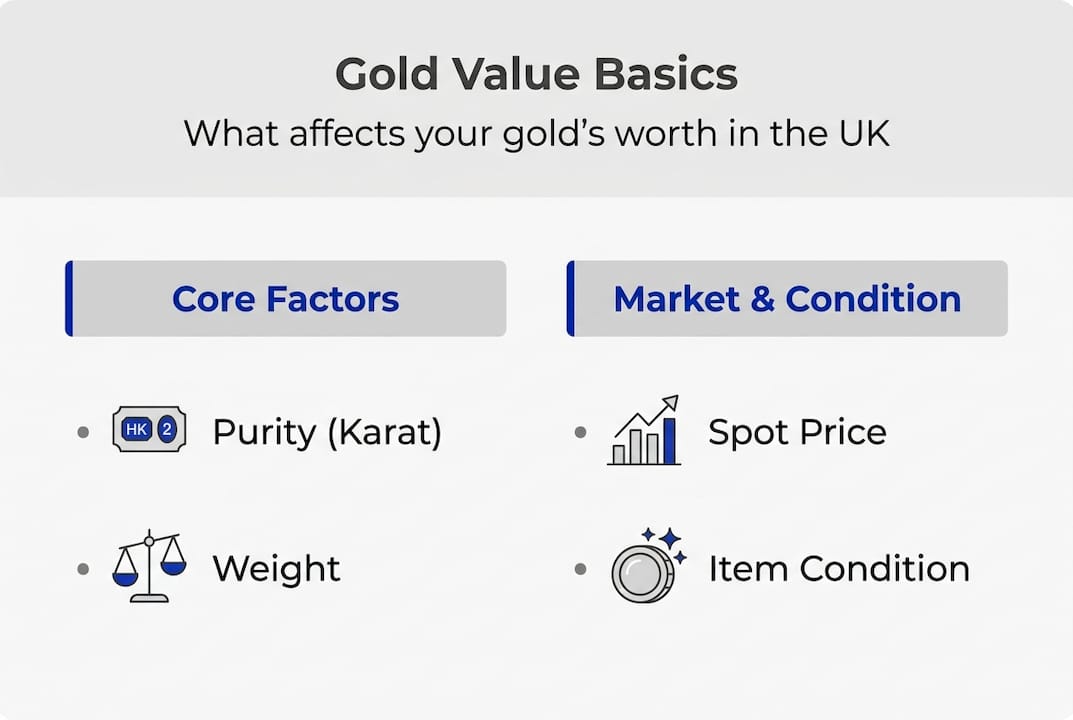
Weight in grams is the second variable. Even a high-purity piece won’t command much if it’s lightweight. Buyers calculate value by multiplying the pure gold content by the current spot price per gram.
The live market price, often called the spot price, fluctuates every trading day based on global demand, currency movements, and geopolitical events. A quote you received last month may be meaningfully different from today’s figure.
Item condition and design also play a role. Damaged pieces may be valued purely for melt value, while intact, hallmarked, or antique jewellery can attract a premium above the raw metal price.
Here’s a quick reference for common UK gold purities:
| Karat | Purity (%) | Typical use |
|---|---|---|
| 9ct | 37.5% | Everyday jewellery |
| 14ct | 58.5% | Mid-range pieces |
| 18ct | 75.0% | Fine jewellery |
| 22ct | 91.6% | High-value pieces |
| 24ct | 99.9% | Bullion, coins |
For a deeper look at valuing gold at home before visiting a buyer, it helps to understand these figures first.
Pro Tip: Always check the live gold spot price on the morning of your sale. Prices can shift by several pounds per gram within a single week, which adds up quickly on heavier pieces.
How to calculate your gold value step-by-step
Understanding the factors is only the first step. Here’s how you can apply them to valuing your gold, whether at home or with a professional.
As a starting point, UK residents can estimate their gold value at home with basic tools, which makes home assessment a sensible first move before approaching any buyer.
- Weigh your gold using a precise digital scale. Kitchen scales are often not accurate enough. Look for a jeweller’s scale that measures to 0.01 grams.
- Identify the karat marking on your piece. Most UK jewellery carries a hallmark, usually stamped inside a ring band or on a clasp. Common marks include 375 (9ct), 585 (14ct), and 750 (18ct).
- Calculate the pure gold weight by multiplying the total weight by the purity percentage. For example, a 10-gram 18ct piece contains 7.5 grams of pure gold.
- Find the current spot price per gram in pounds sterling from a reputable UK bullion site.
- Multiply the pure gold weight by the spot price to get the melt value. This is the baseline. A buyer’s offer will typically be a percentage of this figure.
Here’s how home valuation compares to a professional appraisal:
| Method | Accuracy | Cost | Speed |
|---|---|---|---|
| Home estimate | Moderate | Free | Immediate |
| Online calculator | Moderate | Free | Immediate |
| Professional appraisal | High | Varies | Same day |
| Certified valuation | Very high | Fee applies | 1 to 3 days |
For a precise figure on UK gold valuation per gram, cross-referencing your home estimate with a professional quote is always worthwhile.
Pro Tip: Use a dedicated jeweller’s digital scale and cross-reference two reputable UK gold price websites before settling on a baseline figure. Small discrepancies in weight or purity readings can translate into significant differences in your final payout.
Where and how to sell gold in the UK for the best price
Once you know your gold’s value, the next challenge is choosing where and how to sell for the highest returns.
The best price for gold depends on where and how you sell it, and the difference between channels can be surprisingly large. Here’s a breakdown of the main options:
- High-street jewellers: Often offer fair prices, particularly for hallmarked or antique pieces. Established businesses with physical premises tend to be more transparent and accountable.
- Pawnbrokers: Useful for quick cash, though the offer is typically lower than a specialist gold buyer. Useful if speed is your priority.
- Online gold buyers: Convenient and sometimes competitive, but always verify their reputation, read customer reviews, and confirm their buyback rates before posting anything.
- Auction houses: Best suited for rare, antique, or designer pieces where the design adds value beyond the metal content. Fees and timelines apply.
According to industry data, the UK second-hand gold market continues to grow, with more consumers recognising the financial value locked in unworn jewellery. Sellers who compare at least three offers consistently achieve better outcomes than those who accept the first quote.
For guidance on finding the best place to sell gold jewellery, reputation and transparency should sit at the top of your checklist. Equally, understanding the nuances of getting the best price for gold means knowing which channel suits your specific piece.
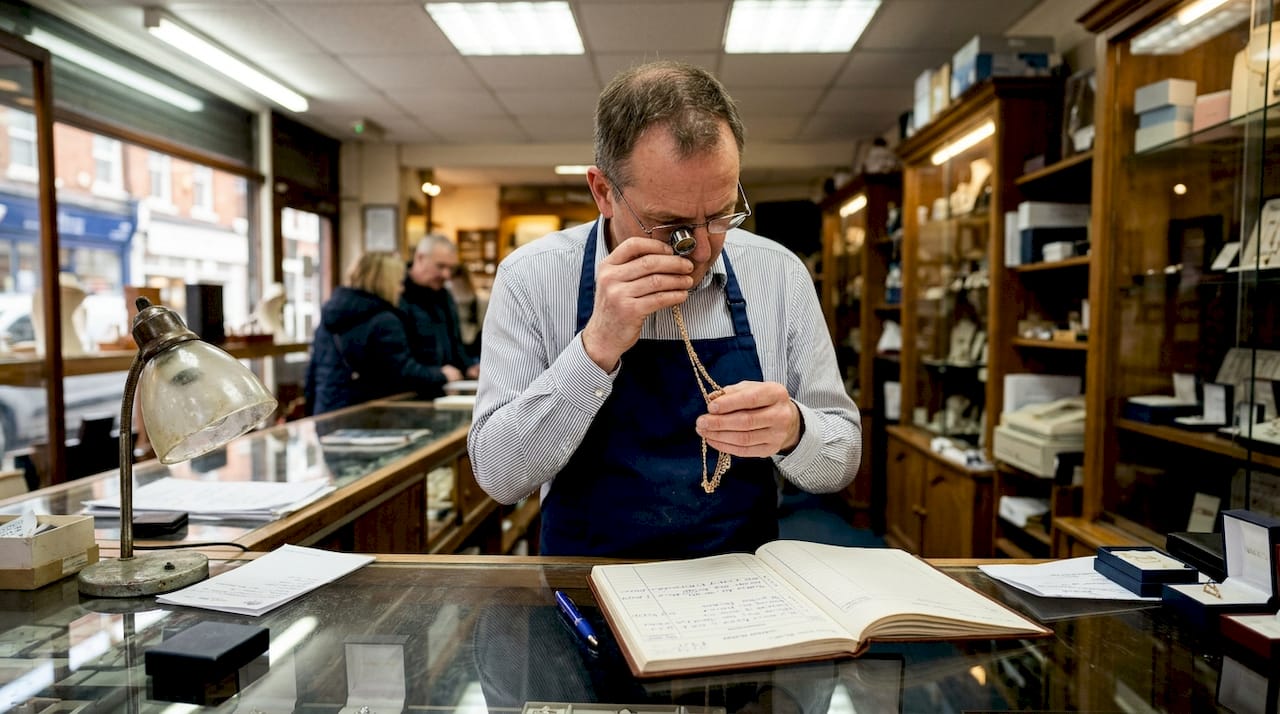
Always confirm that any buyer is registered and operates within UK trading standards. Unverified buyers, whether online or in person, carry real risks of undervaluation or outright fraud.
Common pitfalls and how to maximise your payout
Even after finding where to sell, it’s vital to avoid common mistakes and use proven strategies to get the highest payout.
Many sellers risk undervaluation through rush sales or missing paperwork, and these errors are far more common than most people realise. Here are the pitfalls to watch for:
- Rushing the sale: Accepting the first offer without comparison is the single most common mistake. Even a few hours of research can yield a meaningfully higher return.
- Selling to unverified buyers: Unlicensed or unreviewed buyers may use inaccurate scales or misrepresent purity to lower their offer.
- Ignoring documentation: Original receipts, certificates of authenticity, or hallmark records can increase a buyer’s confidence and your negotiating position.
- Overlooking item type: A piece with strong design provenance or antique status may be worth more intact than melted. Always ask whether the buyer values the piece as jewellery or purely for its metal content.
- Not understanding the offer percentage: Most buyers offer a percentage of the melt value, typically between 70% and 90%. Knowing this in advance helps you evaluate whether an offer is fair.
To maximise your payout, bring your gold clean and organised. Have the karat markings visible, and carry any documentation you have. Visit or contact at least three reputable buyers before committing. If a buyer won’t explain how they’ve calculated their offer, walk away.
For guidance on where to sell gold UK and how to compare options effectively, a little preparation goes a long way.
Pro Tip: Request a written breakdown of how any offer was calculated. A trustworthy buyer will always be willing to show you the weight, purity, and spot price they’ve used. If they hesitate, that tells you something important.
What most sellers miss about gold valuation in the UK
Here’s something we’ve observed over more than 20 years in the jewellery trade: even sellers who’ve done their research often leave money on the table. Not because they’re uninformed, but because they underestimate how much the process matters.
Most people focus on the gold itself and forget that the buyer’s confidence in you as a seller affects the offer. Walking in with clean, organised pieces, visible hallmarks, and a clear understanding of the current spot price signals that you’re not someone who can be lowballed. It changes the dynamic of the conversation entirely.
We’ve seen customers accept offers 20% below what they could have achieved simply because they didn’t compare. And we’ve seen others achieve exceptional returns because they came prepared, asked the right questions, and were willing to wait for the right buyer. Patience is genuinely worth money here.
Our home gold valuation advice exists precisely because an informed seller is a better-protected seller. The more you understand before you walk through any door, the less room there is for anyone to take advantage.
Never settle for the first offer. Seek transparency, ask for written calculations, and treat the process as a negotiation rather than a transaction.
Get expert gold valuation and best offers in the UK
Putting this knowledge into practice is far easier when you have an expert alongside you. Many reputable UK jewellers offer free, no-obligation gold appraisals, giving you a clear, honest figure before you commit to anything.

At Blackwell Jewellers, we’ve been helping UK customers understand and maximise the value of their gold for over two decades. Whether you’re in Kent or anywhere across the UK, our team offers transparent, professional appraisals backed by genuine expertise. Visit our stores in Maidstone, Gravesend, or Bexleyheath, or explore our services through our trusted UK gold valuation service online. We’ll walk you through every figure, explain every calculation, and ensure you leave with a clear picture of what your gold is genuinely worth.
Frequently asked questions
How do I find today’s gold price in the UK?
The live market price affects your gold value daily, so check reputable UK bullion or precious metals websites each morning for the most current per-gram figure before any sale.
Can I value my gold jewellery at home or do I need a professional?
Home valuation is a useful first step using scales and online pricing tools, but a professional appraisal will give you a more precise and defensible figure, particularly for higher-value pieces.
Where is the safest place to sell gold in the UK?
Safety and reputation are the key factors; established high-street jewellers and well-reviewed online gold buyers offer the most reliable and transparent selling experience.
How can I make sure I don’t get undervalued?
Comparing offers from multiple reputable UK buyers, understanding your gold’s purity, and knowing the current spot price are the three most effective ways to protect yourself from undervaluation.