

Most people worry that jewellery refurbishment will ruin a piece’s appearance or slash its value. The truth is quite different. Invisible jewellery repairs aim to restore pieces without visible signs, preserving beauty, structure and value. This guide explains how quality refurbishment works in the UK, from expert craftsmanship to hallmarking laws that guarantee authenticity. You’ll understand what to expect when choosing professional refurbishment services and why these processes protect your investment.
Table of Contents
- The Craftsmanship Behind Invisible Jewellery Repairs
- Understanding Hallmarking: Your Assurance Of Authenticity And Quality
- Balancing Beauty And Durability In Jewellery Refurbishment
- How Refurbishment Preserves Value And Promotes Sustainable Jewellery Ownership
- Discover Expertly Refurbished And Ethical Jewellery At Blackwell Jewellers
Key takeaways
| Point | Details |
|---|---|
| Invisible repairs preserve appearance | Expert jewellers use precision tools to restore pieces without visible damage, maintaining original design integrity. |
| UK hallmarking guarantees authenticity | Hallmarks verify metal purity and meet legal requirements, ensuring consumer protection and confidence in refurbished jewellery. |
| Structural integrity sometimes takes priority | Durability may occasionally require visible repairs, but skilled jewellers advise when this approach protects long-term wearability. |
| Quality refurbishment retains value | Professional repairs preserve resale and insurance value whilst supporting sustainable jewellery ownership in the UK market. |
The craftsmanship behind invisible jewellery repairs
Professional jewellers begin every refurbishment by assessing damage under magnification. They examine scratches, worn prongs, broken clasps or thinning shanks to determine the best restoration approach. This detailed inspection reveals structural weaknesses invisible to the naked eye, ensuring repairs address both cosmetic flaws and hidden vulnerabilities.
Microscopes and laser welders enable precision work that preserves original design details. Laser technology allows jewellers to target specific damaged areas without affecting surrounding metal or gemstones. This focused approach maintains the piece’s original craftsmanship, from intricate filigree patterns to delicate stone settings. Traditional methods like hand finishing and polishing complement modern tools to achieve seamless results.
The process protects resale and insurance value by maintaining visual authenticity. When repairs remain invisible, appraisers and potential buyers perceive the piece as closer to its original condition. This perception directly impacts valuation, particularly for vintage or designer items where alterations can diminish worth. Expert jewellers understand these market dynamics and work to preserve both aesthetic and financial value.
Pro Tip: Always ask your jeweller about the specific techniques they’ll use before authorising repairs. Understanding whether they’ll employ laser welding, traditional soldering or stone retipping helps you gauge the likely visibility of restoration work.
Expert judgement balances appearance with structural integrity throughout the refurbishment process. Sometimes invisible repairs aren’t structurally sound enough for pieces that endure daily wear. In these cases, skilled craftspeople recommend slightly visible reinforcements that extend the jewellery’s lifespan. This honesty prevents future damage and builds trust between jeweller and customer.
Avoid common jewellery repair mistakes by choosing experienced professionals who prioritise both beauty and durability. The right craftsperson will explain trade-offs clearly and help you make informed decisions about your treasured pieces.
Understanding hallmarking: your assurance of authenticity and quality
Hallmarking verification in the UK dates back over 700 years, making it one of the world’s oldest consumer protection systems. Edward I established the practice in 1300 to prevent fraudulent precious metal sales. Today’s hallmarking standards continue this tradition, ensuring every marked piece meets strict purity requirements verified by independent assay offices.
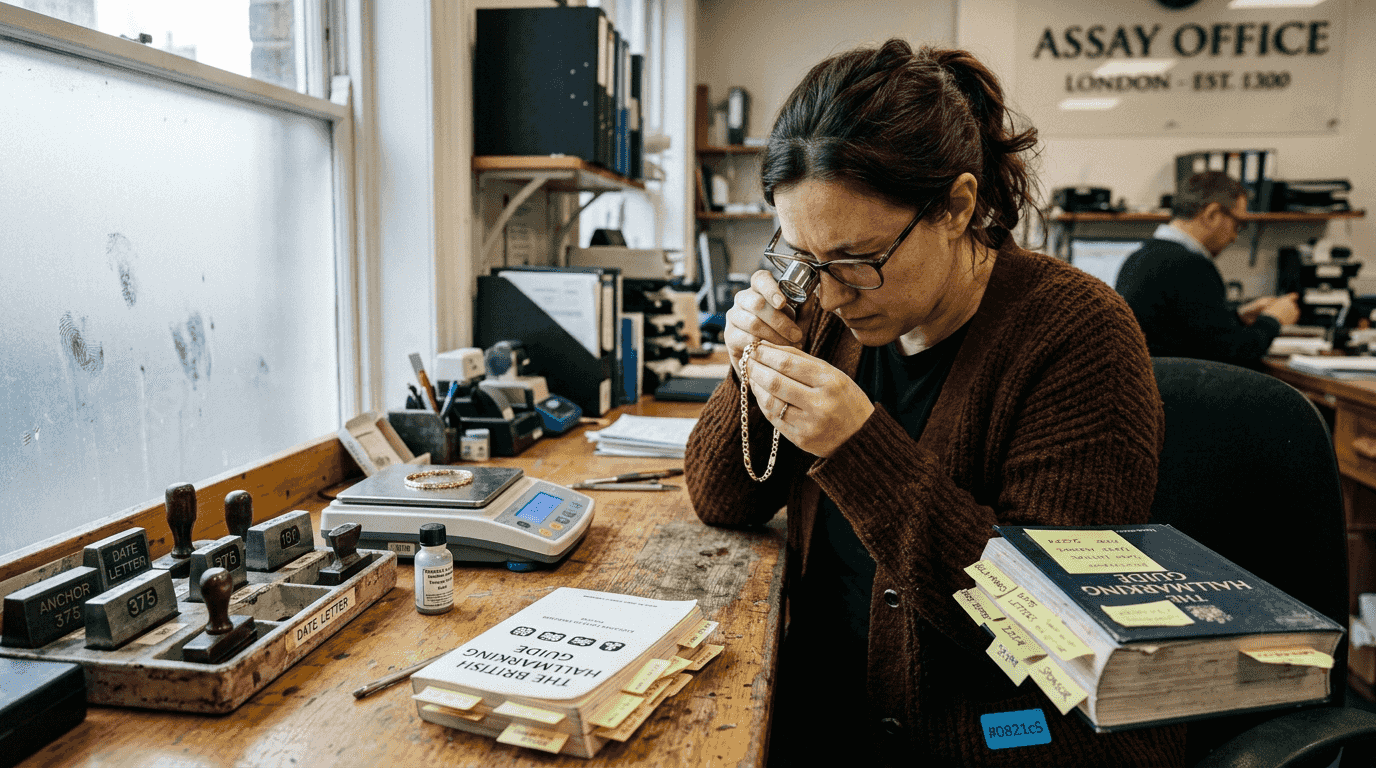
Hallmarks verify metal purity through a series of stamps that act as a guarantee of authenticity. Each hallmark includes the sponsor’s mark identifying the manufacturer or seller, the metal type mark showing the precious metal, the purity mark indicating fineness, and the assay office mark confirming where testing occurred. These combined marks provide complete transparency about a piece’s composition and origin.
Legal thresholds for hallmarking differ by metal type in the UK. Items containing at least 1 gram of gold, 0.5 grams of platinum, 7.78 grams of silver or 0.5 grams of palladium require hallmarking before sale. These thresholds ensure meaningful consumer protection whilst exempting minor decorative elements.
The Hallmarking Act 1973 sets requirements for precious metal articles and forbids describing unhallmarked items as precious metal. This legislation protects consumers from misleading claims and creates accountability throughout the jewellery industry. Penalties for non-compliance include fines and prosecution, incentivising rigorous adherence to hallmarking standards.
| Metal Type | Minimum Weight Requiring Hallmark | Common Purity Marks |
|---|---|---|
| Gold | 1 gram | 375, 585, 750, 916, 990, 999 |
| Platinum | 0.5 grams | 850, 900, 950, 999 |
| Silver | 7.78 grams | 800, 925, 958, 999 |
| Palladium | 0.5 grams | 500, 950, 999 |
Hallmarking impacts valuation and consumer confidence when buying refurbished jewellery. Pieces with clear, authentic hallmarks command higher prices because buyers trust verified quality. Insurance companies also rely on hallmarks when assessing coverage and claims. Understanding hallmarks as a beginner empowers you to make informed purchases and recognise genuine precious metals.
For comprehensive information, explore the complete guide to jewellery hallmarks in the UK to understand exactly what you’re buying and why these marks matter.
Balancing beauty and durability in jewellery refurbishment
Structural soundness sometimes outweighs cosmetic perfection in repair decisions. A worn ring shank might need reinforcement that creates a slight colour variation where new metal joins old. Whilst aesthetically less ideal, this approach prevents future breakage and protects gemstones from falling out. Experienced jewellers recognise when durability must take precedence over invisible aesthetics.
Trusted jewellers provide guidance on when repairs must prioritise longevity over appearance. They’ll explain the risks of purely cosmetic fixes that might fail within months. This transparency helps you understand trade-offs and choose repairs aligned with how you’ll wear the piece. Daily wear items often benefit from stronger, occasionally visible repairs compared to occasional wear jewellery where invisibility matters more.
Customers should receive clear information about potential visible repairs before work begins. Professional jewellers show examples, discuss alternative approaches and explain cost implications of different techniques. This consultation process ensures you’re never surprised by results and can authorise the repair method that best suits your priorities and budget.
Pro Tip: Ask to see before and after photos of similar repairs your jeweller has completed. This visual reference helps set realistic expectations and demonstrates their capability to balance beauty with structural integrity.
“Invisible repairs are not always ideal if structural integrity is compromised; durability can take priority over appearance to ensure your jewellery lasts for generations.”
Communication between customer and craftsman proves essential for achieving optimal outcomes. Share how often you’ll wear the piece, your activity level whilst wearing it, and your budget constraints. This information helps jewellers recommend appropriate repair approaches. You might discover that a slightly visible but permanent repair better serves your needs than a beautiful but fragile invisible fix.
Learn about in-store jewellery repair services to understand what craftspeople can accomplish and how consultations work. Direct conversations with skilled jewellers reveal possibilities you might not have considered and help preserve both beauty and functionality.
How refurbishment preserves value and promotes sustainable jewellery ownership
Quality refurbishment enhances a pre-owned piece’s lifespan whilst maintaining market value. Professional repairs address wear patterns that naturally occur over years or decades of use. By restoring structural integrity and aesthetic appeal, refurbishment transforms tired pieces into jewellery that looks and functions like new. This transformation protects your financial investment whilst extending wearable life.
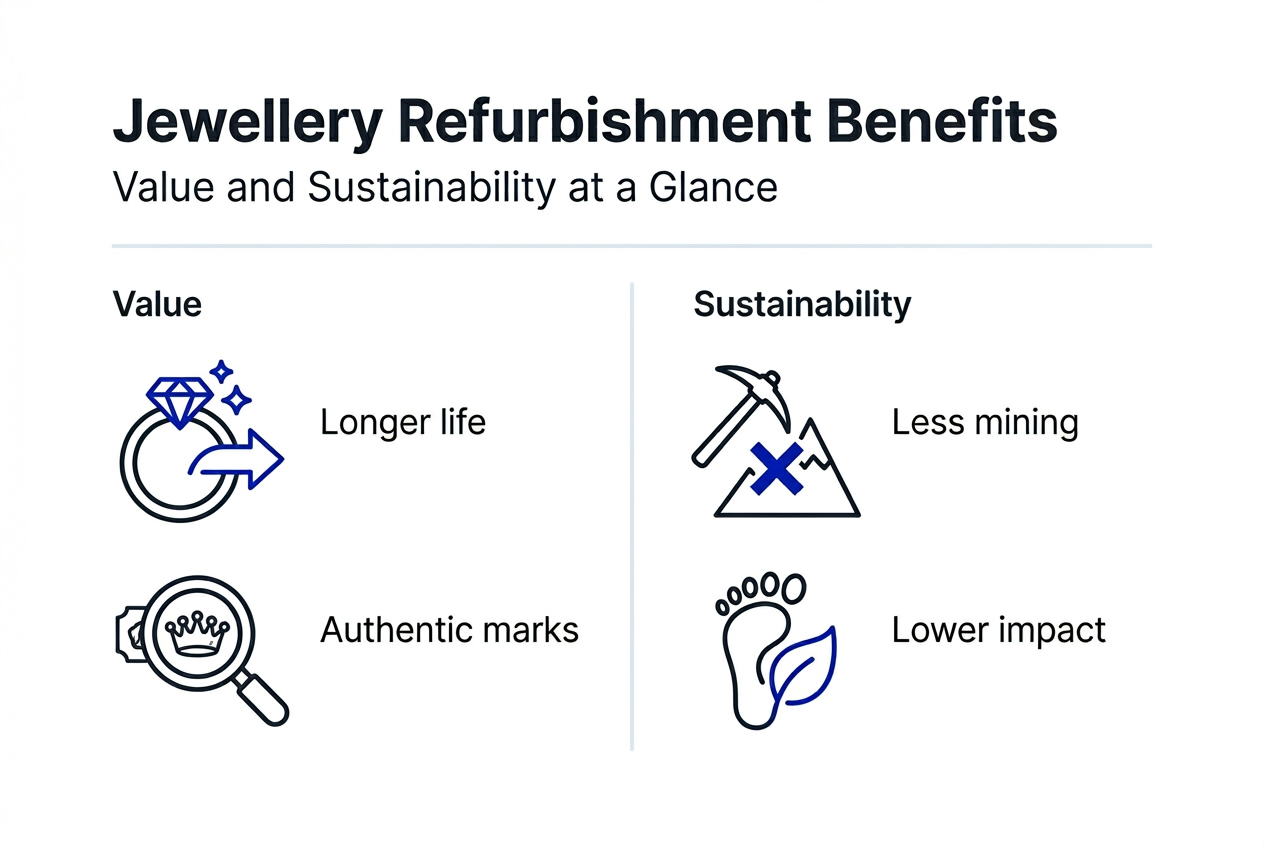
Hallmark presence remains critical for verified quality and accurate pricing. Buyers pay premium prices for hallmarked pieces because these marks eliminate guesswork about metal content. When you upgrade jewellery with hallmarked pieces, you’re investing in transparent quality that holds value better than unmarked alternatives. Appraisers and insurance companies similarly rely on hallmarks for valuations.
Sustainable purchasing reduces environmental impact compared to mining new precious metals. Gold mining generates approximately 20 tonnes of waste rock per single wedding ring. Silver and platinum extraction create similar environmental burdens. Choosing refurbished jewellery eliminates this destructive extraction whilst still providing beautiful, high-quality pieces. You enjoy luxury without contributing to habitat destruction or pollution.
| Aspect | Refurbished Jewellery | New Jewellery |
|---|---|---|
| Environmental impact | Minimal; reuses existing metals | Significant mining waste and habitat disruption |
| Price | Typically 30-50% lower | Full retail pricing |
| Authenticity verification | Hallmarks confirm metal purity | Hallmarks on new pieces above legal thresholds |
| Availability of vintage designs | Access to discontinued styles and periods | Limited to current collections |
| Value retention | Maintains resale value with quality repairs | Depreciates from retail price once purchased |
Refurbished jewellery meets growing ethical consumer demand across the UK market. Modern buyers increasingly prioritise sustainability and responsible sourcing. Purchasing pre-owned pieces aligns with these values whilst offering financial advantages. You’re choosing conscious consumption without sacrificing quality or beauty.
The comparison between refurbished and new jewellery highlights tangible benefits beyond environmental considerations. Refurbished pieces often feature superior craftsmanship from earlier eras when hand-finishing and attention to detail were standard. You can access vintage designs no longer in production whilst supporting circular economy principles that reduce waste and resource consumption.
Discover expertly refurbished and ethical jewellery at Blackwell Jewellers
Now that you understand how professional refurbishment preserves beauty, authenticity and value, it’s time to explore pieces that embody these principles. Blackwell Jewellers specialises in hallmarked pre-owned and second-hand jewellery, with each item rigorously inspected, authenticated and restored by expert craftspeople before sale.

Our Kent-based workshops combine over 20 years of established trading with in-house workmanship that ensures lasting quality. Whether you’re seeking refurbished vintage pieces or new sustainable options like our ethical diamond ring collection, you’ll find transparent provenance and verified hallmarking throughout our selection. We provide the accountability and craftsmanship expertise discussed in this guide, making us a trusted choice for jewellery purchase and refurbishment across the UK.
FAQ
How long does jewellery refurbishment usually take?
Typically between a few days to several weeks depending on repair complexity and current workshop schedules. Invisible repairs requiring precision laser work or intricate stone setting might need additional time for meticulous craftsmanship. Your jeweller should provide a realistic timeframe after assessing the piece.
Is hallmarking mandatory for all precious metal jewellery in the UK?
Hallmarking is legally required for items containing at least 1 gram gold, 0.5 grams platinum, 7.78 grams silver or 0.5 grams palladium. Items below these thresholds are exempt from mandatory hallmarking. This system ensures consumer protection for meaningful precious metal purchases whilst exempting minor decorative elements.
Can all broken jewellery be restored to its original condition?
Not all jewellery can be invisibly repaired depending on damage severity and structural requirements. Skilled jewellers advise when visible repairs improve longevity over purely cosmetic fixes that might fail quickly. Extensive damage sometimes necessitates partial reconstruction that leaves subtle evidence of restoration work.
Does refurbishment affect jewellery insurance coverage?
Professional refurbishment typically maintains or enhances insurance coverage when properly documented. Insurance companies value pieces based on condition, so quality repairs that restore structural integrity and appearance support accurate valuations. Always inform your insurer about significant repairs and request updated appraisals for valuable pieces.
How can I verify a jeweller’s refurbishment expertise?
Request examples of previous refurbishment work, ask about specific techniques they use, and check for professional affiliations or qualifications. Established jewellers willingly share their process and show before-and-after photos. Look for transparency about when invisible repairs aren’t feasible and clear communication about expected outcomes and timeframes.