

TL;DR:
- Ring resizing in England usually takes between one and seven days, depending on the ring’s material and design. Metals like silver and gold are quicker to resize, while platinum and intricate stone-set designs require longer. Sizing down is generally faster and less costly than sizing up, especially for complex or antique rings.
Ring resizing is the process of adjusting a ring’s diameter by adding or removing metal, then refinishing the piece to restore its original appearance. At most jewellers in England, the ring resizing duration ranges from same-day service to around seven working days, depending on the metal, design, and the direction of the size change. Blackwelljewellers, with over 20 years of experience in Kent, handles resizing across gold, silver, and platinum pieces through in-house goldsmiths. Knowing what affects the jewellery resizing timeframe before you book saves you from nasty surprises, especially when a birthday or wedding is looming.
How long does ring resizing take at a jewellers?
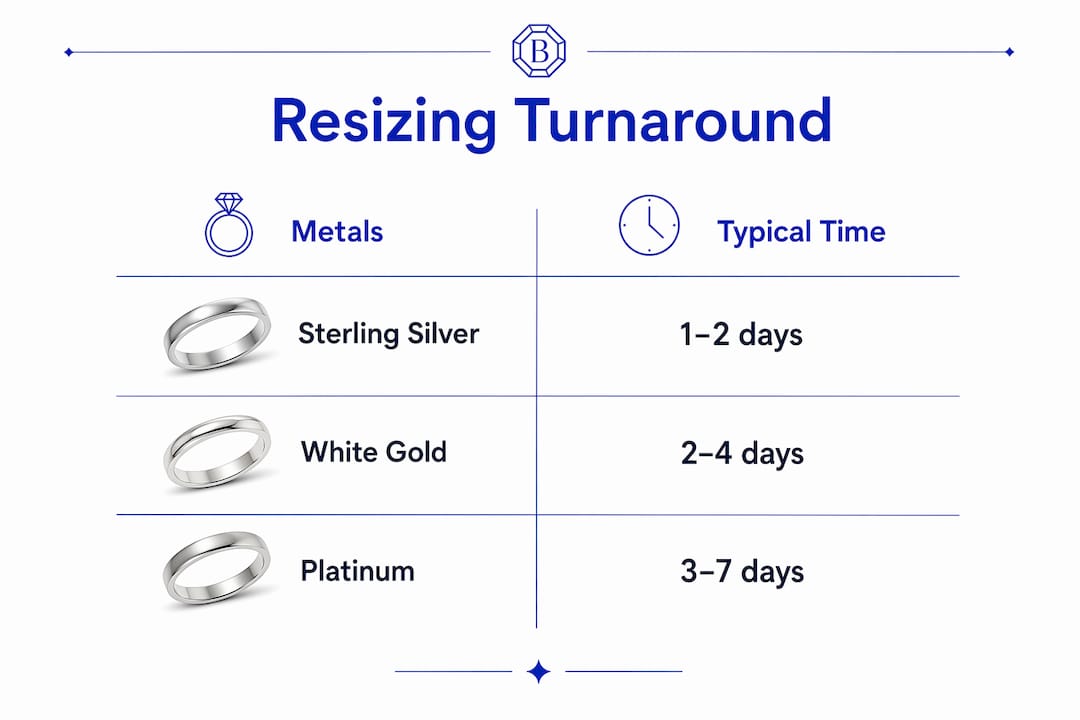
The short answer: anywhere from a few hours to a week. The honest answer: it depends on what your ring is made of, how complex the design is, and whether you need it bigger or smaller. Typical UK turnaround times in 2026 run as follows: sterling silver takes 1–2 days, yellow gold 1–3 days, white gold 2–4 days (including rhodium re-plating), and platinum 3–7 days due to the specialist work involved. That platinum figure surprises people. It should not. Platinum is denser and harder than gold, which means it requires more heat, more time, and a higher level of finishing skill.
The industry term for this service is “ring alteration” or “ring adjustment,” though most customers and jewellers simply call it resizing. Both terms are correct, and you will hear them used interchangeably at the counter.
Does ring material affect the resizing timeframe?
Yes, significantly. The metal your ring is made from is the single biggest factor in how fast the job gets done.
| Metal | Typical turnaround | Notes |
|---|---|---|
| Sterling silver | 1–2 days | Soft metal, straightforward soldering |
| Yellow gold | 1–3 days | Common, well-understood process |
| White gold | 2–4 days | Requires rhodium re-plating after resize |
| Platinum | 3–7 days | Specialist finishing, higher heat required |
White gold deserves a special mention here. The white colour comes from rhodium plating applied over a yellow or pale gold alloy. When a jeweller cuts and solders the shank, that plating gets disrupted. Re-plating white gold adds both days and cost to the process. Budget for it upfront rather than being caught off guard at collection.
Pro Tip: If your white gold ring needs resizing, ask the jeweller to re-plate the entire band, not just the altered section. A partial re-plate looks patchy within weeks.
For a deeper look at how different metals behave during alteration, the opal ring sizing workflow from Australian Opal Direct offers a useful specialist perspective on maintaining ring integrity across different materials.
Does ring design affect how long resizing takes?
Absolutely. A plain court band in yellow gold is about as straightforward as resizing gets. A full eternity ring set with diamonds around the entire shank is a different matter entirely.
Here is what adds time to the ring alteration process:
- Continuous stone settings. Full eternity rings cannot be resized in the traditional sense. Stones run all the way around, leaving no plain section to cut. Jewellers may need to rebuild the setting or suggest alternatives.
- Engraving and milgrain borders. Cutting through decorative edges means the pattern must be restored by hand after soldering. That takes skill and time.
- Tension settings. The stone is held in place by the pressure of the metal band itself. Resizing changes that tension, which risks the stone becoming loose or falling out.
- Antique and vintage pieces. Older rings often have thinner shanks and more fragile settings. A jeweller will spend more time on assessment and proceed more cautiously. Blackwelljewellers specialises in vintage ring restoration and understands the extra care these pieces demand.
- Bespoke or unusual alloys. Custom pieces may use non-standard metal blends that behave differently under heat.
Simple plain bands can often be turned around same day or next day. Intricate or stone-set designs require more time due to delicate work and safety checks. Experts recommend scheduling around key event dates to avoid delays. That is genuinely good advice. Do not book a resize two days before a wedding anniversary and expect miracles.
Sizing down vs sizing up: which takes longer?
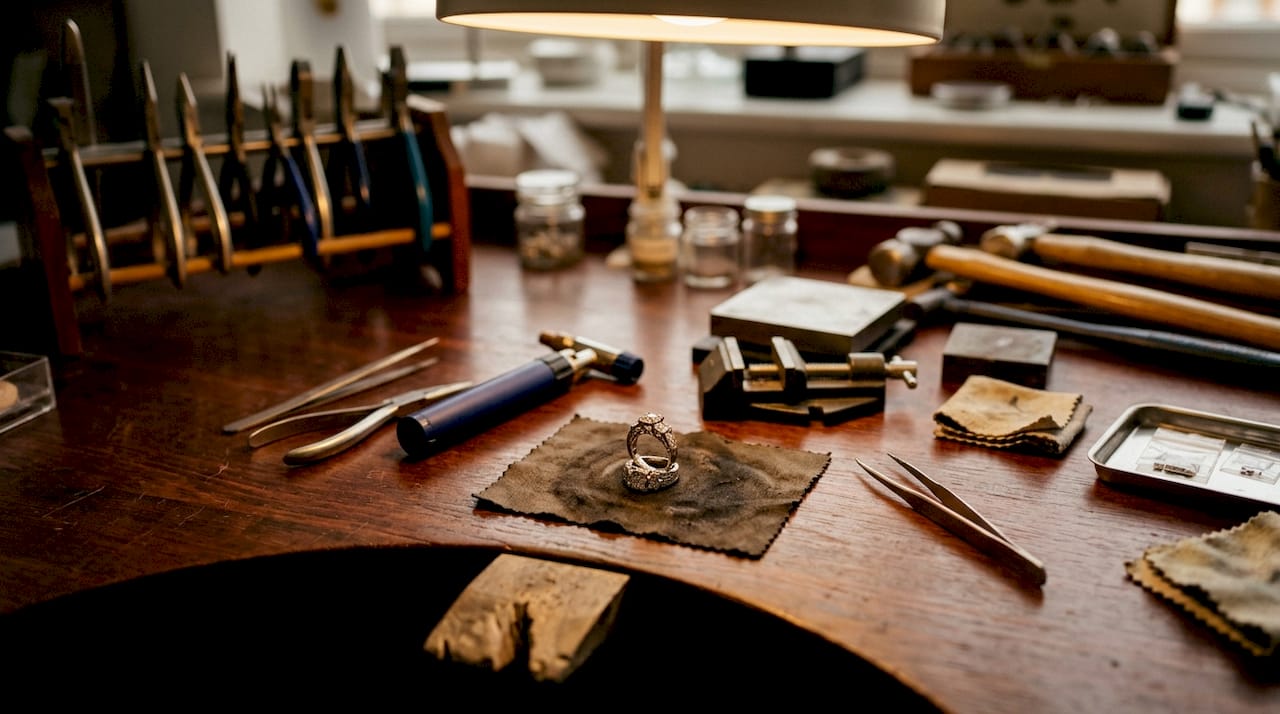
Making a ring smaller is quicker than making it larger. That is not an opinion; it is just how the physics works.
Sizing down
Resizing down involves cutting a section out of the shank, bringing the two ends together, soldering them, and polishing the join. Typical turnaround is 1–3 working days, with costs ranging from £20 to £45 depending on the metal. The process is clean and relatively contained.
Sizing up
Resizing up requires adding a piece of metal to the shank, matching the colour and finish of the original, then soldering, shaping, and polishing the whole band. That colour matching is where things get tricky, particularly on older rings where the metal has developed a patina. Typical turnaround is 2–5 working days, with costs from £30 to £80. Platinum sizing up sits at the longer end of that range.
| Direction | Typical time | Typical cost |
|---|---|---|
| Sizing down | 1–3 working days | £20–£45 |
| Sizing up | 2–5 working days | £30–£80 |
| Platinum (either direction) | 3–7 working days | Higher, confirm with jeweller |
Pro Tip: When buying a ring that sits between two sizes, size up rather than down. Removing metal is always easier than adding it, and you preserve more of the original shank.
There are also limits on how much a ring can safely be resized. Most jewellers will not go beyond two full sizes in either direction without advising structural reinforcement or, in some cases, recommending a replacement shank entirely.
What else affects the total turnaround time?
The metal and design are the big variables, but several other factors influence the ring size change duration in practice.
-
Workshop capacity. A busy jeweller with a full bench will take longer than one with a clear schedule. In-house workshops, like those at Blackwelljewellers, generally turn work around faster than shops that send pieces off-site to a third-party goldsmith.
-
Seasonal demand. Wedding season from may through august and the Christmas period push resizing volumes up sharply. Jewellers experience higher workloads during these periods, which extends timelines. If you need a ring resized for a summer wedding, book in spring.
-
Rush services. Same-day resizing is available at some independents for an additional fee, usually £10–£20. Availability varies by store and ring type. Always call ahead to confirm whether your specific ring qualifies.
-
Off-site specialists. Some high street shops do not have an on-site goldsmith. They send work to a central workshop, which adds days to the process. Always ask whether the work is done in-house before you hand over your ring.
-
Communication of deadlines. Tell your jeweller upfront when you need the ring back. A good jeweller will tell you honestly whether that deadline is achievable. If they say it is tight, believe them.
For a broader look at how repair and resizing timelines work across different services, the jewellery repair timeline guide from Blackwelljewellers breaks down the key variables clearly.
What should you expect during the resizing process?
The resizing process is not just cutting and soldering. A professional jeweller runs through several checks before and after the work.
- Initial assessment. Professional jewellers assess fit, metal condition, and stone security before starting. This consultation affects the timeline but is non-negotiable for quality work.
- Size change limits. The jeweller will advise if your requested change exceeds safe limits for the ring’s current condition.
- Stone security checks. Every stone is checked before and after resizing. Loose stones get tightened before the main work begins.
- Structural inspection. Repeated resizing thins the shank and increases the risk of bending or stone loss. A jeweller may recommend reinforcement for rings that have been altered before.
- Post-resize finishing. Polishing, re-plating (where applicable), and a final quality check all happen after the structural work. This finishing stage is where the ring gets its wearable condition back.
- Follow-up adjustments. Fingers change size with temperature and weight fluctuations. A minor follow-up tweak is not unusual, particularly for rings sized during winter months.
The resizing process involves cutting or adding metal, reshaping the band, soldering, finishing the surface, and checking stone security. Intricate rings with tension settings or full diamond bands may require alternative solutions rather than traditional resizing.
Key takeaways
Ring resizing at a jewellers in England typically takes 1–7 working days, with the metal type, design complexity, and direction of the size change being the three factors that determine where in that range your ring will fall.
| Point | Details |
|---|---|
| Turnaround by metal | Silver takes 1–2 days; gold 1–3; white gold 2–4; platinum 3–7 working days. |
| Sizing direction matters | Sizing down takes 1–3 days; sizing up takes 2–5 days due to metal addition and finishing. |
| Design adds time | Plain bands resize quickly; stone-set, engraved, or antique rings require more care and time. |
| Seasonal delays are real | Wedding season and Christmas extend timelines; book early for event jewellery. |
| In-house workshops are faster | Jewellers with on-site goldsmiths turn work around quicker than those using off-site workshops. |
My honest view on resizing timelines
People consistently underestimate how long resizing takes. They walk in expecting a 20-minute job and are baffled when the jeweller says “come back Thursday.” Here is the thing: a good resize is not a quick fix. It is a structural alteration to a piece of metal that may be worth hundreds or thousands of pounds.
The customers who have the worst experiences are the ones who set a deadline before they have had the assessment. They book the resize on Monday, tell the jeweller they need it by Wednesday, and then discover the ring is white gold with a pave setting that needs re-plating and stone re-securing. Wednesday becomes the following Monday. That is not the jeweller’s fault.
The best approach is to get the assessment first, then set your deadline based on what the jeweller actually tells you. If you are resizing a ring for a gift or an event, build in a buffer of at least a week beyond the quoted time. Things happen. Solder joints need redoing. Stones need re-tipping. Quality finishing takes as long as it takes.
One more thing: multiple resizing attempts thin the shank and increase the risk of damage. If you have had a ring resized before, tell the jeweller. They need to know. A ring that has been altered twice already may need a new shank rather than another resize, and that is a conversation worth having before the work starts rather than after.
— James
Ring resizing at Blackwelljewellers
Blackwelljewellers operates in-house workshops across its Kent stores in Maidstone, Gravesend, and Bexleyheath, with skilled goldsmiths handling resizing directly on-site.

That means no sending your ring off to a central facility and no unnecessary waiting. Whether you need a plain gold band taken down a size or a vintage piece carefully assessed before any work begins, the team provides a personal consultation and a realistic timeline before touching the ring. For rings needing more than a simple resize, the jewellery repairs service covers structural work, stone re-securing, and finishing. If you are browsing for a ring that already fits, the second-hand jewellery collection includes authenticated, hallmarked pieces inspected and restored by the same in-house team.
FAQ
How long does a basic ring resize take in England?
A straightforward resize on a plain gold or silver band typically takes 1–3 working days at most English jewellers. Platinum and white gold pieces take longer due to specialist finishing and re-plating requirements.
Can a ring be resized the same day?
Same-day resizing is available at some jewellers for a rush fee of around £10–£20, but availability depends on the ring type and the jeweller’s current workload. Always call ahead to confirm.
Does resizing a ring damage it?
A professional resize does not damage a ring when done correctly. However, repeated resizing thins the shank over time, so jewellers may recommend structural reinforcement for rings that have been altered more than once.
Why does sizing up take longer than sizing down?
Sizing up requires adding a piece of metal, matching the original colour and finish, and then polishing the entire band. That matching and finishing process takes more time than simply removing a section and soldering the ends together.
How much does ring resizing cost in the UK?
Sizing down typically costs £20–£45, while sizing up costs £30–£80 depending on the metal. Platinum and white gold (which requires rhodium re-plating) sit at the higher end of those ranges.