

TL;DR:
- Restoring vintage rings involves careful repairs that preserve their structural integrity, patina, and historical details.
- Professionals emphasize gentle cleaning, systematic prong retipping, and reinforcement to maintain both value and character.
Vintage ring restoration is the process of repairing, cleaning, and preserving antique rings to maintain both their structural integrity and their original aesthetic character. It is not simply “making an old ring look new again.” The goal is to keep the ring wearable and safe while respecting the craftsmanship, patina, and history that make it worth restoring in the first place. Common restoration work includes prong retipping, shank reinforcement, stone resetting, and careful cleaning. Done well, it protects sentimental value and monetary worth simultaneously.
Should you repair or redesign your vintage ring?
This is the question that trips up almost everyone who walks into a jeweller’s with a grandmother’s ring. And honestly, the answer is less romantic than you might hope. It depends almost entirely on the ring’s structural condition, not your feelings about it (though those matter too).
Repair is the right call when the original craftsmanship and design remain recoverable. If the shank has thickness, the prongs are worn but present, and the overall form is intact, a skilled jeweller can restore it without compromising what makes it special. Antique ring repair in this context is about preserving history, not overwriting it.
Redesign makes more sense when:
- The metal is paper-thin from decades of wear and cannot be reinforced without a full rebuild
- Multiple previous repairs have left the ring structurally compromised
- The style is genuinely unwearable for the owner’s lifestyle (think fragile Edwardian filigree on someone who works with their hands)
- Cumulative damage has destroyed the original design beyond recognition
The emotional side of this decision is real and worth acknowledging. People feel guilt about redesigning a family heirloom. But a ring sitting in a drawer because it is too fragile to wear is not honouring anyone. A practical repair guide can help you think through the structural factors before you commit either way.
Pro Tip: Ask your jeweller to photograph the ring before any work begins. This gives you a reference point for the original condition and protects both parties if there are questions later.
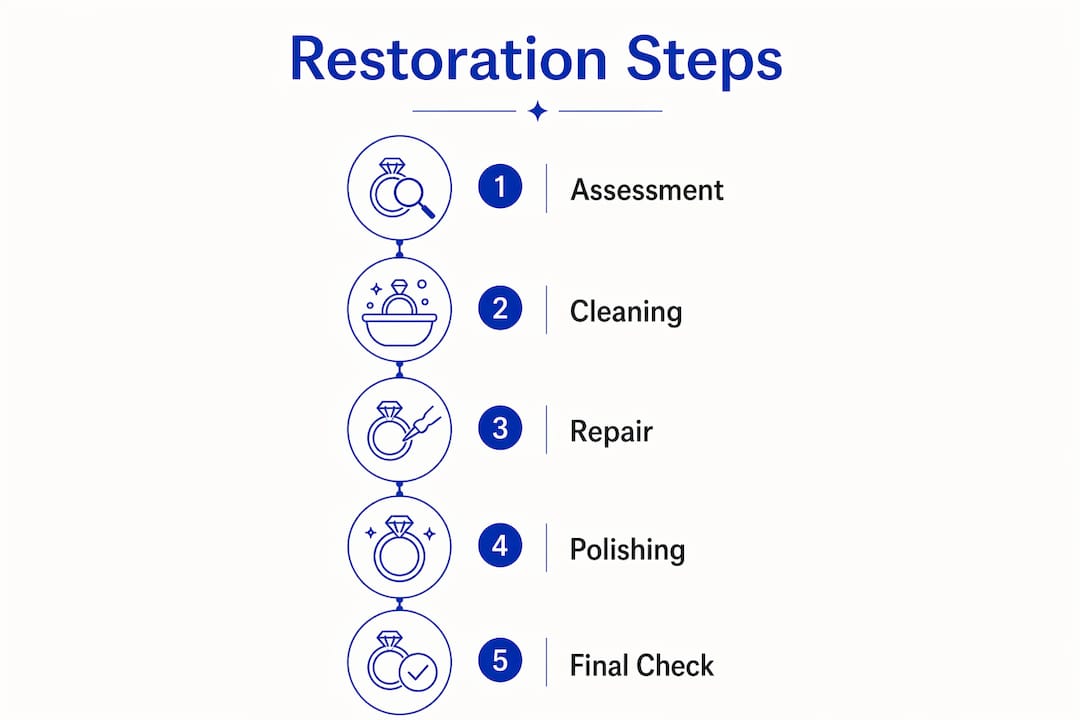
How to clean a vintage ring safely at home
Right. Let’s talk about cleaning, because this is where well-meaning owners accidentally cause real damage. The rule is simple: gentle is always correct, and aggressive is almost always wrong.
Safe home cleaning uses mild dish soap, warm (not hot) water, and a soft baby toothbrush. That is genuinely all you need for routine maintenance. Work in small circular motions around the setting, rinse thoroughly, and pat dry with a lint-free cloth. It takes five minutes and it works.
What you must avoid:
- Bleach or chlorine-based cleaners. These cause alloy breakdown in gold and can lead to stress cracks and prong failure over time.
- Acetone or nail varnish remover. Devastating on certain stones and older adhesives used in antique settings.
- Ultrasonic cleaners without expert approval. These vibrate at frequencies that can loosen already-worn prongs or crack stones with existing fractures.
- Steam cleaning at home. The pressure can shift stones in fragile vintage settings.
- Toothpaste. It is mildly abrasive and will scratch softer metals and stones.
One thing people do not think about enough: cleaning is a structural intervention. Aged shanks, previous solder work, and thin filigree can all be worsened by improper methods. If you can feel a stone moving, or if the shank looks very thin, stop and get a professional inspection before you do anything else. The mistakes that damage jewellery are almost always made with good intentions.
Patina is also worth a mention here. That soft, slightly darkened surface on aged silver or gold is not dirt. Patina is part of the ring’s identity and contributes to its value and charm. Gentle cleaning preserves it. Aggressive scrubbing removes it permanently.
Pro Tip: Before any home cleaning, check every stone by pressing gently with a fingernail. If anything moves, the ring needs a professional inspection before cleaning, not after.
What techniques do professional jewellers use to restore vintage rings?
Professional vintage ring restoration goes well beyond a polish and a clean. Here is what actually happens on the bench.
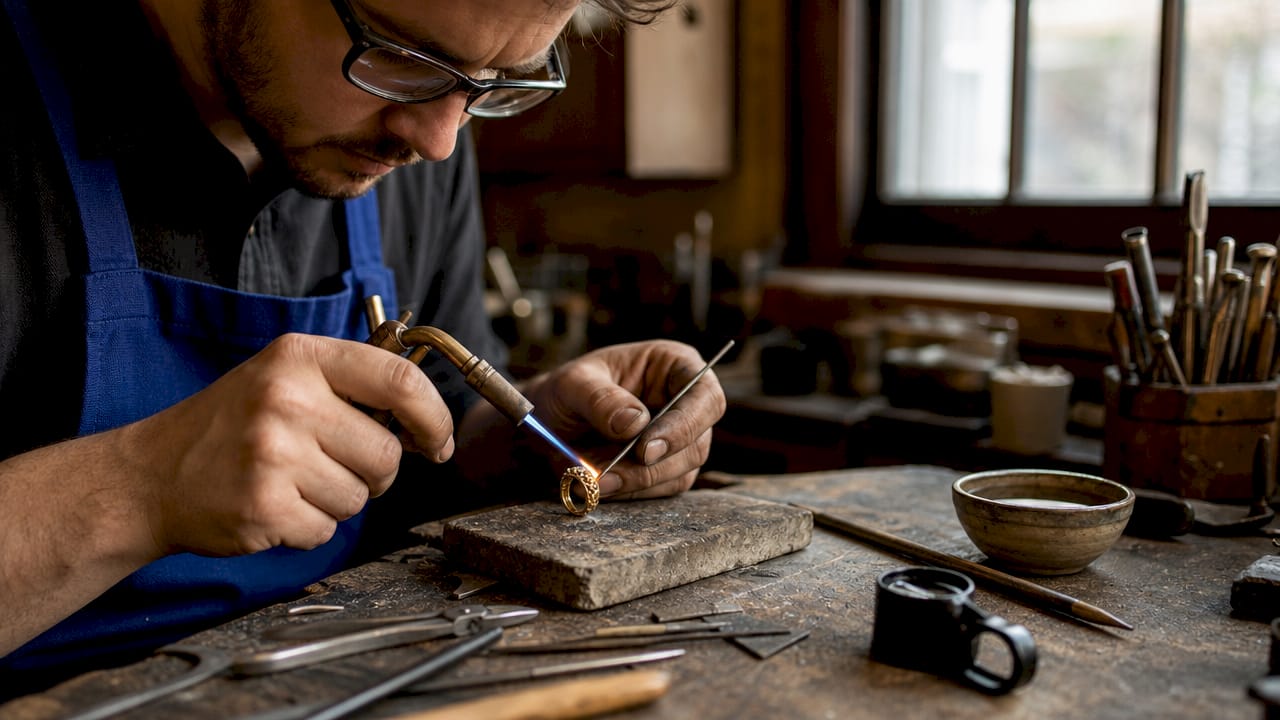
Prong retipping and bead setting repair are the most common structural interventions. Prong repair is done systemically, meaning all worn claws are retipped together rather than just the most obvious ones. Partial repair leaves other prongs vulnerable and risks stone loss. Bead setting repair is a specialist bench skill: the jeweller rebuilds individual beads to secure stones in antique settings, finishing them to match the original style.
Shank reinforcement and reshaping address the most common structural failure in old rings. A shank worn thin from decades of daily wear can be reinforced by adding metal to the worn section, or replaced entirely if it is beyond saving. Reshaping corrects rings that have been bent out of round, which is more common than you would think.
Hand engraving restoration is genuinely skilled work. Original engraving on Victorian and Edwardian rings can be retraced by hand to restore detail lost to wear. Not every jeweller offers this, and it is worth asking specifically.
Here is a comparison of the most common techniques, their purposes, and approximate costs:
| Technique | Purpose | Approximate cost |
|---|---|---|
| Prong retipping (full set) | Secure stones, prevent loss | £80 to £200 depending on claw count |
| Shank reinforcement | Restore structural integrity | £60 to £180 depending on metal and extent |
| Bead setting repair | Rebuild settings to secure stones | £50 to £150 per stone area |
| Hand engraving restoration | Restore decorative detail | £80 to £300 depending on complexity |
| Professional polish and clean | Remove surface dirt, restore lustre | £20 to £60 |
| Full restoration (complex) | Multiple repairs combined | Can reach £900 or more for extensive work |
Pro Tip: Always ask for a written quote before work begins, and confirm whether the quote covers all prongs or just the most visibly worn ones. A good jeweller will recommend the full systematic approach.
How do you preserve a vintage ring’s character during restoration?
This is where restoration becomes an art rather than a trade. The temptation, especially for owners who love their ring, is to want it to look brand new. Resist that temptation. Hard.
Patina and oxidation are not flaws to be corrected. They are evidence of age, and in the antique jewellery market, they contribute directly to a piece’s appeal and value. A ring that has been aggressively polished to a mirror finish loses the subtle surface texture that tells its story. Over-polishing also removes metal, which on a vintage piece means permanently reducing detail in engraving and filigree.
The professional approach to historic ring refurbishment prioritises subtlety. Filigree work, milgrain edges, and hand-engraved details should be cleaned gently and left structurally sound rather than recut or repolished to artificial brightness. When a jeweller propishes to “brighten up” the engraving with a re-cut, ask exactly what that involves and whether it will alter the original lines.
“The best restoration work is the kind you cannot see. The ring looks like itself, just cared for. The worst restoration work makes a Victorian ring look like it was made last Tuesday.” This is the standard worth holding any jeweller to.
Professionals prioritise safety and wearability first when restoring vintage rings, with appearance as a secondary concern. That is the correct order of priorities. A structurally sound ring that retains its aged character is worth more, both sentimentally and financially, than one that has been over-restored into something generic.
For guidance on safe cleaning methods that respect the metal’s surface, it is worth reading up on metal-specific approaches before attempting anything at home.
Key takeaways
Vintage ring restoration succeeds when structural integrity is prioritised first, patina is preserved rather than removed, and all prong repairs are completed systemically rather than selectively.
| Point | Details |
|---|---|
| Repair versus redesign | Choose repair when structure is sound; consider redesign only when metal is too thin or damage is irreversible. |
| Safe home cleaning | Use mild dish soap, warm water, and a soft toothbrush. Avoid bleach, acetone, and ultrasonic cleaners. |
| Systematic prong repair | All worn prongs should be retipped together to prevent stone loss from uneven metal fatigue. |
| Preserve the patina | Avoid aggressive polishing. Patina is part of a vintage ring’s identity and contributes to its value. |
| Professional inspection first | Get a structural assessment before any cleaning or repair to avoid worsening hidden damage. |
What I have learned from years of seeing vintage rings come through the door
Here is my honest take, and it might not be what you want to hear. Most people who bring in a vintage ring for restoration are focused entirely on how it looks. They want it shiny. They want the stones to sparkle. They want it to look the way they imagine it looked when it was new. That instinct is completely understandable, and it is almost always the wrong starting point.
Safety and wearability come first. A ring with a paper-thin shank and three loose prongs is a liability, not a keepsake. The stone will fall out. The shank will snap. And then you will feel much worse than if you had just had it properly assessed and reinforced in the first place.
The other misconception I see constantly is the idea that cleaning a vintage ring at home is risk-free. It is not. Cleaning is a structural intervention, and on a ring with aged metal and worn settings, it carries real risk if you skip the inspection step. I have seen rings come in with cracked shanks that the owner had no idea about, discovered only because a jeweller looked before cleaning rather than after.
My practical advice: get a jewellery inspection before you do anything else. Not a quote. An inspection. Understand what you are working with before you decide what to do about it. The ring has survived this long. It can wait another week for the right assessment.
— James
How Blackwelljewellers can help with your vintage ring
If you have got a vintage ring that needs attention, whether it is a loose stone, a worn shank, or a full antique ring repair, Blackwelljewellers has the in-house expertise to assess and restore it properly.

Blackwelljewellers is a family-run Kent jeweller with over 20 years of experience in jewellery repairs and restoration, operating from stores in Maidstone, Gravesend, and Bexleyheath. Every piece is inspected, assessed, and worked on by skilled jewellers who understand the difference between restoring a vintage ring and simply polishing one. If redesign is the better option, the bespoke design service in Maidstone handles that too. Get in touch for a no-obligation assessment and find out exactly what your ring needs.
FAQ
What does vintage ring restoration actually involve?
Vintage ring restoration covers structural repairs such as prong retipping and shank reinforcement, professional cleaning, and preservation of original design details like engraving and filigree. The goal is a ring that is safe to wear and retains its aged character.
Can I clean my vintage ring at home?
Yes, but carefully. Use mild dish soap, warm water, and a soft toothbrush. Avoid bleach, acetone, and ultrasonic cleaners, as harsh chemicals cause alloy breakdown and can lead to prong failure.
How do I know if my vintage ring needs professional repair?
If you can feel a stone moving, see visible cracks in the shank, or notice prongs that are worn flat, the ring needs a professional inspection before cleaning or wearing. Structural evaluation before cleaning prevents worsening of hidden damage.
Will restoration reduce my ring’s value?
Over-restoration can reduce value, particularly if aggressive polishing removes patina or original engraving detail. Careful restoration that prioritises structural integrity and preserves aged characteristics maintains or improves both wearability and worth.
How much does vintage ring restoration cost in the UK?
Costs vary considerably by the work required. A professional clean and polish typically costs £20 to £60, while full structural restoration involving multiple repairs can reach several hundred pounds or more depending on the metal, stone count, and complexity of the work.