

TL;DR:
- Proper jewellery organisation involves inspecting, categorising, and storing pieces to prevent damage and tangle. Maintaining an inventory and rotating display items help preserve condition and simplify access over time. Consistent habits and suitable storage solutions ensure a well-maintained, enjoyable collection.
Jewellery organisation is the practice of sorting, storing, and tracking your pieces so that every item is protected, accessible, and maintained in wearable condition. Done properly, it means no more tangled necklaces at the bottom of a drawer, no mystery earrings without partners, and no nasty surprises when you pull out a piece you haven’t worn in two years. Whether you’re managing a handful of sentimental pieces or a serious collection of pre-owned gold, silver, and vintage finds, knowing how to organise a jewellery collection is the difference between a chaotic pile and something you actually enjoy owning. The tools are simple: compartmentalised storage, a basic inventory record, and a few consistent habits.
How to categorise your jewellery collection before organising
The first step is not buying a fancy jewellery box. It’s knowing what you actually have.
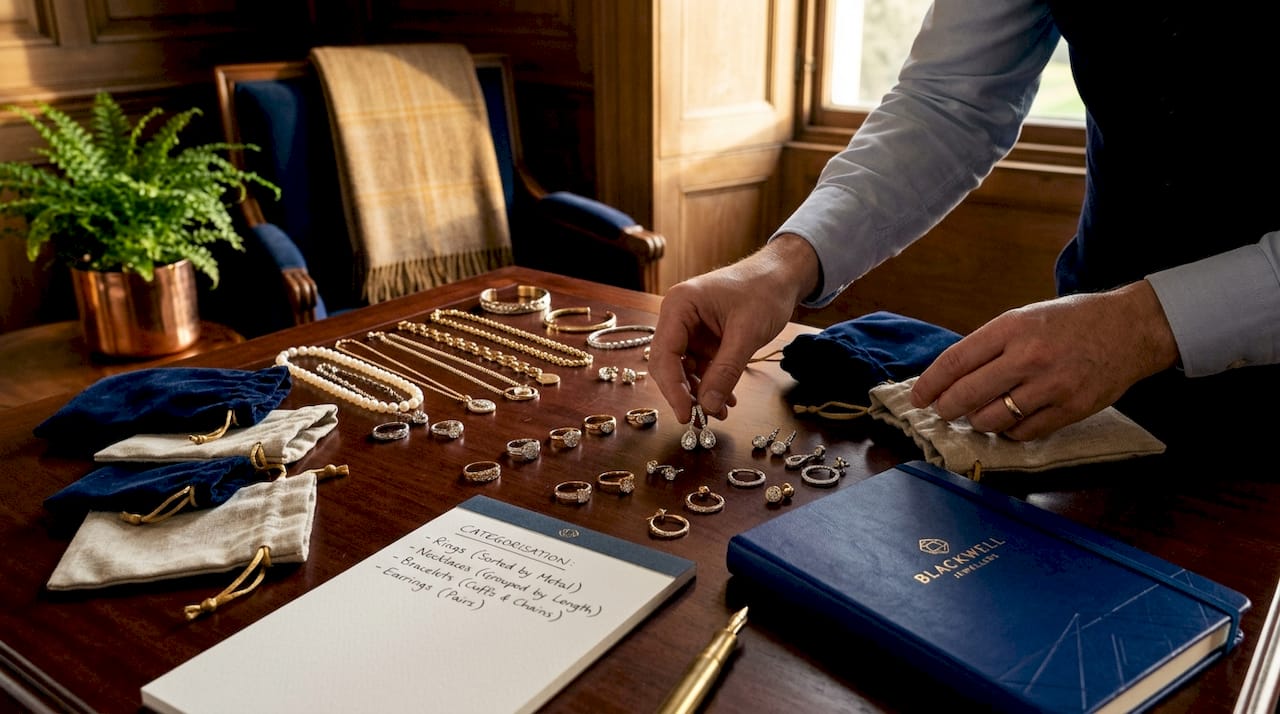
Better Homes & Gardens recommends inspecting each piece individually before making any storage decisions. That means looking at condition, wear, and whether the item still serves a purpose in your life. It sounds obvious, but most people skip this and end up organising chaos rather than eliminating it.
Here’s a practical inspection process to work through:
- Lay everything out on a clean, flat surface in good light. All of it. Yes, including the stuff in that forgotten pouch at the back of the wardrobe.
- Check condition on each piece. Look for broken clasps, missing stones, tarnish, or structural damage. Anything that needs attention goes into a separate repair pile.
- Assess value across three dimensions: financial, sentimental, and aesthetic. Jo Latham’s approach, reported by Paper City Magazine, emphasises sorting by sentimental and financial value alongside type, which helps you make smarter decisions about what to keep, repurpose, or sell.
- Decide the fate of each piece. Keep, repair, donate, repurpose, or sell. Be honest. A broken piece you haven’t fixed in three years is not going to fix itself.
- Sort into primary categories. Necklaces, earrings, rings, bracelets, watches, brooches. Then subdivide further by metal (gold, silver, platinum) or style (fine, costume, vintage) if your collection warrants it.
If you’re working through pre-owned jewellery, the inspection step matters even more. Hallmarks, provenance, and condition all affect how and where a piece should be stored.
Pro Tip: Sort with both your head and your heart. A piece with strong sentimental value deserves protected, dedicated storage even if it’s not worth much financially. A piece with high financial value but zero emotional attachment might be better sold or repurposed than taking up prime display space.
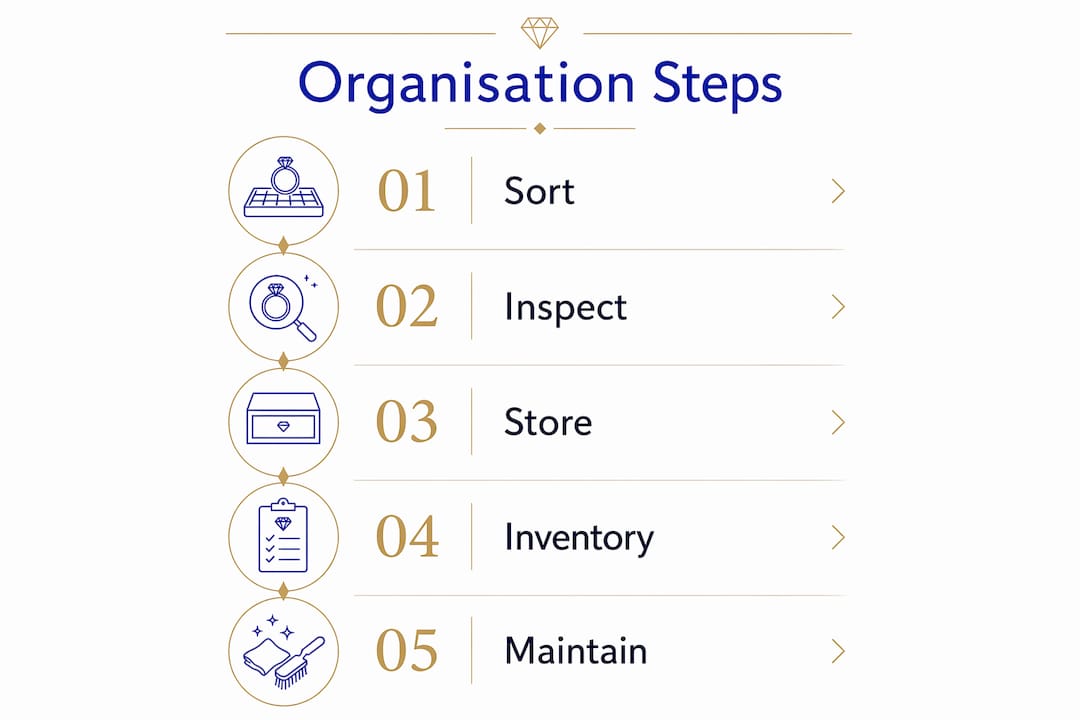
What are the best storage solutions for different types of jewellery?
Storage is where most people either get it right or completely waste their money. The goal, as NYT Wirecutter highlights, is to separate items into individual soft compartments and prioritise visibility. Piling jewellery together causes scratching, tangling, and frustration. Separation prevents all three.
Here’s a comparison of the most common storage options:
| Storage type | Best for | Pros | Cons |
|---|---|---|---|
| Velvet-lined jewellery box with lid | Rings, earrings, brooches | Protects from dust and tarnish, compact | Limited space for larger pieces |
| Hanging organiser with hooks | Necklaces, long chains | Prevents tangling, good visibility | Exposes pieces to air and light |
| Stacking trays and drawer inserts | Mixed collections | Modular, easy to expand | Requires drawer space |
| Display stands and risers | Frequently worn pieces | Visually appealing, quick access | No protection from sunlight or dust |
| Anti-tarnish pouches | Silver and gold pieces | Portable, inexpensive | Low visibility, easy to lose items |
For necklaces specifically, hanging storage is the clear winner. A wall-mounted hook rail or an over-door organiser keeps chains separated and visible. Learning how to sort necklaces by length or metal type before hanging them makes the whole system even easier to use day-to-day.
Preventing tarnish requires keeping fine jewellery in lined, lidded boxes away from direct sunlight and humidity. Silica gel packs and anti-tarnish strips are inexpensive additions that make a real difference, particularly for silver pieces. Think of them as cheap insurance.
For dressing table storage, a well-chosen dressing table with integrated mirror storage can combine display and protection in one piece of furniture, which is genuinely useful if you’re short on space.
Pro Tip: Rotate the pieces you have on open display every few weeks. Constant light and air exposure accelerates tarnish and fading. Keep your most delicate or valuable pieces in closed storage and swap them out rather than leaving them permanently on show.
How to set up and maintain a jewellery inventory system
An inventory sounds like overkill until you need to make an insurance claim, plan an estate, or simply remember where you put that gold chain you bought three years ago.
SpreadsheetDaddy’s jewellery inventory template provides a practical starting point, with fields for metal type, purchase date, condition, and provenance. A detailed, audit-ready inventory enables efficient insurance processing and estate planning without the need to continually re-identify pieces. That last point matters more than people realise. Describing a piece from memory to an insurance assessor is not a fun experience.
Here’s what your inventory record should include for each piece:
- Description. Metal, stone, style, and any distinguishing features.
- Purchase date and source. Where you bought it and when. Especially relevant for pre-owned or estate jewellery.
- Condition at time of recording. Note any existing damage or repairs.
- Estimated or appraised value. Update this periodically, particularly for gold and diamond pieces where market values shift.
- Provenance notes. For vintage or estate pieces, any known history adds both sentimental and financial context.
- Photo. A clear photograph of each piece is worth more than a paragraph of description when it comes to insurance or resale.
Beyond the initial setup, the inventory only works if you maintain it. Build a habit of updating the record when you buy, sell, repair, or repurpose a piece. A quick note and a photo takes two minutes. Tracking down that information after the fact takes considerably longer.
Pair your inventory habit with regular jewellery care checks. Cleaning, condition checks, and re-storing pieces properly after wear are the three habits that keep a collection in good shape without requiring much effort.
How to create a visually appealing jewellery display
Organisation and display are not the same thing, though they work best together. A well-organised collection can still look like a jumble sale if the display isn’t considered. A beautiful display that ignores storage principles will cost you in damaged pieces.
Noble Pack advises creating zones by collection, theme, or metal type with balanced white space to present a curated display rather than a crowded one. The merchandising logic here applies directly to personal collections. Grouping by theme (vintage pieces together, everyday gold together, statement pieces together) makes the display easier to navigate and more visually satisfying.
Tiered stands and risers are genuinely useful here. They add height variation, which makes individual pieces easier to see and reach. Labelled sections work well for larger collections where you might otherwise spend time hunting for a specific piece.
The location of your display matters as much as the layout. Keep pieces away from windowsills, bathroom shelves, and anywhere with fluctuating humidity. Sunlight and moisture exposure accelerates tarnish and can cause irreversible damage to delicate stones and settings. A bedroom dresser away from direct light is the standard recommendation for good reason.
Pro Tip: Not everything needs to be on display. Collectors often make the mistake of wanting to show the entire collection at once. Rotating delicate or high-value pieces off display and into closed storage better preserves their condition and, frankly, makes the pieces you do display feel more special.
Key takeaways
Organising a jewellery collection requires categorising by type and value, choosing storage matched to each piece’s needs, and maintaining a written inventory to protect condition and financial worth over time.
| Point | Details |
|---|---|
| Categorise before storing | Inspect, sort, and decide the fate of each piece before buying any storage solutions. |
| Match storage to jewellery type | Use hanging hooks for necklaces, lidded velvet boxes for rings, and anti-tarnish pouches for silver. |
| Control the environment | Store fine jewellery away from sunlight and humidity; use silica gel packs to reduce tarnish. |
| Keep a written inventory | Record metal, condition, provenance, and value for every piece to support insurance and estate planning. |
| Rotate display pieces | Limit light and air exposure by keeping delicate pieces in closed storage and swapping them out regularly. |
James’s honest view on jewellery organisation
I’ll be straight with you: the first time I properly organised a jewellery collection, I was genuinely embarrassed by how long it had been neglected. Pieces I’d forgotten about. Chains that had turned into abstract sculptures. A ring I’d been looking for since 2019.
The thing most guides don’t tell you is that the system only works if it fits your actual life. A beautiful tiered display stand is useless if you’re always in a rush and end up dumping everything on the nearest surface anyway. Start with what you’ll actually use, not what looks good in a Pinterest photo.
I’ve found that sorting by how often you wear something is as useful as sorting by type. Daily pieces need to be front and centre, easy to grab and put back. Occasion pieces and sentimental items can live in protected closed storage without it being a problem. That split alone removes most of the daily friction.
The inventory feels like admin, and it is. But it’s the kind of admin you’ll thank yourself for later, particularly if you’re building a collection of pre-owned or vintage pieces where provenance matters. Write it down. Take the photo. Future you will be grateful.
The honest truth is that jewellery organisation is not a one-time project. It’s a habit. Set aside twenty minutes every few months to check condition, update your inventory, and rotate your display. That’s genuinely all it takes to keep things in order.
— James
How Blackwelljewellers can help you care for your collection
If your sort-through has revealed pieces that need attention, or gaps in your collection you’d like to fill, Blackwelljewellers is worth a look.

The team at Blackwelljewellers has over 20 years of experience in jewellery repair, bespoke design, and pre-owned pieces across stores in Maidstone, Gravesend, and Bexleyheath. If you’ve found pieces in your collection that need structural work, the jewellery repair service covers everything from clasp replacements to full restorations. If you’re thinking about repurposing old pieces into something new, the bespoke design service in Maidstone handles exactly that. And if you’re a collector looking to expand with authenticated, hallmarked pre-owned pieces, the second-hand jewellery collection is rigorously inspected before sale.
FAQ
How do I start organising a large jewellery collection?
Lay everything out, inspect each piece for condition and value, then sort into categories (necklaces, rings, earrings, bracelets) before selecting storage. Better Homes & Gardens recommends this inspect-first approach to avoid organising clutter rather than eliminating it.
What is the best way to store necklaces without tangling?
Hang necklaces individually on hooks or a wall-mounted rail, sorted by length or metal type. NYT Wirecutter highlights that separating pieces into individual compartments or hanging positions is the most effective way to prevent tangling and damage.
How do I prevent jewellery from tarnishing in storage?
Store pieces in lined, lidded boxes away from sunlight and humidity, and add silica gel packs or anti-tarnish strips to the storage environment. These measures significantly slow the oxidation process that causes tarnish on silver and gold.
Do I need a jewellery inventory?
Yes, particularly if you own pre-owned, vintage, or high-value pieces. A detailed inventory with photos, metal type, condition, and provenance supports insurance claims, resale, and estate planning without the need to re-identify items from memory.
How often should I review and reorganise my jewellery collection?
A condition check and inventory update every three to four months is sufficient for most collections. Use this time to rotate display pieces, clean items before returning them to storage, and note any pieces that need professional repair before damage worsens.