

TL;DR:
- Proper inspection begins with verifying documentation and provenance before physical testing.
- Use specialized tools like a loupe, diamond tester, and Raman spectroscopy for thorough physical assessment.
- Following a structured step-by-step process helps prevent costly mistakes and ensures legal ownership.
Buying pre-owned jewellery in Kent can be one of the most rewarding purchases you make, but it carries real risk if you skip a proper inspection. Sophisticated fakes, misrepresented metals, and missing documentation are more common than most buyers expect. A single misstep can cost you hundreds, or even thousands, of pounds. The good news is that a structured, step-by-step workflow removes most of that risk entirely. Whether you are browsing a local shop in Maidstone or considering a piece online, understanding how experts inspect pre-owned jewellery gives you the confidence to buy wisely and the knowledge to spot problems before they become expensive mistakes.
Table of Contents
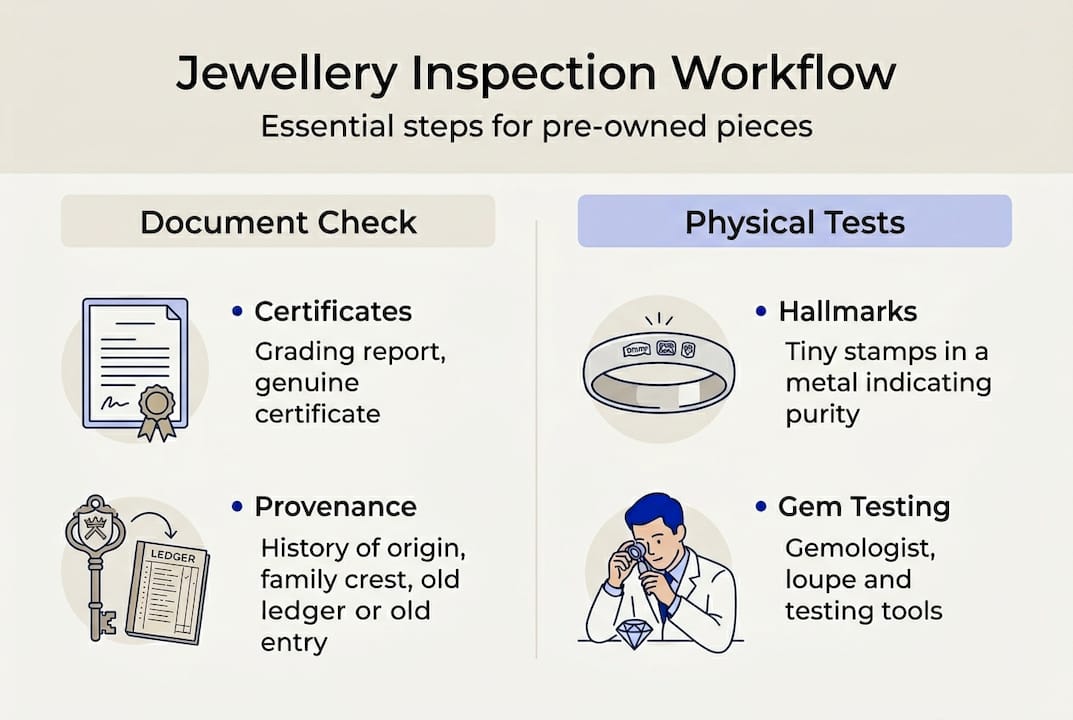
- What you need before you inspect: essentials for jewellery workflow
- Step-by-step: how to verify documentation and provenance
- Physical inspection: examining hallmarks, testing gems, and assessing metals
- Final verification: appraisals, digital twins, and secure transactions
- Why inspection order matters more than most enthusiasts realise
- Start your inspection with confidence: expert help available
- Frequently asked questions
Key Takeaways
| Point | Details |
|---|---|
| Documentation first | Collect and verify all lab certificates and provenance records before any physical checks. |
| Non-destructive testing | Always begin with visual, device-based, and XRF tests before advancing to lab retesting if doubts persist. |
| Final security steps | Document with high-quality images or video, confirm appraisals, and complete your purchase with secure payment methods. |
| Recognise expert resources | Use recognised labs, professional inspection, and technological aids like blockchain to guarantee authenticity. |
What you need before you inspect: essentials for jewellery workflow
With an understanding of the stakes, let’s clarify the essentials you’ll need before beginning the inspection. Rushing straight to a visual examination is one of the most common errors buyers make. Preparation is not optional; it is the foundation that makes every subsequent step meaningful.
Before touching the piece, gather your tools. A 10x loupe is the minimum magnification required to read hallmarks and spot surface-level treatments. A diamond tester (thermal or electrical conductivity type) is essential for any piece containing stones. For higher-value items, a Raman spectroscopy device can identify gem species non-destructively, which is something no loupe can replicate. These tools are not just for professionals; jewellery enthusiasts who buy regularly will find them invaluable.
Alongside your tools, collect every document attached to the piece:
- Lab certificates from recognised bodies such as GIA, IGI, SSEF, or Gübelin
- Original purchase invoices or receipts
- Previous appraisal reports
- Any repair or restoration records
- Insurance documentation if applicable
As part of the lab certificate verification process, experts advise that you obtain full documentation including lab certificates, appraisals, and invoices before any physical examination begins. This is not bureaucracy for its own sake. Documentation tells you what the piece is supposed to be, which gives you a benchmark against which every physical test is measured.
Here is a quick reference for the tools and their primary purpose:
| Tool | Primary use | Skill level needed |
|---|---|---|
| 10x loupe | Hallmark and surface inspection | Beginner |
| Diamond tester | Stone conductivity check | Beginner |
| Raman device | Non-destructive gem identification | Intermediate |
| XRF analyser | Metal composition analysis | Advanced |
| UV lamp | Fluorescence and treatment detection | Beginner |
Pro Tip: Always start with documentation, not the piece itself. If the paperwork does not add up, no amount of physical testing will give you full confidence. Learning how to buy authenticated second-hand jewellery properly means treating documents as your first line of defence.
Step-by-step: how to verify documentation and provenance
Once your tools and paperwork are in order, the next priority is checking documentation and the item’s history. This stage is where many buyers either gain full confidence or discover a serious problem.
Follow this sequence carefully:
- Locate the certificate serial number. Every genuine GIA or IGI certificate carries a unique number. Go directly to the issuing lab’s website and enter it. If the number returns no result, or the details do not match the stone in hand, stop immediately.
- Cross-check all details. The certificate should list carat weight, colour grade, clarity grade, and measurements. Compare these against the physical piece using your loupe and a precision scale.
- Assess the document’s physical condition. Genuine certificates use security features including microprint, holograms, and watermarks. Photocopies, laminated originals, or certificates with signs of alteration are serious red flags.
- Verify provenance and chain of custody. Ask for a written account of every owner, ideally supported by receipts or insurance records. A gap in ownership history is not automatically disqualifying, but it warrants deeper scrutiny.
- Check the seller’s credibility. A reputable seller will welcome verification. Reluctance to share documentation is itself a warning sign.
Always verify certificates directly with the issuing lab and confirm provenance or chain of custody as part of the process. Equally, prioritise recognised labs over lesser-known alternatives and verify certificates directly rather than taking them at face value.
A certificate from a lab you have never heard of is worth very little. The name on the document matters as much as the document itself.
Provenance also carries legal weight. In the UK, purchasing stolen property, even unknowingly, can have serious consequences. A clear chain of custody protects you both financially and legally. If you are buying a diamond and want to understand the certification process more deeply, reading about authenticating lab-grown diamond certificates gives useful context on what genuine documentation looks like.
Pro Tip: When verifying a GIA certificate online, take a screenshot of the result page and save it alongside your purchase records. This creates a timestamped paper trail that can be invaluable for insurance or resale.
Physical inspection: examining hallmarks, testing gems, and assessing metals
After documentation is cleared, move to hands-on verification to uncover any issues not visible on paper. This is where your tools earn their place.
Begin with hallmarks. In the UK, hallmarking is a legal requirement for precious metal items above certain weights, and each mark tells a specific story. Under your 10x loupe, look for the metal fineness mark (such as 750 for 18-carat gold), the assay office mark, and the date letter if present. Cross-reference what you see against official UK databases. Our jewellery hallmark guide explains every mark in detail and is worth bookmarking before any inspection.
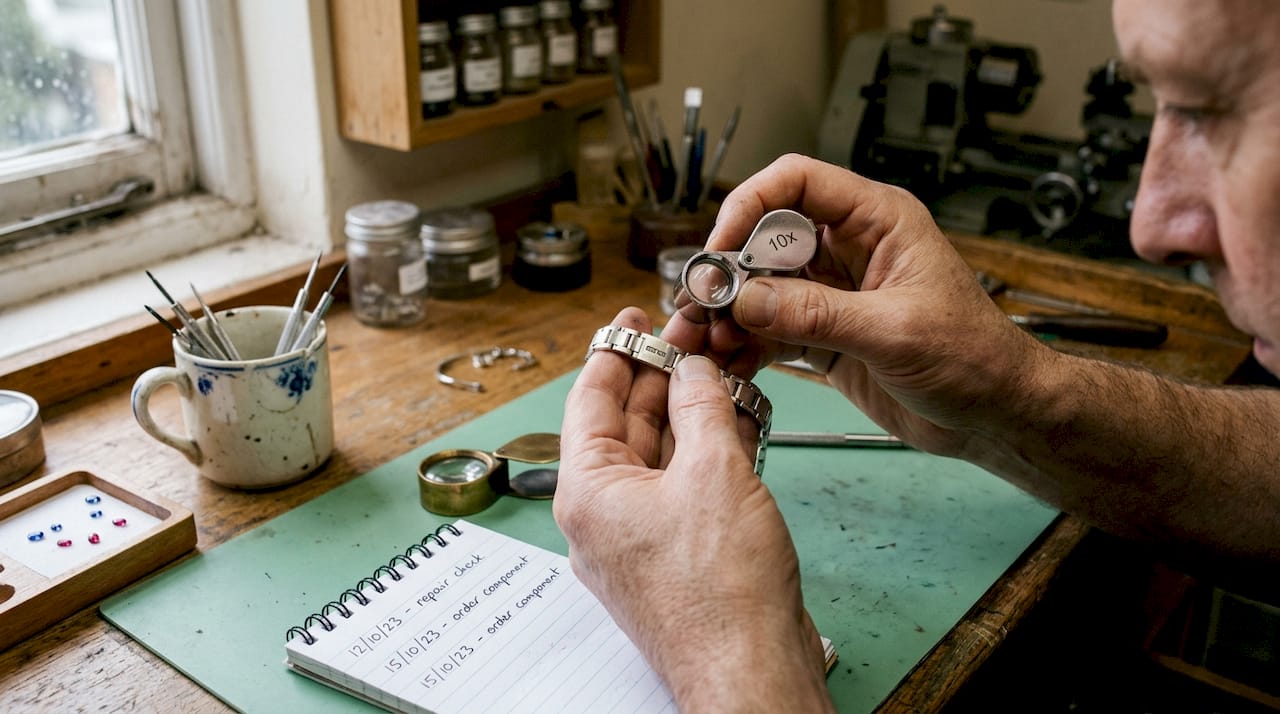
Experts advise that you inspect hallmarks under magnification and use non-destructive gem tests first, reserving XRF analysis for metals when needed. Non-destructive testing preserves the piece and keeps your options open.
For gemstone testing, work through this hierarchy:
- Visual inspection under the loupe: look for natural inclusions, consistent brilliance, and no signs of composite construction
- Diamond tester: a thermal tester will distinguish diamond from glass or cubic zirconia quickly
- UV lamp: check for fluorescence patterns consistent with the certificate’s stated grade (see our guide on diamond UV testing for specifics)
- Raman spectroscopy: identifies gem species definitively without contact
For the metal itself, XRF (X-ray fluorescence) analysis is the gold standard for non-destructive composition testing. It can detect plating over base metals, confirm alloy ratios, and identify undisclosed treatments. If you cannot access an XRF device, request that an independent lab performs this test before you commit. Remember, provenance affects value and legality as much as materials do, so physical testing alone is never sufficient.
Pro Tip: If a diamond passes the thermal tester but something still feels off, request a Raman test. Moissanite, for example, passes thermal tests but registers differently on Raman. Our resource on diamond authenticity tests covers this scenario in full.
Final verification: appraisals, digital twins, and secure transactions
With the physical piece examined, ensure security by confirming value and transaction safety. This final stage is often overlooked, but it is what separates a careful buyer from a vulnerable one.
Start with the appraisal. Not all appraisals carry equal weight. Look for these qualities in a credible report:
- The appraiser holds a recognised qualification (such as FGA from the Gemmological Association of Great Britain)
- The report is dated within the last two years
- It includes a full description, photographs, and a replacement value
- It was issued independently, not by the seller
Next, create a digital twin of the piece. This means photographing every angle under consistent lighting, capturing video of any dynamic optical effects (such as fire in a diamond), and documenting all hallmarks and inclusions. As digital twins and blockchain records emerge as standard practice in 2026, having this archive protects you for insurance claims, future resale, and dispute resolution.
For the transaction itself, follow these security steps:
- Use an escrow service for high-value purchases so funds are only released once you confirm receipt and condition
- Request insured, tracked shipping with declared value if buying remotely
- Obtain a written receipt that references the certificate number, hallmarks, and agreed price
- Ensure the seller provides a returns window in case independent testing reveals discrepancies
Experts confirm that you should verify appraisals, create digital twins, and use escrow or insured shipping for all secure transactions. For ongoing care after purchase, our jewellery care inspection tips and jewellery repair process guides will help you maintain the piece’s integrity long term.
The moment of purchase is not the end of the process. It is the beginning of responsible ownership.
Why inspection order matters more than most enthusiasts realise
Reflecting on the step-by-step process, it is worth spotlighting why the sequence itself is a critical form of protection. Most buyers assume that a good visual examination is sufficient. In 2026, that assumption is increasingly dangerous.
Advanced fraud has become more sophisticated. Laser-engraved fake serial numbers, high-quality synthetic stones set in genuine precious metal mounts, and professionally forged certificates are all documented realities. A piece can look flawless to the naked eye and still be fundamentally misrepresented.
The order of inspection matters because each stage builds on the last. If you begin with physical testing and find nothing wrong, you may feel falsely reassured before checking documentation. But a forged certificate discovered after you have already paid is a far worse position than one caught before the transaction. Experts consistently prioritise paperwork and lab verification over appearance for precisely this reason.
There is also a legal dimension. Discovering provenance issues after purchase can leave you holding a piece you cannot legally sell or insure. The sequence protects your investment, your legal standing, and your peace of mind simultaneously. Knowing when to bring your jewellery to a professional for inspection is part of responsible ownership, not just repairs.
Start your inspection with confidence: expert help available
Armed with this knowledge, take the next step towards safe ownership with professional support. At Blackwell Jewellers, we have spent over 20 years inspecting, authenticating, and restoring pre-owned pieces across our Kent stores in Maidstone, Gravesend, and Bexleyheath.
Every piece in our pre-owned collection has passed the exact workflow described in this guide, verified by our in-house expert jewellers. If you want to buy with complete confidence, browse our expert jewellery inspections and certified pre-owned range directly. For those seeking something new, our ethical diamond rings offer verified provenance from the outset. Whether you need an appraisal, a restoration, or simply a second opinion before purchase, our team is ready to help.
Frequently asked questions
Which lab certificates should I prioritise when buying pre-owned jewellery?
Prioritise certificates from GIA, IGI, SSEF, or Gübelin, as these are globally recognised and reliable and can be verified directly through each lab’s official website.
What is a digital twin in jewellery inspection?
A digital twin is a comprehensive set of high-quality photographs and videos documenting every detail of a piece, and as blockchain records emerge in 2026, these archives can be linked to immutable ownership records.
Is it safe to use online escrow services when purchasing second-hand jewellery?
Yes, reputable escrow services are strongly advised for high-value purchases because funds are only released once you confirm the piece matches its description, making escrow and insured shipping the safest approach.
What is the main difference between verifying proof of provenance and a lab certificate?
A lab certificate confirms the physical and chemical properties of a gemstone, while provenance establishes legal ownership history. As experts note, provenance affects value and legality just as much as the material composition of the piece itself.