

TL;DR:
- Styling second-hand jewellery involves blending vintage character with modern fashion through intentional choices and creative layering. Choosing high-quality pieces that resonate personally and limiting metals to two types ensures cohesive, versatile looks. Proper care, professional refurbishment, and thoughtful repurposing preserve their personality and long-term value.
Styling second-hand jewellery is the art of blending vintage character with modern fashion to create a look that is entirely, unmistakably yours. Pre-owned jewellery (the industry term for pieces with a previous life and provenance) offers something fast fashion simply cannot: genuine craftsmanship, unique history, and the kind of personality that no high-street chain can replicate. Whether you are layering a Victorian locket over a turtleneck or pinning a 1960s brooch to a leather jacket, knowing how to style second-hand jewellery means understanding a few smart principles. This guide covers all of them, from choosing the right pieces to mixing metals, repurposing creatively, and keeping everything looking polished.
How to style second-hand jewellery: choosing pieces that work
Not every thrifted find is worth wearing. The first rule of styling vintage jewellery is choosing pieces that actually have styling potential, and that starts with quality.
A 10-power jeweller’s loupe is your best friend at a car boot sale or charity shop. Check the weight of the piece (heavier usually means better metal content), and look closely at stone settings. Prongs indicate quality construction. Glue indicates the opposite. This one check alone will save you from buying something that falls apart on its first outing.
Beyond quality, buy what resonates with you personally. Danielle Goodwin, founder of Hawkeye Vintage, puts it plainly: personal connection and superior craftsmanship matter far more than chasing whatever trend is circulating on social media this week. A piece you genuinely love will get worn. A piece you bought because it looked good on someone else will sit in a drawer.
Pro Tip: When shopping for second-hand pieces, check the hallmarks. UK hallmarks confirm metal purity and give you a date letter, which tells you exactly how old the piece is. That is free provenance, right there on the metal.
Here is a quick overview of common vintage jewellery types and how versatile they are for everyday styling:
| Jewellery type | Styling versatility | Best occasions |
|---|---|---|
| Brooches | Very high (coat, bag, belt, lapel) | Casual, smart casual, formal |
| Pendant necklaces | High (layering, solo statement) | All occasions |
| Cocktail rings | Medium (statement piece, one per hand) | Evening, smart casual |
| Charm bracelets | High (stack or wear alone) | Casual, daytime |
| Drop earrings | High (pairs with simple outfits) | Evening, smart casual |
How do you mix vintage jewellery with modern outfits?
This is where most people get stuck. The good news: there are clear rules, and once you know them, mixing old and new jewellery becomes second nature.
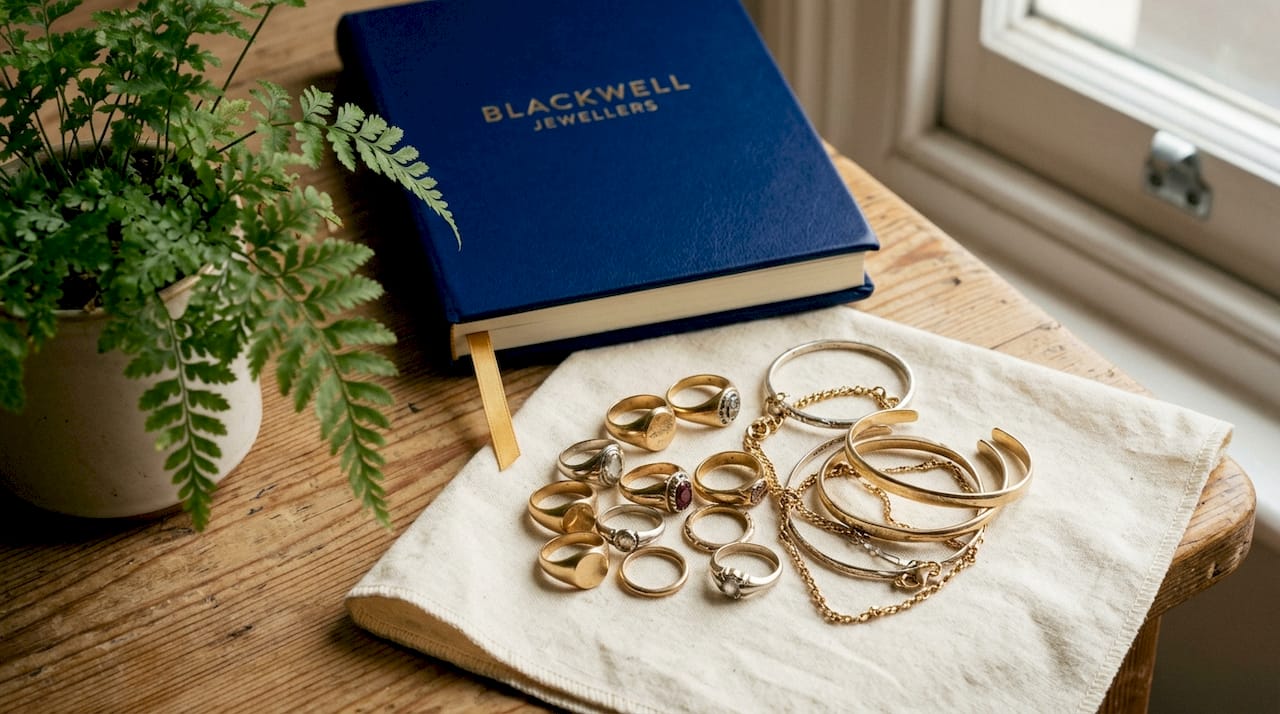
The golden rule for mixing metals is to limit yourself to two and repeat each one at least twice across your outfit. So if you are wearing a gold vintage brooch and a silver chain, make sure gold appears again (a ring, a belt buckle, even a shoe detail) and silver appears again too. This creates what stylists call a “lived-in” cohesion rather than a chaotic clash. It sounds fussy, but once you try it, you will not go back.
Pairing vintage pieces with contemporary clothing is also easier than it looks. A 1940s Art Deco brooch pinned to the lapel of a plain wool coat looks intentional and editorial. A long Edwardian chain layered over a modern ribbed turtleneck reads as fashion-forward rather than fancy dress. The key is clean, modern silhouettes as a backdrop. Bold vintage craftsmanship needs breathing room to stand out.
Here are the dos and don’ts that will save you from common styling mistakes:
- Do choose one statement vintage piece per outfit and build around it
- Do mix oxidised silver with polished gold for depth and contrast
- Do wear brooches on handbag straps, scarves, and coat collars, not just lapels
- Don’t wear three bold vintage pieces at once. One wins, three compete
- Don’t pair intricate vintage jewellery with a busy, patterned outfit
- Don’t ignore scale. A delicate Edwardian ring looks lost next to a chunky 1970s cuff
Pro Tip: Using one signature vintage piece consistently across your outfits builds a visual identity. Think of it as your personal trademark. People will start to associate that piece with you, which is exactly the kind of editorial polish that stylists spend years trying to manufacture.
Creative repurposing and layering techniques
Repurposing vintage jewellery does not always mean physically altering it. Jewellery curator Jo Latham explains that stylistic layering refreshes vintage pieces authentically without touching the original design. The transformation is in how you wear it, not what you do to it.
Some of the most creative ideas come from thinking about jewellery as modular. Influencers and stylists have popularised magnetic clasps on necklaces to convert them into belts, or pinning vintage brooches onto handbag straps to personalise a plain leather tote. These approaches cost nothing and completely change the character of both the jewellery and the accessory it is attached to.
Here is a step-by-step approach to layering vintage jewellery like a professional:
- Start with your longest piece. A long vintage chain or lariat sits closest to the body and forms the base layer.
- Add a mid-length pendant. An antique locket or a Victorian drop pendant at collarbone length creates the middle tier.
- Finish with a short, modern chain. A simple contemporary choker or delicate gold chain at the neck ties the vintage and modern elements together.
- Check for tangling. Different chain widths and textures reduce tangling. Pair a fine trace chain with a chunkier belcher or rope style.
- Edit ruthlessly. If anything feels like too much, remove the most recent addition. The goal is layered, not loaded.
A Victorian locket layered over a high-neck blouse, for example, updates the piece for evening wear without overwhelming a casual daytime look. The same locket worn on its own over a simple white shirt reads entirely differently. That is the power of context.
Common mistakes when styling second-hand jewellery
The most frequent mistake is metal overload. Wearing rose gold, yellow gold, silver, and gunmetal in the same outfit does not read as eclectic. It reads as unedited. Stick to two metals, repeat each one, and you will look like you planned it (even if you did not).
The second mistake is ignoring authenticity. Buying a piece that turns out to be a reproduction is not the end of the world, but it does affect value and sometimes wearability. Authentic Bakelite jewellery, for instance, can be identified by friction heat releasing a faint odour. That kind of simple test separates genuine vintage from a convincing copy. Knowing how to buy authenticated jewellery before you spend serious money is genuinely worth your time.
- Avoid introducing five new vintage pieces into your wardrobe at once. Add one at a time and see how it works with what you already own
- Avoid wearing pieces with structural damage (loose stones, broken clasps) without getting them repaired first. A dangling stone is a lost stone
- Avoid assuming tarnish means a piece is ruined. Silver tarnishes naturally and polishes back beautifully
Pro Tip: If a vintage piece is not quite right as-is, a professional refurbishment can transform it. Resizing, repolishing, and re-setting stones are all standard services. Check out what jewellery refurbishment involves before you write off a piece with potential.
How to care for second-hand jewellery to preserve its style
Second-hand jewellery has already survived decades. With the right care, it will survive decades more. The basics are straightforward, but they do vary by material.
Gold does not tarnish, but it scratches. Store gold pieces separately in soft pouches or lined compartments. Clean with warm water, a drop of washing-up liquid, and a soft toothbrush. Silver tarnishes through oxidation and needs a proper silver polishing cloth or a specialist silver dip (used sparingly). Never use abrasive cloths on silver, as they remove the patina that gives antique pieces their character. Costume jewellery with plating is the most fragile: keep it dry, store it away from humidity, and never use chemical cleaners.
Here is a quick reference for caring for the most common vintage jewellery materials:
| Material | Cleaning method | Storage tip | Professional care needed? |
|---|---|---|---|
| Yellow gold | Warm soapy water, soft brush | Soft pouch, separate compartment | Every 2 to 3 years for a polish |
| Sterling silver | Silver polishing cloth or dip | Anti-tarnish bag or strip | When tarnish is heavy or structural |
| Costume/plated | Dry wipe only, no chemicals | Away from moisture and heat | If plating is lifting or worn |
| Gemstones | Damp cloth, no soaking | Padded box to prevent scratching | Annually to check prong integrity |
When a piece needs more than cleaning, professional repair is the right call. Loose prongs, broken clasps, and worn-through plating are all fixable. Attempting DIY repairs on valuable vintage pieces is the fastest way to reduce both their value and their wearability.
Key takeaways
Styling second-hand jewellery successfully comes down to choosing quality pieces that resonate personally, mixing metals with intention, and using creative repurposing to make vintage work with modern wardrobes.
| Point | Details |
|---|---|
| Choose quality first | Use a jeweller’s loupe to check prongs, weight, and stone settings before buying. |
| Mix metals with rules | Limit to two metal types and repeat each at least twice for a cohesive look. |
| One statement piece per outfit | Let a single vintage piece lead; clean modern silhouettes give it room to shine. |
| Repurpose without altering | Change how a piece is worn (layering, brooch placement, necklace as belt) before considering physical changes. |
| Care by material | Gold, silver, and costume jewellery each need different cleaning and storage approaches. |
Why second-hand jewellery styling is worth the effort
I have been around pre-owned jewellery long enough to know that most people underestimate it. They walk past a tray of vintage rings at a market thinking it is all granny stuff, and then they miss the 1930s Art Deco piece sitting right there for a tenner. That is their loss, honestly.
What I have found, over and over, is that the people who wear vintage jewellery best are not the ones who know the most about hallmarks or periods. They are the ones who pick up a piece and think, “that is me.” That instinct is more reliable than any trend report. The benefits of buying second-hand go beyond sustainability and price. You end up with pieces that have genuine character, and character is what makes an outfit memorable.
The repurposing angle is also something I think people sleep on. You do not need to redesign anything. Wear your grandmother’s brooch on your coat one day, on your bag the next, and on a wide-brimmed hat the day after. Same piece, three completely different looks. That kind of versatility is what makes pre-owned jewellery such a smart wardrobe investment.
My honest advice: start with one piece you genuinely love, learn how it works in your existing wardrobe, and go from there. You will be surprised how quickly it becomes your signature.
— James
Explore Blackwelljewellers’ second-hand jewellery collection
If you are ready to start building your vintage jewellery wardrobe, Blackwelljewellers makes it straightforward. Every piece in the second-hand jewellery collection is inspected, authenticated, hallmarked, and restored by expert jewellers before it goes on sale. No guesswork, no nasty surprises.

If you already have a piece you love but it needs a little attention, the jewellery repair service covers everything from re-setting loose stones to repolishing worn surfaces. And if you want something truly one-of-a-kind, the bespoke design service in Maidstone can work with vintage elements to create something entirely new. Blackwelljewellers has been doing this for over 20 years across Kent and online. They know their stuff.
FAQ
How do I start styling second-hand jewellery?
Start with one piece that genuinely appeals to you and wear it with a clean, simple outfit. Build from there rather than trying to incorporate multiple vintage pieces at once.
Can you mix vintage and modern jewellery together?
Yes, and it often looks better than wearing all-vintage or all-new. The key is limiting your metals to two types and repeating each one across your outfit for cohesion.
How do I know if a second-hand jewellery piece is good quality?
Use a 10-power jeweller’s loupe to check stone settings and weight. Prongs indicate quality; glued stones suggest inferior construction. UK hallmarks also confirm metal purity and date the piece.
What are the best vintage jewellery styles to look for right now?
Art Deco geometric pieces, Victorian lockets, and 1970s statement rings are among the top vintage styles making a comeback in the UK. All three layer well with modern clothing.
How do I care for second-hand jewellery at home?
Clean gold with warm soapy water and a soft brush, use a silver polishing cloth for sterling silver, and keep costume jewellery dry and away from heat. For structural issues, always consult a professional jeweller rather than attempting repairs yourself.