

TL;DR:
- Choosing locally sourced jewellery reduces environmental impact by shortening supply chains and promoting recycling.
- Personal relationships with UK jewellers ensure transparency, accountability, and unique craftsmanship.
- Pre-owned and refurbished pieces offer lasting value, individuality, and community support.
Most people focus on the price tag when buying jewellery, rarely stopping to consider what lies behind it. The true cost of a piece, measured in carbon emissions, labour conditions, and lost craftsmanship, is often hidden deep inside global supply chains. Reducing carbon footprints by shortening those chains is one of the most compelling reasons to source jewellery locally. For buyers in Kent and across the UK, choosing locally sourced, pre-owned, or bespoke pieces is not simply a lifestyle choice. It is a practical, ethical, and financially sound decision backed by growing evidence.
Table of Contents
- Understanding local sourcing: more than proximity
- Environmental impact: lowering carbon and supporting sustainability
- Ethical assurance and transparency: knowing the story behind your jewellery
- Craftsmanship, uniqueness and community: personal value over mass production
- Why the conventional view on price and value is outdated
- Discover bespoke, ethical jewellery locally in Kent
- Frequently asked questions
Key Takeaways
| Point | Details |
|---|---|
| Lower carbon footprint | Choosing local or pre-owned jewellery significantly reduces the environmental impact compared to imported pieces. |
| Ethical assurance | Locally sourced jewellery offers traceability and certification, giving buyers confidence in ethical standards. |
| Unique craftsmanship | Local jewellers deliver bespoke, one-of-a-kind designs that reflect true personal style and support skilled artisans. |
| Long-term value | While locally sourced pieces may cost more, they often hold value and have a meaningful story, making them a wise investment. |
Understanding local sourcing: more than proximity
To understand why locally sourced jewellery matters, it is crucial to clarify what ‘local’ really means for the UK buyer. It is not simply about buying from a shop down the road. Local sourcing covers UK-made pieces, pre-owned jewellery refurbished by British craftspeople, and bespoke commissions created using materials with a traceable, often domestic, origin. Proximity is a starting point, but the full picture includes transparency, skilled workmanship, and meaningful community impact.
Many buyers assume that a well-known brand name guarantees quality and ethics. In reality, large international retailers frequently source components from multiple countries, with little visibility into working conditions or environmental standards at each stage. A locally sourced ring, by contrast, may have been inspected, restored, and hallmarked by the same jeweller who hands it to you. That direct relationship changes everything. You can read more about the definitions of fine jewellery to understand how quality is defined beyond marketing language.
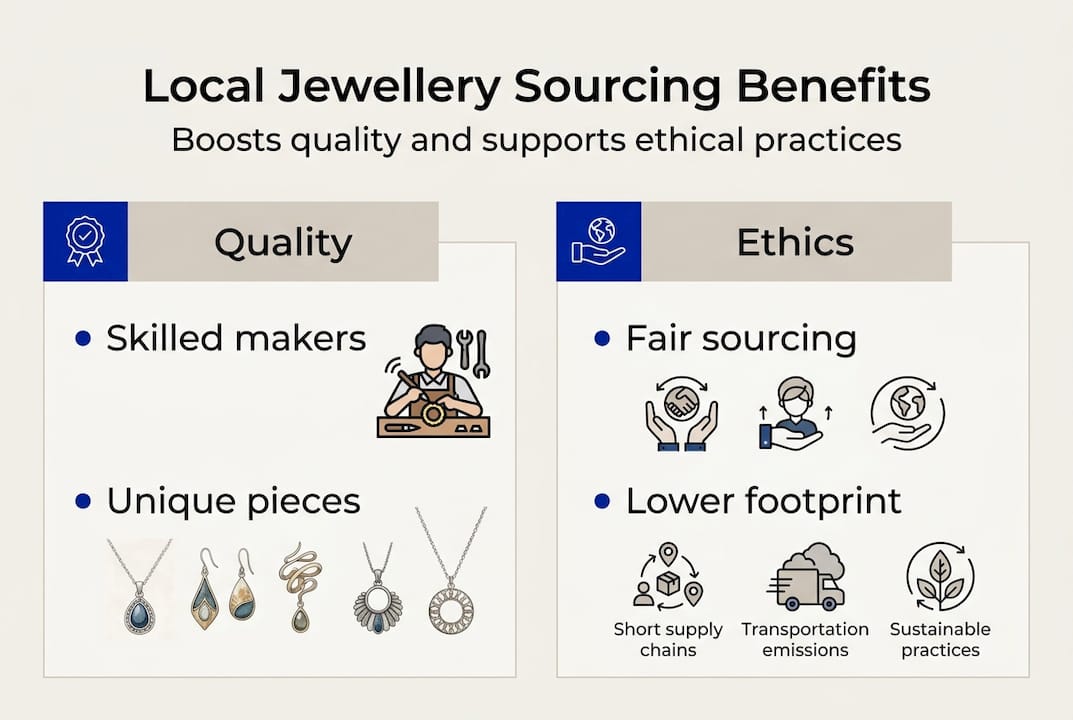
The UK jewellery sector is responding to this shift. The British jewellery market reached £6.41bn in 2025, growing by 3.6%, with sustainability and ethical practice cited as key drivers, particularly among younger buyers. This is not a niche movement. It reflects a fundamental change in how consumers relate to the objects they wear.
What does local sourcing actually include in practice?
- Pre-owned and second-hand pieces inspected and restored by UK jewellers
- Bespoke commissions using recycled or ethically sourced metals and stones
- Vintage and antique jewellery with documented provenance
- Refurbished pieces brought back to wearable condition by skilled craftspeople
Our refurbished jewellery guide explains the full process behind restoring pre-owned pieces to a standard that rivals new stock.
Key insight: Local sourcing is not about limiting your choice. It is about expanding your confidence in what you buy.
Environmental impact: lowering carbon and supporting sustainability
With a clear definition of local sourcing in mind, we can now consider the environmental consequences, and opportunities, it unlocks. The jewellery industry carries a significant environmental burden. Long global supply chains generate substantial carbon emissions through air freight, ocean shipping, and multiple stages of processing across different continents.
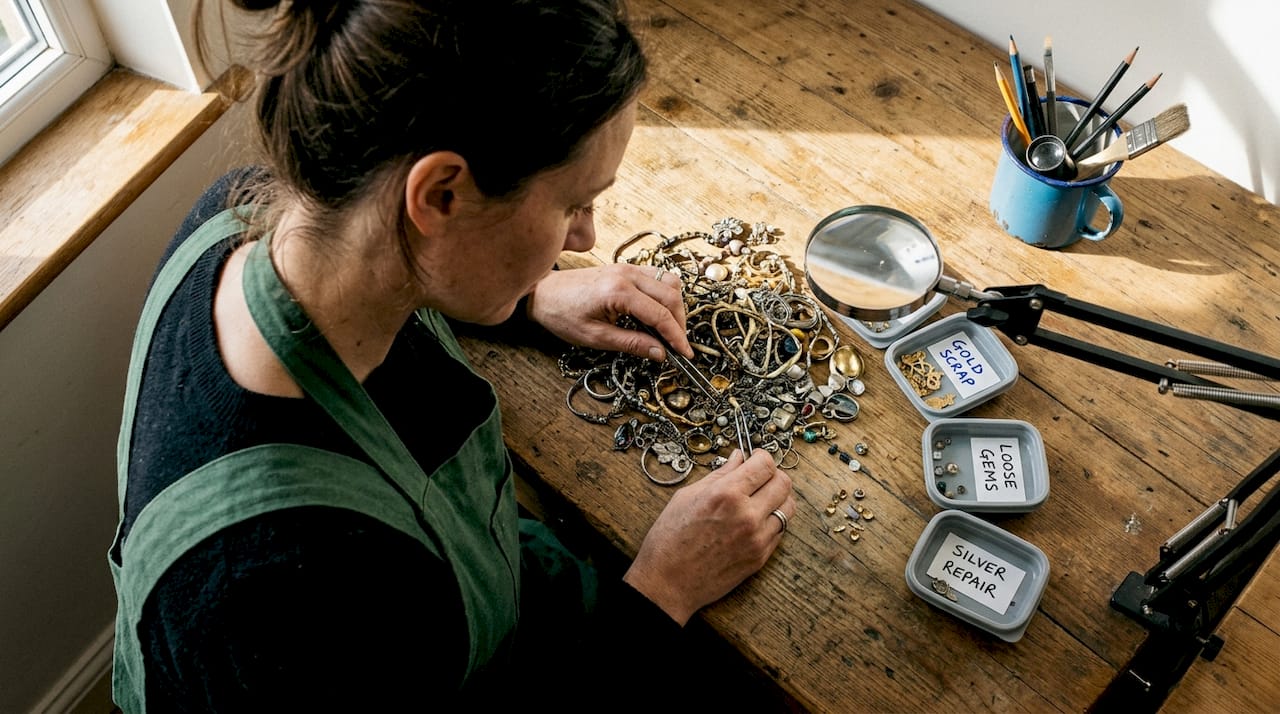
Choosing a pre-owned or locally refurbished piece directly addresses this. Mining a single gold ring produces more than 20 tonnes of waste rock and soil. When you buy pre-owned, that extraction has already happened, and you are simply giving the piece a new chapter without triggering further environmental damage.
| Approach | Estimated CO2 impact | Waste generated |
|---|---|---|
| New imported gold ring | High, multi-stage shipping | 20+ tonnes mining waste |
| Locally refurbished ring | Low, minimal transport | Near zero additional waste |
| Bespoke from recycled metal | Very low | Negligible |
Circular economy thinking, which means refurbishing, redesigning, and reusing existing pieces rather than manufacturing new ones, is gaining serious traction in the UK jewellery sector. It is one of the most effective ways to reduce the industry’s footprint. Explore the latest ethical jewellery trends to see how this is shaping buying decisions in 2026.
Pro Tip: Ask your jeweller specifically about the origin of each component in your piece. A reputable local jeweller will be able to answer clearly. If they cannot, that tells you something important.
Ethical assurance and transparency: knowing the story behind your jewellery
Aside from environmental benefits, choosing local means you can trust both the story and the process behind every jewel. Most imported jewellery lacks clear provenance. It may carry a hallmark confirming metal purity, but that tells you nothing about the conditions under which it was mined, cut, or assembled.
British-made and pre-owned pieces offer a different kind of reassurance. A local jeweller can tell you exactly where a stone came from, who restored the setting, and what tests were carried out before the piece went on display. That accountability is personal, not corporate. Responsible Jewellery Council research confirms that certification measurably improves labour rights and livelihoods across supply chains, and that younger UK buyers are increasingly prioritising verified transparency over marketing claims.
| Factor | Local or pre-owned | Mass-market imported |
|---|---|---|
| Provenance traceability | Full, verifiable | Often limited or absent |
| Labour standards | Monitored or known | Frequently unclear |
| Certification | Hallmarked, inspected | Variable |
| Accountability | Direct, personal | Corporate and remote |
Some larger brands have faced criticism for greenwashing concerns, using sustainability language without substantive evidence. Local jewellers simply do not have that luxury. Their reputation depends on honest dealings with real customers in their own community.
How to verify the story behind your piece:
- Ask for full hallmarking documentation and any accompanying certificates
- Request details of where the metal and stones originated
- Check whether the jeweller is a member of a recognised trade body
- Ask who carried out any restoration or refurbishment work
- Look for evidence of in-house workmanship rather than outsourced processing
For further guidance, our ethical diamond guide and our piece on bespoke ethical sourcing cover these questions in depth.
Craftsmanship, uniqueness and community: personal value over mass production
The reassurance of knowing your jewellery’s origin is only part of the appeal. The craft and community matter too. Mass production is cheaper and faster, but it produces pieces that thousands of other people own. When you source locally, you are far more likely to find something genuinely individual, whether that is a vintage ring with its own history, a bespoke commission designed around your preferences, or a pre-owned piece restored to its original character.
Local jewellers support skilled artisans who have spent years, sometimes decades, developing expertise in setting stones, repairing antique clasps, and working with precious metals by hand. That knowledge does not transfer to a factory floor. When you buy locally, you help sustain it.
The added values of local sourcing include:
- Individuality: Your piece is unlikely to appear on anyone else’s wrist or finger
- Story: Pre-owned and vintage pieces carry genuine history, not manufactured heritage
- Local economic support: Your purchase sustains skilled jobs and independent businesses in your community
- Hands-on customisation: You can discuss adjustments, redesigns, or entirely new commissions directly with the maker
If you are curious about what styles are resonating right now, our guide to jewellery trends 2025 and our overview of vintage styles making a comeback offer plenty of inspiration.
Pro Tip: Before assuming you need to buy new, speak to a local jeweller about refurbishing or redesigning a piece you already own. The result is often more meaningful and more affordable than starting from scratch.
Why the conventional view on price and value is outdated
Now that you have seen the practical benefits, let us challenge a widely held belief about cost and true value. The assumption that imported or mass-market jewellery represents better value is, frankly, a comfortable myth. Price and value are not the same thing, and nowhere is that gap more visible than in jewellery.
A locally sourced or pre-owned piece, properly authenticated and restored, often holds its value better over time than a mass-produced import. It carries a story, a verified history, and a level of craftsmanship that a factory-made equivalent simply cannot replicate. Greenwashing concerns around major brands have made consumers rightly sceptical of cheap imports dressed up in sustainability language.
We have seen this shift directly in our own experience. Customers who initially hesitate over the upfront cost of a locally sourced or pre-owned piece almost always report greater long-term satisfaction. They know what they bought, who made it, and why it matters. That confidence is not reflected in a price tag. It comes from the relationship between buyer and jeweller. Our guide on authentic jewellery savings shows how buying smart locally can actually reduce your overall spend without compromising on quality.
Discover bespoke, ethical jewellery locally in Kent
If you want to put these principles into practice, Kent has a thriving set of options ready for you. At Blackwell Jewellers, we have spent over 20 years building a reputation for transparency, craftsmanship, and genuine value across our stores in Maidstone, Gravesend, and Bexleyheath.
Every pre-owned piece we sell is inspected, authenticated, hallmarked, and restored by our in-house team before it reaches the display case. Whether you are looking for a meaningful pre-owned ring, a bespoke commission, or expert advice on refurbishing something you already love, our team is ready to help. Visit Blackwell Jewellers to explore our full collection and speak with a jeweller who will give you straight answers, not marketing scripts.
Frequently asked questions
Is locally sourced jewellery really more sustainable than imported?
Yes. Local sourcing cuts the carbon footprint by shortening supply chains and increasing the use of recycled and pre-owned materials, which directly reduces environmental damage at every stage.
How can I be sure a jeweller sources materials ethically?
Ask for full certification, request details of where metals and stones originated, and choose suppliers who provide clear answers rather than vague sustainability claims. Certification measurably improves labour rights and livelihoods across supply chains.
Is local jewellery always more expensive than imported?
Not always, and the comparison is rarely straightforward. Locally made pieces may cost more upfront but typically deliver better quality, unique design, and longer-term value, particularly when greenwashing concerns make cheap imports a risky proposition.
Why are pre-owned and refurbished pieces so popular now?
Growing demand for sustainability and originality has made pre-owned and refurbished jewellery a leading trend. The UK jewellery market growth reflects consumers prioritising ethical credentials and recycled materials over new mass-produced stock.
Recommended
- Jewellers’ role in bespoke design and ethical sourcing – blackwellonline
- What is fine jewellery: definitions, ethics and bespoke design – blackwellonline
- Top ethical jewellery trends for a sustainable 2026 – blackwellonline
- How jewellery is refurbished: a quality guide for UK buyers – blackwellonline
- Why Choose Handmade Gothic Jewelry for Self-Expression – GothMarket
- Sustainable Fashion Workflow for Eco-Conscious Streetwear – MEXESS