

TL;DR:
- Jewellery repair by post is safe when using insured, signature-required services like Royal Mail Special Delivery. Proper packing, photographic proof, and understanding insurance limits are essential to protect valuables. Rely on reputable services with clear procedures to minimize risks of loss, damage, or theft.
Jewellery repair by post is a secure and practical option for gold and diamond pieces, provided you use the right postal service, package your items correctly, and understand what your insurance actually covers. The industry term for this is “mail-in jewellery repair,” and it has become a genuinely reliable route for customers across the UK who cannot visit a jeweller in person. Services like Royal Mail Special Delivery offer guaranteed next-day delivery with compensation up to £2,500, making them the go-to choice for sending valuables. Get the process right, and your treasured pieces travel safely. Get it wrong, and you could find yourself in a very stressful situation indeed.
Is jewellery repair by post safe for gold and diamonds?
Yes. Mail-in jewellery repair is safe when you choose a tracked, insured, signature-required postal service and pack your items properly. The risk is not in the concept itself. The risk is in cutting corners.

Royal Mail Special Delivery is the UK industry standard for sending valuables by post. It provides guaranteed next-day delivery and automatic compensation up to £750, which you can extend to £2,500 for higher-value pieces. That matters enormously when you are posting a diamond ring or a gold bracelet worth several hundred pounds.
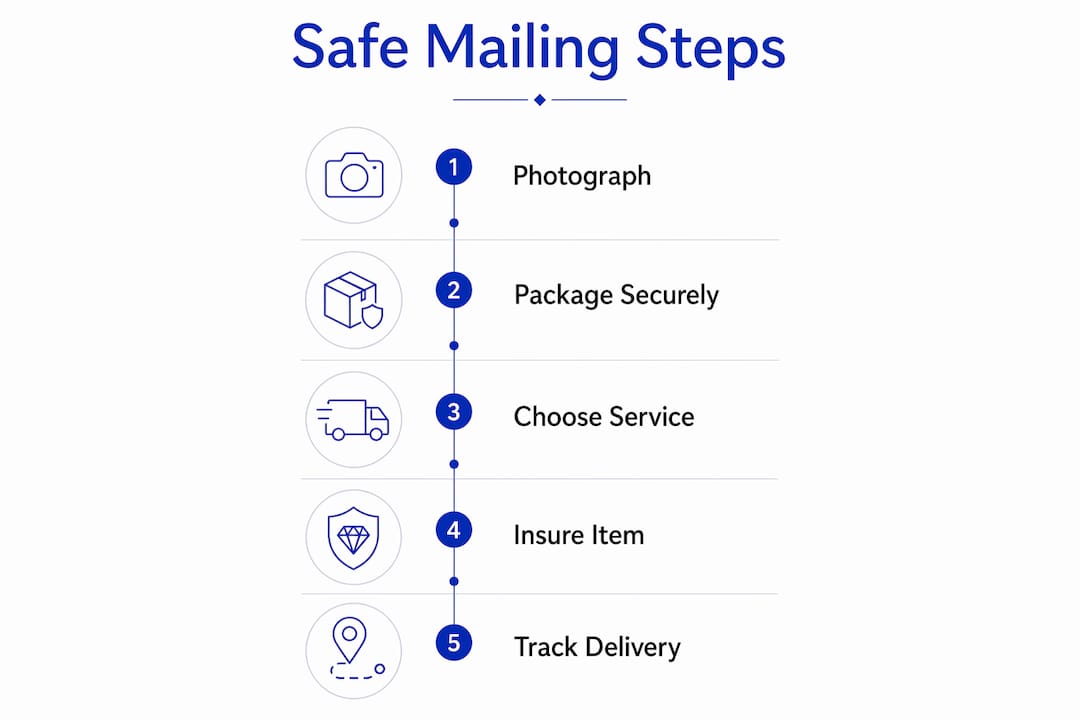
The three pillars of safe jewellery shipping are:
- A postal service with signature on delivery (not just tracking)
- Discreet, reinforced packaging that does not advertise its contents
- Proof of posting and photographic evidence of the item before it leaves your hands
Get all three right, and the risk of loss or damage drops dramatically. Miss even one, and you are exposed in ways that could cost you dearly.
Pro Tip: Always photograph your jewellery from multiple angles before posting, including close-ups of any existing damage. These images are your best friend if you ever need to make a claim.
What makes mailing gold and diamond jewellery for repair safe?
The single most important distinction in safe jewellery shipping is the difference between tracking and security. Tracking confirms movement through scan points but does not establish carrier liability. Signature on delivery does. Without a confirmed handover, you have very little recourse if a parcel goes missing.
This is why Royal Mail Special Delivery is the preferred service for diamond repair by mail and gold repair services. It requires a signature at both ends, creates a verifiable chain of custody, and gives you a legal basis for a compensation claim if something goes wrong.
Discreet packaging is the other non-negotiable. Jewellery is compact and valuable, which makes it a high-risk target for theft during transit. A plain, non-descriptive outer box with no branding or labelling that hints at the contents is your first line of defence. Think boring. Think anonymous. That is exactly what you want.
Here is what safe jewellery shipping looks like in practice:
- Use a small, rigid cardboard box rather than a padded envelope
- Wrap each piece individually in a soft pouch or zip-lock bag to prevent scratching
- Fill any empty space with bubble wrap or packing chips to stop movement
- Seal the box with strong packing tape on all edges
- Write only the address on the outside. Nothing else
Pro Tip: Do not write “jewellery” or “fragile” on the outer packaging. Both phrases can attract unwanted attention during transit.
How to properly prepare gold and diamond jewellery for posting
Packaging your jewellery correctly is not complicated, but it does require a bit of thought. Best practice calls for non-descriptive outer boxes, individual wrapping within zip-lock bags or pouches, and adequate padding to prevent any movement inside the box. Here is a step-by-step approach:
- Photograph everything first. Take high-resolution images from multiple angles, including any existing chips, scratches, or damage. This is your evidence pack.
- Wrap each item individually. Use a soft cloth pouch or a small zip-lock bag. This prevents pieces from scratching each other and adds a layer of protection.
- Place items in a small rigid box. Avoid envelopes entirely. A small cardboard box with a lid is the minimum standard.
- Pad the interior thoroughly. Bubble wrap, foam inserts, or packing chips should fill all empty space. The item should not move at all when you shake the box.
- Include proof of value inside the package. A copy of a valuation certificate, receipt, or written description of the item gives the repair service a reference point on receipt.
- Seal and address the outer box plainly. No decorative tape, no jewellery branding, no “fragile” stickers.
| Packaging element | Recommended | Avoid |
|---|---|---|
| Outer container | Small rigid cardboard box | Padded envelopes or jiffy bags |
| Item wrapping | Soft pouch or zip-lock bag | Loose tissue paper |
| Interior padding | Bubble wrap or packing chips | Empty space |
| Outer labelling | Address only | Brand names, “fragile,” or “jewellery” |
| Documentation | Valuation copy inside box | No documentation at all |
Pro Tip: Prepare your “claim pack” before you seal the parcel. That means photos, valuation proof, and images of the packaged item all saved in one folder. You will thank yourself later if anything goes wrong.
What does postal insurance actually cover for jewellery repairs?
This is where most people get caught out. Postal insurance is not a blanket guarantee. It is contingent on you meeting specific packaging criteria. If your packaging does not meet the carrier’s standards, your claim can be denied even if you paid for premium coverage.
Royal Mail Special Delivery automatically covers compensation up to £750. You can extend that to £2,500 by declaring a higher value at the counter. Compensation claims must be filed within 80 days of posting, and late delivery refunds must be requested within 14 days. Miss those windows, and you lose your right to claim.
There are a few common misconceptions worth addressing directly:
- “Insurance covers everything.” It does not. Sentimental value is never compensated. Compensation is a financial safety net, not a replacement for an irreplaceable item.
- “Tracking means I’m covered.” Tracking alone offers no compensation. Only signature-confirmed delivery establishes carrier liability.
- “I can use a safe place delivery option.” Avoid this entirely for jewellery. Insurers consider liability discharged once a parcel is deposited in a designated safe place, even if it is subsequently stolen.
The gap between what people think insurance covers and what it actually covers is where most claims fail. Read the terms before you post.
What are the risks of sending jewellery by post, and how do you reduce them?
The main risks are loss, damage, and theft. All three are manageable with the right approach. The risks that cannot be managed are sentimental value and irreplaceability. No compensation scheme covers what a piece means to you personally.
Creating a detailed claim pack before posting significantly improves your chances of a successful claim if something does go wrong. That means high-resolution photographs from multiple angles, proof of purchase or a professional valuation, and images of the packaged item before sealing. Evidence decides the outcome of most compensation requests.
Before you dispatch anything, run through this checklist:
- Chosen a signature-required postal service (Royal Mail Special Delivery or equivalent)
- Photographed the item from multiple angles
- Wrapped and padded the item correctly in a rigid box
- Included a copy of valuation or purchase proof inside the package
- Retained the proof of posting receipt and tracking number
- Noted the 80-day window for filing any compensation claim
- Confirmed the repair service’s receipt and inspection process
Pro Tip: Never select “safe place” as a delivery option for jewellery. If the parcel is left unattended and stolen, your insurer will almost certainly reject the claim.
What should you expect from the mail-in jewellery repair process?
The postal jewellery repair process at a reputable service follows a clear sequence. Knowing what to expect removes most of the anxiety.
Here is how it typically works:
- Receipt and inspection. The repair service logs your item on arrival, inspects it against your description, and confirms its condition. You should receive a notification at this stage.
- Estimate and approval. A written estimate is provided before any work begins. You approve the work before the goldsmith touches the piece.
- Repair by qualified goldsmiths. Professional jewellers carry out the work, whether that is re-tipping diamond claws, resizing a gold ring, or repairing a broken clasp.
- Quality check. The repaired item is inspected before return shipping.
- Insured return delivery. The piece is returned using a tracked, insured, signature-required service. You receive a tracking number before dispatch.
Reputable services like Blackwelljewellers communicate at every stage. If you are not receiving updates, that is a red flag worth acting on. You can read more about how online jewellery repairs work to set your expectations before you send anything.
Key takeaways
Mail-in jewellery repair is safe for gold and diamonds when you use Royal Mail Special Delivery, pack items in a rigid box with individual wrapping, retain photographic proof, and understand that insurance covers financial loss, not sentimental value.
| Point | Details |
|---|---|
| Choose the right postal service | Royal Mail Special Delivery offers signature delivery and compensation up to £2,500. |
| Pack discreetly and securely | Use a plain rigid box, individual wrapping, and full padding to prevent movement and deter theft. |
| Build your claim pack first | Photograph the item and packaging before sealing, and keep proof of posting for at least 80 days. |
| Understand insurance limits | Insurance is void if packaging standards are not met, and sentimental value is never compensated. |
| Avoid safe place delivery | Leaving a parcel unattended voids carrier liability, even if the item is subsequently stolen. |
My honest view on sending jewellery for repair by post
The anxiety people feel about posting jewellery is completely understandable. You are putting something precious, possibly irreplaceable, into a cardboard box and handing it to a stranger. That takes a bit of nerve.
But here is what I have observed over years of working with customers who send jewellery for repair: the ones who have bad experiences almost always skipped a step. They used a standard tracked service instead of a signature-required one. They wrapped the piece in tissue paper and dropped it in an envelope. They did not photograph it first. The process itself is not the problem. The shortcuts are.
The other thing I would say is this: compensation is a last resort, not a safety net you should rely on. If your grandmother’s diamond ring holds more meaning than money, treat it accordingly. Choose the best service available. Pack it as if your life depends on it. And pick a repair service with a real track record, real goldsmiths, and real accountability. Blackwelljewellers has been doing this for over 20 years, with physical stores in Kent and a national postal service that treats every piece as if it were their own. That kind of reputation is not built by accident.
— James
Blackwelljewellers’ postal repair service: what you need to know
Blackwelljewellers offers a fully insured, tracked, and professionally managed jewellery repair service for customers across the UK. Every piece received by post is logged, inspected, and assessed by qualified goldsmiths before any work begins.

The process is transparent from start to finish. You receive confirmation on receipt, a written estimate before repairs begin, and a tracked return delivery with full insurance. The team handles everything from diamond claw re-tipping to gold ring resizing, with the same care applied to a £50 repair as to a piece worth thousands. Blackwelljewellers also stocks an extensive range of pre-owned and authenticated jewellery for customers looking to buy alongside their repair. With over two decades of trusted service and stores across Kent, you are in safe hands.
FAQ
Is it safe to send gold jewellery by post for repair?
Yes. Gold jewellery can be sent safely by post using Royal Mail Special Delivery, which provides signature-confirmed delivery and compensation up to £2,500. Secure, discreet packaging and photographic proof of the item are required before posting.
What postal service should I use for diamond repair by mail?
Royal Mail Special Delivery is the UK standard for sending valuable items, including diamonds. It offers guaranteed next-day delivery, tracking, signature on delivery, and automatic compensation up to £750, extendable to £2,500.
Does postal insurance cover the full value of my jewellery?
Postal insurance covers financial loss up to the declared or maximum compensation limit, but it does not cover sentimental value. Claims can also be denied if packaging standards are not met, so following carrier guidelines is non-negotiable.
Can I use a “safe place” delivery option when sending jewellery for repair?
No. Safe place delivery options void carrier liability and insurance coverage for jewellery. If the parcel is left unattended and stolen, the insurer considers the delivery complete and will reject your claim.
How long do I have to file a compensation claim with Royal Mail?
Compensation claims must be filed within 80 days of the posting date. Late delivery refund requests must be submitted within 14 days. Keep your proof of posting receipt until both windows have passed.