
If you want the short version: platinum (950) is the safest bet for sensitive skin and heirloom durability, 18ct or 9ct gold wins if you want tradition and easy resizing, and titanium or tungsten suit anyone who wants a tough, low-maintenance band and is confident in their ring size. That last bit matters more than most buyers realise, because titanium and tungsten are usually not resizeable — get the size wrong and you’ll likely need a replacement rather than resizing.
- Best for skin sensitivity and heirloom value: platinum (950 hallmark), because it displaces metal rather than losing it when scratched.
- Best for tradition and flexibility: 18ct or 9ct gold, which can be resized by a jeweller.
- Best for low fuss, high scratch resistance: titanium (light) or tungsten carbide (hardest), with the big caveat that both are effectively fixed at the size you buy.
Table of Contents
- What are the main men’s wedding ring metals?
- Which metal suits which priority?
- How do you choose the right metal for you?
- How does width and weight affect comfort?
- What upkeep does each metal actually need?
- How does Blackwelljewellers help you get this right?
- Can you set a diamond or gemstone in any of these metals?
- Are there ethical or sustainability factors to consider?
- What styles are men actually choosing now?
- The most durable men’s wedding ring metal, plain and simple
- Why durability arguments miss the point
- Try before you commit, with Blackwelljewellers
- Sources
What are the main men’s wedding ring metals?
Before you go deeper into pros, cons and price, it helps to see the whole field in one place. Here’s how the common metals stack up on the two things that trip up most first-time buyers: can it be resized later, and how much looking-after does it need?
- Platinum (950): resizeable with care, low maintenance, naturally hypoallergenic.
- 18ct gold: resizeable, moderate maintenance, rich colour, softer than 9ct.
- 9ct gold: resizeable, moderate maintenance, harder and more affordable than 18ct.
- White gold: resizeable, high maintenance (needs rhodium replating), can irritate very sensitive skin under the plating.
- Rose gold: resizeable, moderate maintenance, warmer tone from added copper.
- Palladium: resizeable, low maintenance, hypoallergenic, lighter than platinum.
- Titanium: usually not resizeable, very low maintenance, hypoallergenic.
- Tungsten carbide: not resizeable, minimal maintenance, brittle rather than bendable.
- Cobalt chrome / zirconium: limited resizing, low maintenance, bright white finish.
- Silver: resizeable, high maintenance (tarnishes), rarely recommended for daily-wear bands.
Which metal suits which priority?
Every metal on that list solves a slightly different problem, so it’s worth understanding what’s actually going on under the hallmark before you pick one.
-
Platinum. Hallmarked 950 in the UK, meaning 95% pure platinum. It’s dense (noticeably heavier on the finger than gold of the same size), naturally hypoallergenic, and instead of wearing away when scratched, it displaces rather than loses metal and builds a soft patina over years rather than thinning out. That patina is why old platinum rings often look better worn than new. It sits at the premium end of pricing, and light polishing restores shine without removing material.
-
18ct vs 9ct gold. 9ct gold contains 37.5% pure gold and 18ct contains 75%, which explains the price gap and the colour difference. Counter-intuitively, 9ct is the harder, more scratch-resistant metal because the alloy mix contains more of the toughening base metals, while 18ct gives a deeper, richer yellow at a softer finish. Both resize well. White gold is really yellow or rose gold plated in rhodium to get that bright silvery look, and that plating wears off. Rose gold gets its warmth from added copper content, which also makes it slightly harder than plain yellow gold.
-
Palladium. A platinum-group metal, meaning chemically similar to platinum but noticeably lighter on the hand. It carries less UK jewellery history than platinum or gold, but it’s hypoallergenic, resists tarnish, and costs less than platinum while looking almost identical.
-
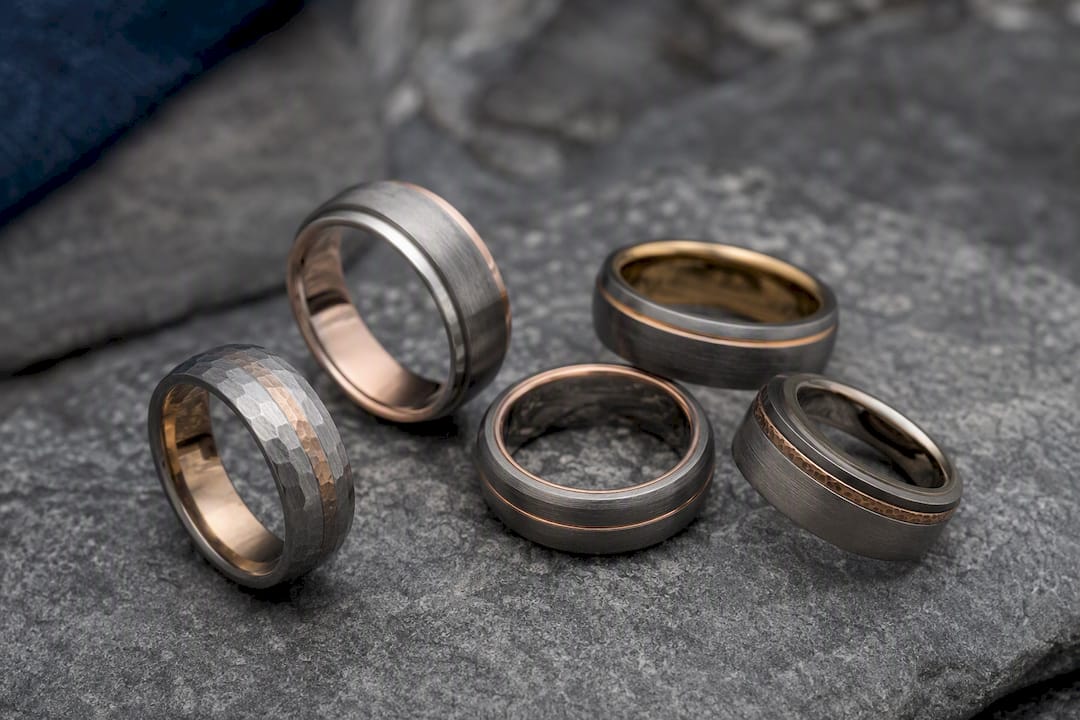
Titanium. Aerospace-grade, corrosion-resistant and remarkably light, as seen in the Vintage Punk Goth men’s ring with gemstone – GothMarket collection. Titanium generally can’t be resized, so it suits buyers who are confident about their size and want a band that shrugs off manual work.
-
Tungsten carbide. Nearly four times harder than titanium and close to scratch-proof, but that hardness comes from brittleness. A hard knock can crack or shatter it rather than dent it, and it’s essentially never resized.
-
Cobalt chrome and zirconium. Modern white-metal alternatives with a bright, hard-wearing finish. Resizing is possible on some cobalt chrome bands but limited compared with gold, and repair after damage is trickier than with precious metals.
-
Silver. Soft, prone to tarnish, and rarely the right call for a ring worn every day for decades. It’s fine for a keepsake band, less fine for the one you’ll wear on a building site.
-
Meteorite, wood or mixed inlays. Striking to look at, but organic inlays react to moisture, heat and chemicals, so they need removing for washing up, swimming, or manual work.
Pro Tip: If you work with your hands, ask a jeweller whether your shortlisted metal can be refinished (polished back to new) or only replaced. That single question separates a ring that lasts a lifetime from one you’ll be rebuying in five years.
How do you choose the right metal for you?
Five questions should drive the decision, in this order of importance:
- Lifestyle: manual work, gym, or an office job all put different stresses on a band.
- Likely size changes: weight fluctuation or muscle gain over time matters more with non-resizeable metals.
- Skin sensitivity: platinum and palladium are the safest hypoallergenic choices.
- Desired finish: brushed, polished, or hammered textures suit some metals better than others.
- Budget: 9ct gold and titanium sit at the accessible end; platinum sits at the top.
When you’re actually in front of a jeweller, ask directly: what’s the hallmark and purity? Can this ring be resized, and by how much in either direction? What does replating or repair cost down the line? Is there a guarantee or exchange policy if the size is wrong?
Walk away from anything with no visible hallmark, a vague “gold-coloured alloy” description, or a no-returns policy on a ring that also can’t be resized. That combination leaves you with zero options if it doesn’t fit.
How does width and weight affect comfort?
Width changes both the look and the feel of a band more than most buyers expect. A slim 3 to 3.5mm reads modern and understated; 4 to 6mm is the traditional middle ground; 8mm and above makes a statement but can feel heavy on smaller hands. Hatton Garden jewellers report that 4 to 5mm bands remain the most common choice, which is a sensible safe default if you’re unsure.
- Platinum’s density makes a wide band feel noticeably heavier than the same width in titanium.
- A court profile (rounded inside and out) tends to sit more comfortably than a flat profile at the same size.
- Try your preferred width in the actual metal you’re buying, not just any sample ring.
Pro Tip: Finger size shifts with temperature and time of day, so get measured properly rather than guessing from an online chart, and expect it to sometimes take more than one visit to settle on a size.
What upkeep does each metal actually need?
Most rings need nothing more than a soft cloth and an occasional warm soapy soak, with a jeweller check-up once a year or so. White gold is the exception: rhodium plating typically needs redoing every one to three years depending on how hard you are on it, at a modest cost each time. Platinum and gold can usually be polished back to looking new, while tungsten generally can’t be repaired at all, only replaced. If your ring has an inlay or stone setting, take it off before swimming, cleaning, or heavy manual work.
How does Blackwelljewellers help you get this right?
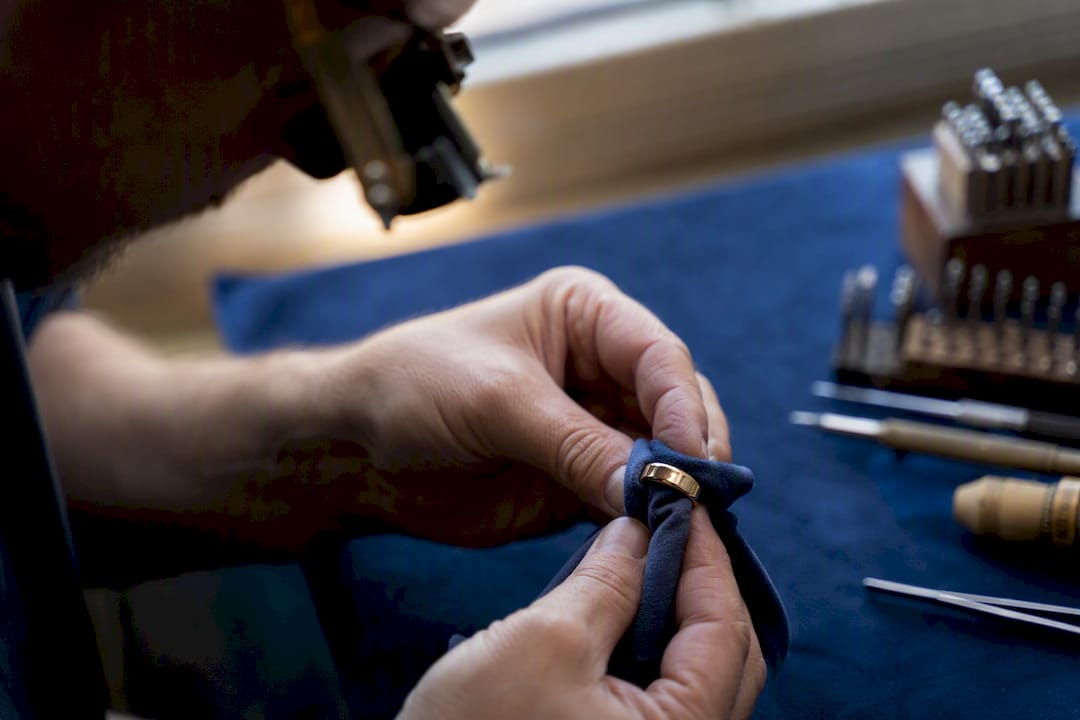
Choosing a metal on a spec sheet is one thing. Trying it on, in the right width, with someone checking the hallmark, is another. Blackwelljewellers has been trading for over 20 years, with stores across Kent and a full online range, and every piece that passes through the workshop is inspected, hallmarked and restored by in-house jewellers before it reaches a customer.
- Try different widths and profiles in-store before committing to a size.
- Ask for inspection notes on any pre-owned ring, covering hallmark, purity and repair history.
- Check resizing policy and turnaround time before you buy, not after.
Can you set a diamond or gemstone in any of these metals?
Not every metal handles a stone setting equally well, and this matters more than it seems on a plain band. Platinum’s density and malleability make it the industry standard for securing diamonds and coloured gemstones because prongs can be reworked and tightened repeatedly without weakening the metal. Gold, particularly 18ct, behaves similarly and is the traditional choice for signet-style rings with an inset stone.
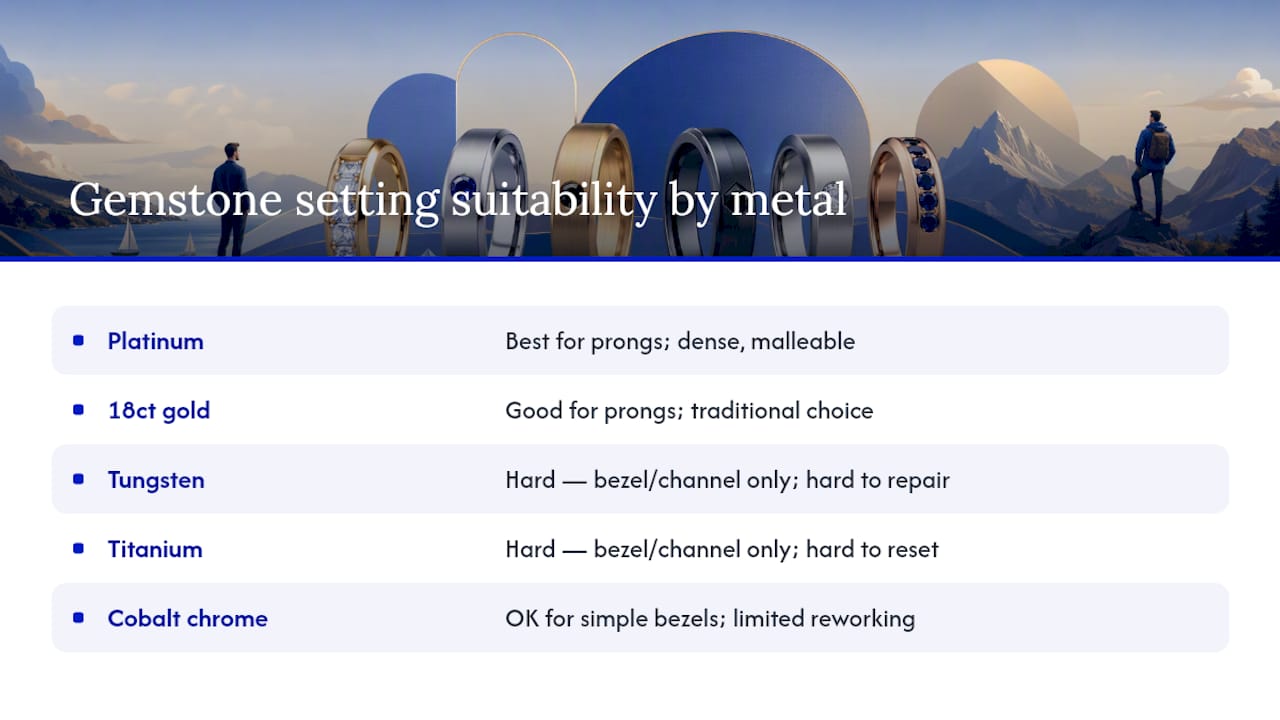
Tungsten and titanium are far less accommodating. Their hardness makes cutting or resetting prongs impractical, so stones on these metals are almost always set into a pre-formed channel or bezel rather than held by traditional claws, and once that setting is damaged, repair options narrow fast. Cobalt chrome sits somewhere in between: workable for simple bezel settings, but not a metal a jeweller will happily rework repeatedly.
If you want an inlay rather than a faceted stone, meteorite and wood strips are typically set into a metal sleeve (often titanium or tungsten) rather than fused directly, which protects the organic material from everyday knocks but means the inlay itself can’t be resized or repaired the way a metal band can. For a groom who wants a stone or inlay and also wants the option to resize later, gold or platinum remains the more forgiving base metal, and that’s worth deciding before you fall for a design.
Are there ethical or sustainability factors to consider?
Precious metal sourcing carries real environmental weight, and it’s worth knowing where your ring’s material actually comes from. Newly mined gold and platinum involve significant land disturbance and energy use, which is why recycled precious metal has become a mainstream option rather than a niche one. A ring made from reclaimed gold carries the same hallmark, purity and durability as newly mined metal, because the metal itself doesn’t know the difference. That’s also where buying pre-owned genuinely helps: an authenticated second-hand platinum or gold band keeps existing metal in circulation rather than requiring fresh extraction, while still going through the same hallmarking and inspection process as new stock.
Alternative metals raise different questions. Titanium and tungsten are typically industrially sourced rather than mined in the same way as precious metals, so the ethical conversation shifts more towards manufacturing energy use than land impact or conflict sourcing. Cobalt, notably, has a more complicated supply chain reputation in other industries (batteries in particular), so it’s a fair question to ask a jeweller where the cobalt in a cobalt chrome ring has come from.
None of this means one metal is unambiguously the “ethical” choice. It means asking about provenance, whether that’s recycled content, conflict-free certification, or supply chain transparency, is a reasonable thing to do before you buy, and a jeweller who can’t answer clearly is telling you something.
What styles are men actually choosing now?
Plain, comfortable bands still dominate, but the metal choice underneath has shifted noticeably over the past few years. Brushed and matte finishes have overtaken high-polish shine as the default preference for daily-wear bands, largely because they hide the small scuffs that accumulate on hands-on jobs far better than a mirror finish does. Hammered and textured surfaces have moved from niche to mainstream too, particularly on wider platinum and gold bands.
On the metal side, alternative options like titanium and tungsten have shifted buyer expectations towards treating a ring as functional daily equipment rather than a delicate keepsake, and plenty of buyers now willingly accept the non-resizing trade-off in exchange for something that survives a job site. That said, gold hasn’t gone anywhere. Rose gold in particular has grown in popularity for men who want warmth without going fully into yellow gold territory, and mixed-metal bands, such as a tungsten core with a gold inlay stripe, have become a genuine middle ground between toughness and traditional colour. A tasteful compromise, in other words, for buyers who can’t quite choose between the two camps.
The most durable men’s wedding ring metal, plain and simple
The single most important fact in this entire guide is that resizability, not raw hardness, decides whether your wedding ring metal will still be usable in twenty years.
| Point | Details |
|---|---|
| Platinum for sensitive skin | Hypoallergenic and hallmarked 950, it displaces rather than loses metal when scratched. |
| Gold for flexibility | 18ct and 9ct gold both resize easily, with 9ct being harder and more affordable. |
| Tungsten and titanium trade-off | Extremely scratch-resistant and low maintenance, but almost never resizeable. |
| White gold needs upkeep | Rhodium replating is typically needed every one to three years to keep its bright finish. |
| Blackwelljewellers for confidence | Offers professional sizing, hallmark inspection and repair on both new and authenticated pre-owned rings. |
Why durability arguments miss the point
Most guides rank metals by hardness alone, as if a Mohs number tells you everything. It doesn’t. Tungsten wins that contest and still fails plenty of buyers, because a ring that can’t be resized when your hands change shape over a decade isn’t durable in any meaningful sense, it’s just hard.
The conventional advice undersells resizability and overstates scratch resistance. In practice, the buyers who end up happiest with their ring five years on are the ones who asked about hallmarks, resizing limits and repair costs before they bought, not the ones who picked the toughest metal on a chart. A hallmark tells you what you’re actually holding; a resizing policy tells you what happens when life changes your hand.
If there’s one thing worth prioritising first, it’s this: get professionally sized in the actual metal and width you want, and ask directly what happens if that size needs to change later. Everything else, colour, finish, price band, is a genuine preference call. Resizability isn’t a preference. It’s the difference between a ring you wear for one decade and one you wear for the rest of your life.
— James
Try before you commit, with Blackwelljewellers
Reading about metals only gets you so far. Blackwelljewellers gives you the chance to actually try platinum, 18ct, 9ct and alternative metal bands in-store across its Kent locations, with a jeweller on hand to explain hallmarks, resizing limits and repair costs before you spend a penny.
If budget is on your mind, the second-hand jewellery collection is worth a look. Every pre-owned ring is inspected, authenticated and re-hallmarked by Blackwelljewellers’s own workshop, so you get verified purity and provenance at a lower price point than buying new. Already own a band that no longer fits or needs restoring? The jewellery repairs service covers resizing, replating and structural repair in-house. Book a fitting appointment at your nearest Kent store, or browse the second-hand collection online, to find a metal that actually suits how you live.
Sources
- How to buy a men’s wedding ring, according to Hatton Garden’s finest | British GQ
- Choosing the Perfect Wedding Ring Metal: Complete UK Guide
- Men’s Wedding Rings UK — The Complete 2026 Guide | Foundoria