
Old cut diamonds are hand-faceted antique stones (old mine, old European and rose cuts) with visible open culets, small tables and proportions, nothing like a modern round brilliant. The buying verdict: choose one for character, not sparkle uniformity, and never buy without seeing a culet-view photo, millimetre measurements and a lab report or in-person inspection first.
Before you part with any money, ask the seller for:
- A photo looking straight down through the table, so you can see the culet
- Girdle-to-girdle millimetre measurements (not just carat weight)
- A gemmological report, or an offer to inspect the stone in person
Key takeaways
Buying an old cut diamond well comes down to verifying the culet, girdle and measurements before price, not after.
| Point | Details |
|---|---|
| Identify the style first | Old mine is cushion-shaped with a large culet; old European is rounder with a smaller culet. |
| Trust millimetres over carats | Deep antique pavilions mean face-up size can be smaller than carat weight implies. |
| Check for recutting | Faceted girdles, tiny culets or unusually modern faceting suggest the stone has been altered. |
| Get documentation before buying | Insist on a lab report, condition notes and photos in normal light, not just spotlighting. |
| Use an authenticator you trust | Blackwell Jewellers inspects hallmarks and cut characteristics on every pre-owned piece before sale. |
Table of Contents
- What are old cut diamonds? The main antique styles explained
- How do you identify an old cut diamond?
- How do old cuts compare with modern round brilliants?
- Checklist for buying an old cut diamond
- How Blackwell Jewellers authenticates and restores old cuts
- Why the “just get it graded” advice misses the point
- Find an authenticated old cut diamond at Blackwell Jewellers
- Frequently asked questions about old cut diamonds
- Sources
What are old cut diamonds? The main antique styles explained
“Old cut” isn’t one shape. It’s a family of hand-cut styles, each tied to a specific era, and knowing which is which tells you roughly how old you’re dealing with.
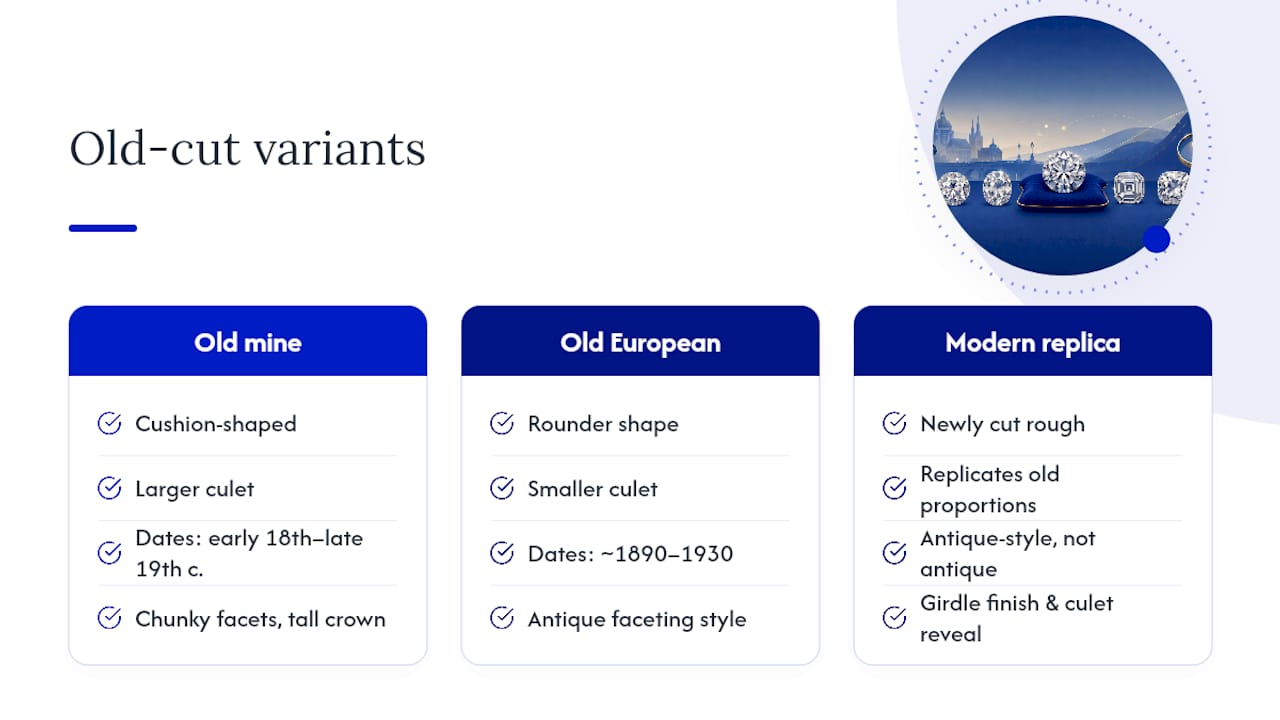
- Old mine cut. Cushion-shaped with rounded corners, a small table, a tall crown and a deep pavilion ending in a large, plainly visible culet. Cutters produced these by eye against candlelight from the early 18th century through the late 19th century, which is exactly why no two are quite alike, as the GIA’s guide to old mine cuts explains.
- Old European cut. The rounder successor, popular from roughly 1890 to 1930. It kept the tall crown and deep pavilion of the old mine but tightened the outline towards a circle and shrank the culet, according to the Gem Society’s breakdown of old European cuts. Think Edwardian filigree through to early Art Deco.
- Rose and transitional cuts. Rose cuts are flat-backed with a domed, faceted crown and no pavilion at all, an older style than either of the above. Transitional cuts sit between old European and the modern brilliant, an intermediate step in the long march charted on Wikipedia’s diamond cut history.
A crucial distinction: an “antique-cut” stone isn’t automatically an antique. Plenty of modern cutters replicate old mine proportions on freshly mined rough, and the GIA notes these copies usually give themselves away through girdle finishing, culet uniformity and a crispness period stones simply don’t have.
How do you identify an old cut diamond?
Most of this you can do from photographs, which matters if you’re buying from an online listing rather than standing at a counter.
- Outline first. A cushion-shaped, slightly lopsided outline points to old mine. A rounder, more even outline suggests old European or transitional.
- Facets should look chunky. Old cuts have fewer, larger facets than a modern brilliant’s 57 or 58. If the facet pattern looks fine and machine-precise, treat the “antique” label with suspicion.
- Find the culet. Look through the table for a flat facet at the very bottom, visible to the naked eye. A large, centred culet is normal and expected, not a flaw.
- Check the girdle. Original girdles are usually bruted (a rough, frosted band) rather than faceted or polished smooth. A crisp, faceted girdle on a supposedly Georgian stone is a red flag for recutting.
- Compare proportions. Small table, tall crown, deep pavilion. Ask for the table percentage and crown height if the seller has them.
Pro Tip: Always ask for photos taken in normal room light, not just showroom spotlighting. As jewellers who specialise in old mine and old European stones point out, antique cuts can look dramatically different under a jeweller’s halogen bulb versus the light you’ll actually wear it in.
How do old cuts compare with modern round brilliants?
The light behaviour is genuinely different, not just marketed as different. Antique cuts throw broad, chunky flashes and warmer fire, while a modern round brilliant breaks light into dozens of small, rapid scintillations, a contrast confirmed by CutGrade’s comparison of vintage and modern cuts. Neither is objectively better. One reads as fireplace glow, the other as strobe light.
Face-up size is where old cuts catch buyers out. Deep pavilions mean an old mine cut often looks smaller than its carat weight suggests when compared to a shallower modern stone. An old mine cut can face up smaller than a modern brilliant of similar quality that weighs less, so relying on carat weight alone to judge size is a mistake worth avoiding before you buy.
- Antique cuts: broader flashes, more visible fire, smaller face-up size per carat
- Modern brilliants: finer scintillation, higher measured brilliance, more predictable sizing
Resale liquidity also splits the two. Modern round brilliants have a deep, standardised secondhand market because grading and demand are consistent worldwide. Genuine, well-documented antique stones can command real premiums among collectors, but that market is thinner and slower, so buy an old cut because you want that stone, not as a quick-turn investment.
Choose an antique cut for a low-set solitaire or a vintage-style cluster where warm, broad flashes suit the design, complementing the elegant themes of a Diamond Wedding Package – Luxury Decor & Entertainment £££. Choose modern for a contemporary halo or pavé setting where fine scintillation is the whole point.
Checklist for buying an old cut diamond
Work through these in order and you’ll avoid the two most common mistakes: overpaying for a recut stone sold as untouched, and buying a chipped culet mistaken for correct antique styling.
- Get a lab report. GIA or another reputable laboratory, and understand its limits. Standard cut-grade scales are built around modern round brilliants and often don’t apply meaningfully to old mine or old European stones, so read the report as a description, not a score.
- Request full measurements. Millimetre dimensions girdle to girdle, table percentage, and photos from the top, side and through the culet. Never accept carat weight alone as a size indicator.
- Inspect for damage. Culet chips, girdle nicks, and any signs of re-polishing. A very small or missing culet, an oddly modern facet pattern, or a faceted girdle can all point to a stone that’s been recut.
- Ask about history. A proper condition report notes any repairs or re-setting. Reputable antique sellers document this rather than hide it.
- Choose the setting carefully. Old mine and old European girdles are often thinner than modern stones’, so a protective setting matters more here than usual. A well-designed jewellery setting shields the girdle edge from everyday knocks.
- Weigh up price factors. Provenance, documented history, condition and rarity all move price more than carat weight alone. A well-provenanced piece can carry a genuine premium, and pricing for authentic antique cuts moves with availability as much as size.
Recutting comes up often with damaged antique stones, and it’s worth understanding before a dealer suggests it. Recutting can remove a significant portion of carat weight and strips away the historical character entirely, even though it may improve light performance. If a dealer offers to recut a stone you’re considering, ask what percentage of weight you’d lose and whether the original culet and outline would survive. Often, they won’t.
Pro Tip: If you’re weighing an antique-style engagement ring against a full period piece, browse a range of diamond ring styles first. It helps to see how a small table and tall crown actually sit in a finished mount before committing.
How Blackwell Jewellers authenticates and restores old cuts
Every pre-owned diamond piece that reaches our Kent stores or website goes through an in-house authentication process before it’s offered for sale. That means checking hallmarks, examining the stone’s cut characteristics under gemmological equipment, and documenting condition honestly rather than glossing over old repairs.
- Hallmark and metal verification alongside the stone’s own cut and wear characteristics
- Written condition notes covering culet, girdle and any prior re-setting
- Restoration that conserves the original cut wherever possible, rather than defaulting to a full recut
- Guidance on protective re-setting or bespoke redesign if the current mount doesn’t suit the stone
Book a viewing and you’ll see the stone under normal light, get the measurements in writing, and leave with a clear condition report, not a sales pitch dressed up as one.
Why the “just get it graded” advice misses the point
Most guides tell you to get a cut grade and compare numbers. That advice works for modern round brilliants and falls apart for anything hand-cut before 1930, because the grading scales were built around Tolkowsky’s mathematics, not candlelight cutting. Treating a GIA report on an old mine cut the way you’d treat one on a modern brilliant is where a lot of buyers go wrong.
What actually matters is condition history and honesty about alteration. A recut old European that’s lost 20% of its weight isn’t a lesser stone, but it is a different stone from the one being described if a seller doesn’t disclose the recut. The irregularity that makes old cuts charming is the same irregularity that makes them easy to misrepresent.
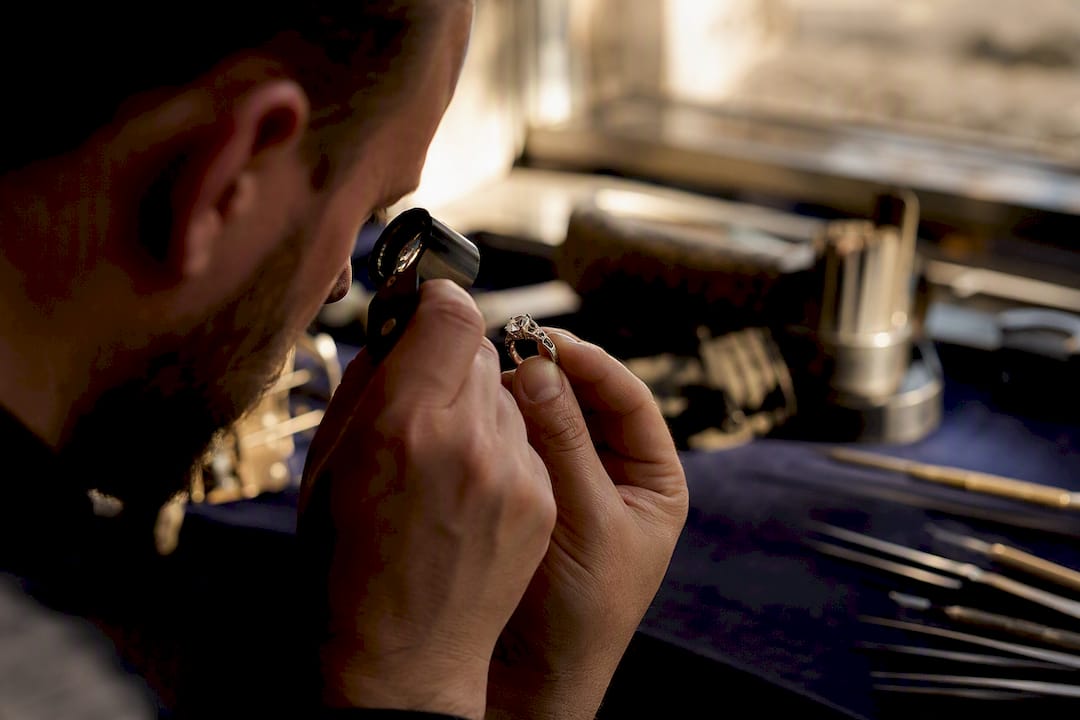
If you take one thing from this, prioritise the culet and girdle inspection over everything else. A dealer who can’t or won’t show you a clear culet-view photo is telling you something, whether they mean to or not. Character is the whole appeal of an old cut diamond. Don’t let uncertainty about authenticity undercut it.
Find an authenticated old cut diamond at Blackwell Jewellers
Rather than gambling on an unverified listing, you can view antique and vintage-style pieces that have already been through hallmark checks, gemmological inspection and condition documentation before they’re offered for sale.

Our second-hand jewellery collection includes old mine, old European and rose-cut pieces with their condition and provenance recorded, so you’re not relying on a stranger’s word for it. If you’d rather see a stone in person under normal light before deciding, our Maidstone showroom offers viewing appointments where you can check the culet, girdle and setting yourself. And if you already own an antique piece that needs a protective re-setting or a repair to preserve its original cut, our restoration service is built around conserving character rather than defaulting to a full recut. Browse the current second-hand collection online or book a viewing at Maidstone to see what’s available now.
Frequently asked questions about old cut diamonds
What makes a diamond an “old cut” rather than just old? It refers to the faceting style, not simply age. A stone must show the small table, tall crown, chunky facets and open culet characteristic of old mine, old European or rose cutting to qualify, regardless of when it was mined.
Can a modern diamond be cut in an old style? Yes, and this happens often. Modern cutters replicate old mine and old European proportions on newly mined rough, producing an antique-style stone rather than an antique stone. Girdle finishing and culet uniformity usually reveal the difference.
Is an old European cut the same as an old mine cut? No. Old mine cuts are cushion-shaped with a larger culet and date roughly from the early 18th to late 19th century. Old European cuts are rounder, have a smaller culet, and became popular from about 1890 to 1930.
Do old cut diamonds sparkle less than modern brilliants? They sparkle differently rather than less. Old cuts produce broader, warmer flashes of light and fire, while modern round brilliants create finer, more frequent scintillation. Preference comes down to personal taste and setting style.
Should I have a chipped old cut diamond recut? Think carefully first. Recutting can improve light performance but typically removes 10 to 30% of the carat weight and erases the historical character that made the stone valuable in the first place. Ask for both options and their costs before deciding.
Sources
- Old mine cut diamond guide | GIA 4Cs
- Old European cut diamonds: The complete guide | Gem Society
- Vintage vs modern diamond cuts | CutGrade
- Diamond cut — Wikipedia