
TL;DR:
- The 4Cs—cut, colour, clarity, and carat—determine a diamond’s value and appearance.
- Reputable UK sellers provide certification, transparent sourcing, and thorough verification processes.
- Pre-owned and lab-grown diamonds offer ethical, cost-effective, and high-quality alternatives to new stones.
Buying a diamond in the UK can feel like navigating a minefield. Prices vary wildly, terminology is confusing, and it is genuinely difficult to know whether you are getting fair value or simply paying for clever marketing. Add in questions about ethical sourcing, authenticity, and the growing appeal of pre-owned gems, and many buyers simply freeze up. This guide cuts through that noise. Whether you are searching for an engagement ring, a milestone gift, or a sustainable investment piece, you will find practical, clear steps that make the process far less daunting.
Table of Contents
- Understanding diamond value: the essentials before you buy
- How to research UK diamond sellers and certifications
- Step-by-step process for buying pre-owned diamonds in the UK
- Verifying diamond quality and authenticity before purchase
- Why the smartest UK buyers embrace pre-owned and ethical diamonds
- Find your perfect ethical diamond today
- Frequently asked questions
Key Takeaways
| Point | Details |
|---|---|
| Focus on the 4Cs | Understanding cut, colour, clarity, and carat is the foundation of smart diamond buying in the UK. |
| Check certifications | Always verify a diamond’s independent certification from reputable labs for peace of mind. |
| Buy from trusted sellers | Choose retailers with transparent service histories and positive UK reviews to avoid common pitfalls. |
| Consider pre-owned options | Pre-owned and ethical diamonds offer valuable, sustainable alternatives for discerning UK buyers. |
Understanding diamond value: the essentials before you buy
Before spending a penny, you need to understand what actually drives a diamond’s price and appearance. The industry uses four core measures, collectively called the 4Cs: cut, colour, clarity, and carat. Each one tells a different part of the story.
Cut refers to how well a diamond has been shaped and faceted, directly affecting how much light it reflects. A poorly cut stone looks dull regardless of size. Colour is graded on a scale from D (completely colourless) to Z (visibly yellow or brown), with colourless stones typically commanding higher prices. Clarity measures the presence of internal imperfections, called inclusions, or surface blemishes. Carat is simply a unit of weight, with one carat equalling 0.2 grams.
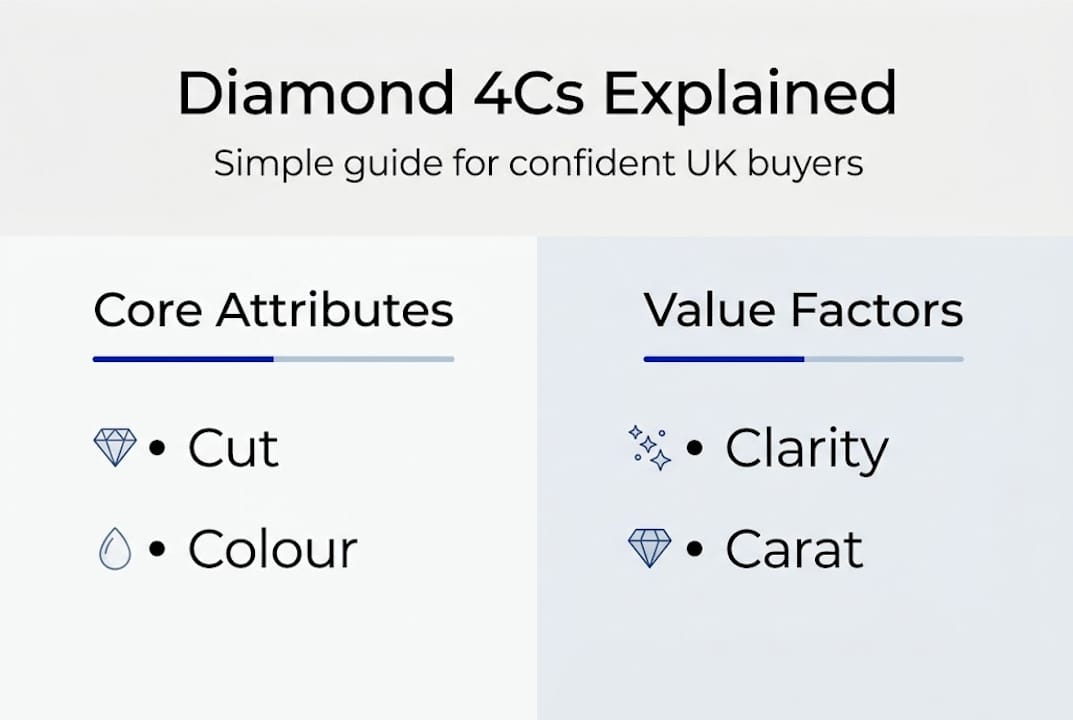
As a starting framework, the understanding the 4Cs guide explains how each characteristic interacts to influence overall value and visual impact.
| The 4Cs | What it measures | Buyer priority |
|---|---|---|
| Cut | Light reflection and brilliance | Very high |
| Colour | Presence of yellow or brown tint | High |
| Clarity | Internal and surface imperfections | Medium to high |
| Carat | Physical weight of the stone | Depends on budget |
Ethical sourcing has become a genuine priority for UK buyers, and rightly so. Conflict diamonds, sometimes called blood diamonds, are mined in war zones and used to fund armed conflict. Reputable sellers in the UK follow the Kimberley Process, but that alone is not enough assurance for many consumers. The ethical diamond buying guide outlines what truly ethical sourcing looks like beyond minimum compliance.
Pre-owned diamonds present a compelling alternative. They are typically 20 to 40 per cent less expensive than comparable new stones, carry an existing history of quality, and sidestep the environmental costs of new mining. UK lab grown diamonds are also worth considering, and lab-grown CVD diamond specs demonstrate that laboratory-created stones can achieve exceptional grades rivalling mined gems.
Key red flags to watch for when browsing:
- Sellers who cannot provide a grading certificate on request
- Listings with vague descriptions or no weight information
- Prices significantly below market value without explanation
- No clear returns or aftercare policy
Pro Tip: Prioritise cut quality above all other factors. A well-cut stone in a mid-range colour and clarity grade will outshine a poorly cut stone with flawless clarity every single time.
How to research UK diamond sellers and certifications
Once you grasp the fundamentals, your next move is choosing a trustworthy UK retailer and verifying their credentials. Not all sellers operate to the same standard, and knowing what to look for protects you from expensive mistakes.
A reputable UK seller will be transparent about their sourcing, provide documentation on request, and offer a clear returns policy. Look for established businesses with physical premises and a verifiable trading history. Online-only sellers are not automatically untrustworthy, but physical accountability is a meaningful reassurance.
Diamond grading certificates are issued by independent gemological laboratories and verify a stone’s 4Cs objectively. The most respected bodies include:
- GIA (Gemological Institute of America): Widely considered the gold standard globally
- IGI (International Gemological Institute): Popular for lab-grown diamonds and widely accepted in the UK
- HRD Antwerp: A respected European authority, well recognised in the UK market
As the recognised certifications guide explains, independent certification removes guesswork and creates a verifiable record of the stone’s characteristics.
| Certification body | Reputation | Best suited for | Typical UK acceptance |
|---|---|---|---|
| GIA | Gold standard | All diamond types | Very high |
| IGI | Strong, growing | Lab-grown diamonds | High |
| HRD Antwerp | Respected in Europe | Mined diamonds | High |
Spotting manipulated or fake certificates is also vital. Always verify the certificate number directly on the issuing laboratory’s website. Cross-check the stone’s weight, measurements, and grades against the physical diamond. Tools like the gem testing tools used by professionals can confirm optical properties that align with the certification.
For a full walkthrough of the selection process, the UK diamond selection guide offers a structured approach from shortlisting to purchase. Additionally, diamond UV light testing is a tool increasingly used by both retailers and buyers to detect treated or synthetic stones.
Pro Tip: Always request the grading report before agreeing to any purchase. If a seller hesitates or cannot produce one promptly, treat that as a serious warning sign.
Step-by-step process for buying pre-owned diamonds in the UK
With the right seller and certificate identified, you are ready to begin the actual buying journey. Pre-owned diamonds are not a compromise. When sourced carefully, they can match the quality and appearance of new stones at a fraction of the cost.
Here is a practical process to follow:
- Begin with research. Set your budget, decide on the 4C priorities, and browse reputable pre-owned retailers. Note down any stones you want to explore further.
- Verify the seller. Check their trading history, customer reviews, and whether they have physical stores or premises. Look for aftercare policies and certification commitments.
- Request documentation. Before viewing or committing, ask for the grading certificate and any refurbishment records. A reliable seller will have both.
- Inspect the stone. Whether in person or via high-quality imagery and video, examine the stone carefully for damage, setting integrity, and visual quality.
- Check refurbishment history. As the jewellery refurbishment quality guide outlines, a properly restored pre-owned piece can genuinely match new quality when sourced carefully. Ask specifically what work was carried out.
- Negotiate and confirm aftercare. Pre-owned pricing often has more flexibility than new retail. Confirm what aftercare or warranty is included before completing the sale.
The sustainability angle is worth noting. A growing number of UK consumers actively choose second-hand gems for both their value and lower environmental footprint. Pre-owned stones require no new mining, no additional processing, and carry a traceable history that many new stones cannot match.
Pro Tip: Ask specifically what refurbishment the stone and setting have received. Retailers who document their restoration process thoroughly are demonstrating a level of transparency that speaks directly to quality and integrity.
Verifying diamond quality and authenticity before purchase
Before you finalise a purchase, be certain about what you are getting. These are the verification steps every UK buyer should complete before handing over payment.
Start with a visual examination. Under magnification, look for:
- Inclusions: Internal features such as crystals, feathers, or clouds that affect clarity
- Surface blemishes: Scratches or chips visible under a loupe or jeweller’s microscope
- Symmetry and proportions: Uneven facets can indicate poor cut quality or damage
- Setting integrity: For mounted stones, check that claws and settings are secure and undamaged
For higher-value purchases, commission an independent appraisal from a certified gemologist. This is a relatively low cost that provides enormous peace of mind. As the diamond UV light testing resource confirms, UV light testing is one of the most reliable tools for identifying treated stones or detecting fluorescence levels that might affect a diamond’s appearance under natural light.
Cut grade also matters more than most buyers realise. Diamond cut grades explain that a stone graded Excellent or Very Good will consistently outperform a larger, poorly cut diamond in terms of brilliance and visual impact.
“Misrepresentation in UK diamond listings is more common than buyers assume. Never rely solely on a seller’s description. Independent verification is not distrust, it is due diligence.”
Buying from retailers who actively support third-party or in-house authenticity checks signals confidence in their own stock. Any reluctance to facilitate verification should immediately raise concerns.
Pro Tip: Even if you trust the seller completely, an independent appraisal for any stone above £500 is a sensible, proportionate step that protects your investment.
Why the smartest UK buyers embrace pre-owned and ethical diamonds
Conventional wisdom in jewellery retail pushes buyers towards new. Shiny cases, pristine packaging, and the idea that new automatically means better. We think that is misguided.

In our experience, buyers who take time to understand the pre-owned market consistently find better value, stronger provenance, and pieces with genuine character. A certified pre-owned diamond carries a traceable history. It has already proven its structural integrity over time. Combined with ethical sourcing priorities, it represents a purchase that holds up not just financially but morally too.
The real shift is in how buyers define value. Impulse and surface impression fade quickly. Long-term satisfaction comes from knowing exactly what you bought, why it was the right choice, and that no corners were cut to acquire it. For better engagement ring value, the pre-owned and ethical route is increasingly the intelligent one. That is not a niche opinion. It is where the market is heading.
Find your perfect ethical diamond today
Armed with these diamond buying tips, you are ready to find a piece that matches your values and budget. Knowing the 4Cs, understanding certifications, and following a clear verification process means you can shop with genuine confidence rather than hoping for the best.
At Blackwell Jewellers, every pre-owned stone in our collection has been inspected, authenticated, and restored by expert jewellers before it reaches you. You can browse our full range of second hand diamond jewellery or explore our bespoke ethical jewellery options if you want something uniquely yours. With over 20 years of experience and stores across Kent, we back every piece with transparency, craftsmanship, and genuine aftercare.
Frequently asked questions
What are the 4Cs of diamond buying in the UK?
The 4Cs stand for cut, colour, clarity, and carat. Together, they determine a diamond’s visual quality and market value, with cut generally having the greatest effect on brilliance.
Why should I consider buying a pre-owned diamond?
Pre-owned diamonds typically cost significantly less than new equivalents and offer a more sustainable choice. As the refurbished jewellery guide confirms, a properly restored pre-owned stone can match new quality in every meaningful way.
What certification should I look for when buying a diamond in the UK?
Look for independent grading from GIA, IGI, or HRD Antwerp. These bodies provide recognised diamond certifications that verify a stone’s characteristics objectively and give you a reliable basis for comparison.
How can I check if a diamond is authentic?
Request the official grading report and verify the certificate number directly with the issuing laboratory. UV light testing and an independent appraisal offer additional confirmation for higher-value purchases.
Are lab-grown diamonds a reliable choice in the UK?
Yes. Lab-grown diamond popularity continues to rise in the UK, and these stones offer verified quality and ethical provenance at prices that are typically 30 to 50 per cent lower than comparable mined diamonds.
Recommended
- Step-by-step diamond selection: A practical guide for UK buyers – blackwellonline
- The 4 Cs of Diamonds: The Complete 2025 Guide for UK Buyers – blackwellonline
- Diamond UV light testing: what UK buyers must know – blackwellonline
- What is an ethical diamond? A 2026 guide for UK buyers – blackwellonline
- Why choose long-lasting roses for elegant gifting in the UK | OnlyRoses - UK