

TL;DR:
- Pink sapphires are durable, naturally beautiful gemstones that range from soft pastel to vivid magenta, making them ideal for everyday engagement rings. Proper care includes gentle cleaning, seeking certification, and matching metal tone to the stone’s hue for optimal style and longevity. Avoid common mistakes by ensuring treatment disclosures, choosing fitting settings for your lifestyle, and buying from reputable sources with quality documentation.
You’ve decided you want a pink sapphire ring. Good choice. Genuinely one of the most striking, romantic, and frankly underrated options in the world of engagement jewellery. But now you’re drowning in questions. What shade of pink is best? Which setting won’t drive you mad after six months of daily wear? Do you need a certificate? What even are pink sapphires, technically speaking? This guide to pink sapphire rings answers all of that and more, without the waffle. We’ll cover gemstone basics, ring styles, buying tips, care routines, and the mistakes that catch people out. By the end, you’ll know exactly what you’re looking for.
Table of Contents
- Key takeaways
- Guide to pink sapphire rings: understanding the stone
- Pink sapphire ring styles and settings
- Buying pink sapphire rings: what to look for
- Caring for your pink sapphire ring
- Common mistakes to avoid
- My take on pink sapphire rings
- Explore pink sapphire rings at Blackwelljewellers
- FAQ
Key takeaways
| Point | Details |
|---|---|
| Hardness makes them practical | Pink sapphires score 9 out of 10 on the Mohs scale, making them genuinely suitable for everyday wear. |
| Colour is the top quality factor | A vivid, pure pink with minimal secondary colours defines a top-quality stone worth paying for. |
| Treatment disclosure matters | Always ask whether a stone is natural or treated before buying; it affects both value and care requirements. |
| Setting choice is a lifestyle decision | Prong settings maximise sparkle; bezel settings offer more protection for active wearers. |
| Metal tone affects the whole look | White metals suit cooler, pastel pinks; yellow and rose gold bring warmth to deeper, more saturated shades. |
Guide to pink sapphire rings: understanding the stone
Pink sapphires belong to the corundum mineral family. That’s the same family as rubies and blue sapphires. Technically, a pink sapphire is a corundum stone with chromium traces that produce a pink hue rather than a red one. The line between a pale ruby and a hot pink sapphire is, honestly, a matter of ongoing debate among gemologists. But for practical purposes, if it’s called a pink sapphire, it sits in a colour range that spans from the softest baby pink to an almost electric magenta.
The colour spectrum matters more than almost anything else when you’re shopping. The colour range from pastel to hot pink is wide, and factors like chromium content, iron levels, and geographic origin all play a role in the final hue. Paler stones tend to feel softer and more romantic. Deeper, more saturated pinks carry a boldness that can hold their own against almost any metal or diamond accent.
Here’s a quick breakdown of what makes a pink sapphire tick:
- Origin. Sri Lanka, Madagascar, and Myanmar produce the most prized pink sapphires. Origin can influence colour saturation and perceived prestige, though a well-cut stone from a lesser-known source can still be stunning.
- Treatment. Heat treatment is extremely common and accepted in the trade. Beryllium diffusion is more controversial. Natural vs treated stones differ significantly in value, so always ask for disclosure.
- Durability. With a hardness of 9 out of 10 on the Mohs scale, pink sapphires resist everyday scratching well. They’re genuinely suitable for daily wear in a way that, say, opals simply aren’t.
- Natural vs lab-grown. Lab-grown pink sapphires are chemically identical to natural ones but cost significantly less. If you want the real thing, check for certification. If budget is a constraint, lab-grown is a perfectly legitimate option.
- Symbolism. Pink sapphires have long been associated with love, compassion, and femininity. For a sapphire ring guide aimed at couples, the symbolism alone is often enough to seal the deal.
Pink sapphire ring styles and settings
Right. Let’s talk cuts and settings, because this is where people get genuinely confused. The cut you choose affects how the colour reads. The setting you choose affects how long the ring lasts without becoming a liability.
Popular cuts for pink sapphires
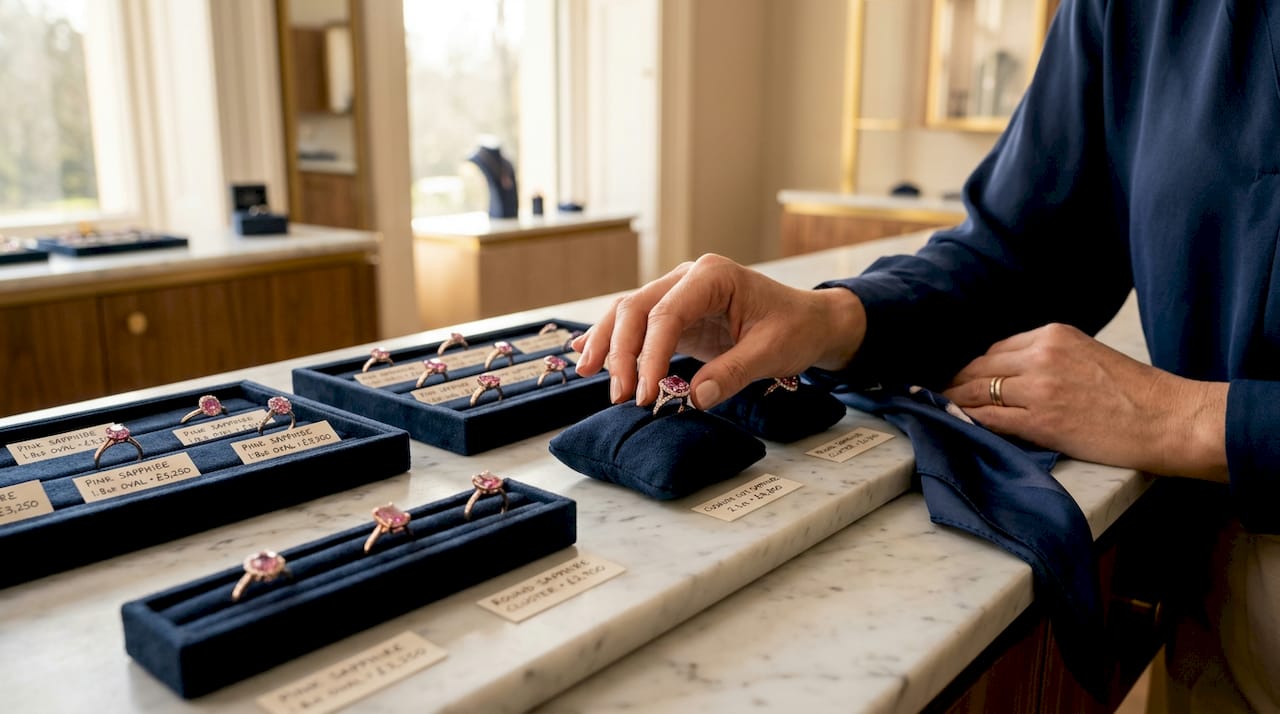
Round brilliant cuts maximise sparkle and work with almost any setting. They’re the safe choice, which isn’t a criticism. Oval cuts are enormously popular right now because they elongate the finger and display colour beautifully across a larger surface area. Cushion cuts tend to hold colour depth well, making them brilliant for richer, deeper pinks. Emerald cuts produce a glassy, sophisticated look but require a stone with good clarity, since the open facets don’t hide much.
| Cut | Best for | Colour display |
|---|---|---|
| Round brilliant | Maximum sparkle, versatile wearers | Even and consistent |
| Oval | Elongating effect, vintage feel | Excellent, large face-up appearance |
| Cushion | Rich, saturated pinks | Deep and warm |
| Emerald | Clean, modern aesthetic | Transparent; clarity must be high |
Settings: more than just aesthetics
Settings like solitaire, halo, three-stone, and bezel all alter both the look and the practical durability of your ring. A solitaire puts the sapphire front and centre with nothing to compete for attention. You can read more about solitaire specifics in this setting guide from Blackwelljewellers. A halo setting surrounds the sapphire with smaller diamonds, which adds perceived size and sparkle. Three-stone designs carry significant symbolism (past, present, future) and pair particularly well with oval or cushion cuts. Bezel settings, where metal wraps around the stone’s perimeter, offer the most protection and suit active lifestyles where snagging a prong on something is a real concern.
Metal choice: it’s not just personal taste
White metals enhance cooler, pastel pink undertones, while yellow or rose gold adds warmth and makes deeper pinks appear even more vivid and rich. White gold and platinum are modern and crisp. Yellow gold gives a vintage warmth that suits certain sapphire shades spectacularly. Rose gold is, unsurprisingly, a very natural companion to any shade of pink sapphire.
Pro Tip: Hold a sample of the metal next to your sapphire before committing. What looks great on screen can feel completely wrong in person. The undertone of the stone should feel like it belongs with the metal, not fight against it.
Buying pink sapphire rings: what to look for
Buying coloured gemstones requires a slightly different mindset than buying diamonds. The standard Four Cs (colour, clarity, cut, carat) still apply, but the weighting shifts dramatically toward colour.
Here’s what to prioritise when buying pink sapphire rings:
- Colour first, always. A vivid, pure pink hue with minimal secondary colours defines the finest examples. Secondary tones like orange or purple can drag the value down, though some buyers actively seek them for a unique look.
- Eye-clean clarity. Unlike diamonds, sapphires are assessed more loosely on clarity. Aim for a stone that appears clean to the naked eye. Microscopic inclusions are common and acceptable; visible cracks or clouds are not.
- Cut quality. A well-proportioned cut maximises the stone’s natural colour and brilliance. A poor cut can make even a beautiful stone look dull or uneven.
- Certification. Look for reports from recognised bodies like the GIA (Gemological Institute of America) or AGL (American Gemological Laboratories). Certification confirms origin, treatment status, and quality grading.
- Treatment disclosure. This is non-negotiable. Awareness of natural vs treated stones is what separates an informed buyer from someone who overpays for a treated stone at natural prices.
- Ethical sourcing. Ask about provenance. Reputable sellers should be able to tell you where a stone was mined and confirm responsible sourcing practices.
- Seller reliability. Buy from established, accountable businesses. Check for hallmarking, clear return policies, and transparent provenance documentation.
One thing people routinely miss: carat weight doesn’t tell you much about a sapphire’s visual size. Sapphires are denser than diamonds, so a 1ct sapphire will appear slightly smaller than a 1ct diamond of the same cut. Go by millimetre dimensions, not just weight.
Caring for your pink sapphire ring
Good news: pink sapphires are not precious little princesses that require round-the-clock fussing. But they do need some sensible care.
Here’s a practical home cleaning routine:
- Fill a small bowl with warm (not hot) water and a drop of washing-up liquid.
- Place your ring in the bowl and leave it for five to ten minutes.
- Use a soft toothbrush to gently scrub around the setting and under the stone.
- Rinse under lukewarm running water, making sure the plug is in the sink (yes, this matters).
- Pat dry with a soft, lint-free cloth and leave to air dry fully before storing.
Avoid anything abrasive, anything acidic, and definitely avoid bleach. Simple.
Always remove your ring before gardening, heavy exercise, swimming, or washing up. Despite that impressive hardness rating, impact damage and setting wear are the most common reasons pink sapphire rings end up needing repairs.
Professional cleaning is something a lot of people skip and really shouldn’t. Annual jeweller checks catch loose settings before you lose a stone, spot hairline cracks early, and give your ring a deep clean that no toothbrush can quite replicate. Once or twice a year is plenty.
On the topic of ultrasonic and steam cleaning: proceed with caution. Ultrasonic or steam cleaning risks damage in stones with inclusions or fracture-filling treatments. If you don’t know exactly how your stone was treated, ask your jeweller before putting it anywhere near an ultrasonic machine. It’s the kind of question that feels fussy but can save you significant heartache.
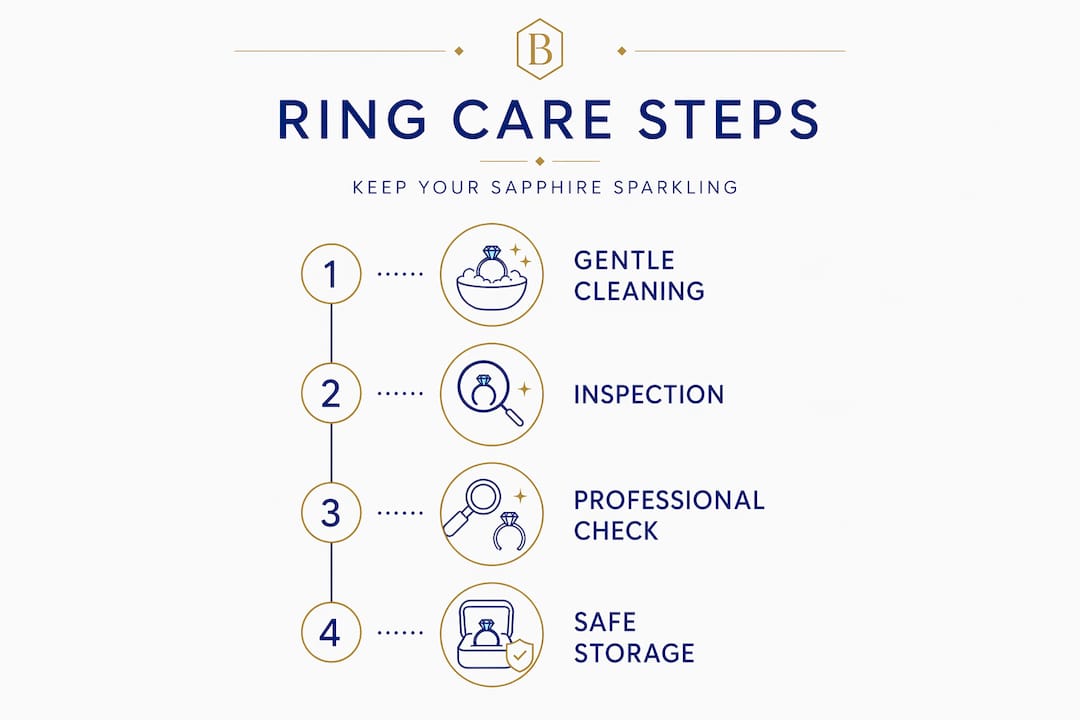
Pro Tip: Store your pink sapphire ring separately from other jewellery, ideally in a soft pouch or a lined box compartment. Diamonds can scratch sapphires. Yes, really. They’re harder.
Common mistakes to avoid
People make the same errors again and again with pink sapphire rings. Here’s the shortlist, so you don’t have to learn these the hard way:
- Skipping treatment disclosure. If a seller can’t tell you whether the stone is heat-treated, beryllium-diffused, or untreated, walk away. This information directly affects value and care requirements.
- Ignoring your lifestyle when choosing a setting. A delicate six-prong solitaire looks extraordinary. It also snags on jumpers, catches on gym equipment, and loses prongs faster if you’re active. Match the setting to how you actually live, not how you imagine you live.
- Using harsh cleaning products. Bleach, acetone, and strong solvents can affect both the metal setting and certain stone treatments. Warm water and mild soap. That’s it.
- Mismatching stone colour and metal tone. A cool, pale pink in a yellow gold setting can look washed out or muddy. Take the time to see them together before you buy.
- Buying without provenance or quality reports. No documentation means no accountability. A reputable seller provides paperwork. If they don’t, that itself tells you something.
My take on pink sapphire rings
I’ve handled a lot of jewellery over the years, and I’ll be honest with you: pink sapphires don’t get the credit they deserve. People walk in asking about diamonds (fair enough), and then their eyes go straight to a pink sapphire in the case, and something shifts.
What I’ve noticed is that people are often surprised by how practical pink sapphires are. There’s a common assumption that a coloured stone is somehow more fragile or more of a statement piece than a serious engagement ring choice. That’s simply not the case. The hardness is real. The durability is genuine.
What I find most interesting, though, is the colour conversation. I’ve seen buyers talk themselves into a pale pastel when they actually want a deeper magenta, because they think the softer shade is more “appropriate.” Appropriate for whom? If you love saturated colour, find the stone that reflects that. Jewellery should feel like you, not like someone’s idea of what you should want.
My honest advice: go and see stones in person before you commit. Photographs do strange things to pink sapphires. The colour shifts under different lighting in ways that genuinely surprise people. Natural daylight, indoor lighting, and overhead shop lights all tell different stories. The one you should trust is the one that makes you not want to put it down.
— James
Explore pink sapphire rings at Blackwelljewellers
If this guide has got you thinking seriously about a pink sapphire ring, the next step is seeing some in real life. Blackwelljewellers carries a range of pink sapphire rings across different metals and styles, from classic white gold and diamond combinations to warmer yellow gold settings with beautifully saturated stones.

As a family-run business with over 20 years of experience in Kent, Blackwelljewellers also offers bespoke ring design for anyone who wants something completely their own, and professional jewellery repairs to keep your ring in excellent condition for years to come. You can also browse the second-hand jewellery collection for authenticated, hallmarked pieces at genuinely accessible prices. Every stone inspected. Every piece verified. No guesswork.
FAQ
What are pink sapphires, exactly?
Pink sapphires are corundum gemstones coloured pink by traces of chromium. They belong to the same mineral family as rubies and blue sapphires, and score 9 out of 10 on the Mohs hardness scale.
Are pink sapphires good for engagement rings?
Yes. Their hardness makes them highly suitable for daily wear, and their colour range from soft pastel to vivid magenta offers enormous variety for personal expression. They’re a well-established alternative to diamonds in engagement jewellery.
How do I clean a pink sapphire ring at home?
Soak the ring in warm water with a small amount of mild washing-up liquid for five to ten minutes, then gently scrub with a soft toothbrush and rinse thoroughly. Avoid ultrasonic cleaners if your stone has been treated, as they can cause damage.
Does metal colour matter with pink sapphires?
Very much so. White gold and platinum complement cooler, lighter pink tones, while yellow gold and rose gold bring warmth and depth to richer, more saturated sapphire shades. Seeing the stone alongside the metal before purchasing makes a real difference.
How often should I have my pink sapphire ring professionally checked?
Once or twice a year is the general recommendation. A professional inspection catches loose settings and wear before they become serious problems, and keeps your stone looking its best over time.