

TL;DR:
- Rhodium plating provides a bright finish and protection for white gold rings, requiring replating every 12 to 24 months based on wear and habits. Proper maintenance involves gentle cleaning, avoiding chemicals, and scheduling professional inspections to extend plating life and ensure structural integrity. Costs in the UK range from £50 to £150, with repairs ideally completed before reapplying rhodium to prevent additional expenses.
Rhodium plating is the thin electrochemical coating applied to white gold rings that gives them their iconic bright, mirror-white finish and a protective layer against scratches and tarnish. Without it, white gold reveals its natural warm champagne tone, which is perfectly fine but not what most people picture when they buy a white gold ring. The good news is that replating is straightforward. For daily wear rings, replating every 12–24 months is the standard industry recommendation, though your lifestyle, skin chemistry, and habits all push that number up or down. This guide covers exactly what affects your replating frequency, what the process involves, how to slow down wear, and what it will cost you.
How often should you replate a white gold ring?
The honest answer is: it depends. But daily wear typically means you will notice visible yellowing or dullness somewhere between 12 and 24 months. That is when the rhodium layer has thinned enough to expose the underlying gold alloy, which carries a warmer, slightly yellowish tone. Rhodium itself does not tarnish or corrode. The discolouration you see is the base metal showing through, not the plating going bad.
Several factors accelerate wear significantly:
- Hand activity level. Rings on active hands wear faster. A builder or nurse will replate far more often than someone who works at a desk.
- Skin chemistry. Acidic skin pH speeds up plating wear. If your rings always seem to lose their shine faster than other people’s, this is probably why.
- Chemical exposure. Cleaning products, perfumes, and hand sanitisers all degrade the plating faster than normal friction alone.
- Ring design. Rings with raised settings and intricate detailing wear unevenly. Flat, simple bands tend to hold their plating longer.
- Type of jewellery. Earrings and necklaces rarely need replating because they see far less friction. Rings, especially engagement rings and wedding bands worn daily, are in a different category entirely.
Pro Tip: Keep a simple note on your phone of when your ring was last plated. When you start noticing a yellowish tinge near the inner band, that is your cue to book in.
Routine professional jewellery checks can catch early plating wear before it becomes obvious. Catching it early means you spend less time wearing a ring that looks tired.
What happens during the rhodium plating process?
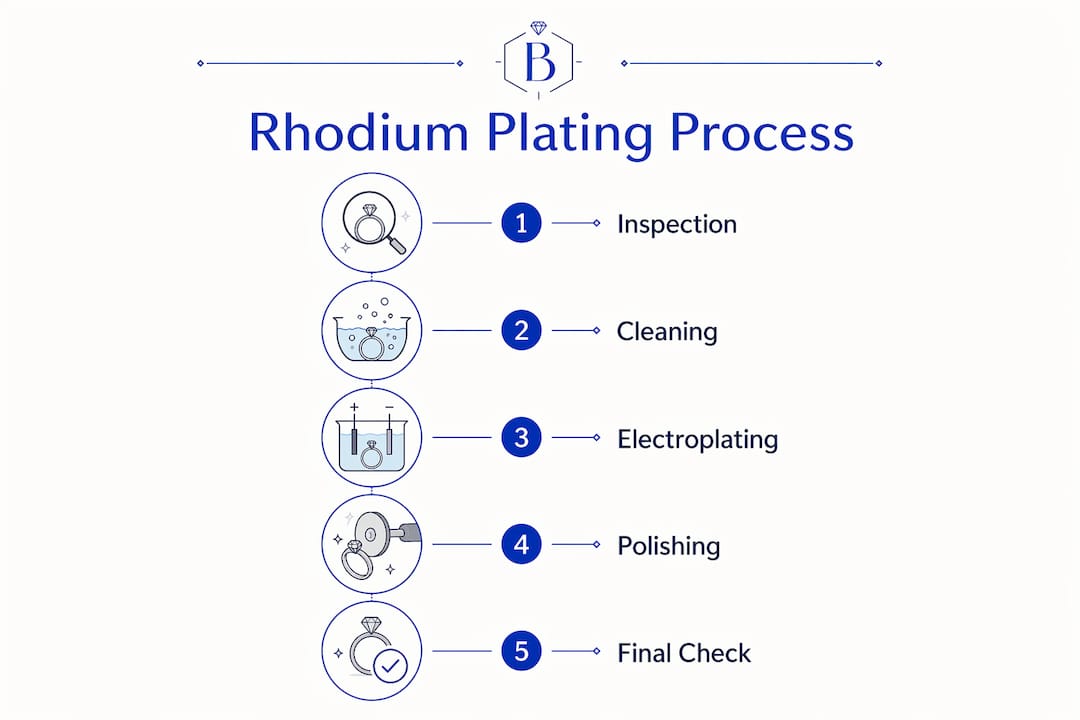
The plating process is more involved than most people realise. It is not simply dunking a ring in a solution and calling it done. Here is what actually happens, step by step:
- Thorough cleaning. The ring is cleaned ultrasonically and steam-cleaned to remove all oils, dirt, and residue. Any contamination on the surface will prevent the plating from bonding properly.
- Polishing. The jeweller polishes the ring to remove surface scratches. This step matters because rhodium plating is very thin and will not hide scratches. It will actually highlight them if the surface is not prepared correctly.
- Electrocleaning. The ring goes through an electrocleaning bath to remove microscopic surface impurities.
- Plating bath. The ring is submerged in a rhodium solution and an electrical current bonds the rhodium to the metal surface. Plating thickness ranges from 0.5 to 2.5 microns, with most jewellers applying around 0.75–1.0 microns for a balance of durability and cost.
- Final rinse and inspection. The ring is rinsed, dried, and inspected under magnification.
The whole service typically takes 1–3 days at a UK workshop, though some jewellers offer same-day turnaround for straightforward pieces.
One thing worth knowing: heat-based repairs like ring sizing will strip the rhodium coating entirely. Always schedule any structural repairs before replating, not after. Doing it the wrong way round means paying for plating twice.
Pro Tip: Ask your jeweller to check prong integrity and stone settings during the replating visit. Since the ring is already being handled professionally, it costs nothing extra to ask and could save you a lost stone.
How to care for your white gold ring to extend plating life
The single biggest thing you can do is reduce unnecessary chemical exposure. Removing your ring before swimming, cleaning, or applying lotions significantly extends plating longevity. Pool chlorine is particularly aggressive. It does not just dull the surface; it actively degrades the plating at a chemical level.
Here are the care habits that make a real difference:
- Take it off for chores. Washing up, scrubbing surfaces, and using bleach-based products are the fastest ways to thin your plating. Keep a small dish by the sink.
- Apply products first, ring last. Put on hand cream, perfume, and hairspray before putting your ring on. These products contain alcohol and oils that accelerate wear.
- Clean gently at home. Warm water and a tiny drop of mild washing-up liquid, applied with a soft toothbrush, is all you need. Avoid abrasive cloths or jewellery dips not designed for plated pieces. For more detail on safe cleaning methods, Blackwelljewellers has a full guide worth reading.
- Store it separately. Rhodium-plated rings stored loose in a jewellery box get scratched by other pieces. A soft pouch or individual compartment protects the surface.
- Avoid ultrasonic cleaners at home. Professional ultrasonic cleaning is fine as part of a workshop service. Home units can loosen stone settings and are not calibrated for plated pieces.
Knowing what to avoid is just as important as knowing what to do. The most common mistakes people make with white gold rings are almost always chemical rather than physical. And if you spot signs of wear beyond the plating, like a loose prong or a slightly bent shank, check out 5 signs your ring needs repair before booking a replating appointment.
Rhodium plating is highly corrosion-resistant and will not tarnish on its own. The wear you see is purely mechanical and chemical thinning of the layer. That means your care habits have a direct, measurable impact on how long the plating lasts.
Cost and timing: when should you schedule replating?
UK replating costs typically range from £50 to £150, depending on ring complexity, stone settings, and the jeweller’s location. A simple solitaire band sits at the lower end. A heavily detailed vintage-style ring with multiple settings will sit at the higher end.
Here is how to think about the cost sensibly:
- Compare it to the alternative. Platinum does not need replating, but a platinum ring costs significantly more upfront. For most people, the occasional replating cost on a white gold ring is still far cheaper over a decade than buying platinum.
- Bundle repairs with replating. Coordinate any heat-based repairs before plating to avoid paying for the service twice. Resizing, prong retipping, and shank repairs all strip the coating and must come first.
- Treat it as routine maintenance, not a crisis. Think of it like a car service. You do not wait until the engine warning light comes on. Book it when you first notice the inner band starting to look slightly yellow.
- Use replating visits as inspection points. Professional replating sessions are an ideal opportunity to check stone settings and ring integrity. A good jeweller will flag any structural issues before they become expensive problems.
- Choose your jeweller carefully. Look for a workshop with in-house plating capability rather than one that sends pieces away. In-house work means faster turnaround, better quality control, and someone accountable if anything goes wrong.
For a broader look at maintaining gold jewellery, Blackwelljewellers covers the full picture, from daily habits to professional servicing schedules. Keir Fine Jewellery also offers rhodium plating services for those seeking a UK-based specialist with transparent pricing.
One more thing: some clients prefer to skip replating entirely and embrace the natural warm champagne tone of white gold. That is a completely valid choice. It reduces long-term maintenance and cost, and the natural tone of white gold is genuinely attractive. The ring just looks different from the bright white finish most people associate with the metal.
Key takeaways
Rhodium plating for white gold rings lasts 12–24 months under daily wear, and the right care habits, combined with timely professional servicing, keep your ring looking its best for longer.
| Point | Details |
|---|---|
| Replating frequency | Daily wear rings typically need replating every 12–24 months, depending on lifestyle and chemical exposure. |
| Plating thickness | Standard plating runs 0.75–1.0 microns; thicker plating lasts longer but costs more. |
| Repair timing | Always complete heat-based repairs before replating to avoid paying for the service twice. |
| Care habits | Remove your ring before swimming, cleaning, and applying lotions to significantly extend plating life. |
| Cost range | UK replating typically costs £50–£150; treat it as routine maintenance, not an emergency expense. |
What I have actually noticed after years of handling white gold rings
Here is something most articles will not tell you: the 12–24 month figure is a starting point, not a rule. I have seen rings come in for replating after six months because the owner was a keen swimmer who never took it off. I have also seen rings that still looked sharp after three years because the owner was meticulous about removing it for anything involving water or chemicals.
The variable that surprises people most is skin chemistry. Two people can wear identical rings with identical habits, and one will need replating twice as often as the other. If you are in that camp, it is not a fault with the ring or the plating. It is just your biology. The practical response is to shorten your inspection interval rather than waiting for obvious yellowing.
My honest view on the “should I just embrace the natural tone” question: it is underrated. White gold without rhodium has a softer, warmer look that suits certain ring styles beautifully, particularly vintage and antique designs. If you are tired of the maintenance cycle, it is worth considering whether the bright white finish is actually what you want, or just what you assumed you wanted.
The one thing I would push back on is treating replating as purely cosmetic. A replating visit is your best opportunity to have the ring properly inspected. Stone settings loosen gradually and invisibly. Prongs wear down. A jeweller who is already handling your ring under magnification will spot these things. That inspection alone is worth the visit, regardless of what the plating looks like.
— James
White gold ring care at Blackwelljewellers
Blackwelljewellers has been handling jewellery repairs and restorations in Kent for over 20 years, with in-house workshops across Maidstone, Gravesend, and Bexleyheath.

The team offers professional jewellery repairs including rhodium plating, ring sizing, prong retipping, and full structural restorations, all carried out by experienced jewellers on-site. Pricing is transparent and the work stays in-house, so you always know who is handling your piece. Whether your ring needs a full replate, a quick inspection, or something more involved, Blackwelljewellers is the kind of place where you can actually talk to the person doing the work. Pop into any Kent store or get in touch through the website to book your appointment.
FAQ
How often does white gold need to be rhodium plated?
Daily wear white gold rings typically need replating every 12–24 months. Rings worn less frequently, or kept away from chemicals, can go considerably longer between treatments.
Does rhodium plating wear off quickly?
Rhodium plating is durable but does thin gradually through friction and chemical exposure. Factors like pool chlorine and cleaning products accelerate wear, while careful habits can extend plating life well beyond the average.
How much does rhodium plating cost in the UK?
UK replating costs range from £50 to £150, depending on ring complexity and the jeweller. Simple bands sit at the lower end; intricate settings with multiple stones cost more.
Can I skip rhodium plating altogether?
Yes. Natural white gold has a warm champagne tone that many people find attractive. Skipping replating reduces maintenance and cost, though the ring will look noticeably different from the bright white finish most people associate with white gold.
Should I do repairs before or after replating?
Always complete repairs first. Heat-based work like ring sizing strips the rhodium coating entirely, so replating must be the final step to avoid paying for the service twice.