

TL;DR:
- A pawnbroker is a licensed financial service provider that offers short-term secured loans against valuables or buys items outright at fair prices. The process involves no credit checks, relies on the item’s value, and requires proper licensing, documentation, and transparency for consumer protection. When properly chosen, pawnbroking provides quick, accessible cash for valuable items without long-term financial risks.
Most people picture a pawnbroker as the last resort for someone truly desperate. That image is outdated and, frankly, unfair. A pawnbroker is a licensed financial service provider who offers short-term secured loans against valuables, or buys items outright at a fair price. No credit checks. No lengthy forms. Just a quick, straightforward transaction. Whether you are considering pawning a piece of jewellery, a watch, or something else of value, understanding exactly how the process works gives you a real advantage before you walk through that door.
Table of Contents
- Key takeaways
- What a pawnbroker actually does
- How pawn loans work
- Consumer protections and licensing
- Pawnbroking vs other quick cash options
- How to choose a reliable pawnbroker
- My honest take on pawnbroking
- Pawnbroking services from Blackwelljewellers
- FAQ
Key takeaways
| Point | Details |
|---|---|
| No credit checks needed | Pawn loans are secured against your item’s value, so your credit history is irrelevant. |
| Loan amounts vary considerably | Expect 25% to 60% of resale value, depending on condition and demand. |
| Licensing protects you | Always use a licensed pawnbroker who issues proper pawn tickets and maintains transaction records. |
| Forfeiture is real | If you do not repay within the agreed period, you lose your item. Full stop. |
| Alternatives exist | Selling outright, personal loans, and credit unions each suit different situations differently. |
What a pawnbroker actually does
Right, let us sort out the basics. A pawnbroker provides two core services. First, short-term secured loans using your item as collateral. Second, outright purchase of items if you simply want cash and do not want the item back. Both transactions happen fast. Usually same day, sometimes within the hour.
The range of items a pawnbroker will accept is broader than most people realise:
- Jewellery (gold, silver, diamonds, and platinum pieces)
- Watches (especially branded pieces like Rolex, Omega, and TAG Heuer)
- Electronics (laptops, cameras, gaming consoles)
- Tools and equipment
- Luxury handbags and accessories
- Musical instruments
Every item gets assessed for condition, authenticity, and resale demand. That last point matters more than you might think. A pawnbroker is essentially running two businesses at once: a lending business and a retail one. So the loan or purchase offer you receive reflects what that item could realistically sell for if you never came back to collect it.
Gold jewellery, for example, gets weighed and tested for purity. A diamond ring gets examined under magnification. A watch gets checked for movement condition and whether it still has its original papers. All of this affects the final offer. If your item is in poor condition or lacks documentation, expect a lower number.
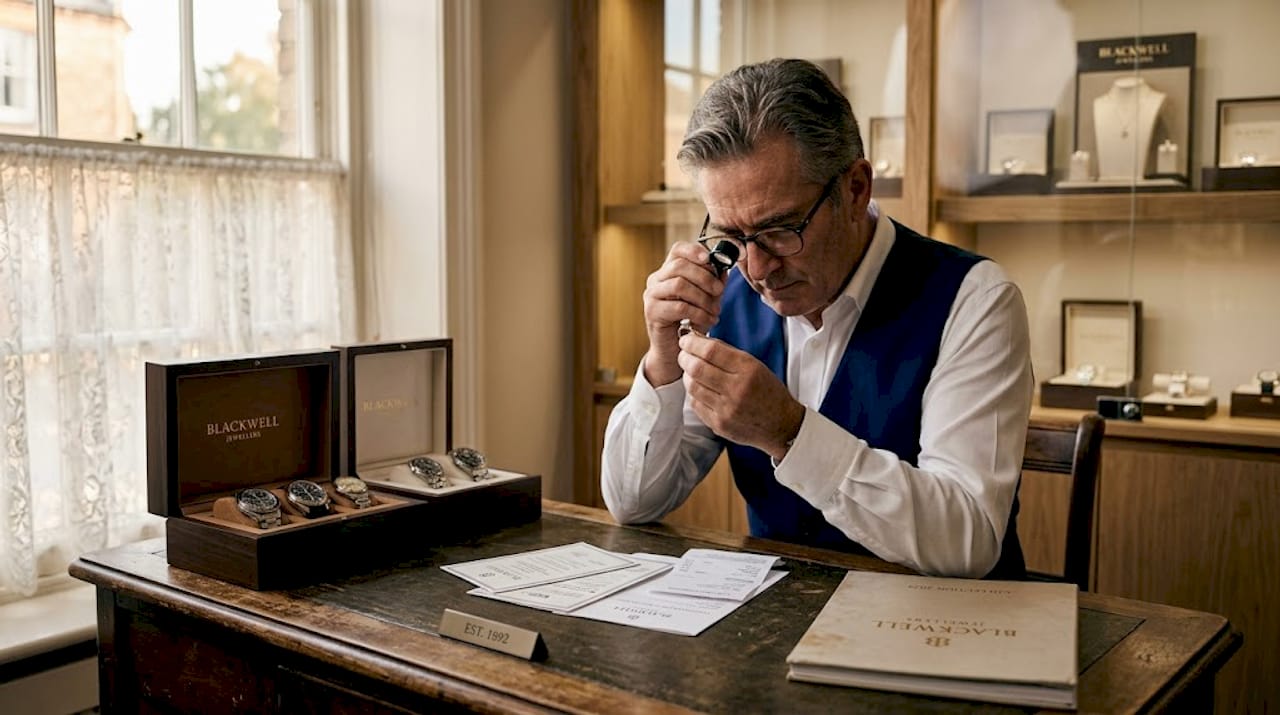
Pro Tip: Clean your jewellery and gather any original boxes, certificates, or receipts before you visit. Presentation and provenance genuinely affect the offer you receive.
How pawn loans work
Here is the bit most people do not know before they walk in. Pawn loans are structured around the item’s resale value, not your personal financial situation. Loan amounts typically range from 25% to 60% of what the pawnbroker believes the item could sell for. So a ring worth £500 on the second-hand market might get you a loan of £150 to £300.
The loan comes with a contract, and that contract matters. Here is what it typically includes:
- The loan amount agreed between you and the pawnbroker
- The interest rate and any additional fees
- The repayment due date, usually between 30 and 90 days
- What happens if you do not repay (the pawnbroker keeps and sells the item)
- Your rights to any surplus if the item sells for more than the loan balance
You receive a pawn ticket when you hand over your item. Guard that ticket with your life. It is your legal proof of the transaction. Losing it complicates the redemption process enormously. Pawn tickets and transaction logs are a regulated requirement, designed specifically to protect you as the borrower.
Now, interest rates. This is where people get caught out. Interest rates vary significantly by location and are often expressed monthly rather than as an annual percentage rate. That makes it genuinely difficult to compare pawn loans against other financial products on a like-for-like basis. In the UK, the Financial Conduct Authority (FCA) regulates consumer credit, which includes pawnbroking. Any reputable UK pawnbroker must be FCA authorised and must display their rates clearly.
If you do not repay by the due date, the pawnbroker keeps your item and sells it. Some pawnbrokers offer loan renewals or extensions with additional fees, giving you more time. This is worth asking about upfront, before you sign anything.
| Aspect | Pawn loan | Unsecured personal loan |
|---|---|---|
| Credit check required | No | Yes |
| Speed of funds | Same day | Days to weeks |
| Risk if unpaid | Lose item | Credit damage |
| Typical term | 30 to 90 days | 1 to 5 years |
| Regulated in UK | Yes (FCA) | Yes (FCA) |
Pro Tip: Always ask for the total cost of the loan in pounds, not just the monthly rate. “2% per month” sounds modest until you work out what that means over 90 days with fees added.
Consumer protections and licensing
Let us be blunt about something. Not every operator calling themselves a pawnbroker is actually legitimate. Unlicensed operators have been found charging illegal interest rates, which can render contracts unenforceable and leave both parties in a legal mess. The consequences for unlicensed operators are severe. But that does not help you much if you have already handed over your grandmother’s ring.
Here is what a properly licensed pawnbroker must do:
- Hold the appropriate consumer credit licence or authorisation (in the UK, FCA authorisation)
- Issue a written pawn ticket for every transaction
- Maintain accurate records of all items received and loans issued
- Return your item upon full repayment within the agreed period
- Notify you before selling an unredeemed item (rules vary by jurisdiction)
- Handle any surplus proceeds from a sale above the loan balance correctly
“Regulated pawn ticket systems include strict contract elements that govern the pawning process and protect consumers, but losing tickets or ignoring paperwork complicates redemptions.” (Pawn ticket legal significance)
You will also need to bring valid photo identification to any pawnbroking transaction. This is not optional. Documentation and identification protect both parties and make disputes far easier to resolve. A pawnbroker who does not ask for ID is a red flag, full stop.
When searching for the best pawnbrokers near me, look specifically for FCA authorisation, transparent fee structures, and a physical presence (a shop you can walk into, not just a website). Read reviews, ask questions, and trust your instincts. If something feels off, it probably is.
Pawnbroking vs other quick cash options
Right, so you need money quickly. Pawnbroking is one option. But is it the right one for your situation? Let us look at this honestly.
| Option | Credit check | Speed | Risk |
|---|---|---|---|
| Pawn loan | No | Same day | Lose item |
| Payday loan | Sometimes | Same day | Debt spiral |
| Personal loan | Yes | Days to weeks | Credit impact |
| Selling item outright | No | Same day | Permanent loss |
| Credit union loan | Yes | 1 to 3 days | Credit impact |
The pawn loan beats most alternatives on speed and accessibility. Loans secured by collateral do not require a credit score, which makes them genuinely accessible to people who have been turned away by banks.
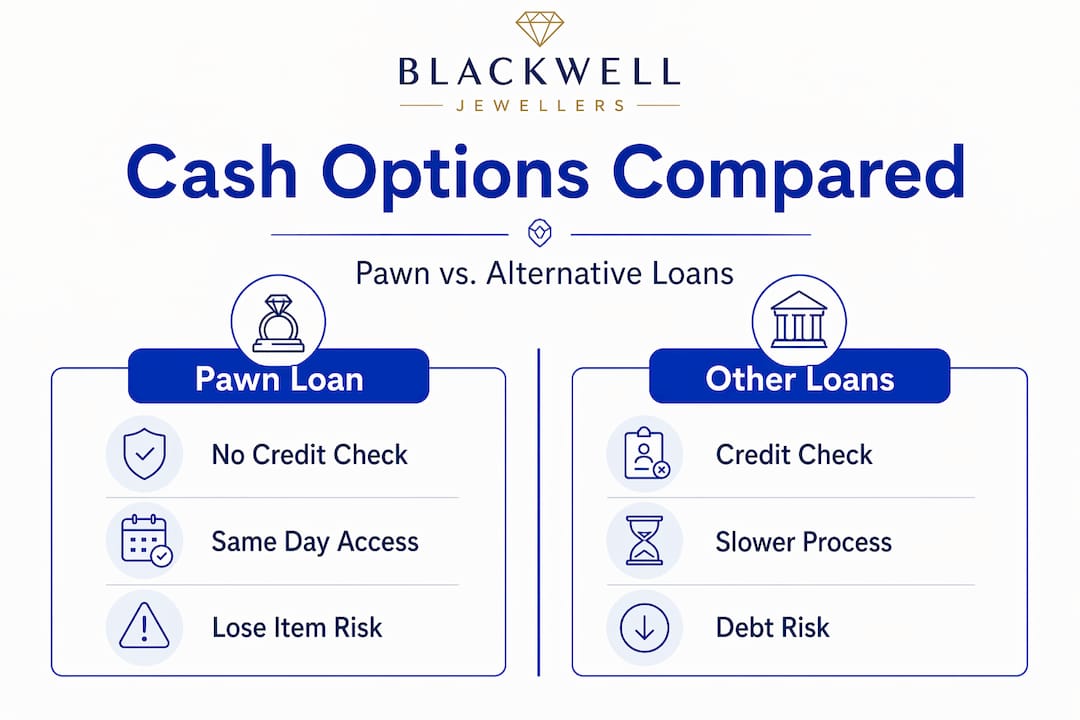
Here is the nuance people miss on the pawn vs sell debate. If you sell your item outright at a pawnbroker, you typically get more cash up front than a pawn loan would offer (because the pawnbroker does not need to factor in the risk of lending). But you lose the item permanently. A pawn loan keeps the option open. You pay interest for that optionality. Whether that is worth it depends entirely on how much the item means to you and how confident you are about repaying.
Where pawnbroking makes real sense:
- You have a short-term cash need and a clear plan to repay
- You own a valuable item but do not want to sell it permanently
- Your credit history would make a personal loan slow or impossible
- You need funds faster than any bank or lender could provide
Where it probably does not make sense: long-term financial struggles where rolling renewals would eat up more in fees than the original loan was worth.
How to choose a reliable pawnbroker
Not all pawnbrokers are equal. Some are meticulous, transparent, and genuinely helpful. Others, well, less so. Here is a practical process for finding a good one and getting the most from your transaction.
- Verify FCA authorisation. Check the FCA register at fca.org.uk before you commit to anything. A quick search by company name takes 30 seconds.
- Get multiple valuations. Do not accept the first offer you receive. Visit two or three pawnbrokers if time allows. Offers can vary surprisingly.
- Read the contract before signing. This sounds obvious, but plenty of people skip it. Check the interest rate, due date, and forfeiture terms.
- Ask about extensions. Before signing, ask: “What happens if I need more time to repay?” Knowing your options before you are in that situation is far better than finding out when you are stressed.
- Keep your pawn ticket somewhere safe. Treat it like a passport. You will need it to reclaim your item. For used jewellery pawn transactions specifically, a good pawnbroker should also provide a receipt with a description of the item pawned.
- Understand the redemption timeline. Consumers who prioritise understanding redemption fees and deadlines avoid the surprise of losing items they intended to reclaim.
Understanding how pawnbrokering works around jewellery valuation in the UK specifically is well worth reading before your first visit. The more informed you are walking in, the better your outcome.
Pro Tip: If you are pawning jewellery, know its hallmark and approximate metal weight beforehand. A quick weigh on your kitchen scales and a glance at the hallmark gives you a baseline to sense-check whatever offer you receive.
My honest take on pawnbroking
I have worked around pawnbroking and jewellery valuations long enough to have some actual opinions on this, beyond what you would find in a dry financial guide.
Here is what I have found: pawnbroking gets a bad reputation mostly because people arrive without understanding the terms. Then they miss the repayment deadline, lose an item they cared about, and blame the pawnbroker. But the terms were in the contract they signed. That is not a defence of every pawnbroker out there (some are absolutely taking advantage of people who are in a panic), but it is a reminder that informed customers consistently get better outcomes.
The dual revenue model of pawnshops (interest income plus retail margins on unredeemed goods) means there is a genuine incentive for operators to under-offer on loans. Not maliciously, just financially. Knowing this does not make the system corrupt. It means you should negotiate, compare, and go in with knowledge rather than desperation driving your decisions.
What I genuinely respect about the pawnbroking model, when it operates properly, is that it provides fast access to cash to people who are completely locked out of traditional lending. No credit check, no waiting period, no rejection letter. That is not nothing. For the right person in the right situation, a well-structured pawn loan from a licensed operator is one of the most honest short-term financial tools available.
The key word there is licensed. That is non-negotiable.
— James
Pawnbroking services from Blackwelljewellers
If you are looking for a pawnbroker you can actually trust, Blackwelljewellers has been doing this for over 20 years from their Kent stores in Maidstone, Gravesend, and Bexleyheath.

Their pawnbroking service is FCA authorised, transparent on fees, and run by jewellery experts who genuinely know what your items are worth. Whether you are bringing in gold, diamonds, or a luxury watch, you are getting a valuation from people who handle these items every single day. No guessing. No lowball offers from someone who just looked it up on a price comparison site.
Blackwelljewellers also offers a full range of authenticated second-hand jewellery for those who want to buy rather than borrow. And for a responsible, detailed overview of jewellery-specific cash loans, their UK cash loans guide is genuinely worth reading before your first visit.
FAQ
What is a pawnbroker and how do they work?
A pawnbroker offers short-term secured loans against valuables, or buys items outright. You hand over an item, receive a loan or cash payment, and reclaim the item upon repayment within the agreed period.
How much will a pawnbroker lend against my item?
Loan amounts typically range from 25% to 60% of the item’s estimated resale value, depending on condition, demand, and the pawnbroker’s own assessment.
Do pawnbrokers carry out credit checks?
No. Pawn loans are secured entirely against the item you bring in, so your credit history is not a factor in whether you qualify or how much you receive.
What happens if I do not repay my pawn loan?
If you do not repay by the due date, the pawnbroker keeps your item and sells it to recover the loan. Some operators offer loan renewals for an additional fee, so always ask about this option upfront.
How do I know if a pawnbroker is legitimate?
In the UK, check the FCA register to confirm authorisation. A legitimate pawnbroker will always issue a pawn ticket, ask for photo identification, and display their fees clearly before any transaction begins.
Recommended
- Pawnbroking guide: securing value and authenticity in UK – blackwellonline
- Find a trusted pawnbroker in Kent for quality jewellery – Blackwell Jewellers
- Unveiling the Mechanics of Pawnbroking: The Blackwell Pawnbrokers Guid – blackwellonline
- Find trustworthy pawn shops near you: Kent’s local guide – Blackwell Jewellers