
TL;DR:
- Most pawnbrokers value jewellery based on metal purity, weight, gemstone quality, condition, and provenance.
- Loan-to-value ratios typically range from 25% to 70% of the estimated resale value, depending on various factors.
- Enhancing your item’s documentation, cleanliness, and timing can significantly increase the amount offered.
Let’s clear something up right away. That gold bracelet your gran left you is not going to fetch its retail price at a pawnbroker. Not even close. A lot of people walk in expecting a figure that matches what the piece would cost in a jeweller’s window, and walk out feeling short-changed. But here is the thing — they were never going to get that. The UK pawned jewellery market is worth £1,991m in 2024, which tells you there is serious money moving through this industry. What this guide will do is explain exactly how valuations work, what to expect in real numbers, and how to squeeze every possible penny from the process.
Table of Contents
- How pawn value is determined for jewellery
- Typical loan-to-value ratios: What you can expect
- Factors influencing your jewellery’s pawn value
- Alternatives to pawning: Selling, lending, or waiting
- Why many people undervalue their jewellery’s potential
- Maximise your jewellery’s value with expert guidance
- Frequently asked questions
Key Takeaways
| Point | Details |
|---|---|
| Valuation is below retail | Jewellery pawn offers are usually much less than high street retail prices because pawnbrokers plan to resell at a profit. |
| Documentation adds value | Papers, certificates, and receipts can significantly increase your appraisal by proving authenticity. |
| Preparation boosts offers | Clean, well-presented items with proofs of purchase or gemstones tend to secure higher loan-to-value rates. |
| Consider all options | Direct sale, pawning, and waiting for market shifts should all be weighed to maximise your jewellery’s value. |
| Market trends matter | The value of gold, designer brands, and diamonds can fluctuate, influencing what you can get for pawning at any given time. |
How pawn value is determined for jewellery
Right, so how do pawnbrokers actually decide what your piece is worth? It is not guesswork, and it is not random. There is a fairly structured appraisal process, though it varies from shop to shop.
The fundamentals are:
- Metal purity — Gold is assessed by its hallmark (9ct, 18ct, 24ct). Higher carat means more pure gold, which means more money.
- Weight — The heavier the piece, the more metal it contains. A chunky 18ct gold chain will fetch considerably more than a dainty 9ct one.
- Gemstone quality and certification — Loose diamonds or stones in a ring will be assessed for the four Cs: cut, colour, clarity, and carat weight. If you have a GIA or IGI certificate, bring it.
- Condition — Scratched, damaged, or structurally compromised pieces fetch less. A broken clasp might seem minor, but it affects resale value.
- Brand and provenance — A Cartier piece or a hallmarked vintage ring carries more weight than an unbranded equivalent. Vintage jewellery appraisal takes into account period, style, and maker’s marks that can add significant value.
Now, here is where people go wrong with family heirlooms. Emotional value and market value are completely different things. The bracelet might mean the world to you, but a pawnbroker sees an 8-gram 9ct gold piece. Full stop. That is not callousness — that is just how the market works.
“Provenance and paperwork are not optional extras. They are the difference between a standard offer and a genuinely strong one.”
Securing value and authenticity when pawning starts well before you walk through the door. Gather receipts, original boxes, certification, and any prior valuations.
| Factor | Low impact on value | High impact on value |
|---|---|---|
| Metal purity | 9ct gold | 18ct or platinum |
| Gemstones | Uncertified, small | GIA certified, larger stones |
| Condition | Damaged, broken | Excellent, clean |
| Brand | Unknown maker | Cartier, Tiffany, Bulgari |
| Documentation | No paperwork | Full certification and receipts |
Pro Tip: Original packaging and purchase receipts can genuinely add value to your pawn offer, especially for designer pieces. A pawnbroker is more willing to advance a higher loan if they can verify the piece’s history and resale prospects quickly.
Typical loan-to-value ratios: What you can expect
Understanding how items are valued is only half the story. Let’s look at the sort of numbers you can actually expect when pawning your jewellery.
Here is the honest truth: pawnbrokers are not charities. They need to cover their risk, storage, insurance, and potential resale effort. So the loan they offer is almost always a percentage of what they believe they can sell the piece for, not what you paid for it.
In the UK, typical loan-to-value ratios for jewellery run like this:
| Item type | Estimated resale value | Typical pawn offer |
|---|---|---|
| 9ct gold ring (5g) | £150 | £50 to £90 |
| 18ct gold chain (15g) | £550 | £200 to £350 |
| Diamond solitaire (0.5ct, certified) | £800 | £300 to £500 |
| Designer watch (mid-range) | £1,200 | £500 to £800 |
| Platinum engagement ring | £1,500 | £600 to £900 |
The general rule is somewhere between 25% and 70% of immediate resale value. That is a wide range, and the spread depends heavily on the factors we just covered: condition, certification, brand, and current market demand.
It is also worth understanding the fundamental mechanic here. When you pawn something, the item is held as collateral against the loan. You pay back the loan (plus interest) within the agreed period and you get your piece back. If you do not repay, the pawnbroker keeps the item and sells it. That is the deal. No drama, no surprises — just read the agreement carefully before signing anything.
The UK pawnbroking market worth over £1.9 billion in recent years reflects just how many people are using this service legitimately. It is not a last resort for desperate people — it is a financial tool, and a perfectly respectable one at that.
High street pawnbrokers (think H&T or Harvey and Thompson) tend to have more standardised offers because they are operating at volume. Boutique or independent pawnbrokers, on the other hand, sometimes have more flexibility to assess rare or unusual pieces with greater nuance. If you have something genuinely special, an independent could serve you better.
Pro Tip: Do not just walk into the first pawnbroker you find. Getting cash loans for jewellery from the right lender can mean a significantly different offer. Visit two or three places and compare.
Factors influencing your jewellery’s pawn value
Once you have a sense of average loan values, it is crucial to know what concrete steps may increase your offer. Some of these are obvious. Some, genuinely, are not.
Material matters enormously. Gold and platinum are commodities with live spot prices. Pawnbrokers know exactly what the melt value of your piece is before you even sit down. Diamonds, on the other hand, are trickier because the resale market for diamonds is notoriously illiquid. A one-carat diamond ring that cost £4,000 retail might only have a resale value of £900 to £1,200, so manage your expectations.
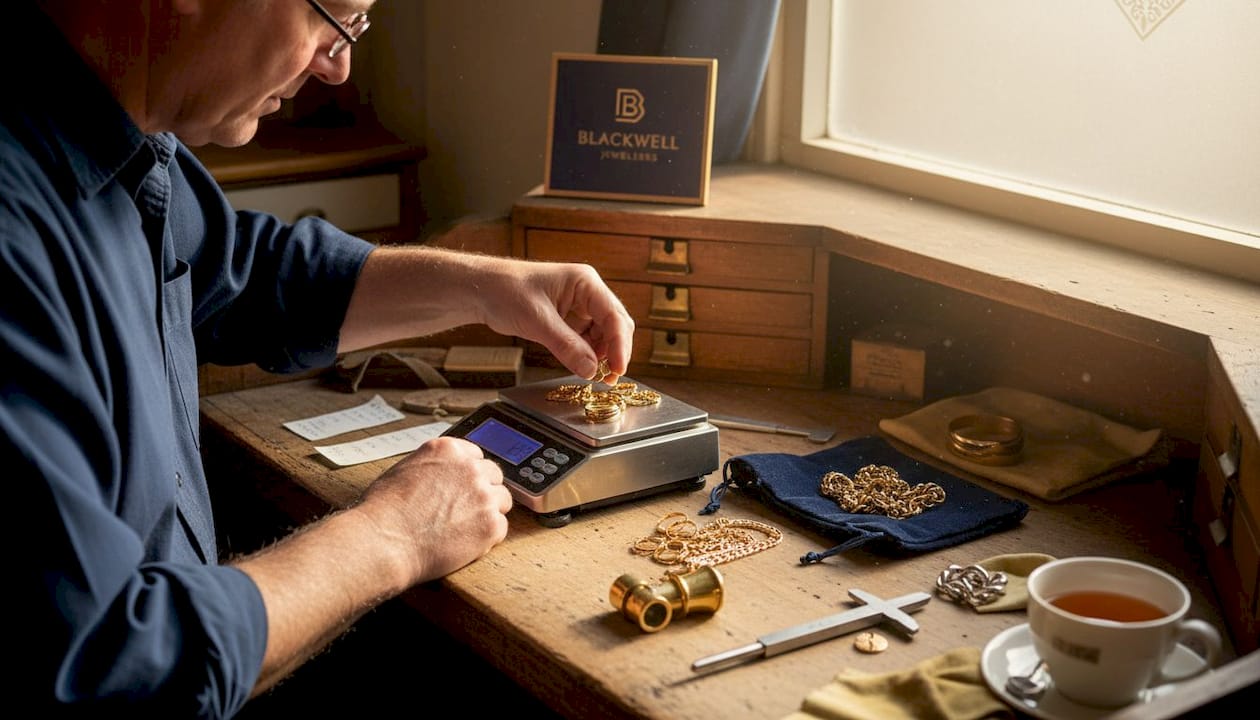
Cleanliness counts. It sounds almost too simple, but a clean, polished piece genuinely does fetch a better offer than a grubby, dull one. Pawnbrokers are human beings. If a ring looks like it has been sitting at the bottom of a bag for three years, it creates a slightly negative impression before any valuation even starts. Give it a gentle clean before you go.
Seasonal demand is real. Gold prices fluctuate. Consumer demand for jewellery spikes around Christmas and Valentine’s Day. If you can afford to wait, timing your pawn visit when gold spot prices are high can make a noticeable difference to your offer.
Documentation and certificates are worth their weight. This really cannot be said enough. Receipts, hallmark certificates, diamond grading reports, and prior insurance valuations all support a stronger offer. They reduce the pawnbroker’s uncertainty, which reduces their risk, which increases what they are willing to lend you. Check out these tips for getting the best price if you want a more detailed breakdown.
Here is a quick checklist before you go:
- Clean your jewellery gently (mild soap, warm water, soft cloth)
- Find all original boxes, bags, and certificates
- Get a recent independent valuation if possible
- Check the live gold spot price on the day
- Note any brand markings, hallmarks, or maker’s stamps
- Research getting the most money for your jewellery before you commit
Pro Tip: If your piece has a gemstone, knowing its approximate specifications beforehand (carat weight, colour grade) gives you a negotiating reference point. Pawnbrokers respect customers who know their stuff. It signals you will not be undersold without noticing.
One final factor that people overlook: the best place to sell jewellery is not necessarily a pawnbroker at all. That depends entirely on your situation, which leads us neatly to the next section.
Alternatives to pawning: Selling, lending, or waiting
You may also wonder if pawning is truly the best path forward. Honestly? Sometimes it is not. Let’s compare your real options.
Pawning versus outright sale
| Pawning | Outright sale | |
|---|---|---|
| Speed | Same day | Usually same day to a few days |
| Amount received | 25% to 70% of resale value | Potentially more (70% to 90%) |
| Keep the item? | Yes (if you repay) | No |
| Ongoing cost | Interest charges | None |
| Best for | Temporary cash need | Permanent financial need |
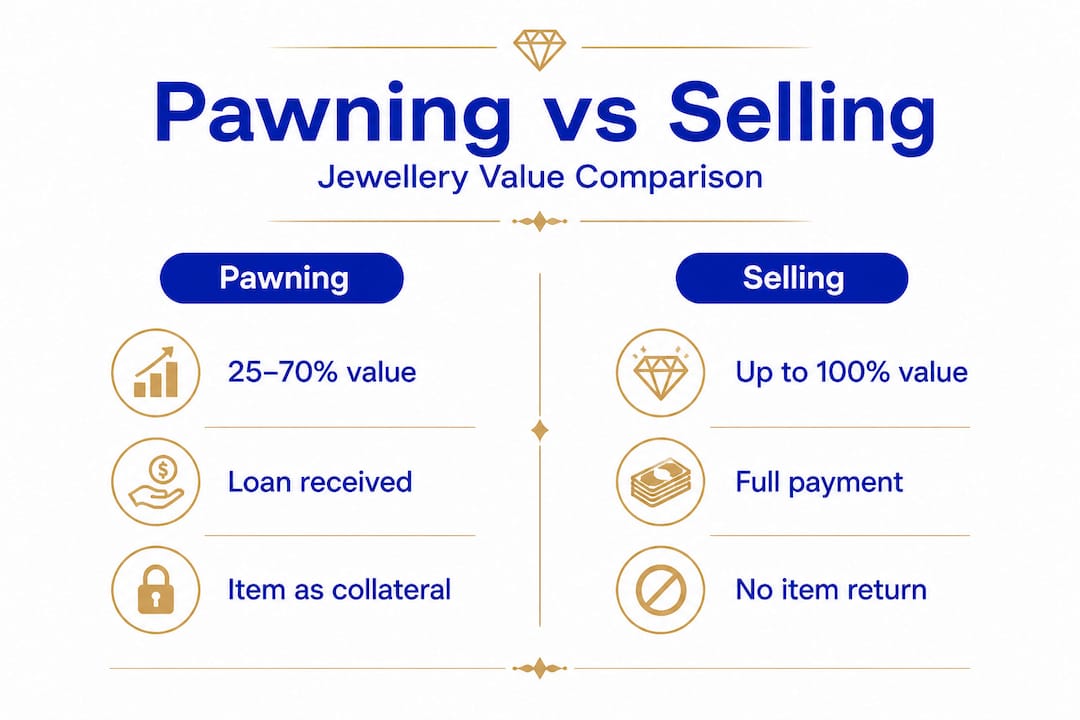
The key question is whether you want the item back. If the answer is yes, pawning makes sense. If you are happy to part with the piece permanently, selling it outright will almost always get you more money.
Here is a simple process for deciding which route suits you:
- Ask yourself honestly: do I want this piece back in six months?
- If yes, calculate whether you can realistically repay the loan plus interest.
- If no, research current resale values and compare pawn versus direct sale offers.
- Get at least two quotes regardless of which route you choose.
- If timing is flexible, monitor gold prices and sell or pawn when they peak.
Importantly, pawned jewellery is not lost as long as you repay the loan within the agreed timeframe. Standard UK pawnbroking agreements run for six months, after which the item may be sold. Mark your calendar and set reminders. Missing the redemption date is the most avoidable mistake in this whole process.
If you are dealing with a sentimental or high-value piece, checking out a cash for pawned jewellery guide alongside a visit to trusted pawnbroker options in your area is absolutely worth doing before you commit.
Pro Tip: If you are not in immediate financial need, waiting for a gold price peak can genuinely be worth it. Gold prices have been historically strong recently, and timing your sale or pawn can add 10% to 15% to your return without doing anything else differently.
Why many people undervalue their jewellery’s potential
Here is the uncomfortable truth. Most people who walk into a pawnbroker focus entirely on the gold weight. They have looked up the spot price, done a quick calculation, and arrive with a number in mind. And nine times out of ten, that number is incomplete.
Here is what they miss:
Gemstones are not factored in properly. A 9ct gold ring with a small, certified sapphire is worth more than its gold weight alone. But if you only focus on the metal, you will accept an offer that ignores the stone entirely. Always ask the appraiser to itemise what they are valuing.
Rarity and period are often ignored. An Art Deco brooch or a Georgian mourning ring has collector value that goes well beyond its material worth. Most high street pawnbrokers will offer melt value and move on. An independent specialist, or a buyer who understands vintage and antique pieces, may offer considerably more.
Market timing is rarely considered by first-timers. Gold hit notable highs in 2024 and 2025. If you pawn or sell at a low point, you could be leaving meaningful money on the table. It takes ten minutes to check the live gold price before you go.
Our honest advice? Get at least three valuations. Do not commit to the first offer you receive. Independent jewellers and specialist pawnbrokers, especially local ones with a genuine eye for quality, will often assess pieces with more nuance than national chains. For responsible cash lending advice that does not leave you worse off, do your homework first.
The people who get the best results from pawning or selling jewellery are the ones who treat it like a negotiation, not a transaction.
Maximise your jewellery’s value with expert guidance
With all this insight at your disposal, here is where you can move forward with confidence and trusted support.
At Blackwell Jewellers, we have been buying, selling, and lending on jewellery for over 20 years across our Kent stores and nationally online. We know exactly what makes a piece valuable and how to appraise it fairly. Our professional pawnbroking service offers transparent, obligation-free valuations with no pressure and no jargon.

Thinking about selling rather than pawning? Our second-hand jewellery collection reflects genuine market values, and we are always interested in quality pieces. Have a piece that needs attention before valuation? Our jewellery repair services can have it looking its best before any appraisal. Come and talk to us — we will give you a straight answer.
Frequently asked questions
What types of jewellery are most valuable at pawn shops?
Pawnbrokers offer higher amounts for gold, platinum, diamonds, and designer pieces, particularly when supported by original documentation and certification.
Will I get more money selling my jewellery instead of pawning it?
Usually yes. Selling outright typically returns more because there is no loan risk margin, as explored in this expert selling guide.
How quickly can I get cash from pawning jewellery?
Most UK pawnbrokers provide cash the same day after completing an appraisal, as outlined in this responsible UK guide on cash loans for jewellery.
Can I reclaim my jewellery after pawning it?
Yes, absolutely. Your jewellery is yours to reclaim as long as you repay the full loan and interest within the agreed period.
Does cleaning my jewellery help me get a better price at a pawn shop?
Yes, presenting clean, well-maintained jewellery can positively influence a valuation. It supports the best price outcome by making a strong first impression.