

Your white gold looks yellow because the thin rhodium plating that gives it that bright, icy finish has worn away, exposing the warmer alloy underneath. A professional rhodium replate almost always brings the colour straight back. If the yellowing is patchy, sits mostly on the prongs, or you can see thin metal, get a jeweller to check it before you book the replate, because that can point to real wear rather than a simple cosmetic fade.
TL;DR:
- Rhodium plating on white gold is very thin and wears down over time from everyday friction, exposing the yellow alloy beneath.
- Replating can restore the bright white finish, but the process typically lasts one to three years depending on wear habits.
- Patchy yellowing usually indicates plating wear at contact points like prongs or shank, not necessarily a metal defect or structural issue.
- Regular maintenance, including weekly cleaning and avoiding exposure to chlorine and abrasive substances, can significantly extend the time between replating.
- Replacing the alloy with platinum or palladium-heavy metals offers a longer-lasting white finish and reduces the need for frequent replates.
Table of Contents
- What white gold actually is (and why it needs rhodium at all)
- Why does white gold turn yellow? The wear and chemistry behind it
- How to restore yellowed white gold: your realistic options
- A simple care routine that actually slows the yellowing
- What replating actually costs, and how long it takes
- When yellowing means something more than a worn finish
- The bench jeweller’s view on getting this right
- Book a repair before the yellowing gets worse
- An honest take on the yellowing problem
- Sources
What white gold actually is (and why it needs rhodium at all)
Here’s the bit nobody tells you when you buy the ring: white gold was never actually white. Gold, in its pure form, is a rich, unmistakable yellow. To get anything resembling white, jewellers alloy it with paler metals such as nickel, palladium, silver or zinc, which dilute the yellow but never fully cancel it out. What you’re left with, before any finishing touches, is a pale, slightly grey or faintly yellow-gold colour, not the bright silvery white you see in the shop window.
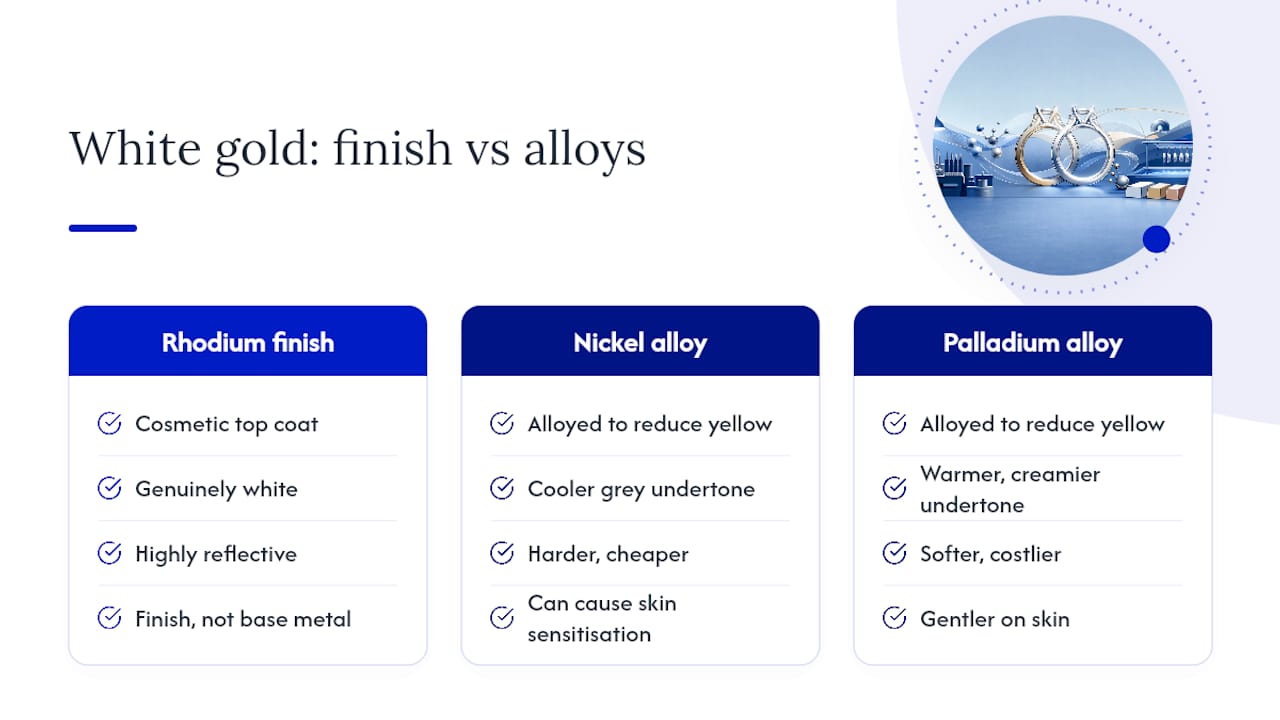
That bright white comes from a separate step: rhodium plating. Rhodium is a member of the platinum family, and it’s genuinely white and highly reflective, which is exactly why jewellers use it as a cosmetic top coat over the alloy beneath. White gold is fundamentally yellow gold alloyed with metals like nickel or palladium, with rhodium applied afterwards purely for appearance. It’s a finish, not the metal itself.
The choice of alloy matters more than most buyers realise. Nickel-based white gold tends to be harder and cheaper to produce, but nickel alloys can trigger skin sensitisation in some wearers, while palladium-based versions are gentler on skin though costlier and softer. Palladium alloys also tend to show a warmer, creamier undertone once the rhodium wears thin, compared with the cooler grey of a nickel mix. Karat plays a role too: 18K white gold contains more pure gold than 14K, so higher-karat pieces often reveal a warmer tone underneath once the plating fades, simply because there’s more actual gold in the mix. That’s not a flaw in your ring. It’s just chemistry doing what chemistry does.
Why does white gold turn yellow? The wear and chemistry behind it
Rhodium is not a thick, armour-like coating. It’s typically applied at just 0.5 to 1.5 microns, thinner than a human hair, which is why everyday friction from skin, soap and fabric wears it down over time. Every handshake, every time you pull on gloves, every fidget with the ring while you’re on a call, all of it slowly abrades that microscopic layer.
Wear isn’t even across a piece, either. Rings almost always yellow first on the underside and at the shank, where the metal rubs constantly against fingers either side. Prongs and high points on a pendant or bracelet clasp follow close behind. Bench jewellers see this pattern so often that it’s become a diagnostic shortcut: uneven, patchy yellowing that clusters around prongs and contact points is a strong sign of ordinary plating wear rather than any deeper problem with the metal.
Your own body chemistry accelerates the process, too. Perspiration is mildly acidic, and skin oils, sweat and the natural pH of your hands gradually break down the plating faster on some wearers than others. If you’ve ever noticed a ring yellows quicker in summer, that’s not your imagination.
Then there’s what you put your hands into. Chlorine in swimming pools and hot tubs is particularly harsh on rhodium, and household bleach isn’t much kinder. Cosmetics, hairspray and perfume leave a film that dulls the plating and speeds up wear when combined with friction. Abrasive kitchen cleaners and washing-up liquids used repeatedly without gloves do the same thing over months rather than days.
Karat and alloy choice change how quickly all this becomes visible rather than how quickly it actually happens. A 14K nickel-based white gold will often show yellowing sooner than an 18K palladium piece, purely because the underlying alloy sits closer in tone to bright white to begin with. Either way, the plating is wearing at broadly the same rate. You’re just seeing the effect sooner on some pieces than others.
How to restore yellowed white gold: your realistic options
Once the plating has worn thin, you’ve got four genuine paths forward, and they’re not equally good for every situation.
Professional rhodium replating is the standard fix, and for good reason. A proper job involves cleaning the piece, polishing out surface scratches, then dipping it into an electroplating bath that deposits a fresh, even layer of rhodium. A reputable replate includes a controlled polish before plating specifically to remove high spots and avoid patchy banding once the new rhodium goes on, and most workshop jobs are done in one to two days. You can typically expect the fresh finish to last one to three years before it needs doing again.
Polishing and ultrasonic cleaning deal with dirt, soap residue and light surface scratches, and they’ll genuinely make a tired-looking piece sparkle again. What they won’t do is put rhodium back where it’s worn away. If the yellow tone is coming from exposed alloy rather than grime, polishing alone won’t touch it.
Switching to platinum or a palladium-heavy alloy is worth considering if you’re tired of the replating cycle altogether. Platinum’s white colour is intrinsic to the metal itself, not a coating, so it develops a soft patina over time instead of yellowing, which suits people who’d rather not think about maintenance schedules. Our guide on platinum versus gold covers the cost and workability trade-offs in more detail, because platinum is denser, pricier per gram, and harder for a jeweller to resize.
At-home fixes exist, but tread carefully here.
- Warm soapy water and a soft cloth is safe and genuinely helps between professional visits.
- Toothpaste is mildly abrasive and can scratch the plating further, making yellowing worse rather than better.
- Vinegar and other acidic kitchen remedies can react with softer alloys and any glued or delicate stone settings.
- Silver dips and jewellery cleaning wipes not designed for rhodium can strip what plating remains unevenly.
Pro Tip: If a ring has looked patchy for a while and you’re tempted to “fix” it yourself before an event, don’t. A rushed toothpaste scrub the night before a wedding usually leaves visible scratch marks under the reception lighting, which is a worse look than the yellowing you started with.
A simple care routine that actually slows the yellowing
You can’t stop rhodium wearing eventually, but you can stretch the time between replates considerably with a few boring, unglamorous habits.
- Clean weekly with warm soapy water and a soft brush. An old, soft toothbrush works fine. Gently work it around the setting and shank, rinse under warm water, then dry immediately with a lint-free cloth. Don’t let pieces air-dry, as water spots and residue accelerate dulling.
- Take rings off for chores, swimming and anything involving bleach or strong cleaning products. Chlorine and household chemicals are among the fastest ways to strip rhodium, so this single habit probably does more for longevity than anything else on this list.
- Apply perfume, lotion and hairspray before you put jewellery on, not after. Give products a minute or two to absorb into skin before dressing. The chemical film left behind by spraying directly onto a worn ring is a slow, steady abrasive.
- Store pieces separately, not tangled together in one dish. Gold, diamonds and gemstones scratch each other in a jewellery box just as easily as they scratch worktops. A lined tray with individual compartments, or simply soft pouches, prevents this.
- Book a periodic check with a jeweller, even when nothing looks obviously wrong. A bench jeweller spots early prong wear and thinning plating long before it’s visible to you, and catching it early keeps a small job small.
For a broader maintenance routine covering more than just white gold, our guide to maintaining gold jewellery walks through seasonal care that applies across your whole collection.
What replating actually costs, and how long it takes
Most jewellers and retailers recommend replating roughly every one to three years, though that window depends heavily on how often you wear a piece and what you expose it to. Someone who wears a ring daily through manual work will need it sooner than someone who saves a pendant for occasions.
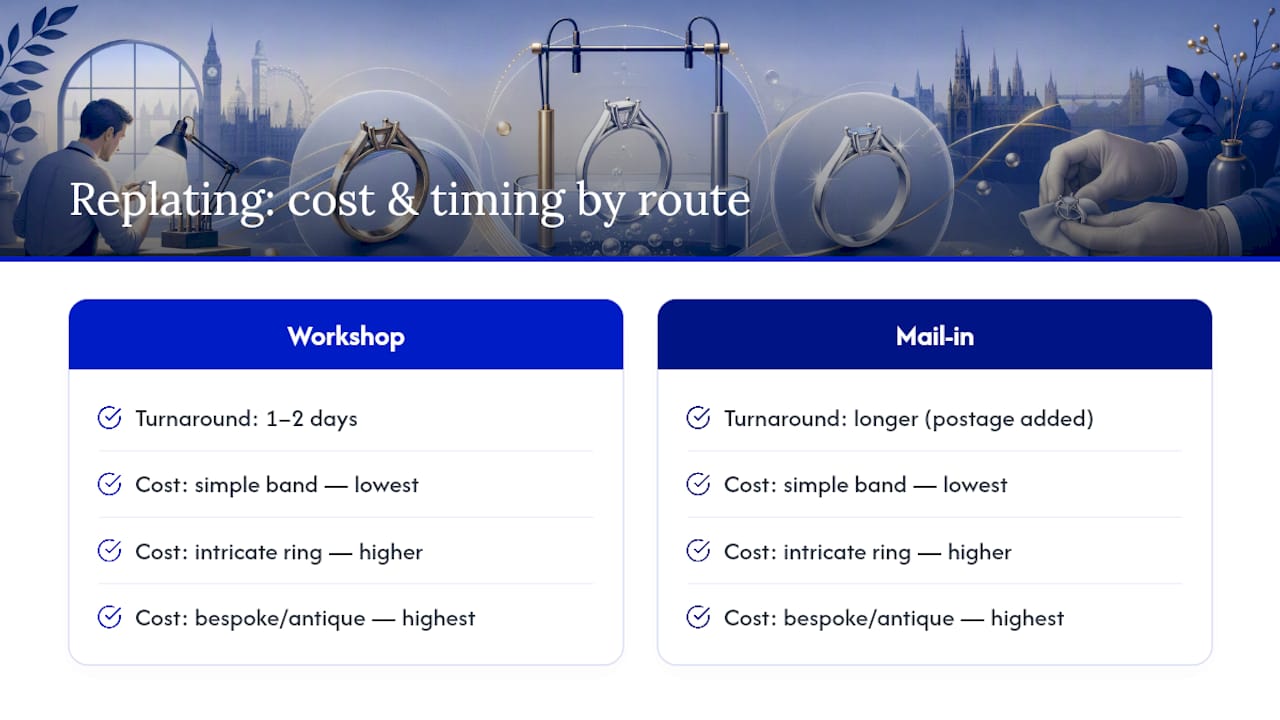
Cost varies by piece rather than sitting at one fixed number. A simple band typically costs less than a ring with an intricate setting, multiple stones, or filigree detail, since more surface area and awkward angles mean more preparation time before plating. Bespoke or antique pieces often cost more again, purely because of the extra care needed around older settings.
Turnaround time also depends on the route you take. A workshop job booked in person is often ready within a day or two, while mail-in or online replating services naturally take longer once postage is factored in. If a piece also needs polishing or a small repair alongside the replate, bundling that work together usually costs more upfront but extends how long the fresh finish actually lasts.
When yellowing means something more than a worn finish
Patchy yellowing that concentrates around the prongs isn’t always just cosmetic. Very thin prongs or areas of exposed metal in high-contact spots can signal genuine structural wear, and that’s a problem worth catching before it costs you a stone.
Do a simple check yourself: look closely at each prong under good light. If any look flattened, thin, or you can wiggle a stone slightly with gentle pressure, stop wearing the piece and get it looked at rather than risk losing the stone entirely. A jeweller will typically re-tip worn prongs or reinforce a thinning shank before any replating goes ahead, since plating over compromised metal doesn’t fix the underlying weakness. For engagement rings especially, an annual inspection is a sensible habit, sooner if you notice any change in how a stone sits.
The bench jeweller’s view on getting this right
Blackwell Jewellers has spent over twenty years handling exactly this kind of repair work across its Kent workshops, from straightforward replates to full restorations on pre-owned and antique pieces. A proper inspection appointment should involve a jeweller examining prongs, shank thickness and stone security before any plating touches the piece, then cleaning and polishing ahead of the rhodium bath itself. If your piece needs more than a cosmetic refresh, that’s the moment to book a repair rather than a straight replate.
Book a repair before the yellowing gets worse
If your ring, bracelet or pendant is showing that dull, patchy yellow tone, the fix is rarely complicated, but it does need a proper hand on it. Blackwell Jewellers’ jewellery repair service covers everything from a straightforward rhodium replate to prong re-tipping and full restoration work across its Kent workshops. If you’re weighing up whether to replate or redesign into something new entirely, browsing second-hand jewellery is worth doing before you commit to either. And if a piece just needs a fresh setting rather than fixing, an emerald cut three-stone white gold design shows how the same alloy looks when it’s brand new and freshly plated, a useful comparison for what your piece should look like once it’s done.
An honest take on the yellowing problem
Most advice on this topic treats rhodium replating as a chore, something to grudgingly repeat every couple of years because the metal is “defective.” That framing is backwards. White gold was never meant to stay bright white forever without maintenance, in the same way a car isn’t meant to stay showroom-shiny without the odd wash. The plating is doing exactly what it’s designed to do, wearing predictably, and the fix is equally predictable.
Where the conventional wisdom actually goes wrong is in pushing people towards toothpaste and vinegar “hacks” as if a £30 solution should match a professional electroplating bath. It won’t, and the scratches it leaves usually cost more to fix than the replate would have in the first place.
If you take one thing from this: prioritise the annual prong check over the cosmetic worry. A yellow ring is a Tuesday problem. A loose stone from worn prongs is the kind of thing you only notice once it’s already gone missing.
— James
Sources
This guide draws on jewellery-industry references covering rhodium plating chemistry, alloy composition and bench repair standards, alongside Blackwell Jewellers’ own restoration and replating guides.
- White, Yellow, or Rose Gold: How to Choose | Zevira
- An introduction to white gold | JewelryScience
- What Is Rhodium Plating and When to Replate? | Diamond Ateliers
- Rhodium plating for white gold | Titan Jewellery
- Why does my white gold look yellow? | Kate Rose Fine Jewelry