

Your white gold ring has gone a bit yellow and sad-looking. Good news: nothing is broken, nothing is wrong with you, and you definitely haven’t ruined it. What you’re seeing is completely normal rhodium plating wear, and the fix is straightforward.
The short answer: professional rhodium plating is the only way to restore genuine whiteness once the plating wears off. Home cleaning removes surface grime and brings back some sparkle, but it cannot reverse yellowing. Here’s what to do, in order:
- Clean it at home first. Warm water, mild soap, soft brush. This removes oils and buildup that dull the shine.
- Book a professional inspection. A jeweller checks prong integrity and stone security before any replating happens.
- Get it rhodium plated. This is the actual restoration. Rhodium plating renews the bright white finish by applying a fresh electrolytic layer over the metal.
- Repeat every 1–3 years for daily-wear rings, or sooner if yellowing appears on the underside or around prongs.
If your ring looks cloudy but not yellow, a professional clean alone might sort it. If it’s visibly warm-toned, replating is the answer.
Why does your white gold ring go dull or yellow?
White gold isn’t naturally white. Pure gold is yellow, and to make it white, jewellers mix it with alloy metals (usually palladium or nickel) and then coat the whole thing in rhodium. Rhodium is a platinum-group metal that gives white gold its crisp, mirror-like finish. It’s the coating doing all the visual heavy lifting.
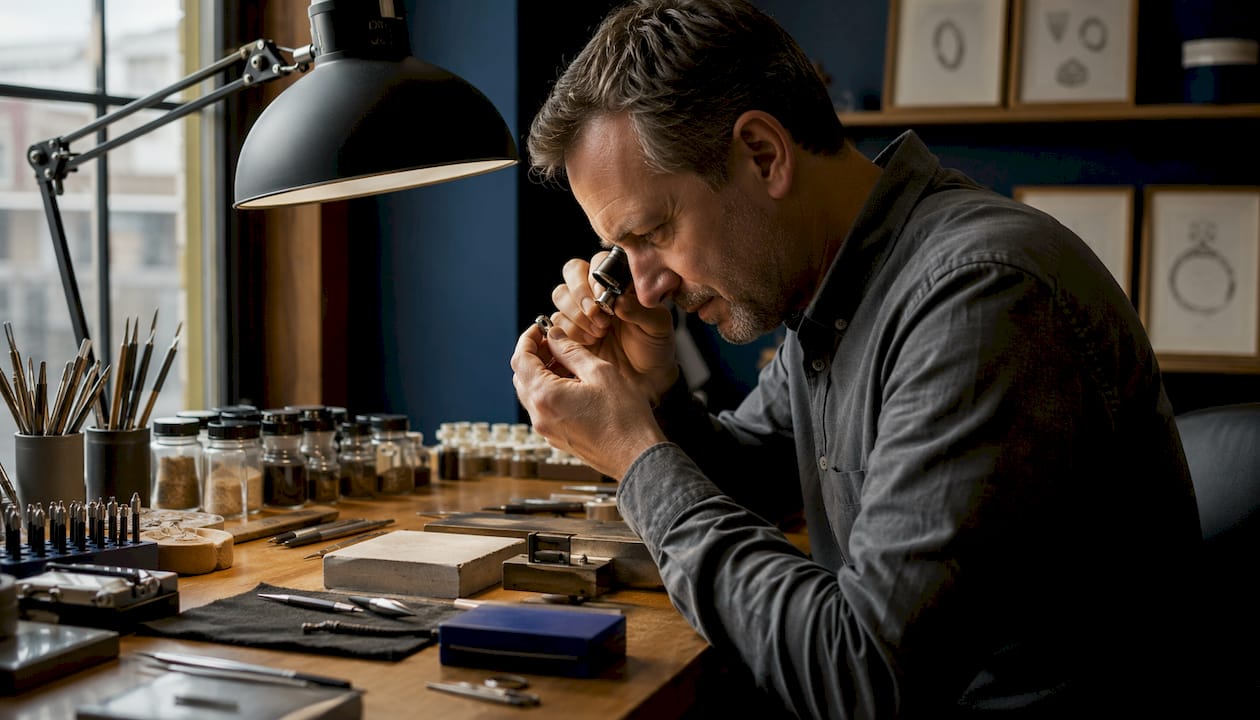
The problem? Rhodium plating wears down over time, exposing the warmer-toned alloy underneath. This isn’t a manufacturing defect or a sign of poor quality. It’s just physics. The layer is only a few microns thick, and daily life is relentless.
Several things accelerate the wear:
- Daily friction from hand washing, typing, and general use thins the plating on the underside and edges first
- Soaps, lotions, and hand sanitisers chemically degrade the rhodium layer faster than you’d expect
- Swimming pools (chlorine is genuinely terrible for rhodium plating)
- Stacking rings that rub against each other, causing uneven wear patches
- Individual body chemistry, including acidic skin, which speeds up plating loss
Uneven yellowing appears on high-friction areas first, particularly the prong tips and the band underside. So if your ring looks yellow on the bottom but still white on top, that’s exactly what’s happening. The plating is going, starting where it gets the most punishment.
There’s also a difference worth knowing: surface grime (oils, lotion residue, soap scum) makes a ring look dull and lifeless, but it’s not the same as plating loss. A good clean can fix the former. Only replating fixes the latter.
How to clean a dull white gold ring safely at home
Home cleaning won’t restore yellowing, but it absolutely restores sparkle by removing the gunk that sits on top of the remaining rhodium. Do this regularly and your ring will look its best between professional appointments.
Here’s the method that protects the rhodium plating while actually working:
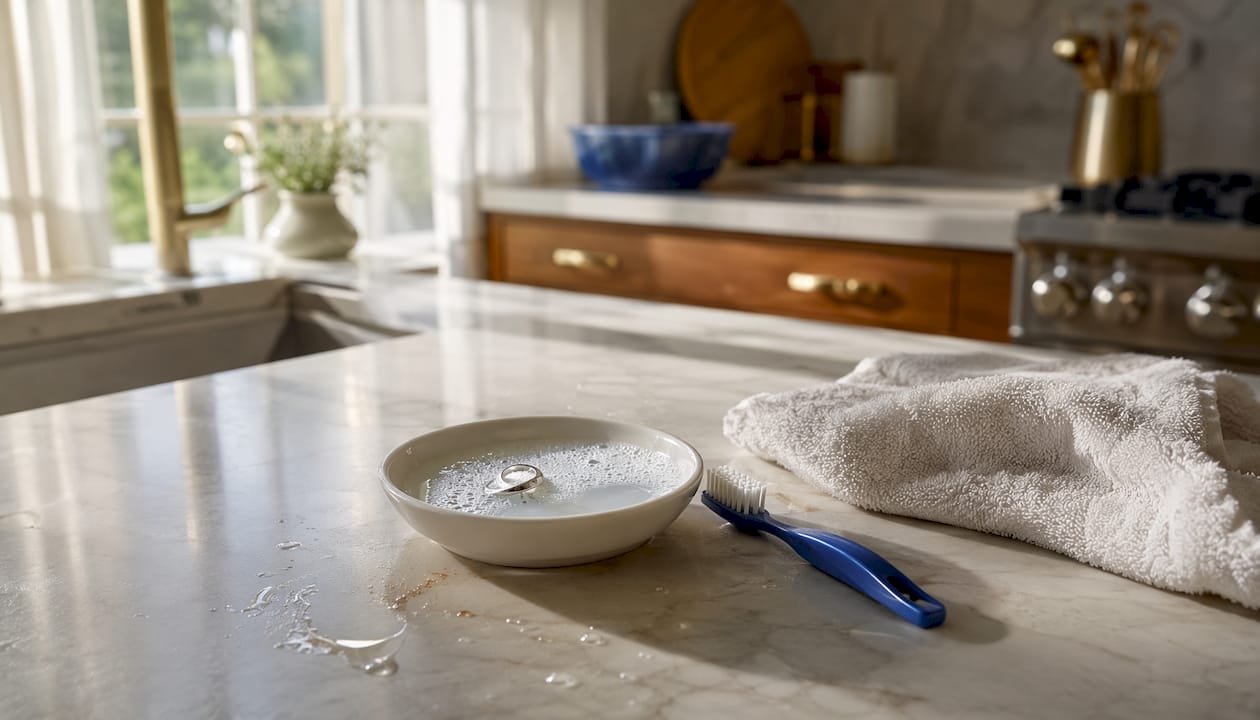
- Prepare a soak. Fill a small bowl with lukewarm water (not hot, never hot) and a few drops of mild washing-up liquid. Thermal shock from hot water can stress stones and settings.
- Soak for 15–20 minutes. This loosens oils, cream residue, and general daily buildup without you having to scrub aggressively.
- Brush gently. Use a soft-bristled toothbrush (a baby toothbrush is ideal) around the stone, under the setting, and along the prongs. You’re massaging, not scouring.
- Rinse carefully. Use lukewarm running water. Keep the plug in the sink. Seriously.
- Dry with a soft cloth. A lint-free microfibre cloth works perfectly. Don’t leave it to air dry; limescale marks on rhodium plating are annoying.
Pro Tip: Check for loose stones before and after cleaning. If a stone wiggles even slightly, stop and take the ring to a jeweller before doing anything else.
Now, what NOT to use. The internet is full of well-meaning but genuinely harmful suggestions:
- Toothpaste contains micro-abrasives that scratch rhodium plating
- Baking soda paste is too abrasive and damages the rhodium layer
- White vinegar is acidic enough to attack the underlying alloys
- Bleach or chlorine corrodes alloys and causes irreversible discolouration
- Ultrasonic cleaners (the cheap home versions) can loosen stones and damage solder joints
Stick to mild soap and warm water. It’s boring, it works, and it won’t cost you a repair bill.
What does professional rhodium plating actually involve?
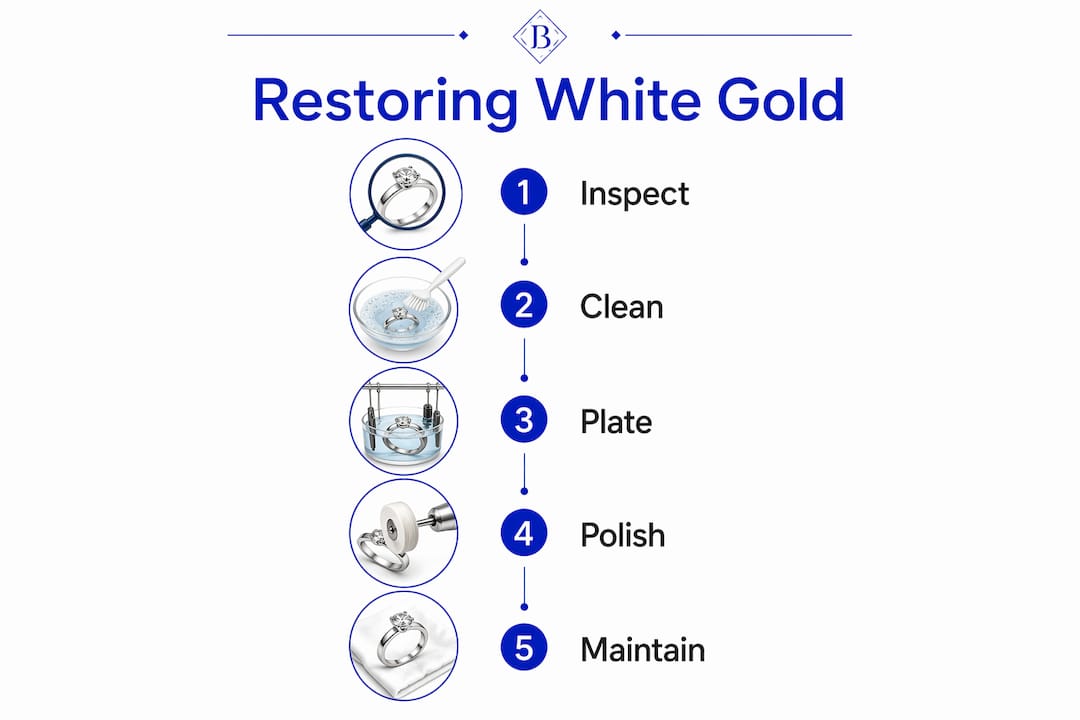
Rhodium plating, also called electroplating or “redipping,” is the process of bonding a fresh layer of rhodium onto the ring’s surface using an electrolytic bath. It’s the only method that genuinely restores the original white finish. At-home rhodium plating kits are not a viable alternative; they produce uneven results and can damage the ring due to imprecise electrical controls and inadequate surface preparation.
A professional service follows a specific sequence:
- Thorough cleaning and degreasing of the ring surface
- Inspection of prongs, settings, and solder points for wear or damage
- Surface polishing to prepare adhesion and remove minor scratches
- Electrolytic rhodium bath (a few minutes in a rhodium sulphate solution)
- Rinsing and drying
- Final quality control check
The inspection step matters more than people realise. Professional rhodium services include thorough inspection and polishing to optimise adhesion and ensure a uniform finish. You don’t want a fresh bright coating applied over a loose stone or a worn prong. That’s hiding a structural problem under a cosmetic fix.
Timing matters too. Replating is more effective before the layer is fully worn away, because surface preparation is simpler at that stage and the result lasts longer. Don’t wait until the ring looks completely yellow. When you first notice warm tones on the underside or around the prongs, that’s your cue.
Cost-wise, professional replating typically takes around 90 minutes and costs an amount depending on ring complexity. For a ring you wear every day, that’s a reasonable annual or biennial expense. Ernest Jones and similar high-street jewellers offer replating services, as do independent specialists like Blackwelljewellers.
For daily-wear rings, rhodium plating usually lasts 1–3 years before visible wear appears. Occasional-wear rings can go considerably longer.
How to keep your white gold ring looking white for longer
You can’t stop rhodium from wearing eventually. But you can slow it down considerably with a few sensible habits. Think of it as the difference between a ring that needs replating every year versus one that goes two or three years between appointments.
The habits that genuinely help:
- Remove your ring before swimming. Chlorine is the single biggest accelerator of rhodium wear. Pool water, hot tubs, the sea (salt and abrasive sand) all cause damage.
- Put jewellery on last. Apply moisturiser, perfume, sunscreen, and hand sanitiser first, then put the ring on. Cosmetics contain chemical agents that degrade rhodium plating.
- Take it off for housework and gardening. Cleaning products, bleach, and physical abrasion from soil all strip the plating faster.
- Store it separately. Keep your ring in an individual jewellery pouch or box, away from other pieces. Metals scratch each other, and a diamond ring left loose with other jewellery will cause damage.
- Clean it gently and regularly at home using the warm water method above, rather than letting buildup accumulate.
- Check for stacking friction. If you wear a wedding band alongside your ring, look at whether the two bands rub in one spot. That concentrated friction wears plating unevenly and quickly.
For general jewellery care advice that applies across different precious metals, the principles are consistent: avoid chemicals, store carefully, and clean gently. The rhodium layer responds well to consistent, low-effort care.
Periodic professional inspections for prong wear and stone security are worth building into your routine, not just when something looks wrong. Prongs wear thin before they look thin, and a lost stone is a far more expensive problem than a replating appointment.
What Blackwelljewellers’ experts say about white gold restoration
At Blackwelljewellers, the team sees white gold rings at every stage of wear, from slightly dull to visibly yellow, and the advice is consistent: don’t panic, and don’t wait too long.
That last point is worth sitting with. Rhodium plating isn’t just cosmetic maintenance. It’s the natural checkpoint for a structural inspection. The two go together, and a good jeweller won’t skip one to do the other.
Blackwelljewellers has over 20 years of experience restoring and inspecting jewellery across its Kent stores in Maidstone, Gravesend, and Bexleyheath, as well as through its national online platform. Every piece that passes through the workshop, whether for replating, repair, or pre-sale restoration, gets a full inspection before any finishing work begins. That’s the standard you should expect from any jeweller you trust with your ring.
Key takeaways
Professional rhodium plating is the only method that restores a white gold ring’s original bright white finish; home cleaning maintains sparkle but cannot reverse yellowing caused by plating wear.
| Point | Details |
|---|---|
| Home cleaning has limits | Warm water and mild soap remove grime and restore sparkle, but cannot fix yellowing from plating loss. |
| — | Professional rhodium plating takes about 90 minutes and is recommended every 1–3 years for daily-wear rings, depending on ring complexity. |
| Inspect before you replate | A jeweller should check prongs and stone security before applying a fresh rhodium layer. |
| Timing affects results | Replating before the layer is fully worn produces a better finish and simpler surface preparation. |
| Prevention slows wear | Avoiding pools, chemicals, and cosmetics before wearing your ring extends the life of the rhodium plating significantly. |
Restore your ring with Blackwelljewellers

If your white gold ring needs more than a home clean, Blackwelljewellers offers professional jewellery repair and restoration services including rhodium plating, prong inspection, and full structural checks. Whether you’re bringing in a daily-wear ring that’s gone a little yellow or a piece that hasn’t been looked at in years, the team will give it an honest assessment before touching it.
You can also browse the pre-owned jewellery collection, where every white gold piece has already been inspected, restored, and hallmarked before it goes on sale. That’s the Blackwelljewellers standard, and it applies whether you’re buying, repairing, or just asking for advice.
Recommended
- Vintage ring restoration: your complete repair guide – Blackwell Jewellers
- How to maintain gold jewellery for lasting shine in 2026 – blackwellonline
- How to repair a damaged ring: a practical UK guide – Blackwell Jewellers
- Rhodium plating for white gold rings: how often do you need it? – Blackwell Jewellers